2026-09-24
Content
In the vast world of industrial adhesives, PE Polyethylene Adhesive Tapes stand out as a versatile and high-performance solution for a multitude of challenges. From sealing and waterproofing to noise reduction and structural bonding, these tapes are engineered to meet demanding specifications across various industries. But with so many variations available, how do you determine if PE tape is the optimal choice for your specific application? This comprehensive guide delves into the critical aspects of PE tape technology, from automotive applications and high-temperature resistance to waterproof sealing and strategic sourcing, providing the expert insight needed to make an informed decision.
The automotive industry demands materials that are not only strong and durable but also lightweight and resistant to extreme environmental conditions. PE Polyethylene Adhesive Tapes, particularly pe foam adhesive tape for automotive use, have become indispensable in modern vehicle manufacturing. They serve critical functions that go far beyond simple adhesion, contributing significantly to vehicle performance, longevity, and passenger comfort. Their unique properties allow engineers to design vehicles that are quieter, more efficient, and better sealed against the elements. This section explores the pivotal role of these specialized tapes in creating the cars of today and tomorrow.
One of the most critical applications of PE foam tape in the automotive sector is in managing Noise, Vibration, and Harshness (NVH). The closed-cell structure of PE foam acts as an excellent damener, absorbing vibrations that would otherwise be transmitted through the vehicle's body. When applied between panels like doors, hoods, and the main chassis, the tape fills microscopic gaps and decouples vibrating surfaces, leading to a noticeably quieter cabin. This application is crucial for premium vehicles where a serene driving experience is a key selling point, but it is equally important in all modern cars to meet consumer expectations for comfort.
A vehicle operates in a wide range of harsh environments, from the freezing cold of winter to the scorching heat of an engine bay in summer. Automotive-grade PE tapes are engineered to withstand these extremes. They must resist degradation from exposure to automotive fluids like oil, coolant, and brake dust, as well as UV radiation and moisture. The PE backing provides excellent chemical resistance, while specially formulated acrylic adhesives maintain their bonding properties across a wide temperature range, typically from -40°C to over 120°C. This durability ensures that the seals and bonds created during manufacturing will last for the entire lifespan of the vehicle.
Beyond NVH, PE tapes are vital for two other key areas: wire harnessing and exterior trim attachment. For wire harnesses, PE tape provides a lightweight, flexible, and abrasion-resistant method for bundling and protecting electrical cables throughout the vehicle. Its smooth surface prevents chafing against sharp metal edges. For exterior trim, such as side moldings, badges, and emblems, double sided PE foam tape provides a strong, permanent bond that can withstand wind shear and vibration while also compensating for surface irregularities, creating a seamless, gap-free finish.
Many industrial applications expose materials to temperatures that would cause standard adhesives to fail. Selecting the right high temperature resistant PE tape is a critical engineering decision that impacts product reliability and safety. Whether it's for protecting electronic components during a soldering process or securing wiring in an engine compartment, understanding the thermal limits of your tape is paramount. This section provides a deep dive into the technology behind heat-resistant PE tapes, focusing on adhesive chemistry and how to interpret performance specifications to ensure you choose a product that won't let you down when the heat is on.
The performance of a PE tape at high temperatures is almost entirely dependent on the type of adhesive used. The two primary types are rubber-based adhesives and acrylic-based adhesives. Rubber adhesives typically offer excellent initial tack and adhesion but have a lower maximum service temperature, often starting to soften or lose their grip around 80°C. Acrylic adhesives, on the other hand, are superior for high-heat applications. They form a stronger, more durable bond that can withstand continuous exposure to temperatures of 120°C or more, with some specialized formulations tolerating even higher short-term peaks. For any application involving sustained heat, an acrylic adhesive is the non-negotiable choice.
When evaluating a high-temperature PE tape, two key specifications on the technical data sheet are the Glass Transition Temperature (Tg) and the Continuous Service Temperature. Tg is the temperature at which the adhesive transitions from a hard, glassy state to a soft, rubbery one. It's a good indicator of the upper performance limit. The Continuous Service Temperature is the maximum temperature at which the tape can maintain its adhesive properties for an extended period without significant degradation. It's crucial to select a tape whose service temperature rating exceeds the maximum temperature expected in your application to ensure long-term reliability.
The demand for high temperature resistant PE tape spans numerous industries. In electronics manufacturing, it is used for masking gold fingers on PCBs during wave soldering or for protecting sensitive components from high-heat reflow processes. In the automotive industry, as mentioned, it's used for wire harnessing and component marking in the engine bay. Industrial applications include sealing high-temperature ducting and insulation for pipes and boilers. In each case, the tape's ability to maintain its integrity and adhesive strength under thermal stress is what makes it an indispensable tool.
Creating a durable, long-lasting seal against water and air ingress is a fundamental challenge in countless applications, from construction and HVAC to electronics enclosures. Waterproof PE sealing tape offers a highly effective and versatile solution. Unlike liquid sealants that can be messy and require curing time, PE sealing tape provides an instant, clean, and permanent bond. Its effectiveness comes from the unique properties of the PE foam backing combined with a pressure-sensitive adhesive. This section explores the science behind how these tapes create superior barriers and the best practices for achieving a perfect, lasting seal.
The secret to the sealing power of PE tape lies in its closed-cell foam structure. This structure consists of millions of tiny, sealed air bubbles that prevent water and air from passing through. When the tape is applied, especially to a joint or seam, the foam compresses to fill all surface irregularities, creating a gasket-like seal. The adhesive ensures the tape remains firmly bonded to the substrate, while the foam's inherent "memory" allows it to maintain constant pressure, accommodating thermal expansion and contraction without breaking the seal. This makes it ideal for applications requiring a specific Ingress Protection (IP) rating.
Even the best waterproof PE sealing tape will fail if applied to an improperly prepared surface. For a long-lasting, reliable seal, surface preparation is non-negotiable. The surface must be clean, dry, and free of dust, grease, oil, and any loose particles. For optimal adhesion on low-energy surfaces like certain plastics or powder-coated metals, a primer or adhesion promoter may be required. A simple wipe with an isopropyl alcohol (IPA) solution is often sufficient for metals and glass. Following proper preparation protocols ensures the adhesive can achieve its maximum bond strength, guaranteeing the integrity of the seal over the long term.
When choosing a sealing tape, it's helpful to compare PE to other common materials. The table below highlights the key differences:
| Characteristic | PE Foam Tape | PVC Tape | Butyl Tape |
| Flexibility | Excellent, remains flexible in cold | Can become stiff in cold temperatures | Excellent, very conformable |
| Temperature Range | Wide (e.g., -40°C to 90°C) | Moderate | Moderate, can soften in high heat |
| Weather Resistance | Excellent UV and ozone resistance | Good, but can degrade with UV exposure | Good, but can be messy to apply |
| Primary Use | Sealing, gasketing, NVH | Electrical insulation, general purpose | Sealing glass, metal seams |
For applications that require a permanent, strong, and invisible bond, double sided PE foam tape is often the superior alternative to mechanical fasteners like screws or rivets. It provides a distributed stress bond across the entire surface area, which is particularly useful for joining dissimilar materials that expand and contract at different rates. Choosing the right tape, however, requires careful consideration of several factors, including the materials being bonded, the environmental conditions, and the required load-bearing capacity. This guide will walk you through the key selection criteria to ensure a successful and durable bond.
The thickness and density of the PE foam core are two of the most important specifications to consider. Thicker tapes (e.g., 1.0mm to 2.0mm) are better at conforming to uneven or textured surfaces and can accommodate greater differential thermal expansion, making them ideal for automotive exterior trim or large metal panels. Thinner tapes (e.g., 0.5mm) are better for applications requiring a very tight bond with minimal gap, such as assembling small electronic devices. Density, measured in kg/m³, relates to the foam's firmness and its ability to support a load. Higher density foams provide higher shear strength and are better for mounting heavier objects.
Bonding to plastics like polyethylene (PE), polypropylene (PP), and Teflon is notoriously difficult due to their low surface energy. Standard adhesives will not stick to them effectively. For these applications, a specialized double sided PE foam tape is required. These tapes use a unique adhesive formulation, often an aggressive modified acrylic, that is specifically designed to wet out and bond to LSE plastics. In some cases, wiping the surface with a primer can further enhance the bond strength. Always check the manufacturer's data sheet for recommended substrates to ensure compatibility.
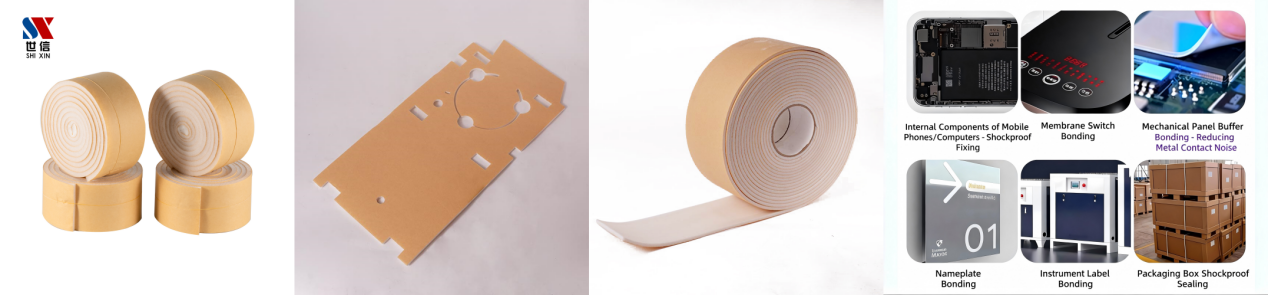
The versatility of double-sided PE foam tape is on full display across various industries. In the automotive sector, it is the standard method for attaching rearview mirrors, emblems, and side moldings. In construction, it's used for mounting signage, handrails, and architectural panels. In the electronics industry, it is crucial for assembling smartphones, tablets, and laptops, bonding screens to frames and securing internal components without the need for screws, which allows for slimmer, more elegant designs. Each of these applications relies on the tape's ability to provide a strong, durable, and stress-relieving bond.
When sourcing PE Polyethylene Adhesive Tapes, businesses face a key strategic decision: should they buy directly from a PE tape manufacturer or through a distributor/supplier? This choice has significant implications for cost, customization, quality control, and technical support. Understanding the distinct advantages of each model is crucial for developing an efficient and resilient supply chain. This section provides a clear analysis of both paths, helping you determine which sourcing strategy best aligns with your business's specific needs and long-term goals.
Working directly with a PE tape manufacturer offers several compelling benefits, particularly for businesses with large volume or unique requirements. The most significant advantage is customization. A manufacturer can work with you to develop a tape with a specific thickness, adhesive type, color, or release liner to perfectly match your application. This direct relationship also provides greater transparency and control over the manufacturing process and quality assurance. Furthermore, by cutting out the middleman, you can achieve a lower cost per unit, especially at higher volumes, leading to better long-term economics.
Suppliers and distributors play a vital role in the tape ecosystem, offering a different set of advantages. They typically carry a wide range of products from multiple manufacturers, giving you access to a broader selection without having to manage multiple relationships. They often offer lower Minimum Order Quantities (MOQs), which is ideal for small businesses or those testing new applications. Suppliers also provide value-added services such as local warehousing, just-in-time delivery, and consolidated shipping, which can simplify your logistics and reduce inventory holding costs.
The decision between a manufacturer and a supplier ultimately depends on your priorities. If your core need is a highly customized product, strict quality control, and the best possible price at scale, a direct relationship with a manufacturer is the clear choice. If you value flexibility, a wide product selection, low MOQs, and managed logistics, a supplier is likely a better fit. Many businesses even use a hybrid approach, working with a manufacturer for their core, high-volume products and a supplier for specialty or low-volume needs. A comparison table can help clarify the decision:
| Decision Factor | Manufacturer | Supplier/Distributor |
| Customization | High (Full customization) | Low (Limited to existing products) |
| Minimum Order Quantity (MOQ) | High | Low |
| Technical Support | Deep, in-depth product knowledge | General, across multiple brands |
| Unit Cost | Lower at high volumes | Higher, but includes service costs |
The typical shelf life of PE Polyethylene Adhesive Tapes is generally between 1 to 2 years when stored in proper conditions. To maximize shelf life, tapes should be stored in their original packaging, lying flat, in a climate-controlled environment. Ideal storage conditions are temperatures between 10°C (50°F) and 21°C (70°F) with less than 50% relative humidity. Storing tapes in extreme heat or cold, or in direct sunlight, can prematurely degrade the adhesive, reducing its performance and tack. Always check the manufacturer's recommendation for the specific shelf life of their product.
Yes, many PE Polyethylene Adhesive Tapes are specifically designed for outdoor use. The key is to select a tape with a UV-stable PE backing and a durable, weather-resistant adhesive, typically an acrylic-based one. These tapes are engineered to withstand prolonged exposure to sunlight, rain, and temperature fluctuations without significant degradation in their physical or adhesive properties. They are commonly used in outdoor applications like sealing window and door frames, mounting outdoor signage, and attaching exterior trim on vehicles. For any outdoor application, always verify the product's specifications for UV and weather resistance.
Removing the adhesive residue left by PE Polyethylene Adhesive Tapes can be done with the right technique and tools. First, try to peel off as much of the tape as possible. For the remaining residue, you can apply a small amount of adhesive remover (like a citrus-based remover or specialized solvent) to a clean cloth and gently rub the area. Alternatively, applying heat with a heat gun on a low setting can soften the adhesive, making it easier to scrape off with a plastic scraper. It's important to test any chemical remover on a small, inconspicuous area first to ensure it does not damage the underlying substrate.
The primary difference between PE tape and PVC tape lies in the material properties and resulting applications. PE (Polyethylene) tape is typically a foam tape that is very flexible, has excellent weather and UV resistance, and is used for sealing, cushioning, and bonding. PVC (Polyvinyl Chloride) tape is typically a solid, non-foamed film that is known for its excellent electrical insulation properties and abrasion resistance. PVC tape is commonly used for electrical wire wrapping and general-purpose bundling, while PE tape is preferred for applications requiring a compressible seal, like weather-stripping or NVH reduction.

Our company has been engaged in the tape manufacturing industry for more than 20 years, and has been focusing on various types of aluminum foil tapes, foam tapes, refrigerator tapes, etc.
IsabelLina
Email:[email protected]
Mobile/Whatsapp: +86 190 3379 1110
Mars Gong
Email:[email protected]
Mobile/Whatsapp: +86 159 5136 0053
Address: West side of Yingbin Avenue and south side of hengwang packaging. Suqian Economic and Technological Development Zone,Jiangsu Province
Copyright © Jiangsu Shixin Adhesive Tape Product Co., Ltd. All Rights Reserved. Custom ODM Refrigerator Foil Adhesive Tapes Manufacturers