2026-10-16
Content
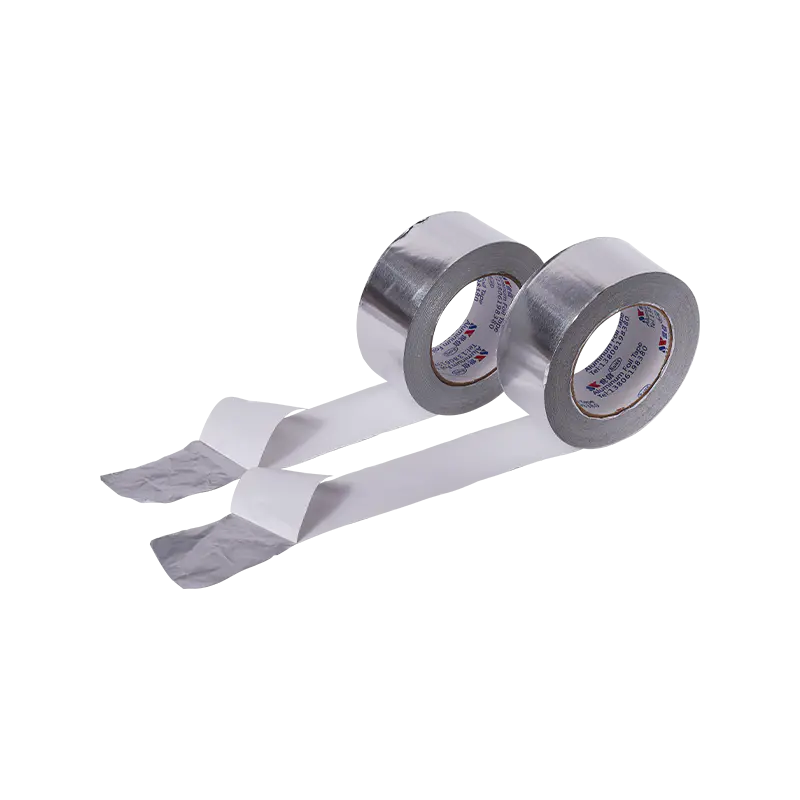
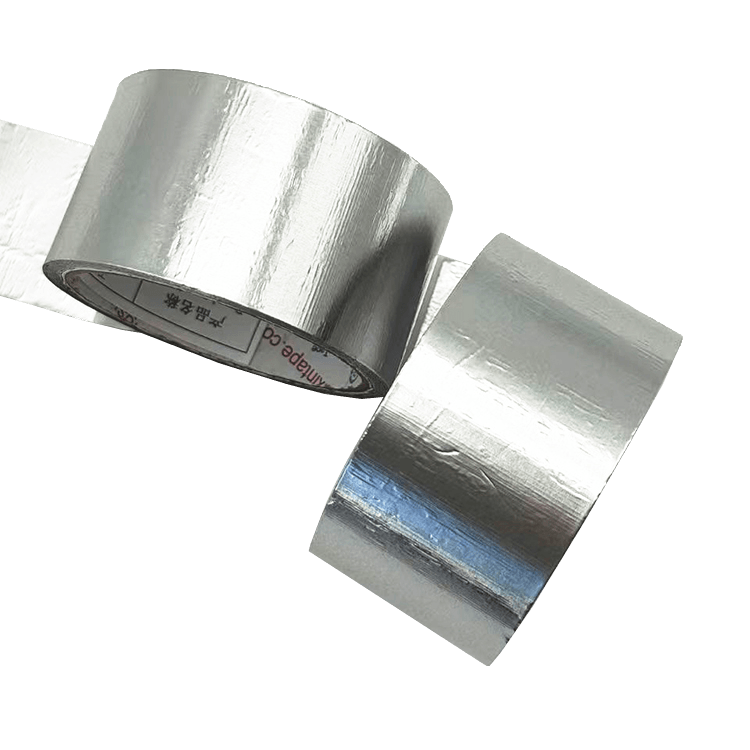
In the realm of modern thermal management, where flexibility, precision, and reliability are non-negotiable, Aluminum Foil Heating Element Tapes Material has emerged as a foundational technology. Moving far beyond simple warming patches, these sophisticated laminates are engineered systems that convert electrical energy into uniform, controllable heat across a vast array of surfaces and complex geometries. At their core, they represent a fusion of material science and electrical engineering, designed to solve heating challenges where traditional wire coils or rigid ceramic elements fail. From keeping critical aerospace sensors functional in frigid conditions to providing gentle, localized warmth in medical therapy devices, these tapes enable innovation by being thin, lightweight, and conformable. Understanding their construction, from the conductive aluminum foil pathways to the specialized insulating layers, is key to leveraging their full potential. This article delves deep into why this material is indispensable, exploring its composition, standout properties, diverse applications, and critical selection criteria for engineers and designers.
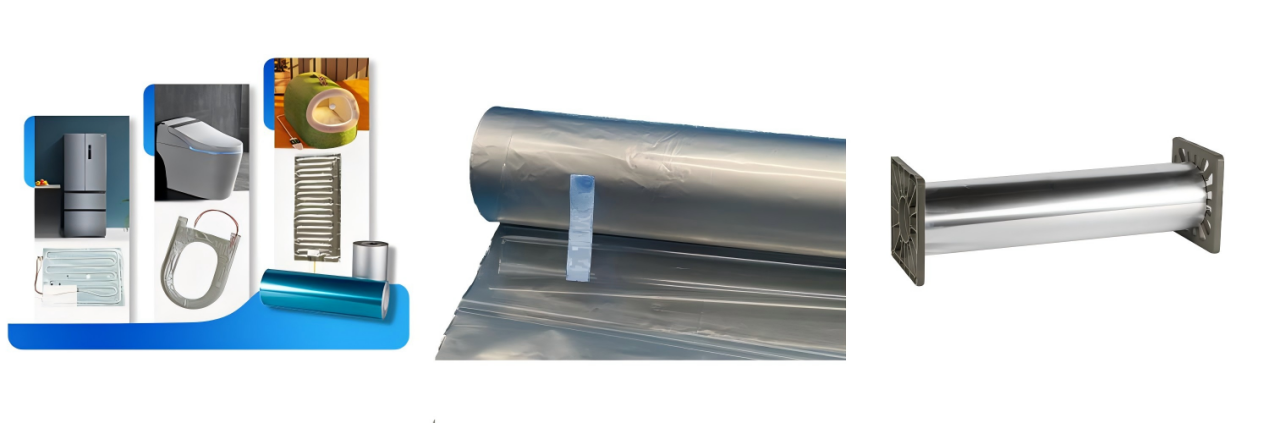
The advent of flexible heating solutions has revolutionized product design across industries. Aluminum Foil Heating Element Tapes Material sits at the heart of this revolution. Essentially, these are thin, laminated structures where a precisely etched aluminum foil circuit acts as the resistive heating element. When an electrical current passes through this foil pattern, its inherent resistance generates heat uniformly across its surface area. This fundamental principle is packaged into a durable, flexible tape format, enabling direct integration onto curved surfaces, moving parts, or within compact assemblies. The shift from bulky, brittle heaters to these thin-film systems offers unparalleled advantages, including improved thermal efficiency due to direct surface contact, reduced energy consumption, enhanced design freedom, and increased product reliability. They are not merely a component but an enabling technology that allows for smarter, lighter, and more user-centric thermal solutions.
The performance and reliability of a heating tape are dictated by its multilayer construction. Each layer serves a distinct and critical function, working in concert to produce safe, efficient, and durable heat. A typical flexible heater aluminum foil tape material stack-up is a marvel of material engineering. It begins with the core resistive element—the aluminum foil itself. The choice of alloy, temper, and thickness (often ranging from 0.0005" to 0.002") directly influences the electrical resistance, current carrying capacity, and mechanical durability of the heater. This foil is chemically or mechanically etched into a specific circuit pattern, which defines the heat distribution and wattage. Next, the adhesive layer bonds this element to insulating substrates. This is a critical junction; for some designs, a conductive adhesive aluminum foil heating tape is used to ensure electrical connection to bus bars, while in most areas, a non-conductive, thermally stable adhesive is essential for insulation.
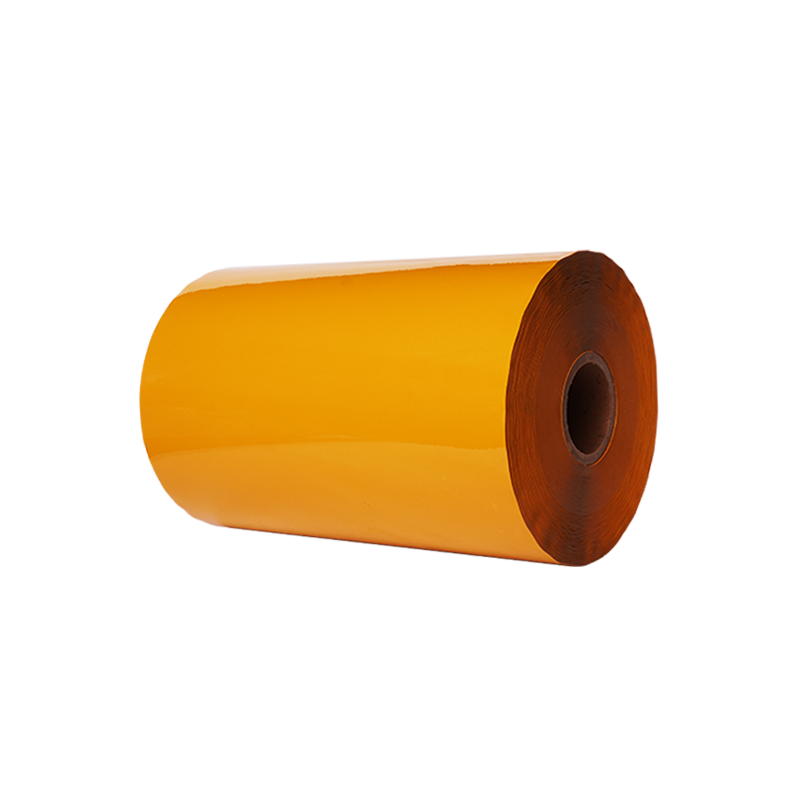
The foil and adhesive are then encapsulated between dielectric insulation layers. The choice of insulation is paramount for temperature rating and environmental protection. Polyimide (Kapton) film is a premier choice for many applications, leading to the common specification of polyimide aluminum foil tape for heating applications. It offers an excellent balance of high-temperature endurance, mechanical strength, and chemical resistance. For even higher temperatures or more demanding flex environments, silicone rubber or fiberglass-reinforced silicone composites are used. Finally, an optional protective overlaminate or pressure-sensitive adhesive (PSA) backing can be added for easy installation. This precise layering transforms simple materials into a robust, integrated heating system.
| Layer | Primary Material Options | Key Function |
| Resistive Element | Etched Aluminum Foil (Alloys 1145, 1235) | Generates heat through electrical resistance. |
| Adhesive | Acrylic, Silicone, Epoxy (Conductive or Non-Conductive) | Bonds layers; conductive adhesive connects circuit to power. |
| Dielectric Insulation | Polyimide Film, Silicone Rubber, Polyester | Electrically insulates the heating element for safety. |
| Protective Layer / Backing | Additional Polyimide, Silicone, PSA, Textile | Provides environmental sealing, mechanical protection, or easy mounting. |
Selecting the right Aluminum Foil Heating Element Tapes Material requires a thorough understanding of the key performance properties that ensure reliability in the target application. Foremost among these is thermal performance. A high temperature aluminum foil tape for heating elements must not only reach the desired operating temperature but do so stably and safely over thousands of cycles. The combination of the aluminum alloy's melting point and, more critically, the insulation material's continuous operating temperature (often 150°C for polyimide, up to 200°C+ for silicone) defines this ceiling. Equally important is electrical performance. The foil's resistivity and the designed circuit pattern determine the watt density (watts per square inch), which must be carefully calculated to avoid overheating the insulation or causing thermal runaway. Uniformity of heat is a hallmark of well-designed foil heaters, stemming from the consistent cross-section of the etched pathways.
Beyond heat and electricity, mechanical and environmental durability are crucial. Flexibility is a primary reason for choosing this technology; the tape must withstand repeated bending, folding, or vibration without cracking the foil or delaminating the layers. Resistance to moisture, chemicals, and abrasion is dictated by the outer insulation and sealing methods. For instance, a silicone rubber encapsulated heater offers superior moisture and chemical resistance compared to a basic polyimide laminate, making it suitable for harsh industrial or medical sterilization environments. These properties are not independent but interrelated, demanding a holistic view during the specification phase.
The unique attributes of flexible heater aluminum foil tape material have led to its adoption in a stunning variety of fields. In each case, it solves a specific thermal challenge that alternative technologies cannot address as effectively. In the medical and healthcare sector, patient comfort and safety are paramount. These tapes are integral to therapeutic heating pads, blood/IV fluid warmers, and respiratory therapy equipment, providing consistent, low-wattage heat that is controllable and safe for human contact. The aerospace and automotive industries leverage them for critical de-icing and anti-icing applications on wing edges, pilot tubes, and sensors, where low weight, reliability, and the ability to conform to aerodynamic surfaces are vital.
Consumer electronics utilize thin heating elements behind LCD screens in extreme climates to maintain functionality, or in battery packs to ensure optimal charging temperatures. Industrial applications are vast, ranging from maintaining process temperatures in fluid lines and analytical instruments to providing sealing heat in packaging machinery. The ability to create custom die cut aluminum foil heating element tapes in virtually any shape allows engineers to place heat exactly where it is needed, minimizing energy waste and maximizing system efficiency. This application diversity underscores the material's role as a versatile thermal tool.
| Industry | Typical Application | Key Requirement Met by Foil Tape |
| Medical Devices | Warming blankets, diagnostic equipment | Flexibility, biocompatibility, safe low-temperature heat. |
| Aerospace | Sensor heating, wing de-icing | Lightweight, conformable, high reliability in extreme temps. |
| Automotive | Seat heaters, mirror defoggers, EV battery thermal management | Durability, vibration resistance, efficient heat spread. |
| Industrial Manufacturing | Process pipe tracing, glue pot warming | High temperature tolerance, chemical resistance, custom shapes. |
Successfully implementing a heating tape solution is a meticulous process that begins with clear requirements. The path to specifying custom die cut aluminum foil heating element tapes involves defining several interdependent parameters. First, the thermal requirements: the desired operating temperature, ambient conditions, heat-up time, and total wattage needed. This determines the necessary watt density. Second, the electrical parameters: available voltage (AC or DC) and current limitations. Using Ohm's law and the foil's resistivity, this defines the circuit pattern's total resistance and trace geometry. Third, the mechanical and environmental constraints: the available space, required flexibility, exposure to moisture, chemicals, or abrasion. This drives the choice between a polyimide aluminum foil tape for heating applications for a clean, high-temp environment or a silicone rubber construction for a wet, abrasive one.
A critical, often overlooked, decision point is the electrical connection method. Using a conductive adhesive aluminum foil heating tape at the bus bar connection points can simplify assembly and improve reliability over mechanical crimping, especially in high-vibration environments. Finally, considering the manufacturing process—whether the tape will be supplied on a reel, as individual pieces, or with integrated sensors and controllers—is essential for integration. Engaging with experts early in the design phase can help navigate these choices to optimize performance, cost, and manufacturability.
Aluminum foil generates heat through the fundamental principle of Joule heating (also called resistive heating). When an electric current is forced to flow through the thin, etched aluminum foil pathways within the tape, it encounters electrical resistance. This resistance impedes the flow of electrons, causing kinetic energy to be converted into thermal energy (heat). The amount of heat generated is precisely calculated using the formula P = I²R (Power = Current squared x Resistance). By carefully engineering the foil's alloy, thickness, and the specific serpentine pattern it is etched into, manufacturers can control the tape's total resistance and, therefore, its heat output (wattage) and distribution across the surface, making Aluminum Foil Heating Element Tapes Material a highly predictable and efficient heat source.
The maximum operating temperature is not solely determined by the aluminum foil (which melts at ~660°C) but by the insulating materials that encapsulate it. For standard polyimide aluminum foil tape for heating applications, the continuous operating temperature typically ranges from 150°C to 180°C (302°F to 356°F), limited by the polyimide film. For more extreme environments, constructions using silicone rubber insulation or high-temperature polyimides can allow for continuous operation up to 220°C (428°F) or even higher for short periods. It is crucial to consult the manufacturer's specifications for both continuous and peak temperature ratings, as exceeding these can lead to insulation breakdown, delamination, and failure. Therefore, specifying a high temperature aluminum foil tape for heating elements requires matching its rated temperature to your application's maximum with a safety margin.
Yes, a primary advantage of this technology is its inherent flexibility. Flexible heater aluminum foil tape material is designed to be conformable. However, there are important limitations. They can be bent around static curves during initial installation, but sharp folds (creasing at a very small radius) should be avoided, as this can stress and potentially crack the etched foil circuit or the insulating layers, leading to a hot spot or open circuit. They are not designed for dynamic, repetitive flexing in operation (like on a continuously moving hinge). For applications requiring motion, specific constructions with more ductile foils and robust encapsulation (like silicone rubber) are used. Always follow the manufacturer's minimum bend radius specification, which is often 5-10 times the total thickness of the tape.
Determining the correct wattage and physical size requires a thermal calculation. First, identify the object you need to heat: its mass, material (specific heat capacity), and the desired temperature increase over a specific time. This gives you the total energy required. Second, account for heat losses to the environment via conduction, convection, and radiation, which is often the dominant factor in sustained heating. For simple estimates, online calculators or engineering handbooks provide heat loss formulas for common shapes. The required total wattage is the sum of the energy needed for the initial heat-up plus the continuous power to counteract losses. The size (area) of the heater is then determined by dividing the total wattage by a safe watt density (e.g., 5-10 W/in² for polyimide, higher for silicone). For complex projects, thermal simulation software or consultation with a manufacturer specializing in custom die cut aluminum foil heating element tapes is highly recommended.
Yes, but with critical caveats. Heating tapes can be manufactured to be safe for medical and food-contact applications, but not all standard tapes are suitable. Safety depends on the specific materials used in construction. For medical devices, materials must often be biocompatible, non-toxic, and capable of withstanding sterilization (e.g., autoclaving, gamma radiation, or EtO gas). Insulations like specific grades of silicone rubber are commonly used. For food-related applications, the materials must comply with relevant food safety regulations (like FDA 21 CFR in the U.S.), meaning they must not leach harmful substances under operating conditions. It is imperative to explicitly state the need for medical or food-grade compliance when sourcing conductive adhesive aluminum foil heating tape or any component, and to request documentation such as USP Class VI certification or FDA compliance statements from the material supplier and finished heater manufacturer.

Our company has been engaged in the tape manufacturing industry for more than 20 years, and has been focusing on various types of aluminum foil tapes, foam tapes, refrigerator tapes, etc.
IsabelLina
Email:[email protected]
Mobile/Whatsapp: +86 190 3379 1110
Mars Gong
Email:[email protected]
Mobile/Whatsapp: +86 159 5136 0053
Address: West side of Yingbin Avenue and south side of hengwang packaging. Suqian Economic and Technological Development Zone,Jiangsu Province
Copyright © Jiangsu Shixin Adhesive Tape Product Co., Ltd. All Rights Reserved. Custom ODM Refrigerator Foil Adhesive Tapes Manufacturers