2026-10-16
Content
In the realm of advanced material engineering and industrial assembly, the evolution of bonding technologies has shifted significantly from mechanical fastening to chemical adhesion. Double-Sided Adhesive Tape stands at the forefront of this transformation, offering a sophisticated solution for joining dissimilar substrates without the stress concentrations or thermal distortion caused by welding, screws, or rivets. Unlike traditional fasteners, these tapes distribute stress evenly across the entire bonded surface, providing a cleaner aesthetic and superior structural integrity. As we delve into the specifics of this technology, it becomes evident that not all tapes are created equal; the market is segmented by adhesive chemistry, carrier materials, and intended application environments. From mounting heavy exterior panels to delicate electronic component assembly, understanding the technical nuances of high-strength double-sided adhesive tape is essential for engineers and procurement specialists aiming to optimize production efficiency and product longevity.
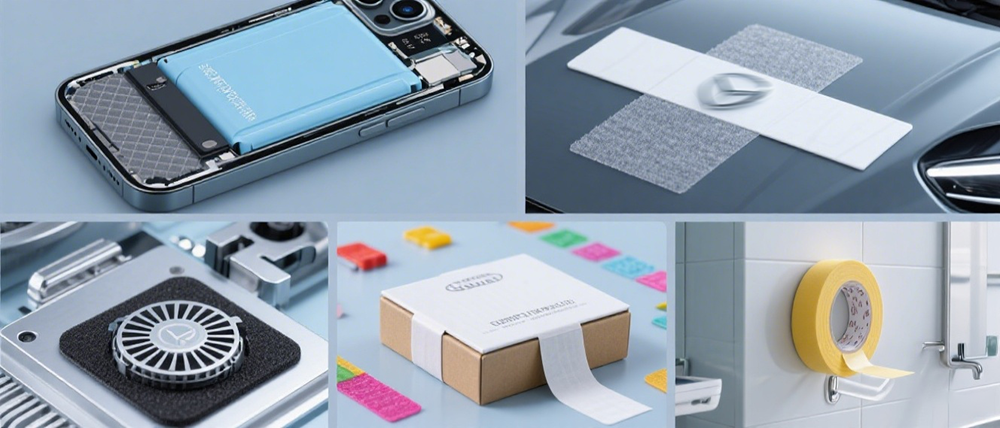
The selection of a bonding medium is critical in structural design, particularly where load-bearing capacity is non-negotiable. High-strength double-sided adhesive tape utilizes advanced acrylic or rubber-based formulations reinforced with high-tensile carriers, such as PET or non-woven scrims, to provide exceptional shear and peel strength. These tapes are engineered to replace mechanical fasteners in many applications, offering a continuous bond line that eliminates weak points associated with point-loading. This category of tape is indispensable in industries such as construction, automotive, and heavy manufacturing, where failure is not an option.
The primary advantage of high-strength variants is their ability to sustain significant static and dynamic loads. Unlike liquid adhesives that may require lengthy curing times, these tapes offer immediate handling strength, which speeds up assembly lines. The viscoelastic nature of the adhesive allows it to absorb energy and vibrations, making it ideal for dynamic applications.
Durability is defined by the tape's resistance to environmental stressors such as UV radiation, temperature fluctuations, and chemical exposure. High-strength tapes are often manufactured with modified acrylic polymers that maintain their properties over a wide temperature range, ensuring long-term performance in harsh conditions.
Despite their strong bonding capabilities, there are scenarios where high-strength double-sided adhesive tape must be removed, whether for repair, recycling, or retrofitting. The removal process can be challenging due to the high shear strength of the adhesive, often leaving behind stubborn residue that attracts dirt and ruins the finish. Understanding the correct removal techniques is crucial to maintaining substrate integrity.
Effective removal requires breaking the bond between the adhesive and the substrate without damaging the base material. This typically involves the application of heat to lower the adhesive's viscoelastic modulus, followed by a chemical solvent to dissolve the residue.
While removing residues, it is vital to protect the substrate from scratching or chemical etching. Using the right tools and techniques ensures that the surface remains ready for re-bonding or finishing.
| Surface Type | Recommended Removal Method |
| Glass | Razor blade scraper + Isopropyl alcohol |
| Painted Metal | Heat gun + Plastic scraper + Mild solvent |
| Plastic | Low heat + Adhesive remover wipe (to prevent stress cracking) |
Engineers frequently debate the merits of using double-sided tape vs glue for specific applications. While both methods aim to join materials, their operational mechanisms differ significantly. Liquid glues rely on chemical curing or evaporation to form a bond, whereas tapes provide instant tack and solid-state bonding. The choice between the two often depends on the manufacturing environment, the materials involved, and the desired production speed.
Double-sided tapes generally offer faster application speeds and immediate handling strength, whereas glues often require clamping and curing time. Furthermore, tapes provide a uniform thickness that can act as a spacer or sealant, a feature not inherent in liquid glues.
| Feature | Double-Sided Tape | Liquid Glue |
| Curing Time | Immediate handling strength | Minutes to hours (clamping required) |
| Mess | Clean, no dripping | Potential for drips and overflow |
| Thickness Control | Precise, uniform thickness | Variable, difficult to control |
| Vibration Damping | Excellent (viscoelastic properties) | Poor (rigid once cured) |
In high-volume manufacturing environments, time is money. Tapes eliminate the need for messy mixing or curing ovens, allowing for continuous workflow. This efficiency makes them the preferred choice in industries like automotive assembly and electronics manufacturing.
Beyond initial application, the long-term performance of tapes often surpasses that of glues due to their resistance to environmental fatigue. Glues can become brittle over time, while modern acrylic tapes retain their flexibility and bond strength. Additionally, the clean application process of tapes prevents contamination of sensitive electronic components.
The versatility of Double-Sided Adhesive Tape is vast, spanning across consumer, commercial, and industrial sectors. What is used for is a question that reveals the adaptability of this technology. It serves functions ranging from simple mounting to complex structural bonding.
In the automotive industry, weight reduction is a constant priority. Double-sided foam tape for automotive applications is widely used to attach trim, emblems, and body side moldings. The foam carrier acts as a gasket to seal out moisture and dust, while the adhesive bonds dissimilar materials like plastic trim to painted metal frames.
For DIY enthusiasts and professionals alike, these tapes simplify complex tasks. They are used for installing kitchen backsplashes, mounting heavy mirrors, and securing carpets. The ease of use makes them a superior alternative to nails and screws in many home renovation scenarios.
Not every application requires the same type of tape. Selecting the correct product based on environmental exposure and substrate material is critical for success.
Double-sided foam tape for automotive uses is specifically designed with closed-cell polyethylene or acrylic foam cores. These materials compress to accommodate thermal expansion and contraction between the vehicle body and the attached part, preventing the bond from failing due to differential movement.
When visual appearance is paramount, transparent double-sided adhesive tape is the ideal solution. Often used for mounting glass, acrylics, or clear display cases, these tapes are crystal clear to remain invisible, ensuring the aesthetics of the product are not compromised by visible fasteners.
Moist environments require specialized bonding solutions. Waterproof double-sided tape for bathroom installations typically features a rubber-based or modified acrylic adhesive that maintains its grip even when submerged in water or exposed to high humidity. This is essential for securing shower seals, towel racks, and soap dispensers.
For exterior applications, durability against the elements is non-negotiable. Heavy-duty double-sided mounting tape for outdoor use is engineered with UV-resistant backings and aggressive adhesives that can withstand extreme temperatures and weather cycles. It is commonly used for mounting house numbers, outdoor signs, and solar panels.
Selecting the right adhesive solution requires a partnership with a manufacturer that understands the technical nuances of bonding. Our company was registered and established in Wuxi, Jiangsu, in 2005, Wuxi Shixin Adhesive Tape Products Co., Ltd., mainly engaged in various adhesive tape products. We are Wholesale Ultra-Thin And Flexible Double-Sided Adhesive Tape Suppliers and China ODM Ultra-Thin And Flexible Double-Sided Adhesive Tape Factory and Producer. After nearly 20 years of persistence and struggle, the company has grown vigorously and gradually expanded in scale. In 2018, we invested in a new factory in Suqian, Jiangsu, and established Jiangsu Shixin Adhesive Tape Products Co., Ltd. At present, our company has become a high-tech enterprise integrating R&D, production, and sales. The company has always firmly believed in the belief that "quality and reputation are the foundation of survival", continuously cultivating technical personnel, strengthening the development of new products, improving sales support, and striving to provide customers with better products and services.
Acrylic tapes generally offer better aging resistance, UV stability, and higher temperature tolerance compared to rubber-based tapes. Rubber-based tapes offer higher initial tack and better adhesion to low surface energy plastics, but may degrade faster under UV exposure.
Yes, provided you use a heavy-duty double-sided mounting tape for outdoor use. These tapes are specifically engineered with high-performance adhesives and UV-resistant carriers to withstand environmental stress and hold significant weight over time.
The thickness of double-sided foam tape for automotive or construction use should be chosen based on the gap between substrates and the level of vibration or thermal expansion expected. Thicker tapes provide better conformability and dampening, while thinner tapes offer a more rigid bond.
While transparent double-sided adhesive tape has improved significantly in strength, it may not always match the sheer load-bearing capacity of thicker, opaque tapes reinforced with scrims. However, for aesthetic applications involving glass or clear plastics, it provides sufficient strength for lightweight to medium loads.
For best results with waterproof double-sided tape for bathroom use, the surface must be clean, dry, and free of dust or grease. Using an alcohol-based cleaner to wipe the surface before application ensures maximum adhesion and longevity of the bond in moist environments.

Our company has been engaged in the tape manufacturing industry for more than 20 years, and has been focusing on various types of aluminum foil tapes, foam tapes, refrigerator tapes, etc.
IsabelLina
Email:[email protected]
Mobile/Whatsapp: +86 190 3379 1110
Mars Gong
Email:[email protected]
Mobile/Whatsapp: +86 159 5136 0053
Address: West side of Yingbin Avenue and south side of hengwang packaging. Suqian Economic and Technological Development Zone,Jiangsu Province
Copyright © Jiangsu Shixin Adhesive Tape Product Co., Ltd. All Rights Reserved. Custom ODM Refrigerator Foil Adhesive Tapes Manufacturers