2026-10-23
Content
For procurement engineers and technical buyers, selecting an appropriate heat-resistant foil tape requires more than a cursory glance at temperature ratings. It demands a systematic evaluation of the adhesive's rheological behavior, the backing's metallurgical properties, and the composite's performance under specific environmental stressors. This guide provides an engineering-level analysis to inform bulk purchasing decisions.
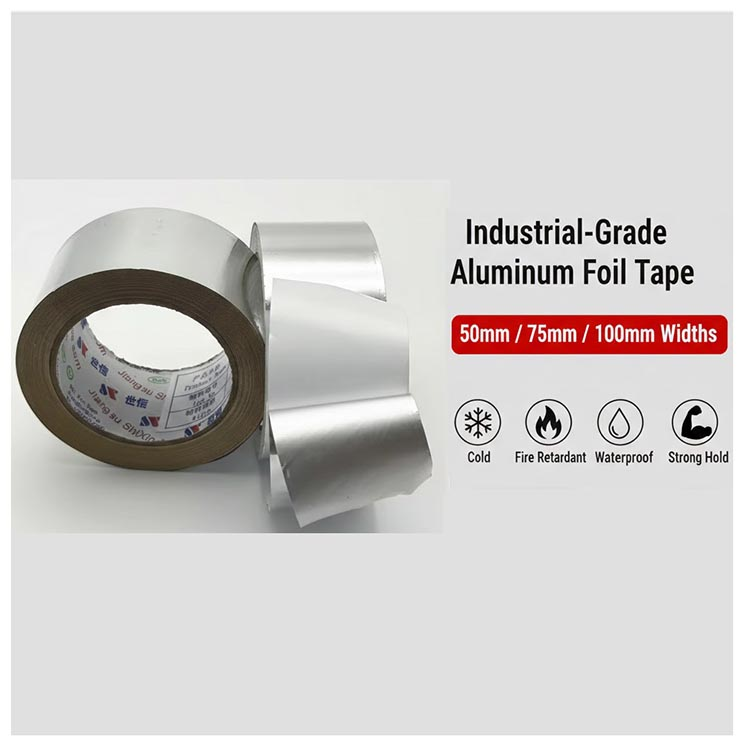
The performance envelope of a heat-resistant foil tape is defined by the interplay between its metal backing and the pressure-sensitive adhesive (PSA) system. The backing provides barrier properties, reflectivity, and mechanical strength, while the adhesive must maintain cohesive strength and bond integrity as temperatures approach the polymer's degradation point.
Adhesion at elevated temperatures is governed by the viscoelastic properties of the polymer. As temperature increases, the adhesive modulus decreases, potentially leading to cohesive failure if the polymer's molecular weight is insufficient. Cross-linked acrylics and silicones maintain their network structure due to covalent bonds between polymer chains, which resist flow and creep up to their decomposition temperature. The glass transition temperature (Tg) of the adhesive must be sufficiently below the service temperature to ensure wet-out, yet the cross-link density must be high enough to prevent shear failure.
The following table provides a comparative analysis of the primary adhesive chemistries used in high-temperature foil tapes, based on standard test methods (ASTM D3654 for shear, ASTM D3330 for peel).
| Adhesive Type | Max Continuous Service Temp (°C) | Initial Tack (Ball Tack, cm) | Shear Resistance @ 100°C (hours to failure, 1kg) | UV Resistance (QUV, hours to 50% adhesion loss) | Typical Application Cost Index |
|---|---|---|---|---|---|
| Cross-linked Acrylic | 150 - 200 | 5 - 15 (moderate) | > 100 | > 2000 | Medium |
| Silicone | 260 - 300 | 20 - 30+ (low) | > 200 | > 3000 | High |
| Thermosetting Rubber | 150 - 200 (after cure) | < 5 (low, after cure) | > 150 | 500 - 1000 | Medium-High |
| Standard Rubber-based | 80 - 120 | < 5 (high) | < 10 | < 500 | Low |
Dryer vent systems present a unique combination of thermal cycling, lint accumulation, and safety requirements. A heat resistant foil tape for dryer vent must be certified to specific building codes that standard foil tapes do not meet.
In North America, compliance with UL 181 is mandatory for tapes used to join or seal rigid fiberglass ductwork and flexible air ducts. For dryer vents specifically, the tape must also meet the requirements of UL 2158, which governs electric clothes dryers. The certification involves rigorous testing for flame propagation (ASTM E84), temperature resistance (sustained exposure to 121°C), and resistance to aging. Non-certified tapes present a fire hazard, as adhesive failure can allow lint to escape into wall cavities.
The following table quantifies the critical differences between a UL-listed heat resistant foil tape for dryer vent and a standard general-purpose foil tape.
| Property (Test Method) | UL 181 B-FX Listed Dryer Vent Tape | Standard General Purpose Foil Tape | Engineering Significance |
|---|---|---|---|
| Flame Spread Index (ASTM E84) | < 25 (Class A) | Often > 100 or untested | Prevents flame propagation along ductwork in case of lint fire |
| Smoke Developed Index (ASTM E84) | < 50 | Highly variable | Limits toxic smoke generation during combustion |
| Adhesion after Heat Aging (72h @ 121°C, % retention) | > 80% | Often < 50% or adhesive liquefies | Ensures long-term seal integrity under cycling dryer heat |
| Mandrel Bend Test (at -18°C) | No cracking or delamination | Frequent adhesive or backing fracture | Verifies low-temperature installation capability in unconditioned spaces |
In Heating, Ventilation, and Air Conditioning (HVAC) systems, high temperature aluminum foil tape for HVAC is critical for ensuring system efficiency and preventing air leakage, which can account for 20-30% of energy loss in ducted systems.
HVAC tapes must withstand both positive and negative static pressures (typically up to 2 inches of water column). They are subject to continuous temperatures ranging from -40°C in mixed-air plenums to 80°C near heating coils. The tape must accommodate the differential thermal expansion between the aluminum backing and the steel or fiberglass duct substrate. A coefficient of thermal expansion (CTE) mismatch that is too high can generate shear stress at the bond line, leading to "flagging" or edge lift.
The construction of the tape—specifically the backing gauge and reinforcement—dictates its suitability for various HVAC substrates.
| Product Type | Backing Material & Thickness | Adhesive Type & Coating Weight (gsm) | Tensile Strength (N/25mm, ASTM D3759) | Elongation at Break (%) | Ideal Substrate / Application |
|---|---|---|---|---|---|
| Dead Soft Aluminum | AA 1145 / 50-80 µm | Acrylic / 35-45 | 50 - 80 | 5 - 8 | Smooth metal ducts, rigid fiberglass board |
| Reinforced (Fiberglass Scrim) | Alu / 25-50 µm + fiberglass scrim | Acrylic / 45-55 | 100 - 150 | 8 - 15 | Punctures, tears, irregular surfaces, flex ducts |
| FSK (Foil/Scrim/Kraft) | Alu / 25 µm + scrim + kraft | Acrylic / 35-45 | 60 - 90 | 5 - 10 | Fiberglass duct board, insulation facing |
The terms are often used interchangeably, leading to specification errors. Understanding **heat resistant foil tape vs aluminum tape** requires a forensic look at the entire material composite.
"Aluminum tape" is a generic term describing any tape with an aluminum foil backing. "Heat-resistant" is a performance modifier that specifically refers to the adhesive's ability to maintain bond strength at elevated temperatures. A standard aluminum tape with rubber adhesive may fail cohesively at 80°C, leaving a molten residue, while a heat-resistant version with cross-linked acrylic will maintain its structure. For procurement, specifying the required service temperature and adhesive chemistry is essential.
This table delineates the engineering specifications separating a true high-performance heat-resistant foil tape from a standard commodity aluminum tape.
| Parameter (Test Method) | Heat-Resistant Foil Tape (Engineered Grade) | Standard Aluminum Tape (Commodity Grade) |
|---|---|---|
| Backing Alloy/Temper | 1145, 1200, 8011 - Dead Soft (O temper) | Variable, often harder temper (H18) |
| Backing Thickness (µm) | 50 - 120 | 25 - 50 |
| Adhesive Chemistry | Cross-linked Acrylic or Silicone | Standard Acrylic or Rubber-based |
| Service Temperature Range (°C) | -40 to +200 (acrylic) / -70 to +260 (silicone) | -20 to +80 |
| Shear Adhesion @ 100°C (hrs, 1kg/in², ASTM D3654) | > 24 hours (often > 100) | < 1 hour (rapid slippage) |
| Dielectric Strength (Volts) | Variable, can be >1000V with thicker backing | Low, <500V |
| Cost Index per m² | 1.5x - 3x | 1x (Baseline) |
Automotive under-hood and exhaust environments represent the pinnacle of performance demand for adhesive tapes. A **heat resistant foil tape automotive exhaust** application requires materials that can withstand thermal shock, vibration, and chemical exposure.
The exhaust system experiences thermal cycles from ambient (-40°C) to operating temperatures exceeding 600°C near the manifold. The tape must accommodate the radial expansion and contraction of pipes without delaminating. Furthermore, the adhesive must resist oxidation and hydrolysis from road salts and acidic exhaust condensate. For these reasons, silicone adhesives are the only viable option for direct exhaust contact, though specialized acrylics can be used for heat shielding further from the source.
The following table outlines the material specifications required for different zones of the exhaust system.
| Exhaust System Zone | Peak Temperature Range (°C) | Required Backing Material | Required Adhesive | Primary Failure Mode if Wrong Spec |
|---|---|---|---|---|
| Manifold / Turbocharger | 500 - 650 | Stainless Steel (SS 304/316) or Aluminized Steel | None (mechanical) or Ceramic-based | Adhesive carbonization, backing oxidation |
| Downpipe / Flex Joint | 400 - 550 | Stainless Steel reinforced | High-Temperature Silicone (with ceramic fillers) | Vibration-induced fatigue, thermal shock cracking |
| Mid-pipe / Resonator | 200 - 400 | Heavy-duty Aluminum (80-120µm) or Stainless Steel | Silicone | Adhesive oxidation, loss of bond |
| Muffler / Tailpipe | 80 - 200 | Reinforced Aluminum | Cross-linked Acrylic or Silicone | Chemical attack (road salts), delamination |
Roofing applications demand tapes that are both waterproof and resistant to thermal expansion. A **waterproof heat resistant foil tape for roofing** is used for sealing flashing, repairing metal roofs, and joining reflective insulation.
Roofing tapes face a combination of UV radiation, ponding water, and extreme temperature swings. The tape must maintain a watertight seal across seasons. The adhesive must resist plasticization by water (hydrolytic stability) and the backing must remain flexible at low temperatures to prevent cracking.
The table below summarizes the key performance indicators (KPIs) for roofing-grade foil tapes, based on industry standards.
| Performance Metric | Acceptable Specification | Relevant Test Method | Why It Matters |
|---|---|---|---|
| Water Resistance | No delamination, <5% adhesion loss after 7 days immersion in water at 23°C | ASTM D870 / ASTM D903 | Prevents leaks during rain and snow melt |
| UV Aging | < 25% loss of adhesion / No cracking after 2000 hours QUV (UVA-340) | ASTM G154, Cycle 1 | Ensures longevity in direct sunlight exposure |
| Low Temperature Flexibility | No cracking when bent over 25mm mandrel at -29°C | ASTM D1970 (modified) | Allows winter installation and prevents winter fracture |
| Heat Aging | 80% retention of tensile and adhesion after 30 days @ 80°C | ASTM D3611 | Simulates years of summer heat exposure |
| Peel Adhesion to Roofing Membranes | > 20 N/25mm on TPO/EPDM (with primer) | ASTM D3330 | Ensures secure bonding to common roofing substrates |
No. Standard aluminum tape lacks the UL 181 certification required by building codes for dryer vents. While it may stick initially, its adhesive will degrade under continuous heat (80-120°C cycles), leading to failure, lint escape, and a potential fire hazard. Only a certified heat resistant foil tape for dryer vent with verified flame and smoke ratings should be used.
Under a 1 kg load at 80°C, a high-temperature aluminum foil tape will hold for over 10,000 minutes (ASTM D3654), whereas standard duct tape (cloth-backed) will fail in under 10 minutes due to adhesive softening. For HVAC systems with positive pressure, this shear resistance is critical to preventing blow-outs.
Check the adhesive specification. If the application requires continuous service at 150°C, you need a tape with cross-linked acrylic or silicone adhesive. Standard aluminum tapes with rubber-based adhesives have a maximum service temperature of 80°C and will fail. Request a technical data sheet (TDS) specifying the "Maximum Operating Temperature" and "Shear Adhesion at High Temperature."
No, it is an emergency or temporary repair. While these tapes can withstand the temperatures, the vibration and thermal expansion of an exhaust system will eventually cause mechanical fatigue at the patch edges. For permanent repair, welding or mechanical clamping is required. The tape is designed for heat shielding, wrapping, and temporary sealing, not structural repair of pressure-containing components.
Not all, but many. Primer is strongly recommended on porous surfaces like wood or aged asphalt, and on low-surface-energy membranes like TPO or EPDM. On clean, bare metal (galvanized steel, aluminum flashing), high-performance acrylic adhesives can achieve 80-100% of their ultimate bond without primer, provided the surface is degreased and dry.
1. ASTM International. (2022). ASTM D3330/D3330M-22 Standard Test Method for Peel Adhesion of Pressure-Sensitive Tape. West Conshohocken, PA: ASTM International.
2. ASTM International. (2021). ASTM D3654/D3654M-22 Standard Test Method for Shear Adhesion of Pressure-Sensitive Tapes. West Conshohocken, PA: ASTM International.
3. UL Standards & Engagement. (2019). UL 181 Standard for Factory-Made Air Ducts and Air Connectors. Northbrook, IL: Underwriters Laboratories.
4. UL Standards & Engagement. (2017). UL 2158 Standard for Electric Clothes Dryers. Northbrook, IL: Underwriters Laboratories.
5. ASTM International. (2020). ASTM E84-20 Standard Test Method for Surface Burning Characteristics of Building Materials. West Conshohocken, PA: ASTM International.
6. ASTM International. (2019). ASTM G154-16 Standard Practice for Operating Fluorescent Ultraviolet (UV) Lamp Apparatus for Exposure of Nonmetallic Materials. West Conshohocken, PA: ASTM International.
7. Pressure Sensitive Tape Council. (2021). Test Methods for Pressure Sensitive Adhesive Tapes (15th Edition). Northbrook, IL: Pressure Sensitive Tape Council.
8. International Code Council. (2021). International Mechanical Code (IMC). Country Club Hills, IL: International Code Council. (See Chapter 6 - Duct Systems).

Our company has been engaged in the tape manufacturing industry for more than 20 years, and has been focusing on various types of aluminum foil tapes, foam tapes, refrigerator tapes, etc.
IsabelLina
Email:[email protected]
Mobile/Whatsapp: +86 190 3379 1110
Mars Gong
Email:[email protected]
Mobile/Whatsapp: +86 159 5136 0053
Address: West side of Yingbin Avenue and south side of hengwang packaging. Suqian Economic and Technological Development Zone,Jiangsu Province
Copyright © Jiangsu Shixin Adhesive Tape Product Co., Ltd. All Rights Reserved. Custom ODM Refrigerator Foil Adhesive Tapes Manufacturers