2026-09-24
Content
Direct Answer
At -40°C, the published temperature rating on an aluminum foil tape data sheet is only one part of the selection equation. The adhesive chemistry, the temperature during actual installation, the substrate surface condition, condensation exposure, thermal cycling frequency, and required service life all determine whether your tape bonds reliably or fails within weeks. Acrylic adhesive carries real performance risk as temperatures approach and pass -30°C. Silicone adhesive is the safer evaluation path for continuous -40°C service, refrigeration equipment manufacturing, cold storage construction, and any application where rework or tape failure creates significant operational cost.
Most procurement conversations about cold temperature aluminum foil tape begin with a single question: what is the minimum temperature rating? It is an understandable starting point. Temperature is a concrete, measurable specification that appears clearly on every product data sheet. But in real industrial environments, relying on this number alone creates a false sense of safety that leads to field failures, rework costs, and in severe cases, compromised insulation performance that affects the energy efficiency and regulatory compliance of an entire refrigeration or cold storage system.
The aluminum foil carrier in aluminum foil tape is, by itself, highly stable at -40°C. Soft aluminum does not become brittle at sub-zero temperatures the way many polymers do. It retains its barrier properties, reflectivity, conformability, and dimensional stability. The problem is almost never the foil. The problem is the adhesive layer, and the adhesive's interaction with the substrate, the application conditions, and the long-term stress environment of the installation.
This is why selecting aluminum foil tape for -40°C applications requires a full application review, not a data sheet comparison. Buyers working in cold storage construction, refrigeration equipment manufacturing, pipe insulation in cold climates, HVAC duct sealing in sub-zero regions, and industrial freezer environments all need to work through the same set of questions before confirming a specification. The temperature rating is where the review starts, not where it ends.
Understanding what actually changes in an adhesive at -40°C, what distinguishes acrylic from silicone adhesive behavior at low temperatures, and how lined aluminum foil tape differs from standard unlined tape in cold manufacturing environments gives buyers the framework to make a specification decision that will hold up in the field over the full service life of the installation.
Pressure-sensitive adhesives work by flowing slightly under applied pressure to create intimate molecular contact with the substrate surface. This flow, called viscoelastic deformation, is what creates both the initial tack you feel when you press tape against a surface and the long-term peel resistance that keeps it bonded. The degree to which an adhesive can flow is fundamentally a function of temperature and the adhesive's glass transition temperature, commonly written as Tg.
The glass transition temperature is the point at which an adhesive shifts from a rubbery, flexible, flow-capable state to a glassy, rigid, brittle state. Above Tg, the adhesive behaves like a soft solid that can deform to match the substrate. Below Tg, the adhesive behaves more like a hard plastic, with sharply reduced ability to wet out surfaces, absorb stress, or conform to surface irregularities.
Standard acrylic adhesive formulations used in general-purpose aluminum foil tape for HVAC and insulation typically have Tg values in the range of -20°C to -30°C. This means that at -40°C service temperatures, the adhesive is operating well below its glass transition point. In practical terms, several things happen simultaneously:
Silicone adhesive behaves fundamentally differently because silicone polymer backbones have inherently low glass transition temperatures, often in the range of -60°C to -70°C depending on the formulation. At -40°C, a silicone adhesive is still well above its Tg, still in its viscoelastic operating range, and still capable of maintaining intimate substrate contact, absorbing thermal expansion stress, and resisting peel forces. This physical difference is the foundation of why acrylic versus silicone adhesive tape comparison matters so much in extreme cold applications.
It is also why laboratory data sheets showing a minimum service temperature can be misleading. A tape may technically survive -40°C in the sense that the adhesive does not crack or delaminate catastrophically under static conditions. But surviving a temperature is not the same as performing reliably at that temperature across the range of substrate conditions, application variables, and mechanical stresses that occur in real installations.
Acrylic adhesive is the right choice for a very wide range of aluminum foil tape applications. It provides excellent UV resistance, good aging stability, clean appearance, compatibility with most common HVAC and insulation substrates, and competitive cost at scale. Understanding where it performs well and where it begins to struggle is the foundation of a rational selection decision, not a reason to automatically reject it for cold applications.
Acrylic aluminum foil tape performs reliably and cost-effectively in the following application contexts:
The risk profile of acrylic adhesive tape changes significantly in the following conditions, which are common in aluminum foil tape for refrigeration and low temperature insulation applications:
A realistic assessment of acrylic adhesive tape for -40°C applications is: it may be acceptable for specific controlled conditions, but the margin of safety is narrow, and any deviation from ideal application conditions — slightly cold substrate, surface contamination, curved geometry, or high cycling frequency — moves the probability of premature failure from low to significant.
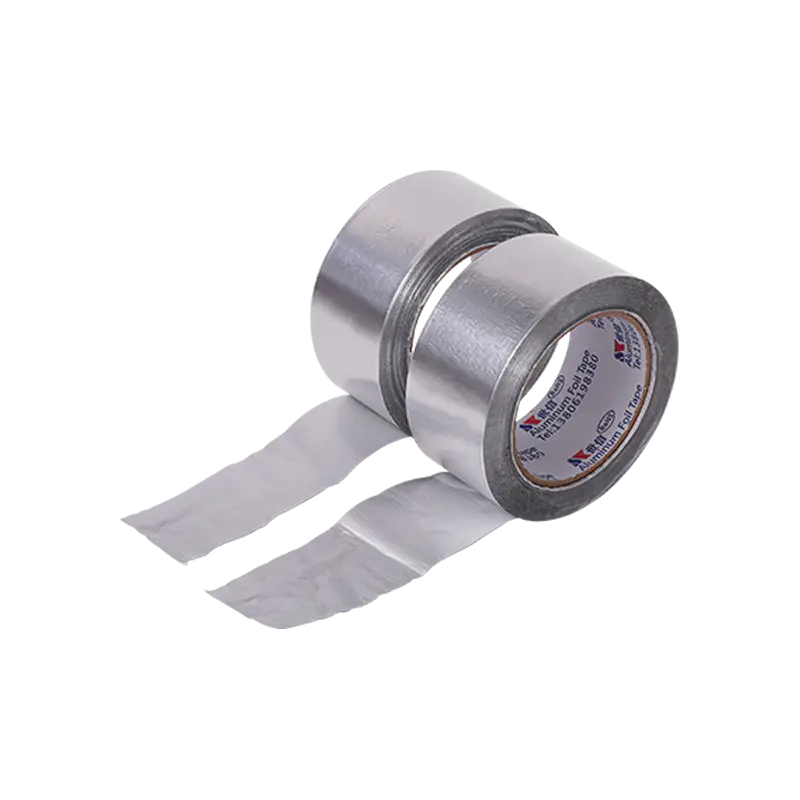
Silicone adhesive aluminum foil tape carries a higher unit cost than acrylic alternatives. Depending on tape structure, width, adhesive thickness, and specification tier, the premium typically ranges from 1.5 times to 3 times the acrylic version cost. This premium is clearly justified in specific application contexts, and clearly not justified in others. The decision should always be driven by the actual application requirements, not by a general preference for a more expensive material.
Silicone adhesive aluminum foil tape is the appropriate evaluation path when one or more of the following conditions apply:
Silicone adhesive is not automatically superior in every situation, and should not be specified by default simply because it sounds more robust. For standard HVAC duct sealing at ambient temperatures, silicone adhesive provides no meaningful performance advantage over quality acrylic, and the cost premium is not recoverable in any real application benefit. Specifying silicone adhesive where acrylic is perfectly adequate increases project cost without improving outcomes.
The correct approach is always application-first: define the temperature regime, application conditions, substrate, service life, and rework risk, then select the adhesive system that provides adequate performance at appropriate cost.
One of the most consistent and costly misunderstandings in cold temperature aluminum foil tape selection is conflating application temperature with service temperature. These are different specifications that describe different moments in the tape's life cycle, and both must be explicitly checked against actual project conditions.
|
Parameter |
What It Describes |
Why It Matters |
Common Specification Error |
|
Application Temperature |
Temperature of the substrate and surrounding environment at the moment the tape is physically applied and pressed down |
Determines whether the adhesive can wet the surface and build initial bond during and after application |
Assuming the service temperature range covers application temperature — it does not |
|
Minimum Service Temperature |
Lowest temperature the bonded tape will experience at any point during its operational life |
Determines whether the adhesive retains flexibility, peel resistance, and cohesive strength throughout the service life |
Treating the data sheet service temp as the only variable to check |
|
Acrylic Application Range |
Typically +5°C to +40°C for standard formulations; some cold-formulated acrylics to -5°C |
Tape must be applied above this minimum even if it is rated for -40°C service temperature |
Applying tape to cold surfaces during cold storage commissioning when facility is already at operating temperature |
|
Silicone Application Range |
Some formulations allow application from -10°C to -20°C, depending on adhesive design |
Enables in-situ repair and installation on cold equipment and cold surfaces without substrate pre-warming |
Assuming all silicone adhesive tapes have the same cold application capability — formulations vary |
A recurring real-world failure scenario illustrates why this distinction is so important. A buyer specifies acrylic aluminum foil tape rated to -40°C minimum service temperature for a cold storage room project. The specification is confirmed, the tape is delivered, and installation begins. However, the facility is being brought down to operating temperature concurrently with installation. Substrate temperature during tape application is -12°C. The acrylic adhesive cannot develop adequate initial bond at this temperature. Within six to eight weeks of operation, tape seams begin lifting, vapor barriers are compromised, condensation forms inside wall panels, and the facility's thermal efficiency drops. The tape itself was not defective by specification — it was applied outside its application temperature window under conditions that guaranteed underperformance.
Preventing this failure requires explicit specification of both parameters, explicit communication with the installation team about minimum substrate temperature during application, and confirmation from the tape supplier that the specific product's application temperature range is appropriate for the actual installation conditions, not just the operating conditions.
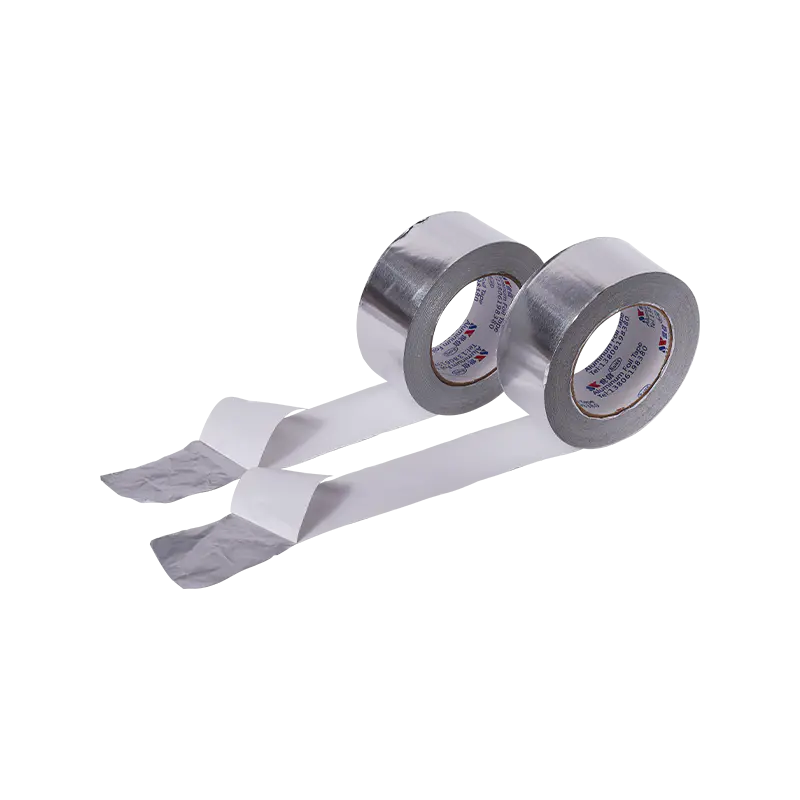
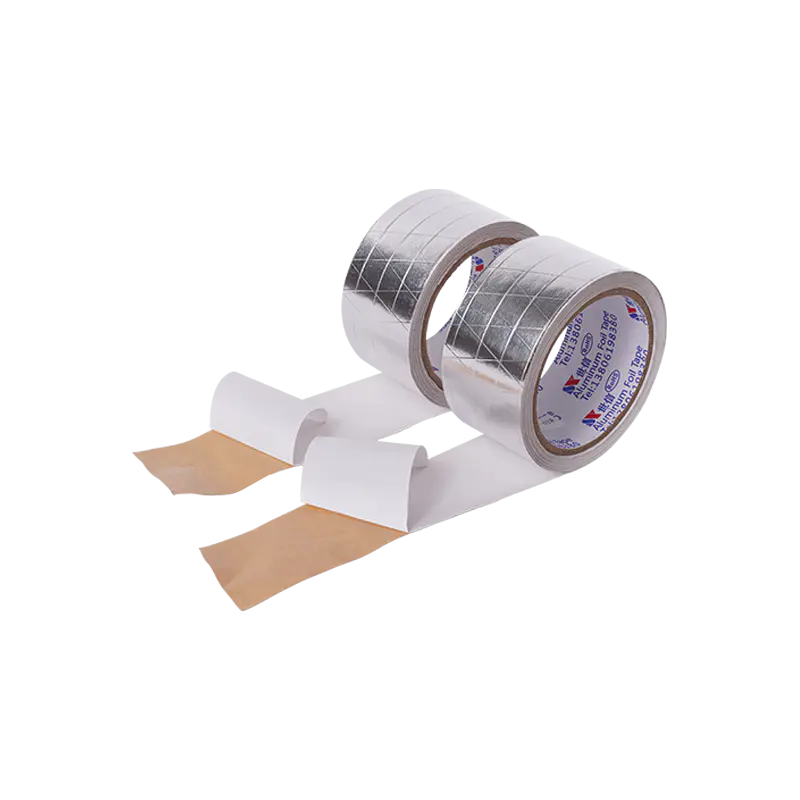
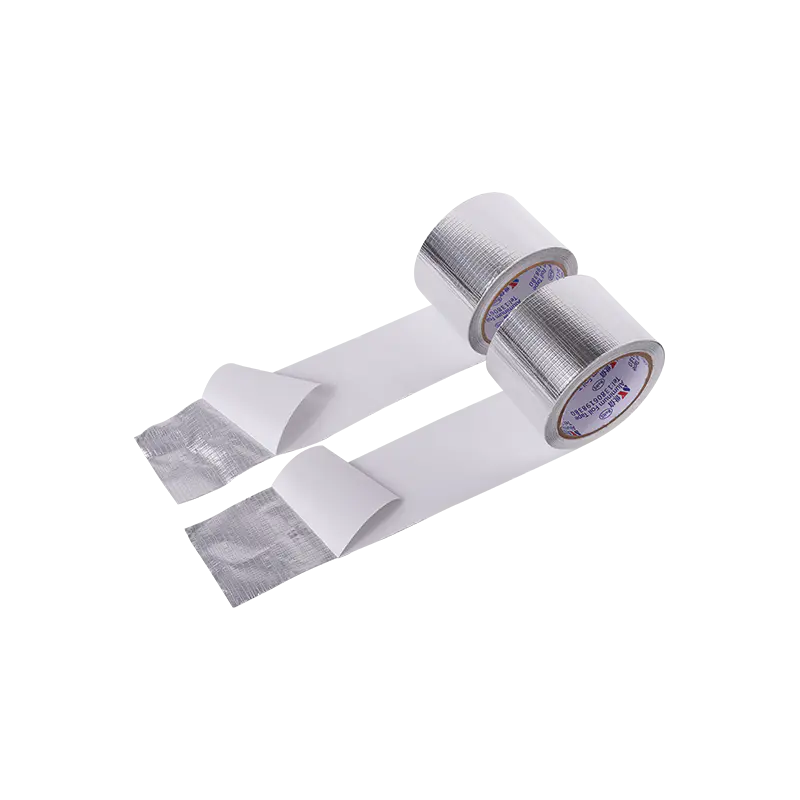
Lined aluminum foil tape is tape supplied with a silicone-coated release liner protecting the adhesive surface before application. This is a standard product configuration for many industrial tape applications, and in cold-environment contexts it provides benefits that go well beyond simple handling convenience.
In ambient temperature applications, the primary value of a liner is protecting the adhesive and enabling easier application. In cold-environment applications, the liner serves additional functions:
A critical specification point that buyers and suppliers often overlook is liner release force at cold temperature. Release force is measured at standard laboratory conditions, typically 23°C. But silicone release coatings on liners behave differently at -10°C or -20°C. Liner release force can increase by 50 to 100 percent at cold application temperatures depending on the liner material and release coating type. This means a liner that releases cleanly and consistently at ambient temperature may require significantly more force at cold temperature, potentially causing the tape to stretch, distort, or partially delaminate before application.
For lined aluminum foil tape specified for cold storage or refrigeration manufacturing applications, buyers should explicitly request liner release force data at the actual application temperature, not just at 23°C. This detail is absent from most standard data sheets but is critical for production reliability in cold manufacturing environments.
The correct specification for a cold-environment lined aluminum foil tape combines the right adhesive chemistry (silicone for demanding -40°C applications) with a liner formulated for consistent release at the actual application temperature, a liner thickness and stiffness appropriate for the die-cutting or hand application process, and a liner width adequate for gloved-hand handling where relevant.
Cold environments introduce surface conditions that are rare or absent in ambient-temperature installations. Each of these conditions can independently drive adhesion failure even when the adhesive is correctly specified for the temperature range. Understanding them is essential for anyone specifying low temperature insulation tape for real-world cold applications.
Different cold-temperature applications have distinct requirements that call for different tape structures and adhesive systems. The following table consolidates practical selection guidance based on application type, typical service temperature, and primary performance requirements. This is a directional framework, not a substitute for application-specific technical review and sample testing.
|
Application |
Typical Service Temp |
Recommended Direction |
Key Specification Focus |
|
HVAC duct sealing, commercial buildings |
-10°C to +60°C |
Standard acrylic aluminum foil tape |
UL 181 compliance, aging resistance, metal surface adhesion, clean appearance |
|
Cold storage construction, warehouse freezers |
-25°C to -40°C continuous |
Silicone adhesive aluminum foil tape or cold-formulated high-performance acrylic — sample test required |
Application temperature window, long-term bond stability, condensation tolerance |
|
Refrigerator and freezer cabinet manufacturing |
-18°C to -40°C |
Lined aluminum foil tape with silicone adhesive |
Die-cut accuracy, liner release force at application temperature, production speed compatibility |
|
Refrigerant pipe insulation, cold climate outdoor |
-30°C to -40°C with UV exposure |
Reinforced lined aluminum foil tape, silicone adhesive |
Curved surface conformability, edge sealing, UV and weathering resistance |
|
Blast freezing tunnels and IQF equipment |
-40°C cycling to ambient daily |
Silicone adhesive aluminum foil tape |
Thermal cycling fatigue resistance, vibration resistance, food-grade cleaning chemical compatibility |
|
Cold-region industrial pipeline insulation |
-40°C continuous, long maintenance interval |
Heavy-gauge reinforced aluminum foil tape, silicone adhesive, UV-stable formulation |
10+ year service life, mechanical protection of insulation, weather and UV resistance |
|
Cold-room seam vapor barrier sealing |
-20°C to -40°C |
Aluminum foil tape with silicone adhesive; apply before cold-down or at application temp minimum |
Vapor barrier continuity, edge sealing on insulation panel faces, application temperature compliance |
|
Food processing equipment, cold washdown areas |
-15°C to +5°C with frequent washdown |
Acrylic or silicone adhesive depending on temperature; food-grade compatibility required |
Moisture and chemical resistance, food-grade certification, surface compatibility with stainless steel |
Before confirming any order for cold temperature aluminum foil tape, working through a systematic checklist prevents the most common causes of field failure. Each item below represents a specification variable that has driven tape failure in real cold-environment installations. None of these can be substituted with a general data sheet temperature rating.
For cold temperature aluminum foil tape applications where failure risk is significant, sample testing under conditions that replicate the actual installation is the single most effective risk reduction step available before bulk order commitment. Standard laboratory peel strength data measured at 23°C on stainless steel test panels does not predict performance on cold polyurethane foam panels during a cold storage commissioning process. The two conditions are simply not comparable.
A meaningful sample test protocol for -40°C applications should include the following elements:
Suppliers who can provide samples, offer technical guidance on test protocol, supply test condition-specific performance data, and engage with the application requirements rather than simply providing a generic data sheet represent a meaningfully lower supply risk for cold-environment tape specifications. This level of technical engagement is especially important for lined aluminum foil tape in refrigeration manufacturing where production reliability depends on tape consistency across thousands of pieces per day.
Shixin Tape approaches aluminum foil tape supply for cold-temperature and refrigeration applications as a technical selection process rather than a catalog transaction. For overseas buyers working in cold storage construction, refrigeration equipment manufacturing, HVAC contracting in cold climates, industrial insulation, or cold-region pipeline work, this means engaging with the actual application environment before recommending a product.
For low-temperature aluminum foil tape projects, Shixin Tape provides structured support across the following areas:
For buyers who have experienced tape failure in cold environments, or who are entering cold-temperature applications for the first time, this application-first supply model reduces the probability of specifying a product that passes the data sheet check but fails in the field — the most expensive outcome in any cold insulation or refrigeration project.
Performance at -40°C depends on adhesive type, application temperature, substrate surface condition, condensation exposure, thermal cycling frequency, and required service life. The aluminum foil carrier is stable at -40°C. The adhesive is the critical variable. Silicone adhesive versions are more reliably specified for continuous -40°C service because silicone polymer chains retain flexibility and flow well below -40°C. Acrylic adhesive versions may be acceptable in specific controlled conditions but carry meaningful performance risk when applied to cold substrates, in condensation-prone environments, or in high thermal cycling applications. Testing under actual application conditions before bulk order is strongly recommended for any -40°C specification.
Acrylic adhesive is the standard for HVAC and general insulation applications. It provides good aging resistance, UV stability, and cost efficiency. However, its glass transition temperature is typically around -20°C to -30°C, meaning it becomes stiffer and less effective as a bonding agent near and below these temperatures. Silicone adhesive has a glass transition temperature below -60°C, maintaining flexibility, flow, and peel resistance at -40°C and below. This physical difference makes silicone adhesive the appropriate evaluation for continuous cold service, cold application conditions, and high thermal cycling environments.
Lined aluminum foil tape provides several specific advantages in refrigeration and cold storage manufacturing. The release liner protects the adhesive from contamination during storage and handling. It enables precise die-cutting into custom shapes for panel sealing. It allows accurate placement in automated application equipment. It protects the adhesive from cold-environment condensation until the moment of application. And it enables workers wearing gloves to handle and apply tape reliably without misalignment or wrinkles. For production environments where taping accuracy affects insulation effectiveness and energy ratings, lined tape provides quality and production speed benefits that outweigh the modest cost premium over unlined tape.
Standard acrylic aluminum foil tape typically requires application at a minimum substrate temperature of +5°C, even if its service temperature rating extends to -40°C. Some cold-formulated acrylic adhesive tapes allow application to 0°C or -5°C. Certain silicone adhesive tapes allow application from -10°C to -20°C depending on formulation. Applying tape below its minimum application temperature prevents the adhesive from developing adequate initial bond, resulting in early failure even if the service temperature specification is correct. Always confirm both the minimum application temperature and the minimum service temperature for any cold-environment tape specification, and ensure installation procedures comply with the application temperature requirement.
Apply tape samples to the actual project substrate at the actual application temperature. Condition bonded samples at -40°C for a minimum of 72 hours before measuring peel strength. Measure peel strength at -40°C, not after returning to ambient temperature. Run thermal cycling tests with at least 10 to 20 cycles between -40°C and ambient, and inspect for edge lifting and adhesive integrity after cycling. For lined tape, measure liner release force at the actual cold application temperature, not just at 23°C. Condensation exposure tests are advisable when moisture risk exists in the application. These tests reflect real application conditions and provide meaningful performance prediction that standard laboratory data cannot.
Not always. For applications where the tape is applied at ambient temperature before cold-down, the service temperature stays above -25°C reliably, surfaces are clean and dry, geometry is flat, and thermal cycling is infrequent, a high-quality cold-formulated acrylic adhesive tape may perform adequately. However, the margin of safety is narrow, and any deviation from these controlled conditions moves the failure risk from low to significant. For applications with continuous -40°C service, cold application conditions, condensation exposure, high cycling frequency, or high rework cost, silicone adhesive is the appropriate evaluation path. Sample testing under real conditions is the only reliable way to confirm which adhesive system is adequate for a specific application.
Conclusion
Selecting aluminum foil tape for -40°C environments requires evaluating the complete application picture. The published temperature rating is a starting point, not a complete specification. Adhesive chemistry — acrylic versus silicone — determines whether the tape builds bond at cold application temperatures, maintains peel strength and flexibility through continuous cold service, and survives repeated thermal cycling without progressive delamination. Lined aluminum foil tape adds production precision and adhesive protection that are especially valuable in refrigeration manufacturing, die-cutting applications, and gloved-hand installation in cold facilities. Surface preparation, condensation management, substrate geometry, thermal cycling frequency, mechanical vibration, and service life requirement all complete the specification and determine whether the tape performs reliably or fails under the demands of the real cold environment. For cold storage construction, refrigeration equipment manufacturing, refrigerant pipe insulation in cold climates, and industrial freezer applications, engaging with a supplier who supports application-specific technical review and real-condition sample testing before bulk commitment is the most practical and cost-effective risk reduction approach available.

Our company has been engaged in the tape manufacturing industry for more than 20 years, and has been focusing on various types of aluminum foil tapes, foam tapes, refrigerator tapes, etc.
IsabelLina
Email:[email protected]
Mobile/Whatsapp: +86 190 3379 1110
Mars Gong
Email:[email protected]
Mobile/Whatsapp: +86 159 5136 0053
Address: West side of Yingbin Avenue and south side of hengwang packaging. Suqian Economic and Technological Development Zone,Jiangsu Province
Copyright © Jiangsu Shixin Adhesive Tape Product Co., Ltd. All Rights Reserved. Custom ODM Refrigerator Foil Adhesive Tapes Manufacturers