2026-10-29
For refrigerator and freezer assembly, the right blue PET fixing tape must hold components during production and transport, yet release cleanly when removed. This guide helps OEM buyers and process engineers specify a suitable PET film construction, adhesion target, slit width and production-ready roll format, then verify performance on actual parts.
What Changes When Blue PET Fixing Tape Is Customized?
Custom blue PET fixing tape uses a polyester film backing and an adhesive system selected for the intended substrate and removal conditions. Shixin’s published fixing-tape range includes linerless rolls with a release-treated film backing. Width, roll length, core dimensions and unwind behavior may be evaluated for a particular assembly process; optional liner-backed formats require project-specific feasibility confirmation.
A standard roll offers available widths and established model specifications. A custom-converted format is defined by the customer’s actual part dimensions, application method, holding period and removal requirements. The aim is not to maximize every parameter, but to achieve stable fixing and clean removal in serial production.
Standard PET fixing tape
Project-specific PET fixing tape
Six Specification Variables That Affect Production Performance
A workable RFQ should describe the film, adhesive, measured bonding performance and converted roll format. These variables can affect application stability, production efficiency and procurement cost, but available options must be checked against the proposed product grade.
For standard PET fixing tapes, consult the No-Residue PET Temporary Fixing Tape product specifications before requesting changes to the construction.
|
PET film thickness |
Balance flexibility, tensile behavior and ease of handling |
Confirm model-specific thickness and dimensional tolerance |
|
Adhesive system |
Natural-rubber or solvent-based acrylic grades are listed in Shixin PET fixing products |
Do not confuse polymer family with coating process; confirm exact grade |
|
Adhesion and removal |
Specify initial tack, peel adhesion, dwell and residue criteria separately |
Test on real appliance substrates under agreed conditions |
|
Release construction |
Linerless release-treated backing is published; lined options require feasibility check |
Check unwind behavior; if lined, specify release force |
|
Slit width and tolerance |
Nominal width plus an agreed allowable deviation |
Prevent overhang, incomplete coverage and feed-position errors |
|
Roll format |
Roll length, core diameter, winding direction and splice allowance |
Verify compatibility with applicator and changeover plan |
Specify Peel Adhesion, Initial Tack and Clean Removal Separately
A very aggressive adhesive is not automatically the safest option for temporary fixing. Refrigerator shelves, drawers and interior components must remain secure during handling or transport, but the tape may also need to peel away without residue or surface damage at unpacking or inspection.
Initial tack indicates how readily a tape grabs during light contact; peel adhesion measures resistance to removal under an agreed test method; holding power addresses resistance to movement under load. These are different properties. State the test substrate, dwell time, test conditions and removal window rather than treating a single “stickiness” number as sufficient.
The substrate is critical. A PET tape that works on pre-coated metal may behave differently on ABS, HIPS or polypropylene refrigerator components because of surface energy, texture, coatings and possible mold-release contamination. Test on actual component surfaces; a steel-panel result alone does not establish suitability for a specific refrigerator part.
 Reference: No-Residue PET Temporary Fixing Tape. Confirm the intended model, film specification and adhesive before placing an order.
Linerless Release, Width and Core: Specifications for Reliable Feeding
The published Shixin PET fixing-tape construction is linerless and uses a release-treated backing to support unwinding. On an automated or semi-automated line, unwind force, web tension, edge quality, core fit and roll diameter can all influence feed stability. A separate removable liner should not be assumed unless the proposed tape format has been confirmed.
Why Blue Visibility Matters in Refrigerator Assembly
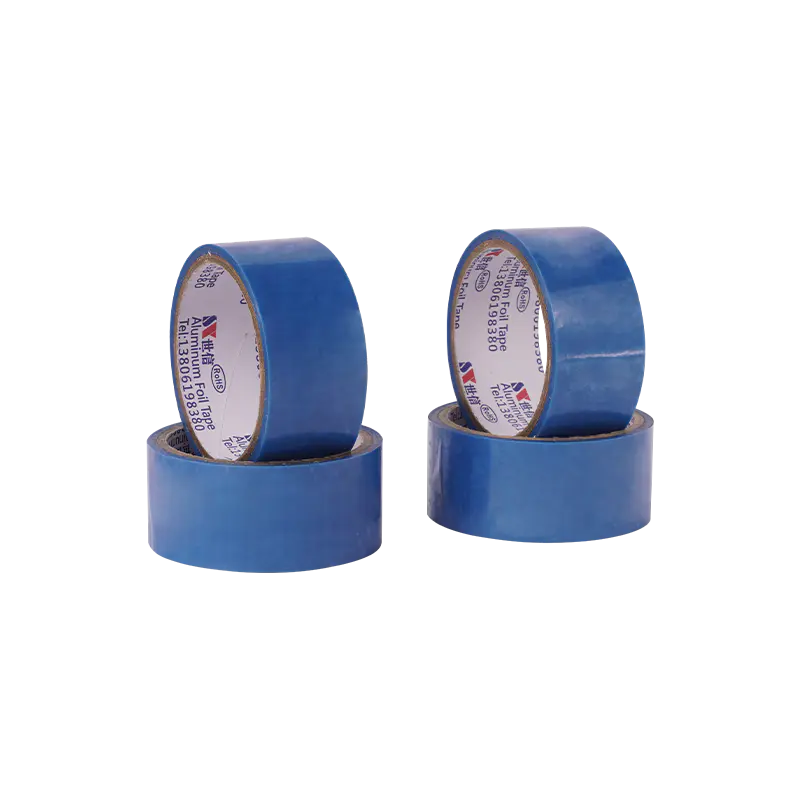
Blue PET fixing tape is easy to distinguish on many white or light-colored appliance interiors. The contrast helps operators confirm application and helps inspectors locate strips intended for later removal.
Where visual inspection is part of quality control, agree on a reference color sample and inspection lighting. A consistent shade can help distinguish the approved fixing tape from alternative materials or incorrectly positioned strips.
Color alone does not determine adhesion, residue performance or product grade. Confirm the complete tape construction and the required functional tests for the relevant refrigerator or freezer application.
 Blue PET Positioning Tape for Refrigerator Parts
A Practical Five-Step Sample Qualification Process
A useful approval process tests the tape and the converted roll together. The sequence below is a practical starting point; the number of samples and duration of trials should follow the customer’s risk assessment and production requirements.
Record the actual substrate, tape width, parts being fixed, application method, line speed, expected holding time, removal step and likely temperature exposure during transport or storage.
Define the target peel adhesion and initial tack using agreed test methods. Specify the test surface, dwell time, removal angle or speed, residue criteria and any relevant holding-power requirement.
Apply sample tape using the real fixture or assembly method. Evaluate bonding, repositioning if needed, clean removal, surface marks and any visible adhesive transfer on the actual components.
Test the approved candidate at the intended line speed and representative environmental conditions. Inspect feed stability, unwind behavior, positioning accuracy and removal results. Agree trial quantity with the customer rather than assuming a universal batch size.
Confirm slit-width tolerance, core size, roll length, winding direction, splice rule and incoming inspection checks. Any die-cut format or removable liner should be separately approved if included in the final construction.
Troubleshooting Common Problems After Approval
When a fixing tape fails in production, first compare the current lot, substrate, application method and environmental conditions with the approved sample. The following patterns can help direct an investigation.
Edge lifting on curved plastic parts
Possible causes include insufficient conformability, contamination, unsuitable adhesive or application tension. Compare film flexibility and peel performance on the actual curvature before changing film thickness or adhesive.
Unstable feeding or unwinding
For linerless rolls, check release-coating consistency, winding tension, roll alignment and core fit. For a confirmed lined construction, also check liner release force and equipment settings.
Adhesive transfer following warm transport
If residue appears after transit, reproduce the relevant time-temperature exposure and test removal on the affected substrate. A specified transport-temperature example is not evidence that every shipment reaches that temperature.
Width variation between batches
Compare incoming roll width against the agreed tolerance and check whether the tape still covers the intended fixing area without excessive overhang.
What to Include in a Custom Blue PET Tape RFQ
A useful RFQ identifies the tape’s function before asking for a price. Include the component drawing or photos, the substrate material, holding and removal requirements, expected volume and how the tape is applied.
Add the target width and tolerance, roll length, core dimensions, winding direction, removal timing, test conditions and any need for special converting. Review the PET tape range and Blue PET Positioning Tape for Refrigerator Parts, then submit representative parts or photos with the specification.
Ask the supplier which parameters can be maintained in serial production and what test methods will be used for incoming inspection. A reproducible specification is more valuable than a single sample that happens to work.
Jiangsu Shixin Adhesive Tape Product Co., Ltd. (Shixin Tape), established in 2005, manufactures industrial adhesive tapes and provides converting support for selected PET fixing-tape applications. The applicable film, adhesive, release treatment and custom roll options should be confirmed against each product grade. Current quality-system certificates and product-specific regulatory test records can be discussed upon request.
Frequently Asked Questions
Is a custom blue PET fixing tape always more expensive than a standard roll?
Not necessarily. Pricing depends on the selected construction, processing requirements, quantity and converting format. Compare total application cost, including line stoppages, removal defects, rework and changeover time, rather than assuming a custom roll always costs more per assembly.
What slit-width tolerance should I specify?
Start from the smallest dimension and alignment allowance of the actual component. State the nominal width and acceptable tolerance on the drawing, then ask the supplier to confirm the achievable production range.
Can the same PET fixing tape be used on ABS and pre-coated metal?
Possibly, but suitability must be established on both substrates under the intended dwell and removal conditions. If the results differ significantly, evaluate different adhesion grades or a different application method.
How long does sample approval take?
Timing depends on the grade, roll format, number of tests and customer approval requirements. A clear specification and representative component samples can reduce revisions; confirm the actual sampling and production schedule with Shixin Tape.
Discuss your refrigerator PET tape application: send Shixin Tape your substrate, roll specification, holding period and removal requirements through our contact page to discuss sample or technical-data availability.

Our company has been engaged in the tape manufacturing industry for more than 20 years, and has been focusing on various types of aluminum foil tapes, foam tapes, refrigerator tapes, etc.
IsabelLina
Email:[email protected]
Mobile/Whatsapp: +86 190 3379 1110
Mars Gong
Email:[email protected]
Mobile/Whatsapp: +86 159 5136 0053
Address: West side of Yingbin Avenue and south side of hengwang packaging. Suqian Economic and Technological Development Zone,Jiangsu Province
Copyright © Jiangsu Shixin Adhesive Tape Product Co., Ltd. All Rights Reserved. Custom ODM Refrigerator Foil Adhesive Tapes Manufacturers