2026-10-23
Content
In the contemporary packaging landscape, the shift towards sustainable materials is no longer a niche trend but a global imperative. Driven by consumer awareness and stringent regulations, businesses are actively seeking alternatives to traditional plastic packaging materials. One of the most significant debates in this transition is the choice between conventional plastic tapes and emerging paper-based solutions. A Moisture-proof Paper Adhesive Tape has emerged as a leading contender, promising the environmental benefits of paper without sacrificing the durability required for logistics. This article analyzes whether this innovative material truly outperforms plastic across the critical metrics of strength, durability, operational efficiency, and recyclability.
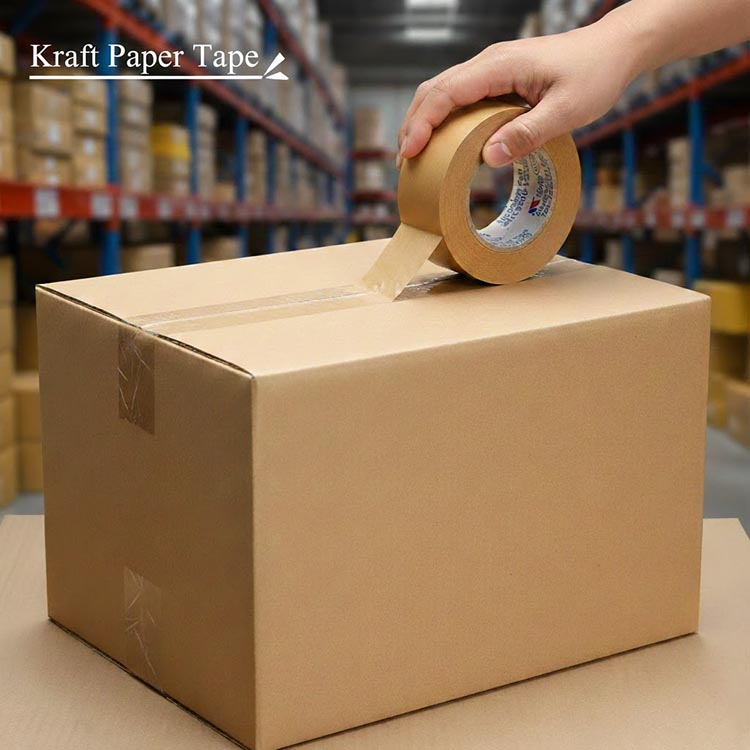
A common misconception in the industry is that paper-based tapes lack the tensile strength necessary for industrial applications. However, modern engineering has produced high-performance variants specifically designed as Moisture-proof Paper Adhesive Tape for Heavy Boxes. Unlike standard masking tapes, these are manufactured from high-grammage kraft paper, often reinforced with a cross-linked structure. When subjected to the rigorous demands of logistics, the performance gap between high-quality reinforced paper tape and traditional plastic tape narrows significantly.
Comparing the tensile properties of reinforced paper tape against standard plastic tape reveals the viability of paper for heavy-duty use.
| Property | Standard Plastic Tape | Reinforced Paper Tape |
| Tensile Strength | High; relies on polypropylene stretch. | High; relies on dense kraft fiber and reinforcing. |
| Yield Point | High; stretches significantly before breaking. | Moderate; higher stiffness prevents box deformation. |
| Shock Resistance | Absorbs shock via elongation. | Absorbs shock via fiber strength and adhesive shear. |
Just as Fengrun Rope Weaving Co., Ltd. maintains an unwavering commitment to "Quality and Innovation in Equal Measure" in the production of our high-strength ropes, we apply the same philosophy to packaging materials. A substandard tape can compromise the integrity of a shipment just as a weak rope can cause a load to shift. We believe that true sustainability does not mean a compromise on performance; rather, it demands engineering excellence to ensure that eco-friendly materials are robust enough for the toughest supply chains.
Historically, the Achilles' heel of paper packaging has been its vulnerability to moisture. In cold supply chains or humid environments, standard paper absorbs water, leading to loss of adhesion and structural failure. To address this, High Humidity Performance of Paper Packing Tape is achieved through advanced coating technologies. Manufacturers apply a polyethylene (PE) or biodegradable polymer coating to one or both sides of the kraft paper. This layer acts as a moisture barrier, ensuring the fibers remain dry and the adhesive retains its bond strength even in condensing conditions.
The resistance to moisture is a critical differentiator when evaluating packaging materials for diverse climates.
| Condition | Standard Paper Tape | Moisture-proof Paper Tape |
| Water Absorption | Rapidly absorbs water; loses structural integrity. | Repels water; maintains form and adhesion. |
| Adhesive Bond | Weakens and separates when wet. | Remains stable due to protective backing. |
| Visual Appearance | Waves, curls, and discolors when damp. | Retains flatness and print quality. |
The primary driver for switching to paper is the reduction of environmental footprint. An Eco-friendly Packaging Paper Tape offers a biodegradable and renewable alternative to fossil-fuel-derived plastics. While plastic tapes can persist in the environment for centuries, high-quality paper tapes are designed to decompose naturally. Furthermore, the production of paper tape typically utilizes sustainably managed forests. This shift is crucial for companies aiming to reduce their Scope 3 emissions and improve their ESG (Environmental, Social, and Governance) ratings. By eliminating the plastic layer, companies ensure that their packaging does not contribute to the growing crisis of microplastics.
According to the "Future of Global Packaging" report by Smithers Pira, the demand for paper-based packaging is projected to grow significantly by 2028, driven primarily by brand owners' commitments to plastic reduction and the implementation of stricter government regulations against single-use plastics.
Source: Smithers - The Future of Global Packaging
For large-scale operations, the transition to sustainable materials cannot come at the cost of throughput. Packaging lines running at high speeds require materials that are reliable and predictable. An Automated Packing Machine Grade Paper Tape is engineered specifically for these environments. Key technical specifications include low noise emission during unwinding, consistent unwind force, and high tear resistance to prevent snapping in the dispenser head. Advanced moisture-proof paper tapes often feature a specialized "quiet unwind" property and a high shear adhesive that ensures the tape does not peel off under the rapid vibrations of automated case sealers.
Operational compatibility differs significantly between manual and machine-grade paper tapes.
| Operational Feature | Manual Paper Tape | Automated Machine Grade Tape |
| Unwind Force | Variable; designed for hand tension. | Tightly controlled; prevents machine slipping. |
| Noise Level | Standard crinkle sound. | Low-noise formulation for worker comfort. |
| Core Strength | Standard density core. | High-density core to prevent crushing in chucks. |
One of the strongest arguments for using paper tape is its compatibility with existing cardboard recycling streams. While plastic tapes act as contaminants in the pulping process—requiring them to be filtered out and sent to landfill—the Recyclability of Moisture-proof Paper Tape with Cardboard is generally superior. Although the moisture-proof coating adds a layer of complexity, many modern tapes are designed with repulpable coatings. Even in cases where the coating is synthetic, the significantly lower mass of the tape compared to the box allows standard recycling mills to process the cardboard efficiently. The tape breaks down into fibers that are screened out or integrated, whereas plastic tapes remain as large, non-fibrous contaminants.
The impact of tape choice on the recycling process is a critical consideration for a circular economy.
| Recycling Metric | Plastic Tape (BOPP/PVC) | Moisture-proof Paper Tape |
| Process Compatibility | Contaminant; must be removed at pulping stage. | Compatible; often goes straight to repulping. |
| Waste Output | Generates plastic sludge sent to landfill. | Fiber waste can often be reused or composted. |
| Sortation Ease | Difficult; often requires optical sorting. | Easy; sorted with corrugated board. |
The question of whether Moisture-proof Paper Adhesive Tape is better than plastic is answered by evaluating both immediate performance and long-term impact. While plastic tape offers high stretchability, the advancements in Moisture-proof Paper Adhesive Tape for Heavy Boxes and the High Humidity Performance of Paper Packing Tape have closed the gap in functionality. Furthermore, the Eco-friendly Packaging Paper Tape aligns with global sustainability mandates, and the availability of Automated Packing Machine Grade Paper Tape ensures operational efficiency. When combined with the superior Recyclability of Moisture-proof Paper Tape with Cardboard, the choice for businesses looking to future-proof their packaging logistics is clear. Fengrun Rope Weaving Co., Ltd. believes that in the choice between ecological responsibility and functional integrity, one should not have to choose.
Yes, it is designed with a water-resistant coating (often PE) that repels liquid water, preventing the paper from becoming soggy and losing adhesion.
For general purpose light use, plastic is stronger due to stretch. However, reinforced moisture-proof paper tape has higher tensile stiffness, which prevents heavy boxes from bursting.
Yes, it is generally recyclable with cardboard. While some coatings are synthetic, the majority of the tape is paper fiber, making it far more recyclable than pure plastic tape.
Yes, provided it is a standard 3-inch core roll. However, for heavy-duty application, a sharp, serrated blade is recommended for a clean cut.
Typically, it has a shelf life of 12 to 24 months if stored in a cool, dry place, away from direct sunlight and extreme heat.

Our company has been engaged in the tape manufacturing industry for more than 20 years, and has been focusing on various types of aluminum foil tapes, foam tapes, refrigerator tapes, etc.
IsabelLina
Email:[email protected]
Mobile/Whatsapp: +86 190 3379 1110
Mars Gong
Email:[email protected]
Mobile/Whatsapp: +86 159 5136 0053
Address: West side of Yingbin Avenue and south side of hengwang packaging. Suqian Economic and Technological Development Zone,Jiangsu Province
Copyright © Jiangsu Shixin Adhesive Tape Product Co., Ltd. All Rights Reserved. Custom ODM Refrigerator Foil Adhesive Tapes Manufacturers