2026-10-23
This guide covers Shixin’s SXPE-SS-ALS grade. Its published product information specifies polyethylene (PE) fiber mesh reinforcement. Construction and performance of other SS grades should be confirmed against their own technical data sheets.
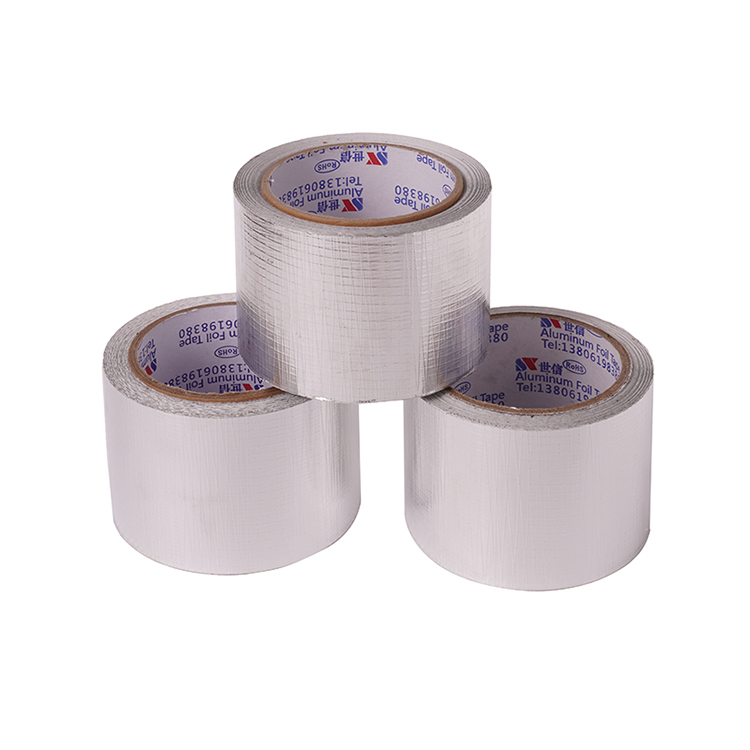
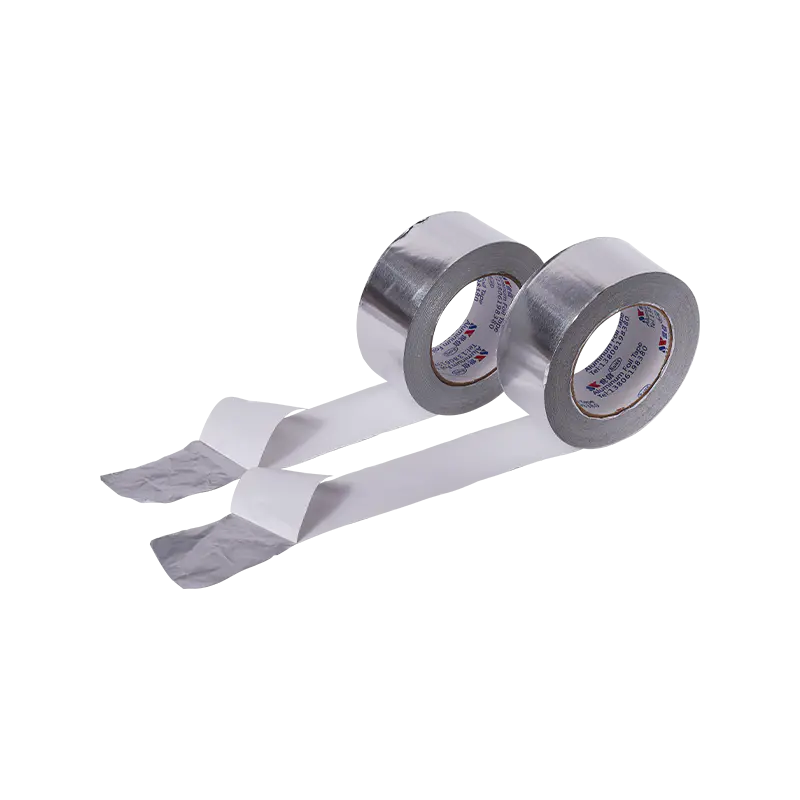
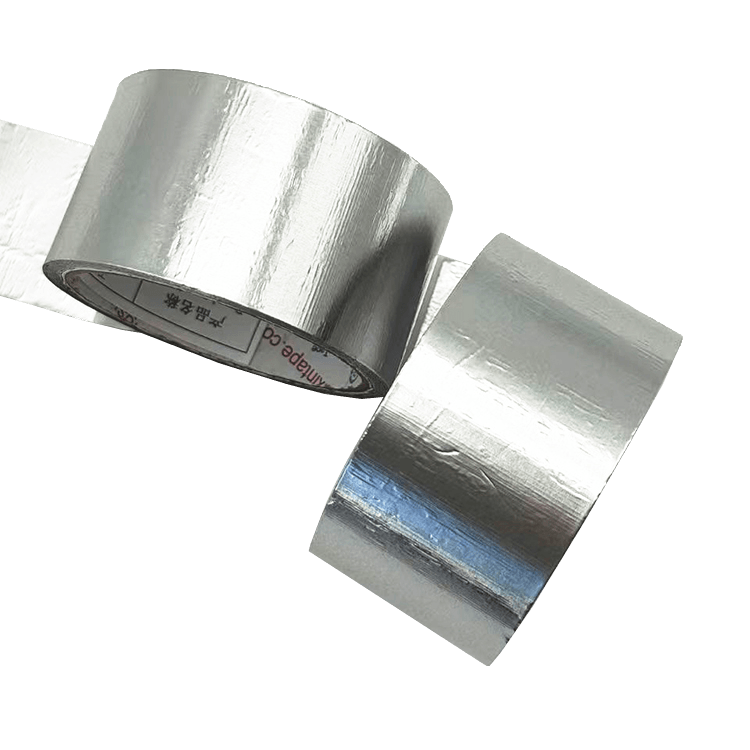
SS Reinforced Aluminum Foil Tape is designed for HVAC duct insulation, glass wool and rock wool facing joints, duct board seaming, flexible and rigid duct applications, and other thermal insulation systems where standard aluminum foil tape may not provide sufficient mechanical strength.
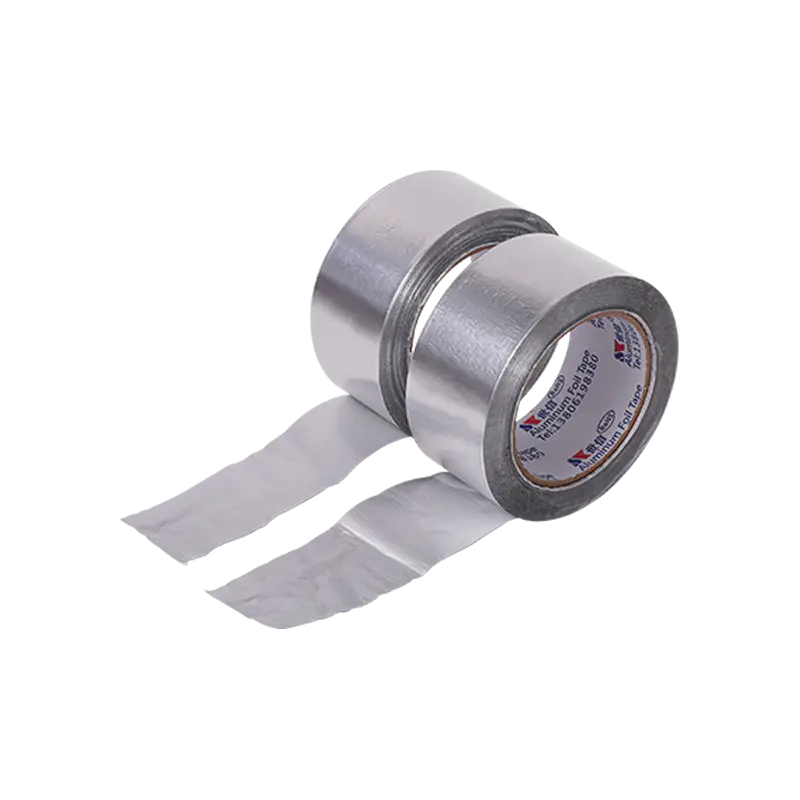
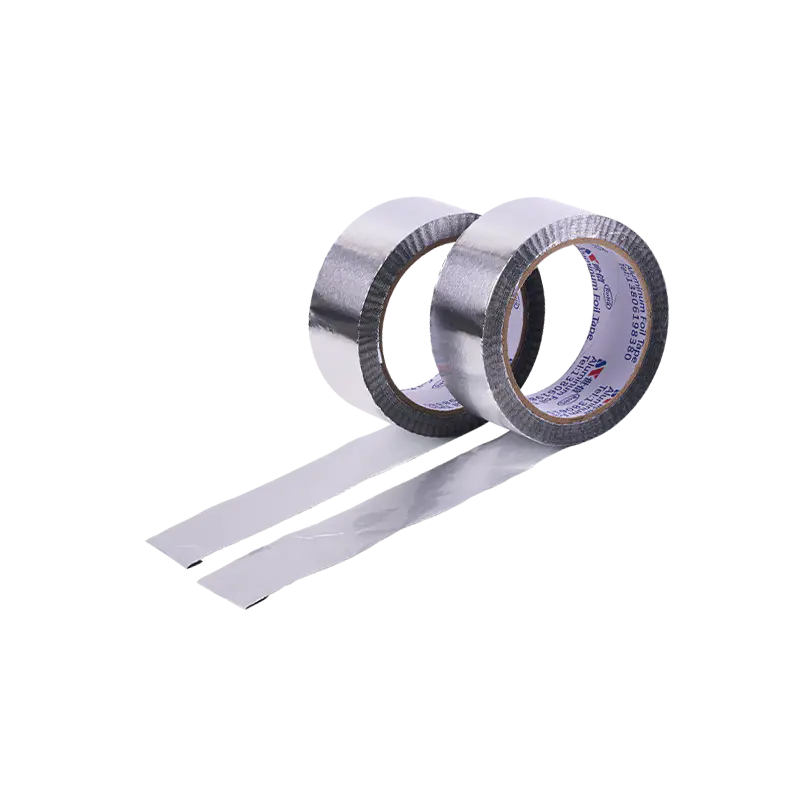
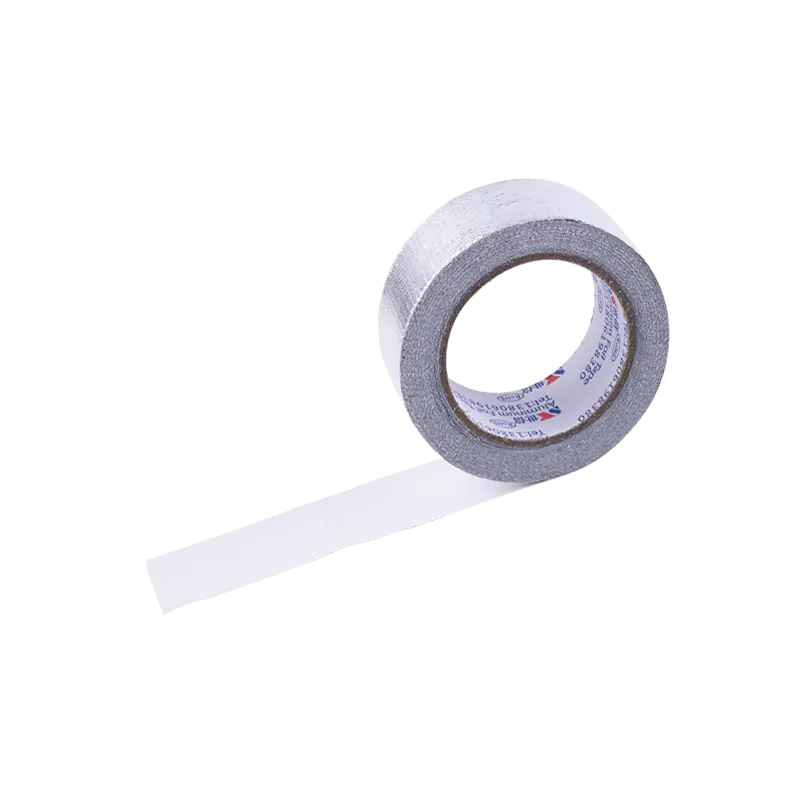
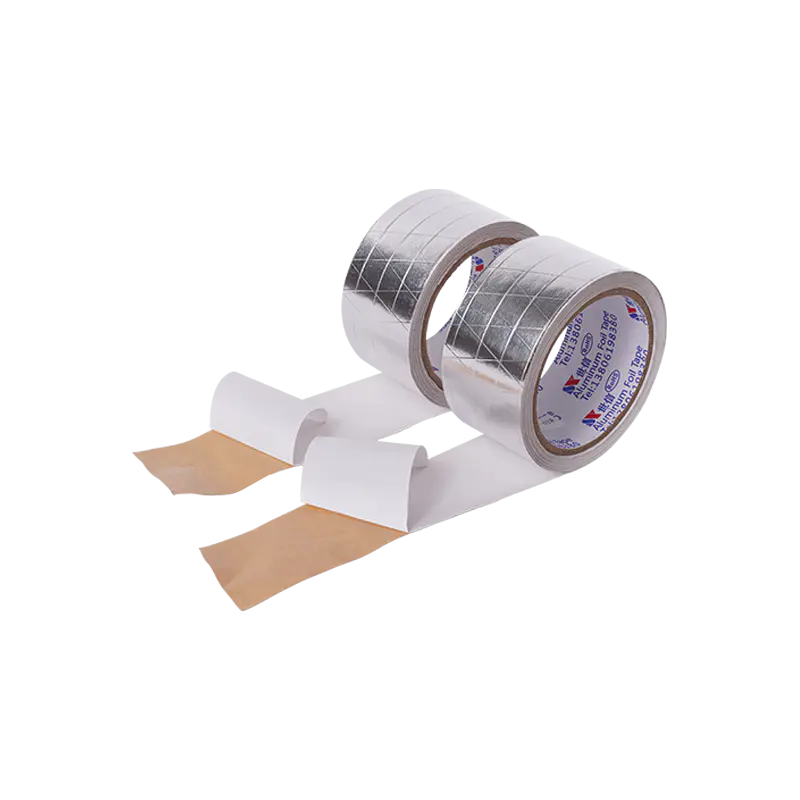
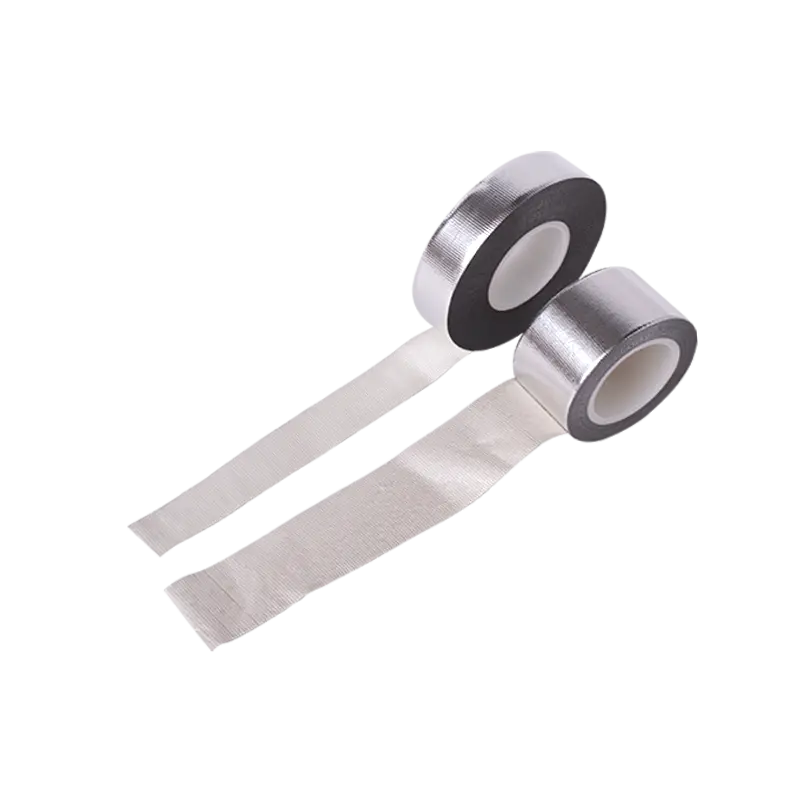
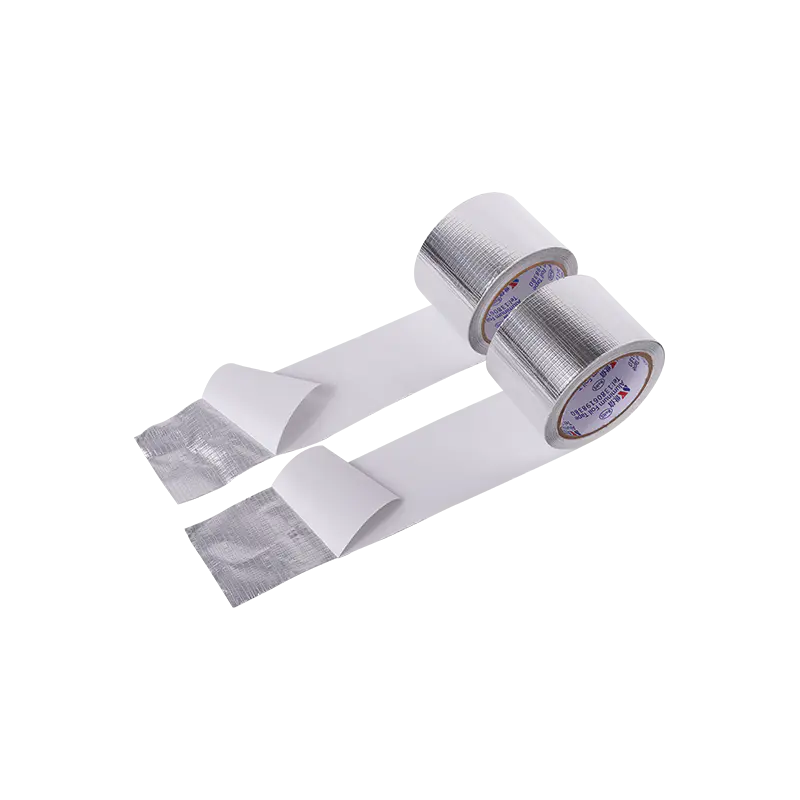
The tape combines aluminum foil with a polyethylene fiber mesh and a pressure-sensitive adhesive. The reinforcing mesh improves tensile strength, tear resistance, and dimensional stability while the aluminum foil helps maintain surface continuity and vapor-barrier integrity.
For long seams, mechanically stressed joints, rough insulation surfaces, or applications involving higher installation tension, reinforced aluminum foil tape can provide a more durable sealing solution than unsupported foil tape.
What Is SS Reinforced Aluminum Foil Tape?
Shixin SS Reinforced Aluminum Foil Tape typically uses the following composite construction:
Aluminum Foil + Polyethylene Fiber Mesh + Pressure-Sensitive Adhesive
Depending on the product design, a release liner may also be included for converting or installation.
|
Component |
Main Function |
|
Aluminum foil |
Provides a reflective surface, surface protection, and barrier continuity |
|
Polyethylene fiber mesh |
Improves tensile strength, tear resistance, and dimensional stability |
|
Pressure-sensitive adhesive |
Bonds the tape to ducts, insulation facings, and other substrates |
|
Release liner, when applicable |
Protects the adhesive and supports processing or installation |
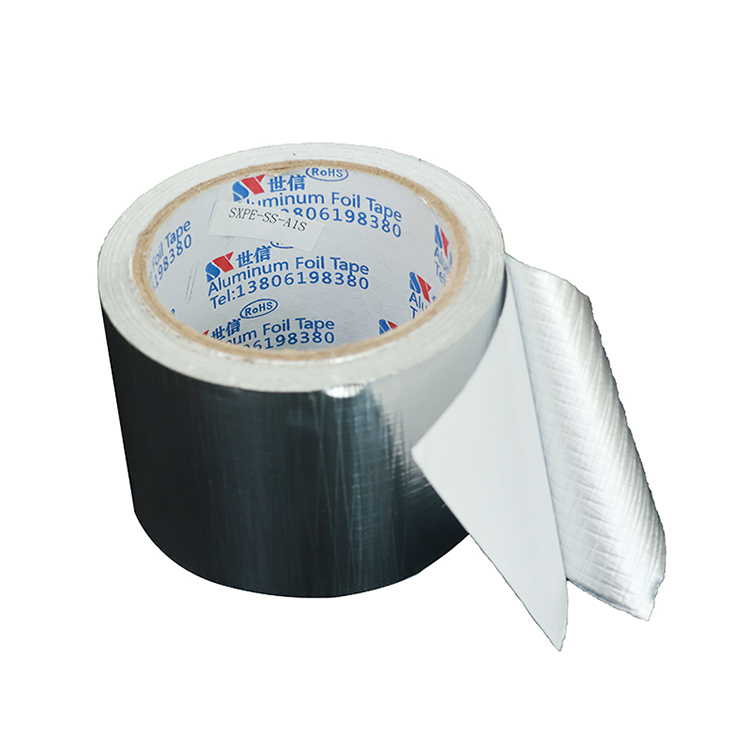
The reinforcement used in this construction is polyethylene fiber mesh.
This is important because reinforced foil tapes can use different reinforcement structures. In this product, the mesh is not stainless steel and it is not fiberglass.
Fiberglass may refer to the insulation material or facing where the tape is applied, such as fiberglass insulation or glass wool facing, but it should not be confused with the tape reinforcement itself.
Why Use a Reinforcing Mesh in Aluminum Foil Tape?
Standard aluminum foil tape performs well in many sealing applications, particularly on flat surfaces and low-stress joints.
However, unsupported aluminum foil can be more vulnerable to tearing when the tape is exposed to:
Long seam installation
Higher application tension
Corners and edges
Rough insulation surfaces
Handling stress
Repeated movement
Localized mechanical loads
The polyethylene fiber mesh creates a reinforcing framework within the laminate and helps distribute these forces across the tape structure.
Higher Tensile Strength
The reinforcing mesh improves the ability of the tape to withstand pulling forces during installation.
This is particularly useful for long HVAC duct seams, large insulation panels, and areas where the installer needs to apply controlled tension while maintaining consistent coverage.
Improved Tear Resistance
A local cut or puncture in unsupported aluminum foil can sometimes develop into a larger tear.
The reinforcing mesh helps limit tear propagation and improves mechanical durability during installation, handling, and service.
Better Dimensional Stability
The reinforcement also helps reduce excessive stretching and deformation.
More stable dimensions make it easier to maintain consistent overlap and seam coverage, especially on longer joints.
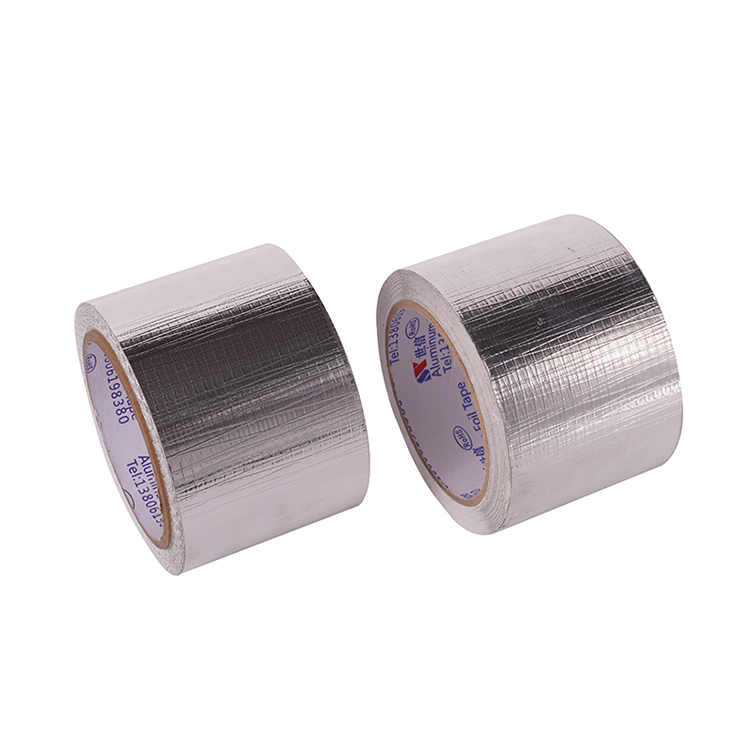
Easy-Tear or Higher Tear Resistance?
Higher tear resistance is not always the best choice.
The ideal tape construction depends on how the tape will be installed.
For manual HVAC installation, an easy-tear construction can make field work faster and reduce the need for cutting tools.
Typical benefits include:
Faster manual application
Easier tape cutting
More convenient duct wrapping
Improved installation efficiency
For mechanically demanding applications, a higher tear-resistance construction may be more appropriate.
This is particularly useful for:
Long insulation seams
Higher installation tension
Areas exposed to mechanical stress
Applications requiring greater structural stability
The correct choice is therefore not simply the strongest tape available.
A better question is: Does the application require easy hand tearing or greater resistance to tearing during installation and service?
HVAC Duct Wrapping and Insulation
HVAC systems contain a large number of seams, joints, corners, insulation connections, and transition areas.
These locations often require more than simple surface coverage.
The tape must maintain adhesion while also tolerating the mechanical stress created during wrapping and installation.
SS Reinforced Aluminum Foil Tape can be used for:
HVAC duct wrapping
Insulation seam sealing
Foil-facing joints
Duct connection areas
Corners and edges
Local insulation repairs
The reinforcing mesh provides additional mechanical stability, making the tape particularly useful where ordinary foil tape may be more vulnerable to tearing.
Sealing Glass Wool and Rock Wool Facing Joints
Glass wool and rock wool insulation products often use aluminum foil or laminated facings.
The joints between insulation sections can become weak points in the overall insulation system.
If these joints are not properly sealed, they may affect:
Facing continuity
Vapor-control performance
Surface protection
Long-term insulation integrity
Reinforced aluminum foil tape can bridge the joints while helping reduce the risk of tearing during installation.
Adhesive compatibility is also important.
Glass wool and rock wool facings can vary in surface texture, coating, and porosity, so adhesion should ideally be evaluated on the actual facing material rather than only on a standard laboratory surface.
Duct Board Seaming
Duct board installation involves seams, folds, corners, and connection points.
The tape used in these areas must perform two functions.
First, the adhesive must establish reliable contact with the duct board facing.
Second, the tape structure must tolerate the tension and mechanical stress created during installation.
Where additional mechanical durability is required, reinforced aluminum foil tape can provide better tear resistance and dimensional stability than unsupported foil tape.
Reinforced Foil Tape for Rigid and Flexible Ducts
|
Application |
Main Selection Priority |
|
Rigid duct |
Adhesion, seam strength, dimensional stability |
|
Flexible duct |
Adhesion, flexibility, tear resistance |
|
Duct board |
Seam coverage and structural stability |
|
Long seams |
Tensile strength and tear resistance |
|
Corners |
Balance between conformability and mechanical strength |
For flexible ducts, high strength alone is not enough.
A tape that is excessively stiff may be difficult to conform around smaller radii or moving sections.
The reinforced structure therefore needs to provide a balance between mechanical strength and flexibility.
Vapor Sealing in Insulation Systems
Cold-air ducts, refrigeration systems, and other low-temperature insulation applications require careful control of moisture movement.
If warm, humid air enters through poorly sealed joints and reaches a cold surface, condensation can develop inside or around the insulation system.
The aluminum foil layer can form part of the vapor-control system, while the reinforcing mesh helps protect the foil from mechanical damage.
However, reinforcement does not automatically make the tape more vapor-impermeable.
Actual vapor-barrier performance depends on several factors:
Foil and laminate integrity
Seam coverage
Adhesive sealing
Edge bonding
Installation quality
Long-term environmental stability
The main value of the reinforcing mesh is that it helps preserve the physical integrity of the foil barrier during installation and service.
SS Reinforced Aluminum Foil Tape vs. Standard Aluminum Foil Tape
The main difference between reinforced and standard aluminum foil tape is the mechanical construction.
|
Property |
Standard Aluminum Foil Tape |
SS Reinforced Aluminum Foil Tape |
|
Aluminum foil |
Yes |
Yes |
|
Mesh reinforcement |
No |
Polyethylene fiber mesh |
|
Tensile strength |
Depends on foil and construction |
Generally higher |
|
Tear resistance |
Mainly dependent on foil |
Improved by reinforcement |
|
Dimensional stability |
Moderate |
Improved |
|
Conformability |
Generally good |
Depends on reinforcement design |
|
Long seams |
Suitable for normal conditions |
Better for higher mechanical stress |
|
Duct board seaming |
Suitable for many applications |
Better where reinforcement is required |
|
HVAC insulation |
Widely used |
Suitable where sealing and reinforcement are both needed |
Standard aluminum foil tape may be sufficient for:
Flat seams
Low mechanical stress
Small repairs
Applications requiring maximum conformability
Reinforced aluminum foil tape is more suitable when the application involves:
Long seams
Higher installation tension
Greater tear risk
Duct board joints
Reinforced insulation seams
Mechanical stress during handling or installation
What Specifications Should Buyers Check?
Industrial buyers should avoid selecting reinforced foil tape only based on descriptions such as “high strength,” “strong adhesion,” or “high temperature.”
These descriptions do not provide enough information for technical comparison.
The following specifications are more useful:
|
Specification |
Why It Matters |
|
Total thickness |
Influences handling and mechanical performance |
|
Aluminum foil construction |
Affects surface durability and barrier integrity |
|
Reinforcement structure |
Determines the reinforcement characteristics |
|
Tensile strength |
Indicates resistance to pulling forces |
|
Tear performance |
Affects installation and mechanical durability |
|
Peel adhesion |
Indicates bonding performance on the substrate |
|
Holding power |
Indicates resistance to movement under load |
|
Service temperature |
Defines the usable operating environment |
|
Flame performance |
Should be verified when required by the application |
|
Width and length |
Affect installation efficiency and material consumption |
|
Liner or linerless construction |
Influences processing and installation |
Actual values should always be confirmed for the specific tape construction and test method.
Comparing data from different adhesive systems or different test conditions can lead to misleading conclusions.
How to Select SS Reinforced Aluminum Foil Tape
Start by defining the surface to which the tape will be applied.
Common substrates include:
Aluminum foil facing
Glass wool facing
Rock wool facing
Duct board
Flexible duct
Rigid duct
Laminated insulation surfaces
Surface texture, porosity, coating, and contamination can all affect adhesive performance.
Testing on the actual substrate is recommended for critical or long-term applications.
Consider how the tape will be installed.
For manual installation, easier hand tearing can improve productivity.
For long seams or mechanically demanding applications, higher tear resistance may be more important.
The operating environment should include more than a single maximum temperature.
Important factors include:
Installation temperature
Minimum service temperature
Maximum continuous service temperature
Short-term temperature peaks
Thermal cycling
The temperature resistance of the finished tape depends not only on the aluminum foil, but also on the adhesive and complete laminate construction.
For cold ducts, refrigeration systems, cold storage, and other low-temperature insulation, pay particular attention to:
Seam continuity
Foil integrity
Edge adhesion
Low-temperature bonding
Vapor-control requirements
A strong tape cannot compensate for poor seam design or incorrect installation.
For OEM and long-term industrial projects, representative application testing is recommended before bulk purchasing.
Depending on the application, evaluation may include:
Initial tack
Peel adhesion
Tear behavior
Hand-tear performance
Installation handling
Edge lifting
Heat aging
Humidity exposure
Long-term adhesion
Testing the tape on the actual insulation facing and under representative operating conditions often provides more useful information than comparing specification sheets alone.
SS Reinforced Aluminum Foil Tape Solutions from Shixin
Jiangsu Shixin Adhesive Tape Product Co., Ltd. manufactures industrial adhesive tapes for HVAC, thermal insulation, refrigeration, and other industrial applications.
SS Reinforced Aluminum Foil Tape can be customized according to different application requirements, including:
Aluminum foil construction
Polyethylene fiber mesh reinforcement
Adhesive system
Easy-tear or higher tear-resistance design
Tape thickness
Width and length
Liner or linerless construction
Flame-performance requirements
OEM converting
Custom specifications
For a new HVAC or thermal insulation project, providing information about the substrate, operating temperature, tape dimensions, installation method, and required tear performance helps determine a more suitable tape construction.
Frequently Asked Questions
What is SS Reinforced Aluminum Foil Tape?
SS Reinforced Aluminum Foil Tape is an aluminum foil tape reinforced with a polyethylene fiber mesh. The mesh improves tensile strength, tear resistance, and dimensional stability, making the tape suitable for HVAC and thermal insulation applications requiring additional mechanical strength.
What is SS Reinforced Aluminum Foil Tape used for?
Typical applications include HVAC duct wrapping, glass wool and rock wool facing joints, duct board seaming, flexible and rigid duct systems, and vapor sealing of insulation facings.
What is the reinforcement material in SS Reinforced Aluminum Foil Tape?
Shixin SS Reinforced Aluminum Foil Tape uses a polyethylene fiber mesh reinforcement rather than stainless steel or fiberglass reinforcement.
What is the difference between reinforced aluminum foil tape and standard aluminum foil tape?
Standard aluminum foil tape mainly relies on the aluminum foil backing for mechanical strength. Reinforced foil tape adds a fiber mesh that improves tensile strength, tear resistance, and dimensional stability.
Can SS Reinforced Aluminum Foil Tape be torn by hand?
Yes. Tear performance can be adjusted according to the tape construction. Easy-tear versions can improve manual installation efficiency, while higher tear-resistance versions are more suitable for mechanically demanding applications.
Is reinforced aluminum foil tape better for HVAC applications?
It can be a better choice when HVAC insulation joints are exposed to higher installation tension, long seams, or mechanical stress. For simple flat seams and low-stress applications, standard aluminum foil tape may already be sufficient.
Does reinforcement improve vapor-barrier performance?
Not directly. Vapor-barrier performance depends mainly on foil integrity, laminate construction, adhesive sealing, seam coverage, and installation quality. The reinforcement helps protect the foil from mechanical damage.
Need Help Selecting the Right Reinforced Aluminum Foil Tape?
If you are selecting tape for HVAC ducts, glass wool, rock wool, duct board, refrigeration, or other insulation applications, send us your:
Substrate
Operating temperature
Tape width and length
Installation method
Tear-performance requirement

Our company has been engaged in the tape manufacturing industry for more than 20 years, and has been focusing on various types of aluminum foil tapes, foam tapes, refrigerator tapes, etc.
IsabelLina
Email:[email protected]
Mobile/Whatsapp: +86 190 3379 1110
Mars Gong
Email:[email protected]
Mobile/Whatsapp: +86 159 5136 0053
Address: West side of Yingbin Avenue and south side of hengwang packaging. Suqian Economic and Technological Development Zone,Jiangsu Province
Copyright © Jiangsu Shixin Adhesive Tape Product Co., Ltd. All Rights Reserved. Custom ODM Refrigerator Foil Adhesive Tapes Manufacturers