2026-10-23
Content
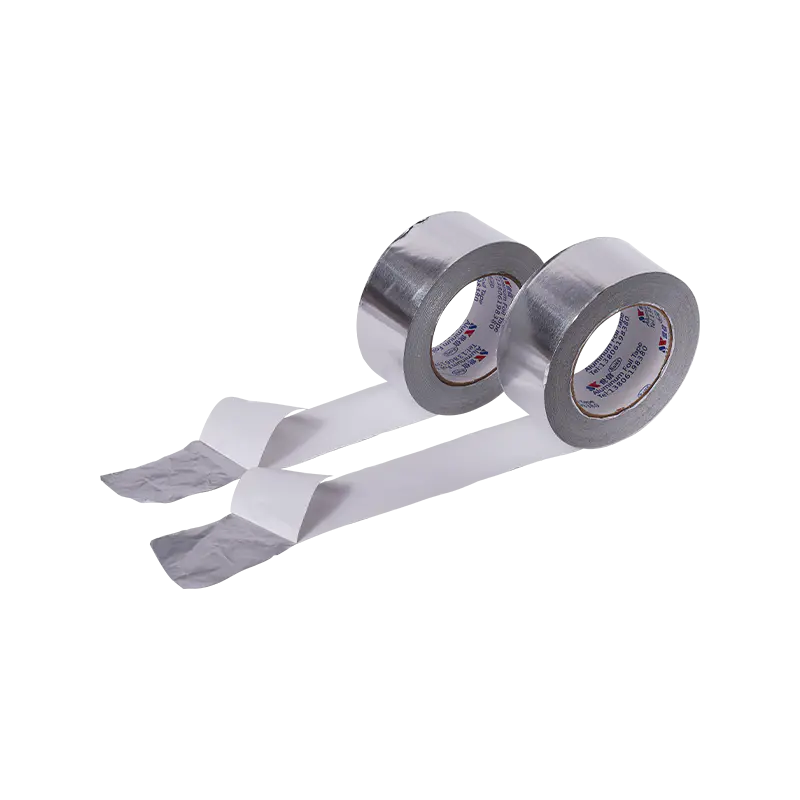
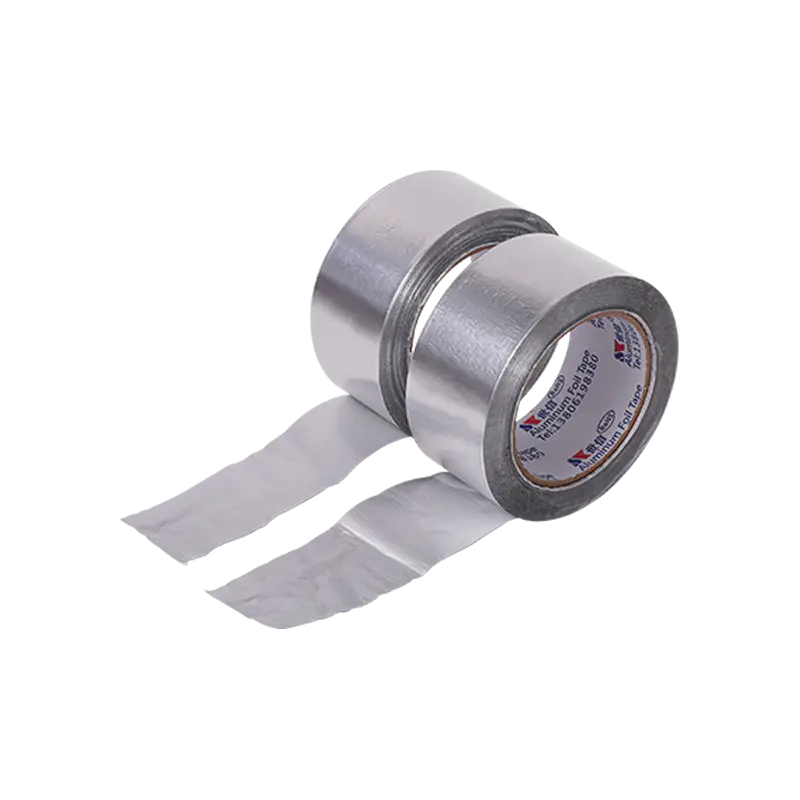
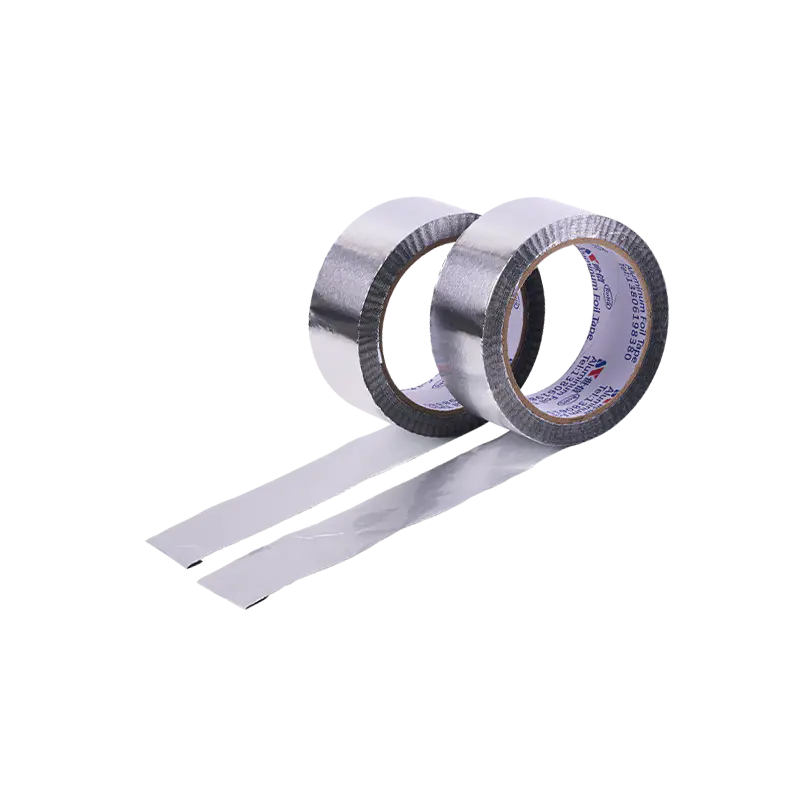
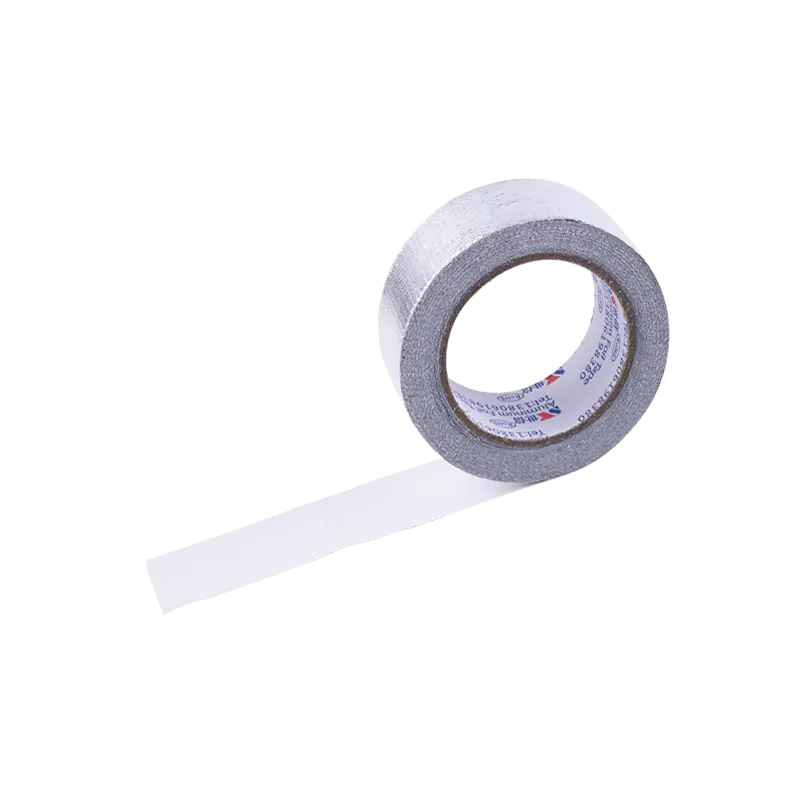
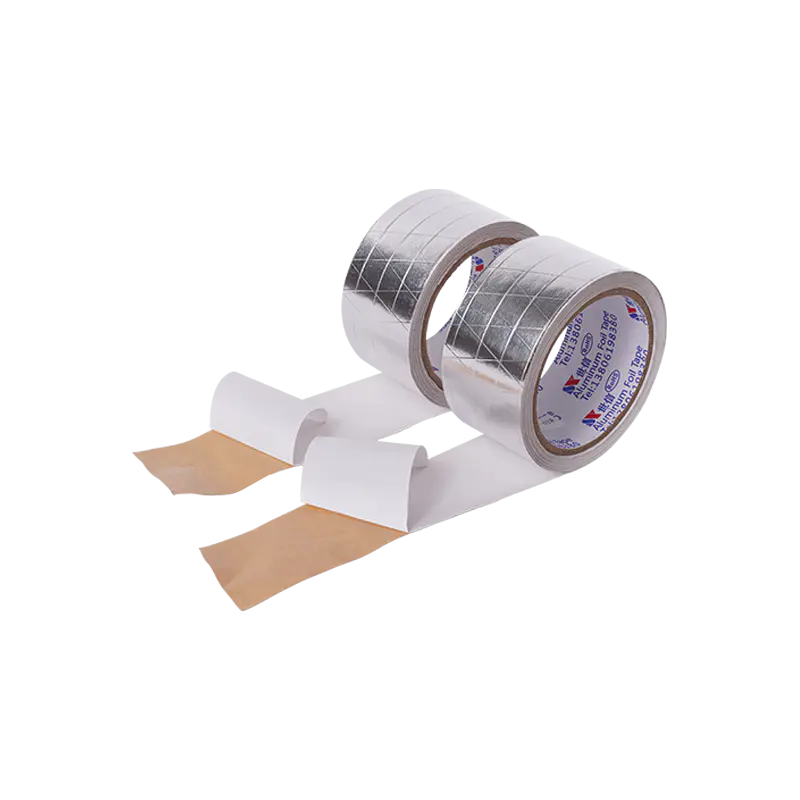
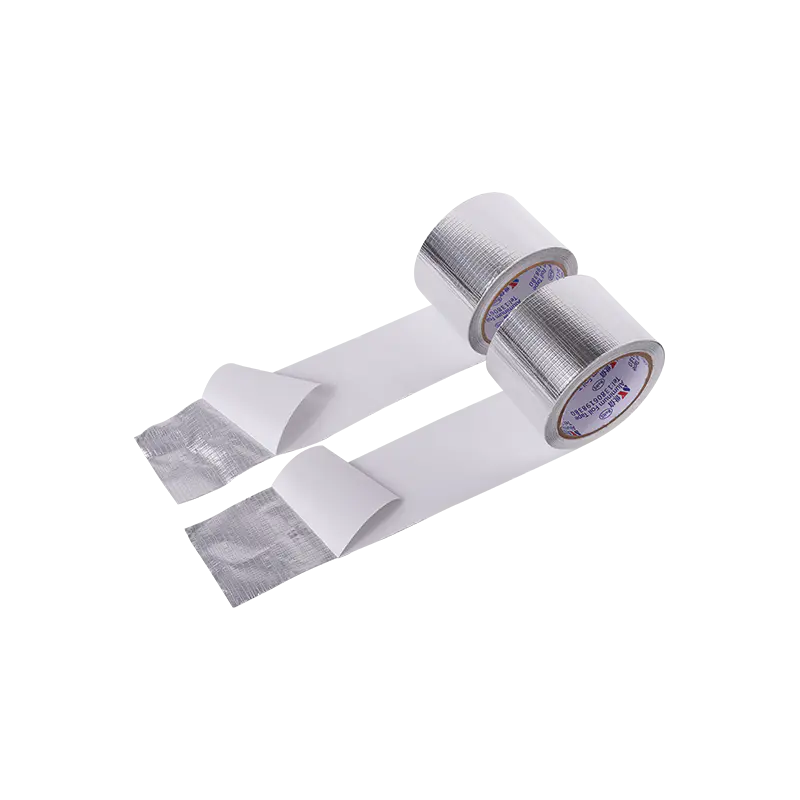
Pure Aluminum Foil Tape With Liner is a pressure-sensitive adhesive tape made from a pure aluminum foil backing, an adhesive layer, and a removable release liner. The three-layer structure is designed to combine the functional properties of aluminum foil with controlled adhesive application. The foil provides thermal reflection, moisture and vapor resistance, surface protection, and dimensional stability, while the adhesive creates the bond with the substrate. The liner protects the adhesive until the tape is ready to be installed or processed.
For industrial and B2B applications, the term “pure aluminum foil” is important because the backing is formed from actual aluminum foil rather than a polymer film with a metallized coating. This distinction affects mechanical behavior, thermal performance, electrical conductivity, barrier properties, and converting characteristics. The final performance also depends on foil thickness, aluminum grade, adhesive formulation, liner construction, and application conditions.
A typical Pure Aluminum Foil Tape With Liner consists of three main layers:
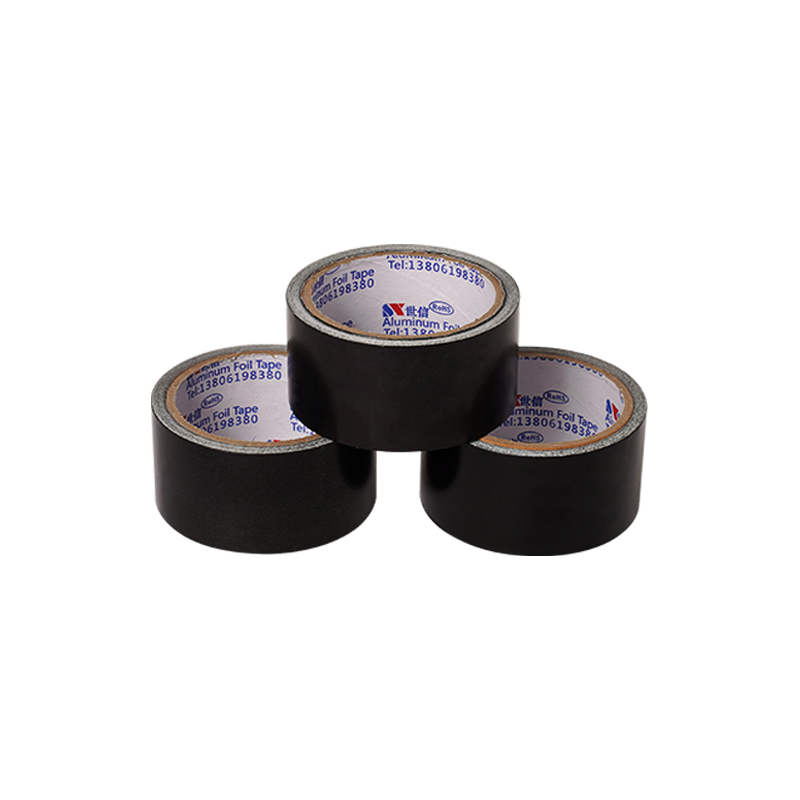
The release liner is more than a temporary protective layer. In manufacturing environments, it can directly affect how efficiently aluminum foil tape is handled and converted. A suitable liner allows the adhesive surface to remain clean until the exact point of application and provides a stable backing during cutting or die-cutting operations.
For example, when a tape is supplied in narrow rolls or pre-cut shapes, the liner can help maintain dimensional stability during processing. During installation, the liner can also be partially removed so that the tape can be positioned progressively instead of exposing the entire adhesive surface at once.
One important distinction in material selection is whether the backing consists of actual aluminum foil or a polymer film with a thin metallized coating. These structures can look similar but behave differently in industrial applications.
|
Property |
Pure Aluminum Foil Backing |
Metallized Polymer Film |
|
Backing structure |
Metallic aluminum foil |
Polymer film with a thin metal coating |
|
Thermal reflection |
High, depending on surface condition |
Generally high for reflective applications |
|
Electrical conductivity |
Conductive through the aluminum layer |
Depends strongly on metallization continuity |
|
Barrier performance |
Strong moisture and vapor barrier |
Depends on film and coating construction |
|
Mechanical behavior |
Metal foil characteristics with good conformability |
More strongly influenced by polymer film properties |
|
Surface durability |
Suitable for applications requiring a continuous metallic surface |
Coating durability depends on the film and metallization process |
The appropriate structure should be selected according to the actual engineering requirement. If the application requires a continuous aluminum metallic layer, controlled thermal reflection, electrical conductivity, or a strong vapor barrier, pure aluminum foil can provide advantages that a metallized polymer film may not fully reproduce.
Foil thickness is one of the main variables affecting the mechanical and handling characteristics of Pure Aluminum Foil Tape With Liner. There is no single thickness suitable for every application.
Actual specifications should be established according to the required application rather than using foil thickness as the only selection criterion. Adhesive strength, substrate compatibility, temperature exposure, and installation method can have an equally significant influence on final performance.
Because the tape combines an aluminum barrier layer with a controlled adhesive system, it can be used across several industrial applications.
For B2B procurement and engineering applications, the following parameters should normally be confirmed before selecting Pure Aluminum Foil Tape With Liner:
In practical terms, Pure Aluminum Foil Tape With Liner should be specified as a complete material system rather than simply as “aluminum tape.” The aluminum backing determines many of the barrier and thermal characteristics, the adhesive determines bonding performance, and the release liner determines how effectively the tape can be stored, converted, handled, and applied. Matching all three layers to the intended application is the key to achieving consistent performance in industrial use.
Pure Aluminum Foil Tape With Liner works through the combined action of a metallic aluminum backing, a pressure-sensitive adhesive layer, and a removable release liner. During storage and handling, the liner protects the adhesive from contamination and premature bonding. During installation, the liner is removed to expose the adhesive, which is then pressed against the target substrate. Once bonded, the aluminum foil provides the functional barrier and reflective surface required by the application.
The performance of the tape is therefore not determined by the aluminum foil alone. Bond strength depends on adhesive chemistry and surface conditions, while thermal and barrier performance are strongly influenced by foil construction. For industrial applications, understanding how the three layers interact is essential for selecting the appropriate specification.
The aluminum foil is the main functional backing layer. Because aluminum is a continuous metallic material, it can provide a combination of thermal reflection, moisture resistance, vapor resistance, electrical conductivity, and surface protection.
When exposed to radiant heat, a clean aluminum surface can reflect a significant portion of incident infrared radiation. This makes aluminum foil tape useful for reflective insulation and localized thermal management applications. However, the actual thermal performance of an installed tape also depends on surface condition, contact with adjacent materials, temperature, and the overall insulation structure.
The foil also acts as a barrier against moisture and vapor. A continuous foil layer can help reduce the passage of water vapor through joints and seams when the tape is properly bonded and the surrounding assembly is appropriately designed.
The adhesive layer provides the connection between the aluminum foil and the substrate. Most linered aluminum foil tapes use a pressure-sensitive adhesive, meaning that bonding is achieved primarily through controlled pressure rather than through a separate curing process.
When pressure is applied, the adhesive flows sufficiently to increase contact with microscopic irregularities on the substrate surface. Greater effective contact generally improves adhesion, provided that the substrate is clean, dry, and compatible with the adhesive.
Adhesive performance can be evaluated through several important parameters:
These properties should not be evaluated independently. An adhesive with high initial tack, for example, may not necessarily provide the required long-term holding performance at elevated temperatures.
The release liner protects the adhesive before application. It normally consists of a paper or polymer-based carrier with a release-treated surface that allows the liner to separate from the adhesive without damaging the adhesive layer.
Before application, the liner prevents dust, moisture, and other contaminants from reaching the adhesive. During installation, the liner is peeled away, exposing a clean adhesive surface.
The liner also provides important processing advantages for industrial applications:
The bonding process can generally be understood as a sequence of four stages:
For critical applications, bonding conditions should be validated using the actual substrate, temperature, surface condition, and installation method rather than relying only on laboratory values from a general specification sheet.
|
Layer |
Primary Function |
Key Performance Factors |
|
Pure aluminum foil |
Thermal reflection, barrier protection, conductivity, mechanical protection |
Foil thickness, aluminum grade, surface condition, tensile strength |
|
Pressure-sensitive adhesive |
Creates and maintains the bond |
Initial tack, peel adhesion, shear resistance, temperature resistance |
|
Release liner |
Protects adhesive before application |
Liner material, thickness, release force, dimensional stability |
The interaction between these layers is particularly important in industrial converting. For example, increasing foil thickness can improve mechanical strength but may reduce flexibility. A stronger adhesive can improve bonding to difficult substrates but may require a different liner release force. Similarly, a liner that performs well during storage may not necessarily be ideal for high-speed die-cutting.
Temperature affects both the aluminum backing and the adhesive system, but the adhesive is generally the more temperature-sensitive component. Aluminum itself remains dimensionally stable over a broad temperature range compared with many polymeric adhesive systems. However, changes in temperature can alter adhesive flow, tack, cohesive strength, and long-term holding power.
For this reason, an application exposed to continuous elevated temperature should be evaluated using the adhesive's actual operating range rather than assuming that the aluminum foil automatically makes the entire tape suitable for high-temperature service.
A useful engineering distinction is:
Even a high-performance adhesive cannot compensate completely for a poorly prepared surface. Dust, oil, grease, moisture, oxidation, and loose particles can reduce the actual contact area between the adhesive and substrate.
Substrate surface energy also influences wetting. Smooth, clean metal surfaces may provide very different bonding behavior from rough insulation materials, coated surfaces, plastics, or porous substrates.
For industrial qualification, adhesion should therefore be tested on the actual substrate used in production. A representative test should consider surface preparation, application pressure, bonding temperature, dwell time, and environmental exposure.
|
Parameter |
Why It Matters |
Typical Selection Consideration |
|
Foil thickness |
Influences strength, flexibility, barrier performance, and handling |
Select according to mechanical and barrier requirements |
|
Adhesive type |
Determines bonding behavior and environmental resistance |
Match to substrate and operating conditions |
|
Peel adhesion |
Indicates resistance to peeling from the substrate |
Specify using the actual substrate and test method |
|
Temperature range |
Determines whether the bond remains functional during service |
Consider continuous temperature and temperature cycling |
|
Liner release force |
Affects ease of liner removal and processing efficiency |
Balance easy release with sufficient handling stability |
|
Substrate compatibility |
Strongly affects final adhesion |
Validate using production substrate and surface condition |
Pure Aluminum Foil Tape With Liner works as an integrated system rather than as a simple aluminum strip with adhesive. The aluminum foil provides the primary thermal, barrier, conductive, and protective functions; the adhesive establishes the bond; and the release liner preserves adhesive quality and improves handling before installation.
For B2B and industrial applications, reliable performance comes from matching the foil construction, adhesive system, liner design, substrate, application process, and operating environment. Evaluating these factors together provides a more accurate basis for material selection than comparing foil thickness or adhesive strength alone.
The key specifications of Pure Aluminum Foil Tape With Liner include aluminum foil thickness, total tape thickness, adhesive type, adhesive performance, release liner construction, temperature resistance, tensile strength, elongation, roll dimensions, and converting requirements. These parameters work together to determine whether the tape is suitable for insulation, HVAC sealing, thermal management, industrial bonding, electrical applications, or customized die-cut components.
For B2B procurement, it is important to evaluate the complete tape construction rather than selecting a specification based on foil thickness alone. Two tapes with the same aluminum thickness can have significantly different performance if their adhesive systems, liner structures, or coating weights are different.
Aluminum foil thickness is one of the most important physical specifications. It affects mechanical strength, flexibility, conformability, barrier characteristics, and resistance to tearing during installation.
|
Foil Thickness Range |
General Characteristics |
Typical Considerations |
|
Approximately 20–30 μm |
Lightweight and highly flexible |
Suitable where conformability and low material weight are important |
|
Approximately 30–50 μm |
Balanced flexibility and mechanical handling strength |
Suitable for general industrial sealing and insulation-related applications |
|
Approximately 50–100 μm |
Higher mechanical strength and improved resistance to tearing |
Useful where stronger barrier and protective characteristics are required |
|
Above 100 μm |
Greater stiffness and mechanical robustness |
Selected for demanding structural or protective applications when flexibility is less critical |
These ranges are general engineering references rather than universal product standards. The actual specification should be determined according to the substrate, installation method, mechanical load, and required barrier performance.
Total tape thickness includes the aluminum foil and adhesive layer, while the release liner is normally specified separately. This value is important when the tape must fit into a defined assembly gap or when it will be used in a converting process.
A thicker overall construction may provide better mechanical handling and surface protection, but excessive thickness can reduce flexibility around tight curves. For automated lamination or die-cutting, dimensional consistency is often more important than simply maximizing thickness.
The adhesive system determines how effectively the tape bonds to the selected substrate and how well the bond performs during service. Common adhesive categories include acrylic-based and rubber-based pressure-sensitive systems, although the appropriate formulation depends on the intended application.
|
Adhesive Consideration |
Primary Performance Focus |
Selection Priority |
|
Acrylic-based system |
Long-term stability and environmental resistance |
Suitable where temperature, UV, aging, or environmental exposure is important |
|
Rubber-based system |
High initial tack and rapid bonding |
Useful where fast adhesion and good contact with suitable substrates are required |
The adhesive should always be evaluated against the actual substrate. Adhesive performance on clean aluminum, painted metal, insulation materials, plastics, and porous surfaces can vary substantially.
Peel adhesion describes the force required to remove the tape from a specified substrate under controlled testing conditions. It is commonly expressed in N/25 mm or a similar unit depending on the test method.
Higher peel adhesion can be beneficial when the tape must resist edge lifting or peeling forces. However, a higher numerical value does not automatically mean that a tape is more suitable for every application. Substrate compatibility, surface cleanliness, application pressure, and temperature must also be considered.
Tensile strength describes the force required to break the aluminum foil tape under a specified test method. Elongation indicates how much the material stretches before failure.
For aluminum foil tape, these properties are influenced by foil thickness, aluminum grade, temper, adhesive construction, and test conditions.
Temperature resistance should be specified according to the adhesive system rather than the aluminum foil alone. Aluminum foil can tolerate relatively high temperatures, but the adhesive may experience changes in tack, cohesion, or shear strength as temperature increases.
|
Temperature Condition |
What Should Be Evaluated? |
|
Low-temperature application |
Initial tack and ability to wet the substrate |
|
Normal operating temperature |
Long-term adhesion and dimensional stability |
|
Elevated continuous temperature |
Adhesive cohesion, shear resistance, and long-term bond retention |
|
Temperature cycling |
Interface stress, repeated expansion and contraction, and edge lifting |
When the tape will be used in a thermally demanding environment, both continuous operating temperature and short-term peak temperature should be specified separately.
The release liner protects the adhesive before use and influences the handling characteristics of the tape. Important liner parameters include material, thickness, release force, dimensional stability, and compatibility with converting equipment.
A liner that releases too easily may create handling problems during processing, while excessive release force can make installation slower and may interfere with automated liner removal.
Width and roll length should be selected according to the installation method and production process. Narrow widths can be useful for joints, seams, and localized sealing, while wider formats can reduce the number of overlaps in large-area applications.
For industrial converting, roll dimensions should also be matched to slitting, laminating, and die-cutting equipment. Consistent winding quality and controlled roll tension can be as important as nominal width and length.
The aluminum foil surface can be supplied with different levels of smoothness or surface treatment depending on the intended use. Surface condition can affect appearance, reflectivity, printability, lamination, and adhesive performance.
For applications where thermal reflection is important, maintaining a clean and relatively continuous aluminum surface can be advantageous. For bonding or laminating processes, surface treatment and cleanliness should be evaluated together with the adhesive system.
|
Specification |
Recommended Information to Confirm |
|
Aluminum foil |
Thickness, grade, temper, surface condition |
|
Adhesive |
Type, coating weight, peel adhesion, shear resistance |
|
Total thickness |
Foil + adhesive thickness |
|
Mechanical properties |
Tensile strength, elongation, tear resistance where required |
|
Temperature performance |
Application temperature, continuous temperature, peak temperature |
|
Release liner |
Material, thickness, release force, dimensional stability |
|
Dimensions |
Width, roll length, core size, winding requirements |
|
Converting |
Slitting, die-cutting, laminating, and automated application requirements |
The key specifications of Pure Aluminum Foil Tape With Liner should be evaluated as an integrated set of material, adhesive, liner, mechanical, thermal, and dimensional parameters. Foil thickness determines much of the mechanical and barrier behavior, while adhesive properties control bonding performance and the release liner determines handling and processing characteristics.
For industrial procurement, the most reliable specification process starts with the application requirements and works backward to the material construction. By defining the substrate, temperature range, environmental exposure, mechanical requirements, installation method, and converting process first, engineers can select a tape specification that provides consistent performance without unnecessarily over-specifying individual parameters.
Pure Aluminum Foil Tape With Liner combines the functional advantages of a continuous aluminum foil backing with controlled adhesive application and convenient handling. Its main benefits include thermal reflection, moisture and vapor resistance, surface protection, good conformability, controlled installation, and suitability for industrial converting. The release liner is particularly valuable when accurate positioning, die-cutting, lamination, or clean adhesive handling is required.
For B2B applications, the practical value of the tape comes from the interaction between the aluminum foil, adhesive, and liner. Selecting a suitable foil thickness without considering adhesive performance or installation conditions can lead to inconsistent results. The following benefits explain where the three-layer construction can provide meaningful engineering advantages.
The metallic aluminum surface can reflect radiant heat, making the tape useful for applications involving thermal insulation, heat shielding, and reflective surfaces. A clean and continuous aluminum surface generally provides higher reflectivity than a heavily contaminated, oxidized, or mechanically damaged surface.
Thermal reflection should not be confused with thermal insulation. Aluminum foil primarily reflects radiant energy, while insulation materials reduce heat transfer through conduction and convection. In an actual thermal assembly, the tape normally works as one component of a larger insulation system.
A continuous aluminum foil backing provides an effective barrier against moisture and water vapor. This is particularly valuable in insulation assemblies where uncontrolled vapor transmission can reduce thermal performance or contribute to condensation-related problems.
However, the barrier function depends heavily on installation quality. Pinholes, cuts, wrinkles, incomplete overlaps, and unsealed edges can create pathways through which moisture or vapor can pass.
For this reason, a liner-backed construction can be particularly useful when clean and controlled sealing is required. The release liner protects the adhesive until the tape is ready to be applied, reducing the risk of contamination before bonding.
The release liner provides an important practical advantage during installation. Because the adhesive remains covered until use, workers can handle and position the tape without immediately exposing the entire adhesive surface.
This is useful when the tape must be aligned along long seams, narrow joints, corners, or irregular surfaces. The liner can be removed progressively, allowing the installer to control the bonding sequence.
Pure aluminum foil can be formed around many contours when an appropriate foil thickness is selected. This makes aluminum foil tape useful for joints, edges, corners, seams, and surfaces that are not completely flat.
|
Foil Construction |
Flexibility |
Mechanical Handling |
Typical Selection Consideration |
|
Thin foil |
Higher |
Lower to moderate |
Irregular surfaces and applications requiring greater flexibility |
|
Medium foil |
Balanced |
Moderate |
General sealing, insulation, and industrial applications |
|
Thick foil |
Lower |
Higher |
Applications requiring stronger resistance to tearing and mechanical damage |
The correct balance depends on the application. A thicker foil is not automatically preferable because increased thickness can reduce flexibility around tight radii.
Compared with polymer films carrying only a thin metallic coating, actual aluminum foil provides a continuous metallic backing that can contribute to surface protection and resistance to handling damage.
Foil thickness has a direct influence on this characteristic. Increasing the foil thickness generally improves resistance to tearing and mechanical deformation, although the adhesive and substrate remain important factors in the final assembly.
This makes liner-backed aluminum foil tape useful for applications where the tape must function as both a sealing layer and a protective metallic surface.
Because the backing is metallic aluminum, the foil can provide electrical conductivity when electrical continuity is maintained across the tape and the contact interface. This property can be useful in certain shielding, grounding, and electromagnetic management applications.
However, electrical performance should always be verified for the actual construction. Adhesive layers can be electrically insulating, and surface oxidation, overlaps, substrate conditions, and adhesive formulation can affect electrical continuity.
|
Electrical Requirement |
Important Factor |
|
Conductive foil surface |
Continuity of the aluminum backing |
|
Conductive overlap |
Contact between aluminum surfaces at the joint |
|
Shielding application |
Continuity, coverage, grounding method, and assembly geometry |
|
Insulated adhesive layer |
Electrical separation between foil and substrate |
The release liner can provide a stable carrier for industrial converting operations. This is especially useful when aluminum foil tape needs to be supplied as narrow strips, pre-cut pieces, custom shapes, or laminated components.
During die-cutting, the liner can support the tape structure and help maintain the shape of adhesive components after cutting. During slitting, a suitable liner can also help protect the adhesive surface and improve handling efficiency.
The release liner protects the adhesive from contamination before the tape is used. This can be particularly important in industrial environments where dust, particles, moisture, or accidental contact could reduce adhesive performance.
Proper storage remains important even with a liner. Rolls should normally be protected from excessive heat, moisture, direct sunlight, and physical deformation. Storage conditions should follow the adhesive and liner specifications established for the specific construction.
The main benefits of Pure Aluminum Foil Tape With Liner should be evaluated as a system. Increasing one parameter does not necessarily improve every aspect of performance.
|
Design Change |
Potential Advantage |
Possible Trade-Off |
|
Increase foil thickness |
Higher mechanical strength and tear resistance |
Reduced flexibility and potentially higher material weight |
|
Increase adhesive coating |
Potentially improved bonding and surface wetting |
Greater total thickness and different converting characteristics |
|
Use a stronger adhesive system |
Higher holding power on suitable substrates |
May require greater release force or different application conditions |
|
Use a thicker liner |
Improved handling and dimensional stability |
Higher overall material thickness and potentially higher processing cost |
For industrial buyers, the value of Pure Aluminum Foil Tape With Liner is not limited to the tape's basic bonding capability. The construction can simplify production, improve installation consistency, and provide additional barrier or thermal functions within the finished assembly.
When evaluating a specification, procurement and engineering teams should consider:
The main benefits of Pure Aluminum Foil Tape With Liner come from combining a continuous aluminum backing with a controlled adhesive system and protective release liner. The aluminum layer provides thermal reflection, moisture and vapor resistance, surface protection, and potential electrical conductivity. The adhesive provides the required bond, while the liner improves storage, handling, positioning, and converting efficiency.
For professional industrial applications, the most suitable specification is not necessarily the thickest foil or the strongest adhesive. The better approach is to balance foil thickness, adhesive performance, liner design, substrate compatibility, temperature exposure, environmental conditions, and processing requirements according to the actual application.
Pure Aluminum Foil Tape With Liner is used mainly in applications that require a combination of aluminum foil barrier performance, thermal reflection, moisture resistance, controlled bonding, and clean installation. The release liner makes the tape particularly suitable for applications where accurate positioning, die-cutting, lamination, or controlled adhesive exposure is important.
Because application conditions vary considerably, the tape should be selected according to substrate, temperature, mechanical requirements, environmental exposure, and installation method. The same aluminum foil construction may perform differently on insulation, metal, plastic, or coated surfaces.
HVAC and thermal insulation applications are among the common uses for liner-backed aluminum foil tape. The aluminum foil can help seal joints, maintain a continuous vapor barrier, and provide a reflective surface on compatible insulation assemblies.
Typical applications include:
For HVAC applications, adhesive performance is just as important as foil construction. The tape must maintain adequate adhesion under the expected temperature and humidity conditions. Surfaces should be clean, dry, and free from dust, oil, and loose particles before application.
Pure Aluminum Foil Tape With Liner can be incorporated into building insulation and reflective barrier assemblies where a continuous metallic surface or moisture-resistant seam is required.
Typical uses include:
The liner can be especially useful when long seams need accurate positioning. The installer can remove the liner progressively instead of exposing the entire adhesive surface at once, helping reduce wrinkles and unintended bonding.
The aluminum backing is electrically conductive, which makes pure aluminum foil tape potentially useful in selected electrical shielding, grounding, and electromagnetic management applications. However, electrical performance depends on the complete tape construction and installation method.
|
Application Requirement |
Important Consideration |
|
Electrical continuity |
Aluminum-to-aluminum contact and continuity across joints |
|
Shielding |
Continuous coverage, overlap design, and grounding method |
|
Bonding to conductive surfaces |
Adhesive compatibility and surface preparation |
|
Insulating adhesive construction |
Electrical separation between the foil and substrate |
When electrical resistance or shielding effectiveness is critical, the final assembly should be tested rather than relying solely on the nominal conductivity of the aluminum foil.
In automotive and transportation equipment, linered aluminum foil tape can be considered for thermal management, insulation-related assemblies, and localized heat-reflective applications.
Potential uses include:
Automotive environments can involve vibration, temperature cycling, humidity, oils, and other contaminants. Therefore, adhesive selection should consider both the continuous operating temperature and the expected mechanical movement. A tape that performs well under static indoor conditions may require a different adhesive construction for a high-vibration environment.
Pure aluminum foil tape can be used for localized thermal management where radiant heat reflection or a metallic protective surface is required. The aluminum surface can reflect radiant energy, while the adhesive maintains the tape in the required position.
Potential industrial applications include:
It is important to distinguish heat reflection from thermal insulation. Aluminum foil primarily contributes reflective and barrier functions. It does not replace a properly designed insulation layer where low heat transfer through conduction is required.
The liner-backed construction is particularly useful when aluminum foil tape is converted into custom shapes. The release liner supports the adhesive layer during processing and keeps the adhesive protected until the component is installed.
Common converting operations include:
For automated converting, liner thickness, release force, foil thickness, adhesive coating uniformity, and winding quality should be considered together. A liner that is appropriate for manual application may not necessarily provide the required stability during high-speed processing.
|
Industry |
Primary Function |
Important Parameters |
|
HVAC and insulation |
Sealing, vapor barrier continuity, thermal reflection |
Adhesion, foil thickness, temperature resistance, moisture resistance |
|
Construction |
Insulation seam sealing and reflective surface continuity |
Conformability, adhesion, barrier performance |
|
Electrical and electronics |
Conductive and shielding applications |
Electrical continuity, adhesive construction, surface coverage |
|
Automotive |
Thermal management and insulation assembly |
Temperature resistance, vibration resistance, aging stability |
|
Industrial equipment |
Thermal reflection and surface protection |
Foil strength, temperature range, environmental resistance |
|
Industrial converting |
Custom adhesive components |
Liner release, dimensional stability, die-cutting performance |
Application selection should begin with the actual operating environment rather than the tape name alone. A practical selection process can follow these steps:
Even when the tape construction is correctly selected, application quality can strongly influence final performance. The substrate should normally be clean and dry, and sufficient pressure should be applied to establish close adhesive contact.
When sealing insulation seams, particular attention should be paid to overlaps and edge contact. When electrical shielding is required, continuity between adjacent foil sections must also be considered. For high-temperature applications, the bonded assembly should be validated under representative service conditions.
Pure Aluminum Foil Tape With Liner can serve multiple industrial functions, including insulation seam sealing, vapor-barrier maintenance, thermal reflection, surface protection, electrical shielding, and customized adhesive component production. Its suitability depends on more than the aluminum foil itself. Foil thickness, adhesive properties, liner design, substrate compatibility, temperature exposure, environmental conditions, and processing requirements should all be evaluated.
For B2B applications, the most reliable approach is to define the required function first and then specify the tape construction around that requirement. This helps ensure that the selected aluminum foil tape provides the necessary balance of barrier performance, adhesion, mechanical strength, flexibility, thermal resistance, and processing efficiency.

Our company has been engaged in the tape manufacturing industry for more than 20 years, and has been focusing on various types of aluminum foil tapes, foam tapes, refrigerator tapes, etc.
IsabelLina
Email:[email protected]
Mobile/Whatsapp: +86 190 3379 1110
Mars Gong
Email:[email protected]
Mobile/Whatsapp: +86 159 5136 0053
Address: West side of Yingbin Avenue and south side of hengwang packaging. Suqian Economic and Technological Development Zone,Jiangsu Province
Copyright © Jiangsu Shixin Adhesive Tape Product Co., Ltd. All Rights Reserved. Custom ODM Refrigerator Foil Adhesive Tapes Manufacturers