2026-10-23
Content
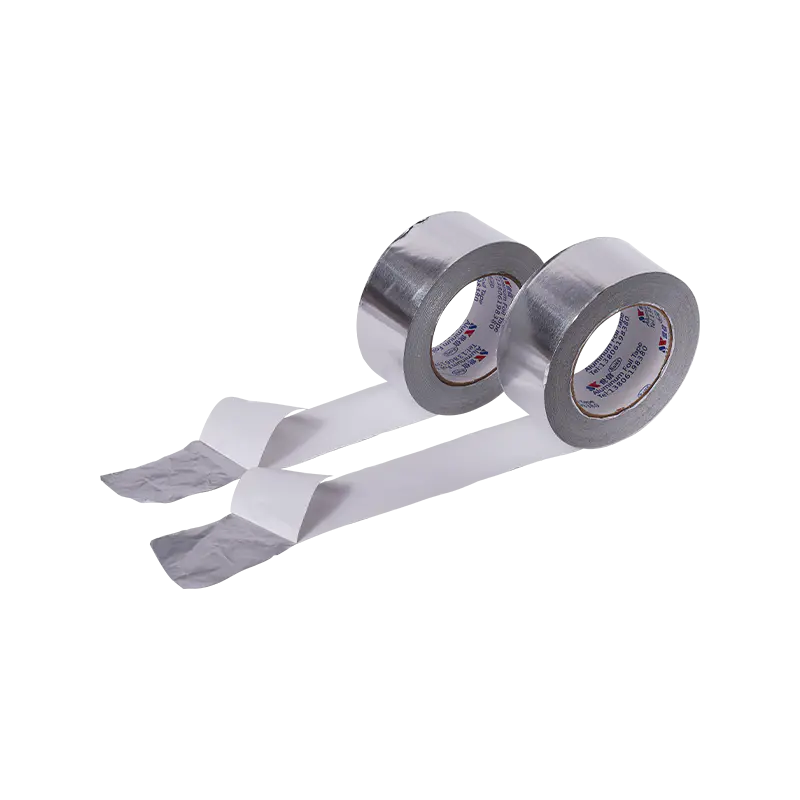
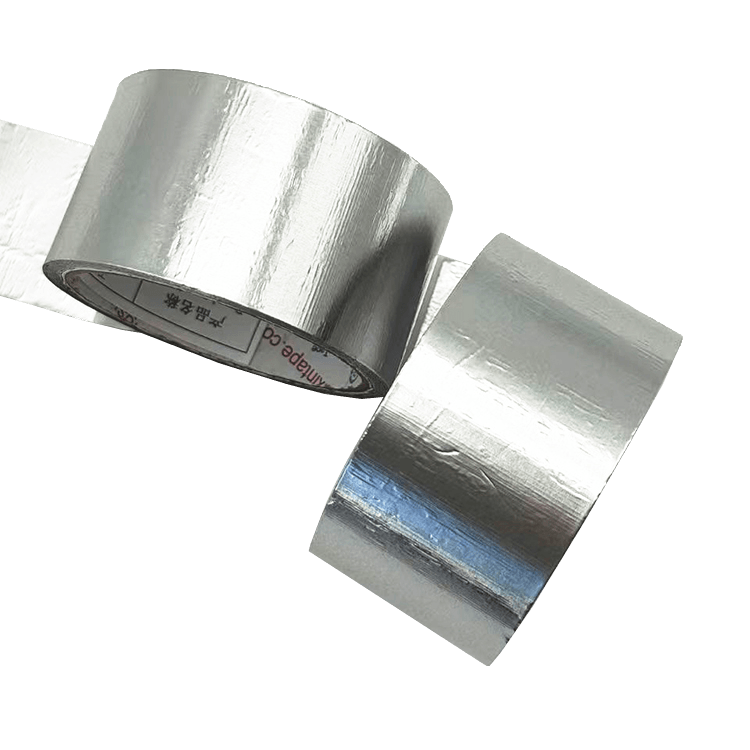
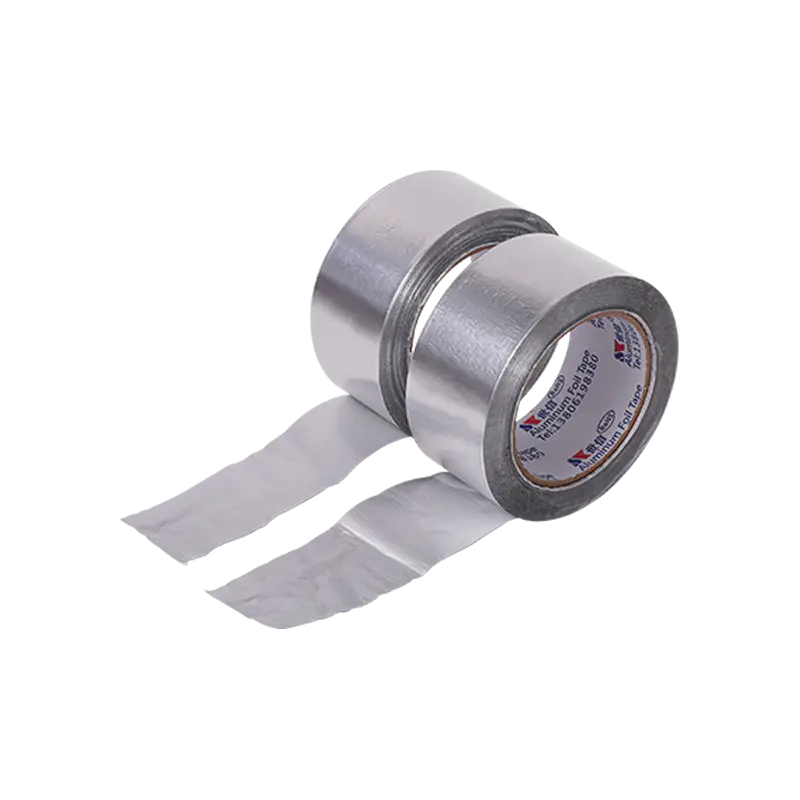
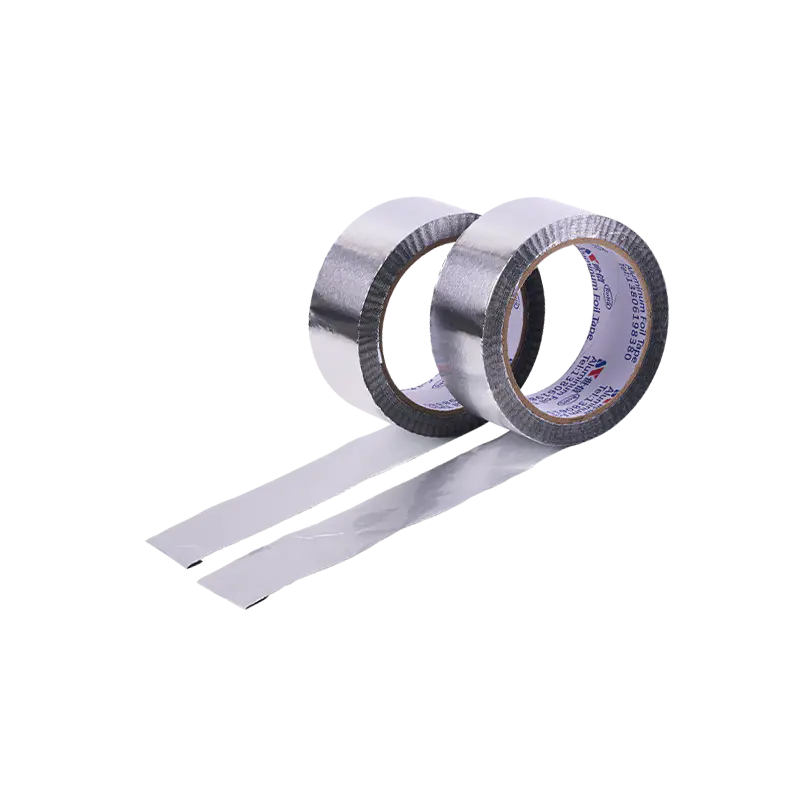
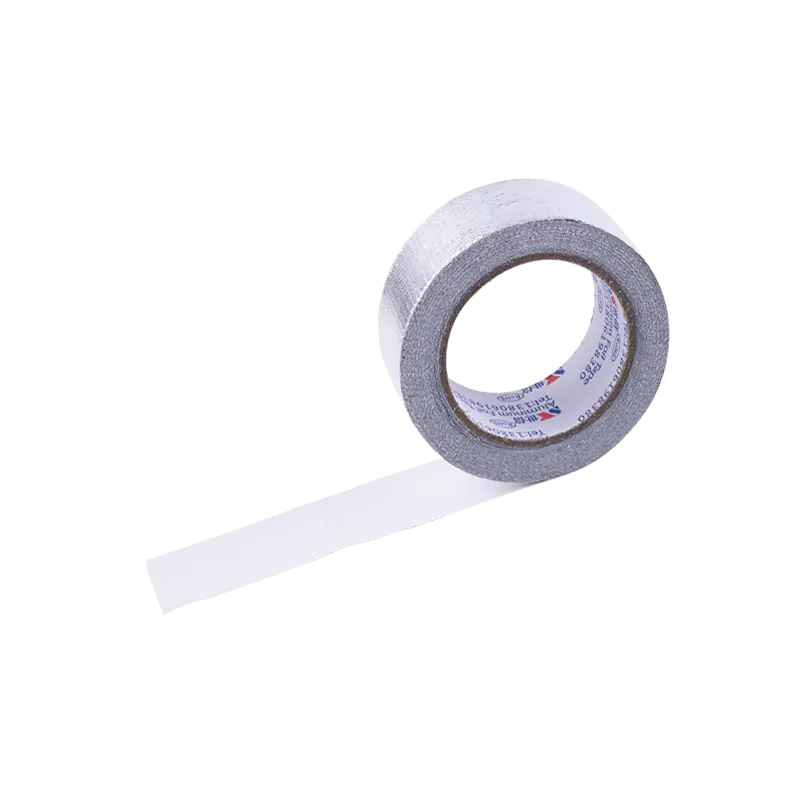
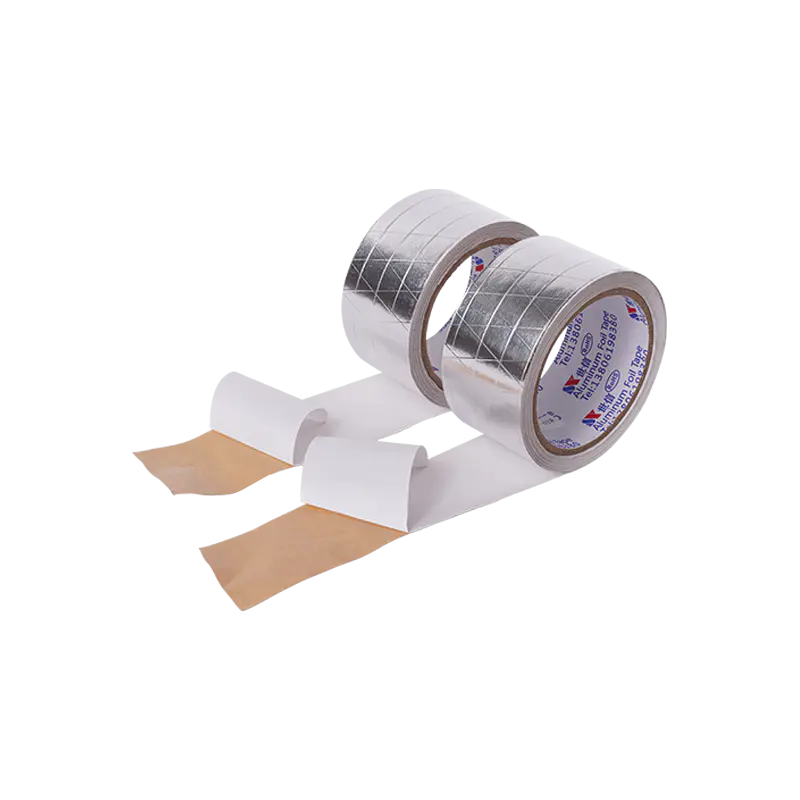
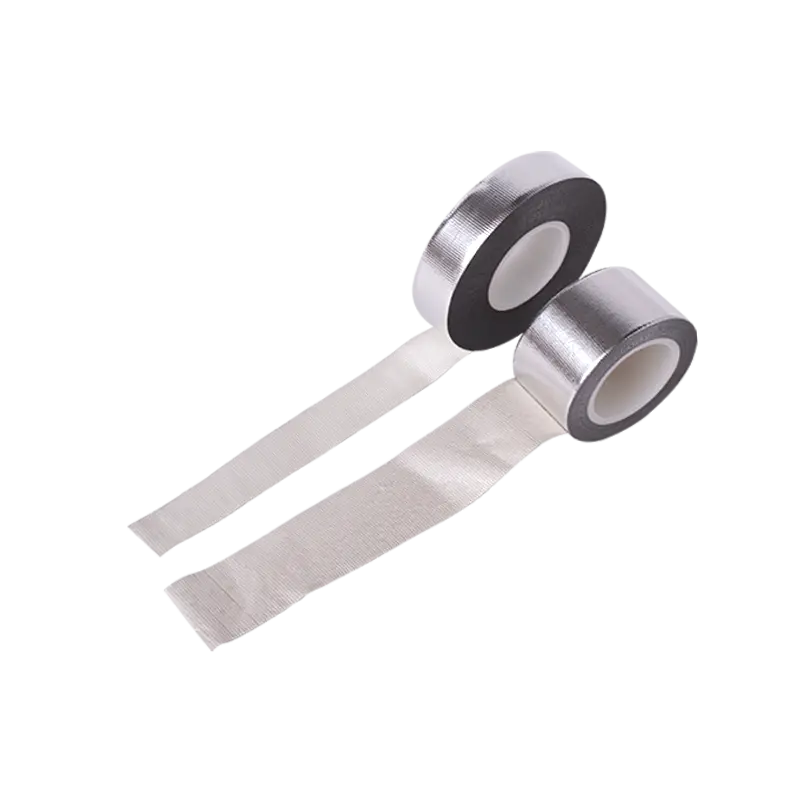
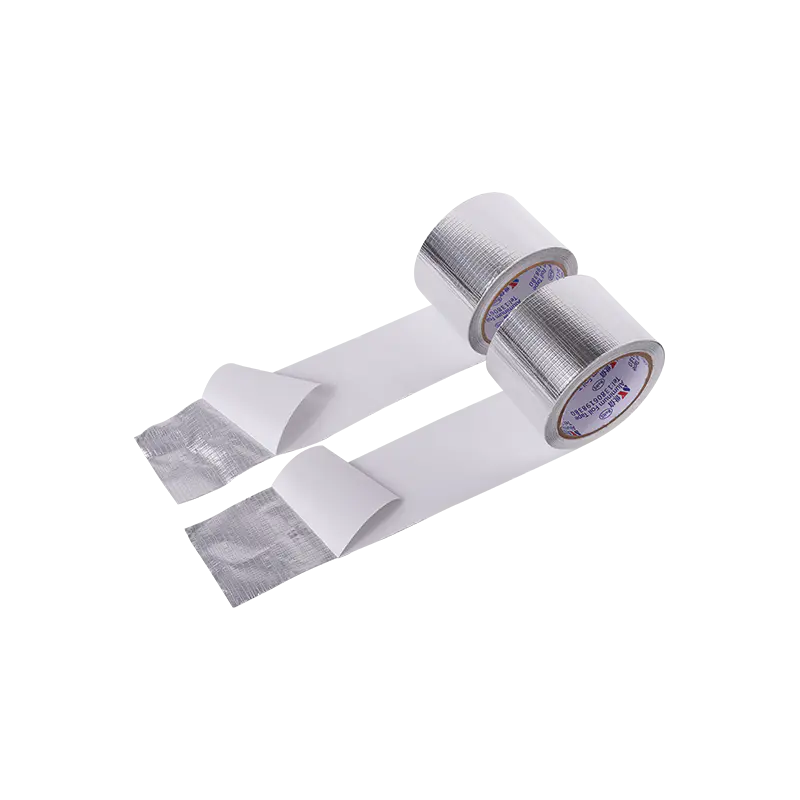
Fiberglass Cloth Aluminum Foil Tape is a reinforced adhesive tape that combines an aluminum foil layer, a fiberglass cloth reinforcement layer, and a pressure-sensitive adhesive system. This composite construction is designed to provide the reflective and barrier properties of aluminum foil while improving tensile strength, dimensional stability, and resistance to tearing through fiberglass reinforcement.
Compared with unsupported aluminum foil tape, the fiberglass reinforcement provides a stronger internal structure that can help the tape maintain its shape when subjected to pulling, handling, bending, or localized mechanical stress. The actual performance depends on the foil thickness, fiberglass cloth construction, adhesive formulation, and manufacturing process.
A typical reinforced aluminum foil tape can be understood through three primary functional components:
Some constructions may also incorporate a release liner or additional functional layers depending on the intended application. These variations should be specified according to installation and converting requirements.
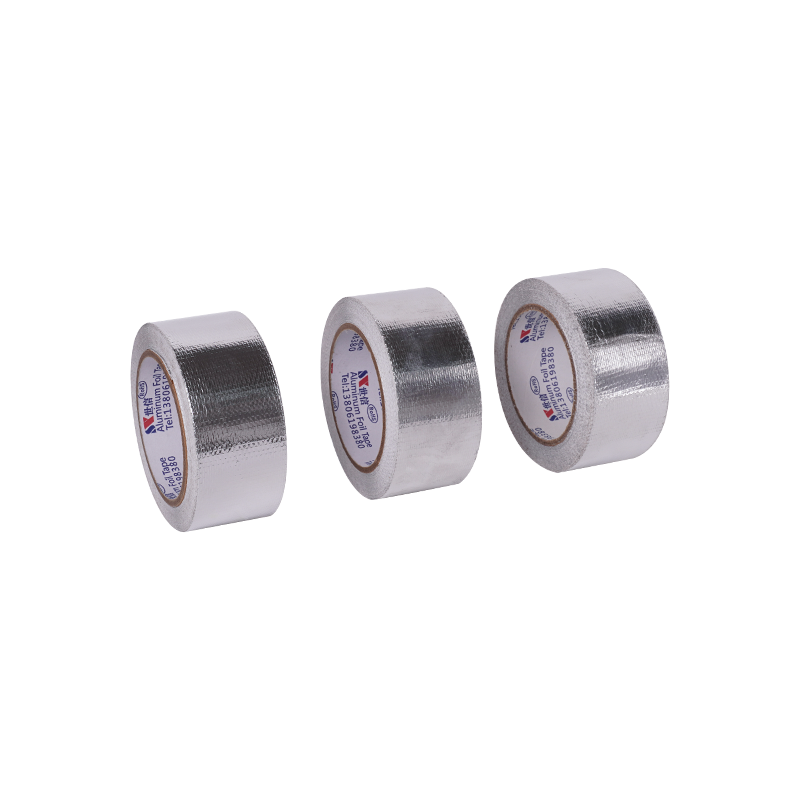
The aluminum foil is the primary barrier and reflective component. Its continuous metallic surface can reflect radiant heat and help reduce the transmission of moisture and water vapor through properly sealed joints.
Aluminum foil can also provide a degree of surface protection against environmental exposure. The effectiveness of these properties is influenced by foil thickness, surface condition, continuity, and the quality of the finished bond.
The fiberglass cloth acts as an internal reinforcement network. Unlike aluminum foil alone, which can tear or deform when subjected to concentrated forces, fiberglass provides additional structural support across the tape.
The reinforcement is particularly useful when the tape must withstand repeated handling, tension during installation, or mechanical stress around seams and edges.
|
Fiberglass Reinforcement Level |
General Mechanical Behavior |
Application Consideration |
|
Light reinforcement |
Higher flexibility with moderate reinforcement |
Suitable when conformability remains important |
|
Medium reinforcement |
Balanced strength, flexibility, and dimensional stability |
Suitable for general industrial insulation and sealing applications |
|
Heavy reinforcement |
Higher tensile and tear resistance with greater structural support |
Useful for demanding mechanical handling and reinforcement requirements |
Increasing fiberglass reinforcement does not automatically improve every property. A heavier reinforcement structure can increase strength while reducing flexibility and conformability. Therefore, reinforcement density should be selected according to the actual mechanical requirements.
The adhesive layer connects the composite tape to the target substrate. Its performance determines whether the tape can maintain a reliable bond under the expected temperature, humidity, vibration, and mechanical loading conditions.
Important adhesive characteristics include:
Adhesive selection should be based on the actual substrate rather than the tape construction alone. Aluminum, galvanized metal, coated surfaces, insulation materials, plastics, and porous substrates can have significantly different surface characteristics.
|
Layer |
Primary Function |
Key Parameters |
|
Aluminum foil |
Reflection, barrier protection, surface protection |
Foil thickness, grade, surface condition, tensile properties |
|
Fiberglass cloth |
Reinforcement and dimensional stability |
Cloth thickness, yarn structure, density, tensile strength |
|
Adhesive |
Bonding and load transfer |
Peel adhesion, tack, shear resistance, temperature resistance |
The three components should be designed as a coordinated system. For example, increasing foil thickness can improve mechanical protection but may reduce flexibility. Increasing fiberglass reinforcement can improve tensile strength but can also affect conformability. Increasing adhesive coating may improve bonding to certain substrates while changing the total thickness and converting behavior.
|
Performance Factor |
Fiberglass Reinforced Aluminum Foil Tape |
Unsupported Aluminum Foil Tape |
|
Tensile strength |
Generally higher because of the reinforcement structure |
Primarily dependent on foil thickness and aluminum properties |
|
Tear resistance |
Improved resistance to propagation of tears |
More dependent on foil thickness and handling conditions |
|
Dimensional stability |
Higher under tensile and handling forces |
More susceptible to stretching or deformation under certain loads |
|
Flexibility |
Depends on reinforcement density and construction |
Generally higher at comparable foil thickness |
|
Mechanical handling |
More suitable for applications involving pulling or repeated handling |
Suitable where mechanical loading is relatively limited |
The comparison does not mean that fiberglass reinforcement is required for every application. Unsupported aluminum foil can be preferable where maximum flexibility and easy conformability are more important than high mechanical strength.
For industrial procurement, the following parameters should be established before specifying Fiberglass Cloth Aluminum Foil Tape:
The main advantage of Fiberglass Cloth Aluminum Foil Tape is the combination of different functional properties within one construction. The aluminum foil supplies reflection and barrier characteristics, while the fiberglass reinforcement improves mechanical stability. The adhesive then transfers loads between the tape and the substrate.
This combination is particularly useful where a tape must remain intact during installation or service while also providing a reflective or moisture-resistant outer surface. For HVAC insulation, industrial thermal management, construction materials, and other demanding applications, the reinforcement can help reduce the risk of tearing and deformation compared with unsupported foil constructions.
In practical B2B selection, the tape should therefore be specified according to the complete structure rather than by the aluminum foil layer alone. Matching foil thickness, fiberglass reinforcement, adhesive performance, and application conditions provides a more reliable basis for achieving the required mechanical, thermal, and barrier performance.
Fiberglass Cloth Aluminum Foil Tape works through the coordinated action of its aluminum foil surface, fiberglass reinforcement, and adhesive layer. The aluminum foil contributes radiant heat reflection and barrier performance, the fiberglass cloth provides mechanical reinforcement and dimensional stability, and the adhesive establishes contact with the target substrate. This combined structure allows the tape to perform both functional and mechanical roles in applications where unsupported foil may be more vulnerable to tearing or deformation.
The working principle is therefore different from treating the tape simply as an aluminum foil coating. Each layer addresses a different performance requirement, and the final result depends on how these layers are designed together.
The exposed aluminum surface provides the primary reflective function. Aluminum is a thermally conductive metal, but its value in reflective insulation applications comes mainly from its ability to reflect radiant energy rather than from acting as a conventional thermal insulator. A clean, continuous metallic surface can reduce the amount of radiant heat absorbed by the underlying assembly.
The aluminum layer also contributes to moisture and vapor barrier performance. When the foil remains continuous and the tape is correctly bonded across seams and joints, it can help limit moisture and vapor penetration through the sealed area.
It is important to distinguish radiant heat reflection from thermal insulation. The aluminum layer does not replace a low-conductivity insulation material. Instead, it can work with an insulation system by providing a reflective and barrier surface.
The fiberglass cloth forms a reinforcing network within the composite structure. Its primary function is to improve resistance to tensile loading, tearing, puncture, and dimensional deformation. This is particularly valuable when the tape is pulled during installation or exposed to movement and vibration after bonding.
Instead of allowing the aluminum foil to carry mechanical loads by itself, the fiberglass network distributes forces across a larger area. This can help maintain the integrity of the foil when the tape is subjected to localized stress.
|
Reinforcement Level |
Mechanical Effect |
Typical Design Consideration |
|
Light fiberglass reinforcement |
Moderate increase in strength while retaining higher flexibility |
Suitable when conformability is important |
|
Medium fiberglass reinforcement |
Balanced tensile strength and dimensional stability |
Suitable for general industrial insulation and sealing |
|
Heavy fiberglass reinforcement |
Higher mechanical and tear resistance |
Suitable when handling strength and durability have higher priority |
Increasing reinforcement density is not automatically advantageous. A heavier fiberglass structure can improve strength while reducing flexibility. Therefore, reinforcement should be matched to the mechanical loading and surface geometry of the application.
The adhesive connects the composite tape to the substrate and transfers mechanical loads from the aluminum-fiberglass structure into the bonded surface. Pressure-sensitive adhesive systems establish bonding through contact and applied pressure, with performance depending strongly on substrate condition and adhesive formulation.
Important adhesive characteristics include:
For high-temperature applications, the temperature limit of the adhesive should be considered separately from the temperature tolerance of the aluminum foil and fiberglass. A metallic foil can remain structurally stable at temperatures where an unsuitable adhesive may soften, lose cohesion, or experience reduced adhesion.
|
Layer |
Primary Function |
Performance Contribution |
|
Aluminum foil |
Reflective and barrier layer |
Radiant heat reflection, moisture resistance, vapor control, metallic surface protection |
|
Fiberglass cloth |
Reinforcement layer |
Tensile strength, tear resistance, dimensional stability |
|
Pressure-sensitive adhesive |
Bonding layer |
Initial tack, peel adhesion, shear resistance, substrate attachment |
The three layers complement one another. The aluminum foil supplies the primary functional surface, fiberglass controls mechanical deformation, and the adhesive maintains contact with the substrate. This is why reinforced foil tape can combine reflective performance with greater mechanical robustness than an unsupported foil construction.
During installation, tape may be pulled, stretched, folded, or pressed around corners. After installation, the assembly may experience vibration, thermal expansion, contraction, or localized movement.
Fiberglass reinforcement helps distribute these mechanical forces. When the aluminum foil experiences a local tear or concentrated load, the fiberglass network can help restrict tear propagation and maintain the overall structure.
|
Mechanical Condition |
Primary Performance Requirement |
Role of Fiberglass Reinforcement |
|
Pulling during installation |
High tensile strength |
Helps carry tensile load and reduce foil deformation |
|
Cutting and handling |
Tear resistance |
Helps limit uncontrolled tearing |
|
Curved installation |
Flexibility and conformability |
Provides reinforcement while allowing controlled bending |
|
Vibration |
Dimensional stability and adhesive retention |
Helps maintain structural integrity during movement |
|
Temperature cycling |
Stable bonded assembly |
Helps reduce deformation of the foil structure while the adhesive accommodates interface movement |
The thermal behavior of Fiberglass Cloth Aluminum Foil Tape is controlled by more than the aluminum layer. The foil contributes reflection and thermal conductivity, the fiberglass contributes structural stability, and the adhesive determines whether the bonded assembly can withstand the service temperature.
For example, a tape may use a high-temperature adhesive system for demanding thermal environments. Some industrial constructions are designed for continuous service at substantially elevated temperatures, but the actual temperature limit is construction-specific and should always be verified from the applicable technical specification. Published industrial examples demonstrate that glass-cloth-reinforced aluminum foil tapes can be engineered for broad temperature ranges, including applications involving substantial heat exposure.
Temperature evaluation should include:
The aluminum foil functions as a continuous barrier layer, while the adhesive closes the interface between the tape and substrate. The quality of the barrier therefore depends on both the foil and the installation.
Even a continuous aluminum foil can lose its barrier effectiveness if the finished assembly contains unsealed edges, punctures, wrinkles, gaps, or poorly bonded overlaps. For insulation systems, maintaining continuity across seams is particularly important.
For this reason, installation should focus on:
|
Performance Factor |
Fiberglass Cloth Aluminum Foil Tape |
Unsupported Aluminum Foil Tape |
|
Tensile resistance |
Generally higher because the fiberglass carries part of the mechanical load |
Primarily determined by aluminum foil thickness and grade |
|
Tear resistance |
Generally improved through reinforcement |
More sensitive to foil thickness and local damage |
|
Dimensional stability |
Improved under pulling and handling forces |
Can deform more easily under mechanical stress |
|
Flexibility |
Depends on fiberglass density and construction |
Generally higher at similar foil thickness |
|
Thermal reflection |
Provided primarily by aluminum foil |
Provided primarily by aluminum foil |
|
Barrier performance |
Provided primarily by the aluminum layer and seam quality |
Provided primarily by the aluminum layer and seam quality |
This comparison illustrates an important engineering principle: fiberglass reinforcement mainly improves mechanical performance rather than replacing the functional role of the aluminum foil. The aluminum remains responsible for the reflective and barrier functions, while the fiberglass strengthens the composite structure.
The final performance of Fiberglass Cloth Aluminum Foil Tape depends on the interaction of several variables rather than one specification.
The working principle of Fiberglass Cloth Aluminum Foil Tape is based on dividing functional and mechanical responsibilities among the aluminum foil, fiberglass reinforcement, and adhesive layer. Aluminum provides radiant heat reflection and barrier performance, fiberglass improves tensile strength and dimensional stability, and the adhesive establishes the connection between the composite tape and substrate.
For industrial applications, the most reliable performance comes from balancing these three components with the actual operating environment. Foil thickness, fiberglass reinforcement, adhesive characteristics, substrate compatibility, temperature exposure, and installation conditions should therefore be evaluated together rather than independently.
The performance of Fiberglass Cloth Aluminum Foil Tape is determined by the combined specifications of the aluminum foil, fiberglass reinforcement, adhesive layer, and overall tape construction. For industrial procurement, evaluating only the aluminum foil thickness is not sufficient. Tensile strength, reinforcement density, adhesive performance, temperature resistance, total thickness, and dimensional specifications can all influence how the tape performs during installation and long-term service.
The appropriate specification should therefore be selected according to the substrate, operating environment, mechanical loading, thermal exposure, and production process. The following parameters provide a practical framework for evaluating reinforced aluminum foil tape for industrial applications.
Aluminum foil thickness directly affects the tape's mechanical properties, flexibility, barrier performance, and handling characteristics. Thicker foil generally provides greater resistance to tearing and mechanical damage, while thinner foil offers improved flexibility and conformability.
|
Foil Thickness Range |
General Characteristics |
Typical Selection Consideration |
|
Approximately 20–30 μm |
Lightweight and highly flexible |
Suitable where flexibility and conformability have higher priority |
|
Approximately 30–50 μm |
Balanced flexibility and mechanical strength |
Suitable for general insulation and sealing applications |
|
Approximately 50–100 μm |
Higher mechanical robustness |
Useful where increased tear and handling resistance is required |
|
Above 100 μm |
Greater stiffness and structural support |
Considered for demanding mechanical or protective applications |
These ranges are general engineering references rather than universal specifications. The actual foil thickness should be determined according to the application and required mechanical performance.
The fiberglass cloth is the primary reinforcement component. Its construction affects tensile strength, tear resistance, dimensional stability, flexibility, and total tape thickness.
Fiberglass reinforcement is commonly described through parameters such as yarn structure, mesh or weave construction, cloth thickness, and mass per unit area. A higher reinforcement level generally increases mechanical support, but excessive reinforcement can reduce conformability.
|
Reinforcement Level |
Mechanical Support |
Flexibility |
Typical Requirement |
|
Light |
Moderate |
Higher |
Applications requiring improved strength while retaining flexibility |
|
Medium |
High |
Balanced |
General industrial insulation and sealing |
|
Heavy |
Very high |
Lower |
Applications involving greater pulling, tearing, or mechanical stress |
When specifying fiberglass reinforcement, engineers should consider both strength and flexibility. The highest reinforcement level is not necessarily the most appropriate option for curved or irregular surfaces.
Total tape thickness normally includes the aluminum foil, fiberglass reinforcement, and adhesive layer. If a release liner is included, its thickness should normally be specified separately.
Total thickness affects mechanical handling, flexibility, converting performance, and the ability of the tape to conform to surface irregularities.
For precision converting, dimensional consistency is often more important than simply selecting the thickest construction.
The adhesive system determines how effectively Fiberglass Cloth Aluminum Foil Tape bonds to the target substrate. Adhesive selection should consider the substrate, temperature, environmental exposure, and required holding power.
Important adhesive specifications include:
Increasing adhesive coating weight may improve wetting on certain surfaces, but it can also increase total thickness and influence converting characteristics. Adhesive performance should therefore be evaluated together with the substrate and application conditions.
Tensile strength is one of the most important mechanical parameters for fiberglass reinforced aluminum foil tape. It describes the maximum tensile force the tape can withstand under a defined test method before breaking.
The fiberglass reinforcement carries a significant portion of the mechanical load and helps distribute stress across the tape. This is particularly important during installation when the tape may be pulled across long seams or around insulation structures.
|
Tensile Performance |
General Application Implication |
|
Lower tensile strength |
Suitable for applications with limited mechanical loading |
|
Medium tensile strength |
Suitable for general insulation and industrial sealing |
|
Higher tensile strength |
Useful for applications involving pulling, vibration, or demanding handling |
Testing values should always be compared using the same test direction, specimen width, conditioning method, and testing standard. Values obtained under different test methods should not be compared directly.
Elongation indicates how much the tape stretches before failure. For a reinforced aluminum foil tape, the fiberglass structure generally limits excessive stretching and helps maintain dimensional stability.
Lower elongation can be advantageous when dimensional stability is important, while controlled flexibility may be more useful when the tape must follow moderate surface movement.
Elongation should not be evaluated independently from tensile strength. A tape with high tensile strength and controlled elongation may be more suitable for reinforcement applications than a tape selected solely for maximum stretch.
Peel adhesion measures the force required to remove the tape from a specified substrate under controlled conditions. It is usually expressed as a force per unit width.
High peel adhesion can help reduce edge lifting and premature separation, but the numerical value alone does not determine whether the tape is appropriate. The substrate type, surface cleanliness, application pressure, temperature, and aging conditions all affect actual bond performance.
|
Peel Adhesion Consideration |
Importance |
|
Initial adhesion |
Important for immediate positioning and installation |
|
Long-term adhesion |
Important for permanent or extended service applications |
|
Adhesion after temperature exposure |
Important for thermal management and HVAC applications |
|
Adhesion after humidity exposure |
Important where moisture and condensation may occur |
Temperature resistance is primarily controlled by the adhesive system, although the aluminum foil and fiberglass reinforcement also contribute to the structural stability of the tape.
Procurement specifications should distinguish between application temperature and service temperature.
For demanding thermal applications, the complete bonded assembly should be evaluated. The aluminum foil may remain physically stable at temperatures where an unsuitable adhesive loses tack or cohesion.
The aluminum foil provides an effective metallic barrier when it remains continuous and properly sealed. However, the overall environmental performance also depends on adhesive stability and the quality of installation.
Important environmental parameters may include:
Applications exposed to condensation or high humidity require particular attention to adhesive compatibility and edge sealing.
Dimensional specifications influence both installation efficiency and converting compatibility. Width should be selected according to the joint or surface being sealed, while roll length should consider application volume and handling requirements.
|
Dimension |
Primary Consideration |
|
Width |
Joint size, overlap requirements, and installation method |
|
Roll length |
Application volume and replacement frequency |
|
Core diameter |
Compatibility with dispensers and converting equipment |
|
Winding quality |
Stable unwinding and consistent production processing |
Where a liner-backed construction is required, the release liner becomes an important processing parameter. The liner protects the adhesive before application and can support die-cutting, lamination, and automated assembly.
Key liner specifications include:
A liner with excessive release force may slow automated application, while a liner with insufficient release force can create handling problems during converting.
|
Application Requirement |
Priority Parameters |
General Direction |
|
High mechanical loading |
Tensile strength, fiberglass density, tear resistance |
Use stronger reinforcement and an adhesive with adequate shear resistance |
|
Irregular or curved surfaces |
Flexibility, foil thickness, reinforcement structure |
Balance mechanical strength with conformability |
|
High-temperature environment |
Adhesive temperature resistance, foil stability |
Verify continuous and peak temperature performance |
|
Moisture-prone environment |
Foil continuity, adhesion, edge sealing |
Prioritize barrier integrity and environmental resistance |
|
Industrial converting |
Total thickness, liner release, winding quality |
Match construction to slitting, die-cutting, or lamination equipment |
For B2B purchasing and engineering evaluation, a complete technical specification should normally include the following information:
The key specifications of Fiberglass Cloth Aluminum Foil Tape should be evaluated as an integrated material system rather than as isolated numerical values. Aluminum foil thickness affects the reflective, barrier, and mechanical characteristics; fiberglass reinforcement controls tensile strength and dimensional stability; and the adhesive determines bonding performance under actual service conditions.
For industrial applications, the most effective specification balances mechanical strength, tear resistance, flexibility, adhesion, temperature resistance, environmental stability, and processing requirements. Establishing these parameters before procurement helps engineering and purchasing teams select a construction that matches the actual application instead of relying on a single specification such as foil thickness or total tape thickness.
Fiberglass Cloth Aluminum Foil Tape combines the reflective and barrier characteristics of aluminum foil with the mechanical reinforcement of fiberglass cloth. This combination gives the tape a useful balance of tensile strength, tear resistance, dimensional stability, thermal reflection, moisture protection, and installation durability. In practical industrial applications, the main advantage is not simply higher strength, but the ability to maintain a functional aluminum surface while the fiberglass reinforcement helps the tape withstand mechanical stress.
The performance of the finished tape depends on the relationship between foil thickness, fiberglass construction, adhesive properties, and application conditions. Industrial examples show that reinforced aluminum foil constructions are used where resistance to puncture, fracture, tearing, movement, vibration, moisture, and heat exposure is required.
Fiberglass reinforcement provides a continuous structural network within the tape, allowing tensile forces to be distributed across the composite rather than being carried by the aluminum foil alone. This is particularly valuable during installation, when tape may be pulled along long seams or positioned around insulation assemblies.
The improvement in tensile performance depends on fiberglass yarn structure, cloth density, reinforcement pattern, foil thickness, and the bonding quality between the layers. A stronger reinforcement structure can reduce stretching and deformation when the tape is subjected to pulling forces.
|
Construction |
Relative Tensile Performance |
Typical Mechanical Behavior |
|
Thin unsupported aluminum foil |
Lower |
More susceptible to stretching, creasing, or tearing during demanding handling |
|
Aluminum foil with light fiberglass reinforcement |
Moderate |
Improved handling strength while retaining relatively good flexibility |
|
Aluminum foil with medium fiberglass reinforcement |
Higher |
Balanced strength and dimensional stability |
|
Aluminum foil with heavy fiberglass reinforcement |
Very high |
Greater resistance to mechanical loading, with reduced conformability |
For procurement purposes, tensile strength should always be compared using the same test direction, specimen width, conditioning procedure, and testing standard. A numerical value without its test conditions may not provide a meaningful comparison.
Aluminum foil can provide an excellent continuous barrier surface, but a thin foil layer can be vulnerable to concentrated mechanical forces. Once a tear begins, the damaged area may expand when the tape is pulled or manipulated.
The fiberglass reinforcement helps limit this type of damage by distributing the applied force through the reinforcement network. As a result, the tape can maintain greater structural integrity when exposed to handling stress, sharp edges, corners, or localized pressure.
This characteristic is particularly useful when the tape is installed over insulation seams, around equipment, or on surfaces where repeated handling may occur. Reinforced constructions are also used in applications requiring greater puncture and tear resistance.
Dimensional stability refers to the ability of the tape to maintain its original dimensions and shape when subjected to mechanical or environmental stress. Fiberglass reinforcement restricts excessive stretching and helps the composite structure remain stable.
This can be particularly important for long tape runs. Excessive stretching during application can change the effective coverage and create uneven tension, wrinkles, or localized stress in the adhesive layer.
|
Condition |
Potential Problem Without Reinforcement |
Contribution of Fiberglass Reinforcement |
|
Long-distance application |
Stretching and dimensional variation |
Helps maintain tape dimensions |
|
Manual pulling |
Deformation of thin foil |
Distributes tensile forces |
|
Temperature cycling |
Repeated dimensional movement |
Provides structural support |
|
Vibration |
Mechanical fatigue and local deformation |
Improves structural stability |
The aluminum foil surface provides the primary thermal reflection function. A clean metallic surface can reflect radiant energy, making the tape useful for heat-reflective applications around insulation and temperature-sensitive components.
Industrial reinforced aluminum foil tapes can therefore be used where heat reflection needs to be combined with mechanical durability. Some high-temperature constructions are specifically designed for heat-reflective wrapping around insulation, cables, instruments, and other temperature-sensitive materials.
However, thermal reflection should not be confused with thermal insulation. The aluminum foil mainly interacts with radiant heat, while the insulation material itself provides resistance to conductive and convective heat transfer. The tape should therefore be considered part of the overall thermal-management system.
The continuous aluminum foil layer can function as a barrier against moisture and water vapor when the tape is properly applied. This is particularly useful for insulation systems where gaps or unsealed joints can compromise the continuity of the barrier layer.
The fiberglass cloth does not replace the aluminum barrier. Instead, it reinforces the foil so that the barrier layer is less vulnerable to tearing during installation and handling.
For effective barrier performance, the complete installation should minimize:
In insulation-related applications, reinforced aluminum foil tape is commonly used to seal joints and seams where moisture and vapor control are required.
The combination of aluminum foil and fiberglass cloth creates a stronger composite surface than a thin unsupported foil layer. The aluminum provides the external metallic surface, while the fiberglass reinforcement helps resist puncture, tearing, and deformation.
This makes the construction useful when the tape must provide more than simple seam coverage. It can also serve as a localized protective layer over insulation materials, cables, equipment surfaces, and other compatible substrates.
|
Protection Requirement |
Aluminum Foil Contribution |
Fiberglass Contribution |
|
Radiant heat exposure |
Reflective metallic surface |
Maintains structural support |
|
Surface abrasion |
Provides metallic outer layer |
Helps resist tearing and deformation |
|
Localized impact |
Provides surface coverage |
Improves mechanical integrity |
|
Handling stress |
Provides barrier surface |
Distributes tensile forces |
A major engineering advantage of fiberglass reinforcement is that strength can be increased without relying solely on a much thicker aluminum foil. This allows manufacturers to balance mechanical durability with flexibility.
A very thick aluminum foil may provide greater mechanical strength but can become more difficult to bend around corners and irregular surfaces. Fiberglass reinforcement provides another method of increasing structural performance while maintaining a relatively lightweight composite construction.
However, reinforcement density still needs to be controlled. Excessive reinforcement can make the tape stiffer and reduce its ability to follow complex geometries.
Industrial equipment, vehicles, ducts, cables, and insulation assemblies may experience continuous vibration or periodic movement. Under these conditions, the tape must maintain both structural integrity and adhesive contact.
Fiberglass reinforcement helps the tape resist mechanical deformation, while the adhesive must accommodate movement at the substrate interface. High-performance reinforced constructions are used in applications exposed to movement and vibration, demonstrating the importance of combining mechanical reinforcement with an appropriate adhesive system.
For these applications, selecting a high-strength backing alone is not sufficient. The adhesive should also be evaluated for shear resistance, temperature stability, and long-term adhesion.
The main advantage of Fiberglass Cloth Aluminum Foil Tape is its ability to combine several functional properties within one material structure. The following comparison illustrates the general relationship between the major performance characteristics.
|
Performance Property |
Primary Functional Layer |
Importance in Industrial Applications |
|
Tensile strength |
Fiberglass reinforcement |
Important for pulling, handling, and mechanical loading |
|
Tear resistance |
Fiberglass + aluminum foil |
Important around seams, corners, and irregular surfaces |
|
Thermal reflection |
Aluminum foil |
Important for radiant heat management |
|
Moisture barrier |
Aluminum foil + adhesive continuity |
Important for insulation and vapor-control assemblies |
|
Dimensional stability |
Fiberglass reinforcement |
Important for long seams and precision installation |
|
Bonding |
Adhesive layer |
Important for long-term attachment and load transfer |
|
Temperature resistance |
Primarily adhesive system |
Critical for thermal and high-temperature applications |
Higher performance in one area can affect another property. Industrial specification should therefore focus on the required performance balance rather than maximizing every parameter.
|
Design Increase |
Potential Benefit |
Possible Trade-Off |
|
Higher foil thickness |
Greater mechanical and barrier support |
Reduced flexibility and conformability |
|
Higher fiberglass density |
Higher tensile and tear resistance |
Greater stiffness |
|
Higher adhesive coating |
Potentially improved surface wetting and bonding |
Greater total thickness and different converting behavior |
|
Higher total construction strength |
Improved mechanical durability |
Potentially reduced flexibility |
These trade-offs explain why a heavier or thicker construction is not automatically the correct choice. For example, an insulation seam on a curved surface may require greater flexibility, while a mechanically exposed joint may prioritize tensile and tear resistance.
For engineering and purchasing teams, the value of Fiberglass Cloth Aluminum Foil Tape lies in its ability to combine several functions into a reinforced construction. Instead of evaluating the aluminum foil only as a reflective material, buyers can assess the tape as a complete engineered assembly.
A practical evaluation should consider:
The principal performance advantages of Fiberglass Cloth Aluminum Foil Tape come from the interaction between aluminum foil, fiberglass reinforcement, and adhesive. The aluminum layer provides thermal reflection and barrier protection, fiberglass improves tensile strength, tear resistance, and dimensional stability, while the adhesive maintains contact with the substrate.
For demanding industrial applications, this combination can provide a more durable and stable solution than unsupported foil constructions. The most suitable specification should nevertheless be based on the actual balance of mechanical strength, flexibility, thermal exposure, moisture resistance, adhesion, and environmental conditions. This application-driven approach provides a more reliable basis for engineering selection and long-term performance.
Fiberglass Cloth Aluminum Foil Tape is used in industrial applications where thermal reflection, moisture and vapor control, mechanical reinforcement, and reliable surface bonding need to be combined in one tape construction. The aluminum foil provides the primary reflective and barrier surface, while the fiberglass cloth improves tensile strength, tear resistance, and dimensional stability. The adhesive layer then provides attachment to compatible substrates.
The application range is broader than simple seam sealing. Depending on the foil thickness, fiberglass reinforcement, adhesive formulation, and temperature capability, reinforced aluminum foil tape can be incorporated into HVAC insulation systems, thermal insulation assemblies, industrial equipment, transportation components, cable protection, and converting processes. Industrial technical references also identify heat-reflective wrapping, insulation, wire-harness protection, and applications exposed to vibration as important use areas for aluminum foil and glass-cloth tape constructions.
HVAC insulation is one of the most practical applications for Fiberglass Cloth Aluminum Foil Tape. The tape can be used to seal joints, seams, edges, and connection areas on foil-faced insulation materials and related duct insulation assemblies.
The aluminum layer helps maintain continuity of the reflective and vapor-control surface, while fiberglass reinforcement provides additional mechanical strength during installation. This is particularly useful on long seams where the tape may be exposed to pulling forces or handling stress.
For HVAC applications, the tape should not be selected only according to width. Engineers should also evaluate foil thickness, fiberglass reinforcement, adhesive performance, substrate compatibility, and the expected temperature range. Effective seam sealing is important because gaps and poorly sealed joints can reduce the effectiveness of insulation and allow moisture penetration.
Fiberglass Cloth Aluminum Foil Tape can be incorporated into thermal insulation systems for pipes, equipment, ducts, vessels, and other structures where the insulation assembly requires a reinforced reflective surface.
The tape itself should not be considered a replacement for the primary insulation material. Its role is generally to reinforce, seal, protect, or maintain the continuity of a foil-facing system.
|
Insulation Requirement |
Contribution of Aluminum Foil |
Contribution of Fiberglass Cloth |
|
Radiant heat management |
Reflective metallic surface |
Maintains structural integrity of the composite |
|
Moisture control |
Barrier against moisture and vapor |
Helps protect the foil against mechanical damage |
|
Seam reinforcement |
Creates continuous foil coverage |
Improves tensile and tear resistance |
|
Installation handling |
Provides surface protection |
Reduces deformation and uncontrolled tearing |
For high-temperature insulation, the adhesive must be evaluated separately from the backing. Aluminum foil and fiberglass can remain structurally stable at temperatures where an unsuitable adhesive may lose adhesion or cohesion. Therefore, continuous operating temperature and peak temperature should be included in the specification.
Insulated pipes, ducts, tanks, vessels, and industrial equipment can have seams, joints, transitions, and irregular surfaces that require reinforcement or sealing. Fiberglass Cloth Aluminum Foil Tape can provide a flexible reinforced layer over these areas when the adhesive and backing construction are compatible with the service environment.
For cylindrical or curved surfaces, conformability becomes especially important. A construction with excessive fiberglass density or excessive foil thickness may provide greater strength but can be more difficult to apply around tight radii.
|
Installation Geometry |
Important Tape Characteristics |
Selection Priority |
|
Flat insulation panels |
Dimensional stability and adhesion |
Balanced reinforcement and adhesive performance |
|
Large-radius pipes |
Flexibility and tensile strength |
Moderate reinforcement with good conformability |
|
Small-radius pipes |
Conformability and controlled stiffness |
Avoid unnecessarily rigid constructions |
|
Irregular equipment surfaces |
Adhesive wetting and flexibility |
Substrate compatibility becomes critical |
Industrial equipment may contain components that require protection from radiant heat or localized thermal exposure. A fiberglass-reinforced aluminum foil construction can be used as a heat-reflective wrapping or localized protective layer where the complete assembly is compatible with the expected temperature and environmental conditions.
Applications can include:
Technical applications of aluminum foil and glass-cloth constructions include heat-reflective wrapping over insulation, instruments, cables, and other temperature-sensitive materials, as well as industrial environments involving movement and vibration.
Transportation equipment can expose insulation and cable assemblies to vibration, temperature changes, mechanical movement, and restricted installation spaces. In these environments, the combination of aluminum foil and fiberglass reinforcement can provide useful mechanical and thermal properties without requiring a very thick backing.
Potential applications include:
Automotive and other transportation applications require careful evaluation of vibration, temperature cycling, chemical exposure, and adhesive compatibility. A tape that performs well on a stationary insulation panel may require a different adhesive or reinforcement structure when subjected to continuous movement.
Fiberglass Cloth Aluminum Foil Tape can also be used around selected cable and wire harness assemblies where thermal reflection, mechanical reinforcement, and surface protection are required.
The aluminum layer can provide a reflective heat barrier, while the fiberglass reinforcement improves resistance to tearing during wrapping. In applications involving movement, the adhesive must maintain sufficient bonding without becoming excessively brittle or losing cohesion during temperature cycling.
|
Requirement |
Relevant Tape Property |
|
Heat exposure |
Temperature resistance and thermal reflection |
|
Repeated handling |
Tensile and tear resistance |
|
Vibration |
Dimensional stability and adhesive shear resistance |
|
Limited installation space |
Thin construction and conformability |
|
Long-term wrapping |
Adhesive aging and environmental resistance |
In building insulation systems, reinforced aluminum foil tape can be used to seal foil-faced insulation materials, joints, edges, and selected transitions. The objective is generally to maintain continuity of the facing layer and reduce unsealed areas that could compromise moisture or vapor control.
Typical application areas include:
In these applications, installation quality has a direct effect on performance. The substrate should be clean and dry, the tape should be applied with sufficient pressure, and seams should be free from significant gaps, wrinkles, or contamination.
Beyond direct installation, Fiberglass Cloth Aluminum Foil Tape can be supplied in constructions designed for industrial converting. Slitting, die-cutting, laminating, and automated application may require tighter control of thickness, winding quality, liner release, and dimensional stability.
For converting operations, the tape should be evaluated as a process material rather than only as an adhesive tape.
|
Converting Process |
Important Parameters |
Potential Processing Concern |
|
Slitting |
Winding quality, thickness consistency, edge stability |
Uneven edges or telescoping rolls |
|
Die-cutting |
Total thickness, reinforcement structure, liner release |
Incomplete cutting or difficult part removal |
|
Lamination |
Surface compatibility, adhesive system, dimensional stability |
Delamination or uneven bonding |
|
Automated application |
Roll dimensions, release characteristics, winding consistency |
Feeding or liner-removal problems |
Vibration is an important consideration in industrial equipment, transportation systems, cable assemblies, and machinery. Mechanical movement can repeatedly stress both the tape backing and adhesive interface.
Fiberglass reinforcement helps maintain the structural integrity of the foil layer, while adhesive selection determines whether the bond can tolerate movement without excessive edge lifting or cohesive failure.
For vibration-exposed applications, engineers should evaluate:
|
Application |
Primary Requirement |
Recommended Specification Focus |
|
HVAC duct insulation |
Seam sealing and vapor control |
Adhesion, foil continuity, moisture resistance |
|
Thermal insulation |
Heat reflection and mechanical reinforcement |
Foil thickness, fiberglass density, temperature resistance |
|
Pipe insulation |
Conformability and seam integrity |
Flexibility, adhesion, tear resistance |
|
Industrial equipment |
Thermal and mechanical protection |
Temperature capability, tensile strength, environmental resistance |
|
Automotive and transportation |
Heat management and vibration resistance |
Adhesive durability, reinforcement, temperature cycling |
|
Cable and harness protection |
Heat reflection and mechanical protection |
Flexibility, thickness, thermal performance |
|
Industrial converting |
Processing consistency |
Thickness tolerance, winding quality, liner release |
Selecting Fiberglass Cloth Aluminum Foil Tape should begin with the operating requirements rather than with a predefined tape construction. The following questions can help engineers and purchasing teams establish the appropriate specification:
Even a technically suitable tape can perform poorly when the application process is inadequate. The substrate should generally be free of dust, oil, moisture, and loose particles. Adequate pressure should be applied to establish contact between the adhesive and substrate.
For insulation and vapor-control applications, the finished surface should maintain continuity. Open edges, poorly bonded overlaps, punctures, and excessive wrinkles can reduce the effectiveness of the overall assembly.
Application temperature should also be considered. If the substrate is extremely cold, hot, wet, or contaminated, adhesive wetting and initial bonding may be significantly different from laboratory test conditions.
Fiberglass Cloth Aluminum Foil Tape is particularly valuable in industrial applications that require a combination of thermal reflection, barrier protection, mechanical reinforcement, and adhesive bonding. Its major application areas include HVAC insulation, thermal insulation systems, pipe and equipment insulation, industrial thermal management, transportation components, cable protection, building insulation, and industrial converting.
The appropriate construction depends on the actual operating conditions. Applications involving high mechanical loads should prioritize tensile and tear resistance, while curved surfaces require greater flexibility. High-temperature environments require careful adhesive evaluation, and moisture-sensitive insulation systems require reliable foil continuity and seam sealing.
For B2B engineering and procurement, the most reliable approach is to match foil thickness, fiberglass reinforcement, adhesive properties, total thickness, temperature resistance, and dimensional specifications to the complete application rather than selecting the tape according to a single parameter.

Our company has been engaged in the tape manufacturing industry for more than 20 years, and has been focusing on various types of aluminum foil tapes, foam tapes, refrigerator tapes, etc.
IsabelLina
Email:[email protected]
Mobile/Whatsapp: +86 190 3379 1110
Mars Gong
Email:[email protected]
Mobile/Whatsapp: +86 159 5136 0053
Address: West side of Yingbin Avenue and south side of hengwang packaging. Suqian Economic and Technological Development Zone,Jiangsu Province
Copyright © Jiangsu Shixin Adhesive Tape Product Co., Ltd. All Rights Reserved. Custom ODM Refrigerator Foil Adhesive Tapes Manufacturers