2026-10-23
Content
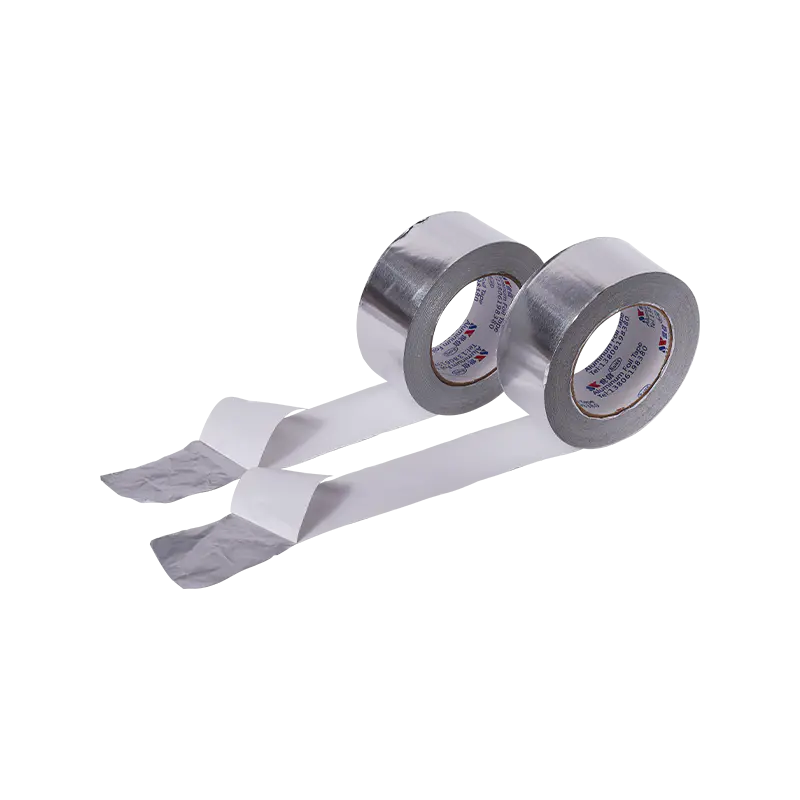
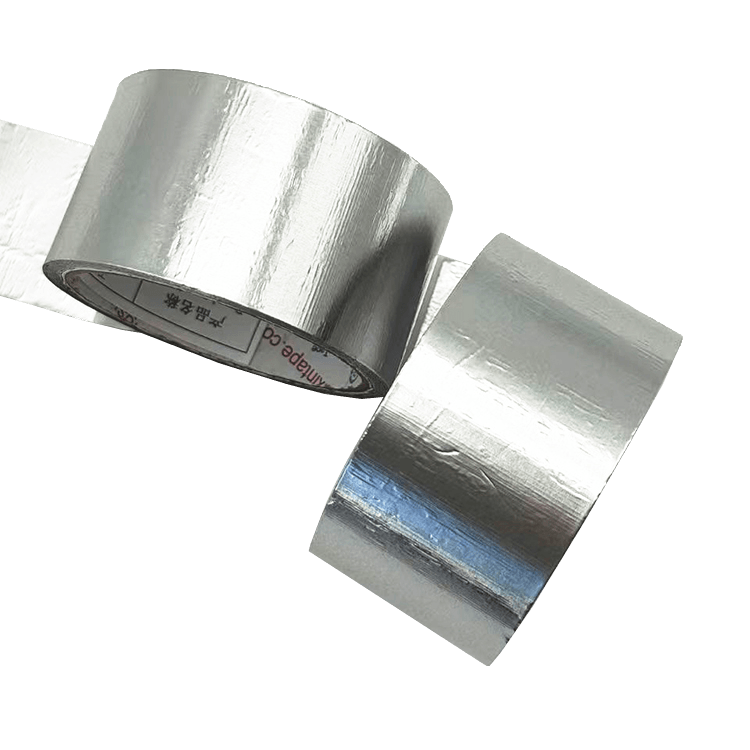
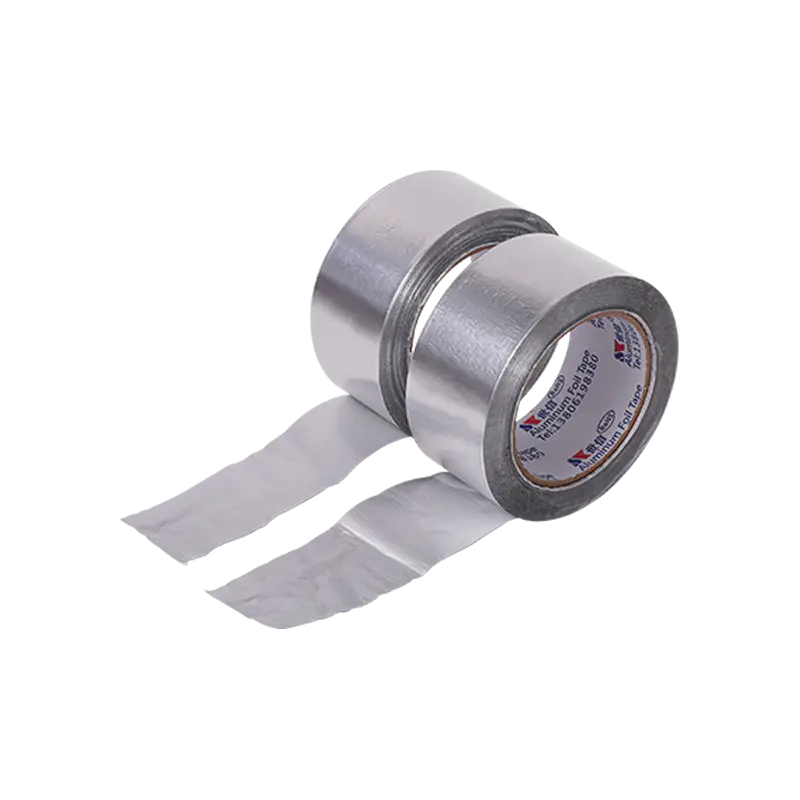
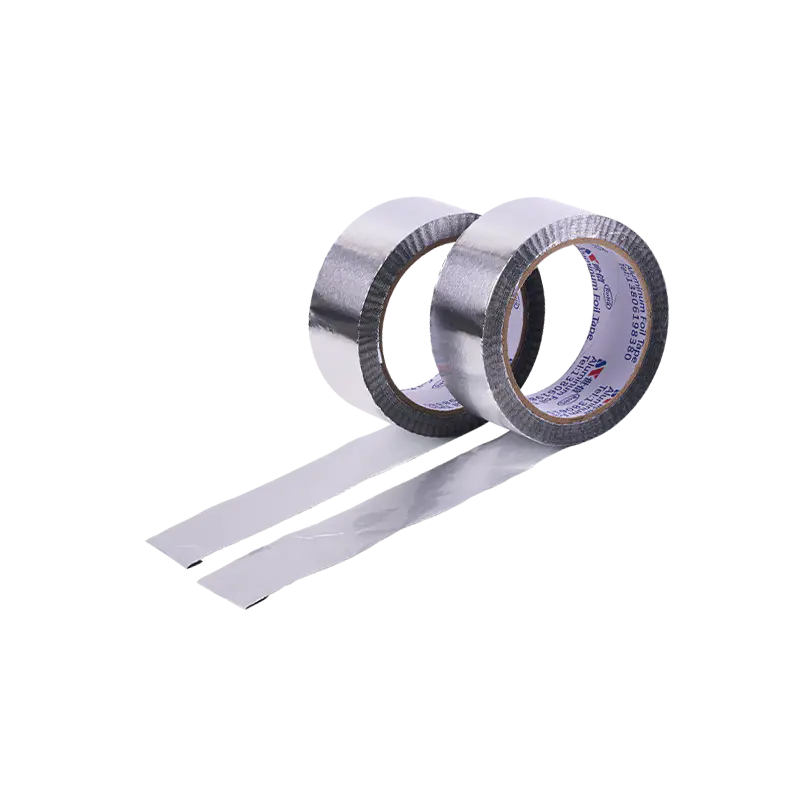
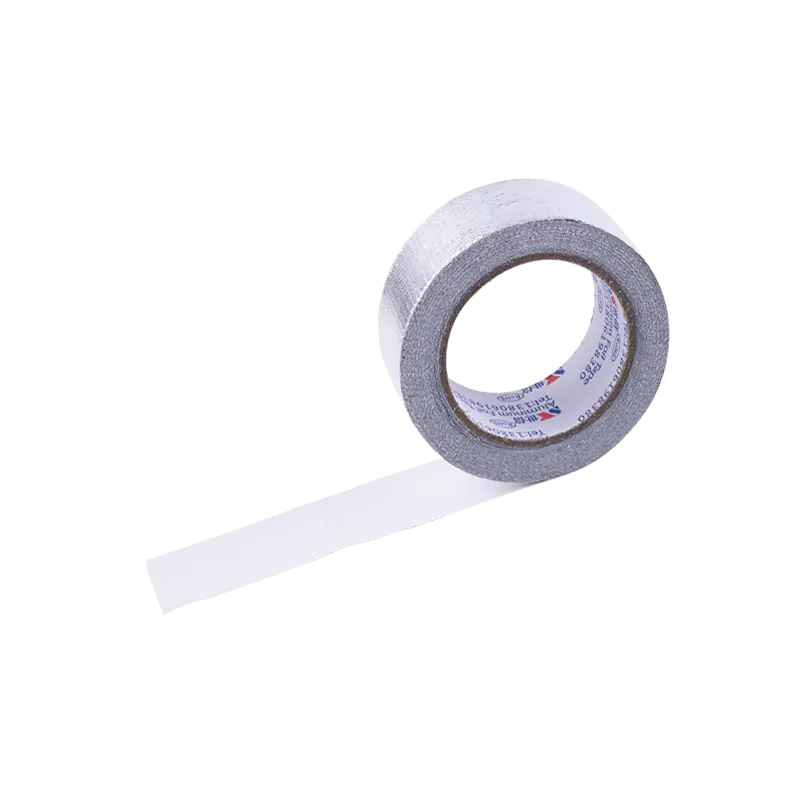
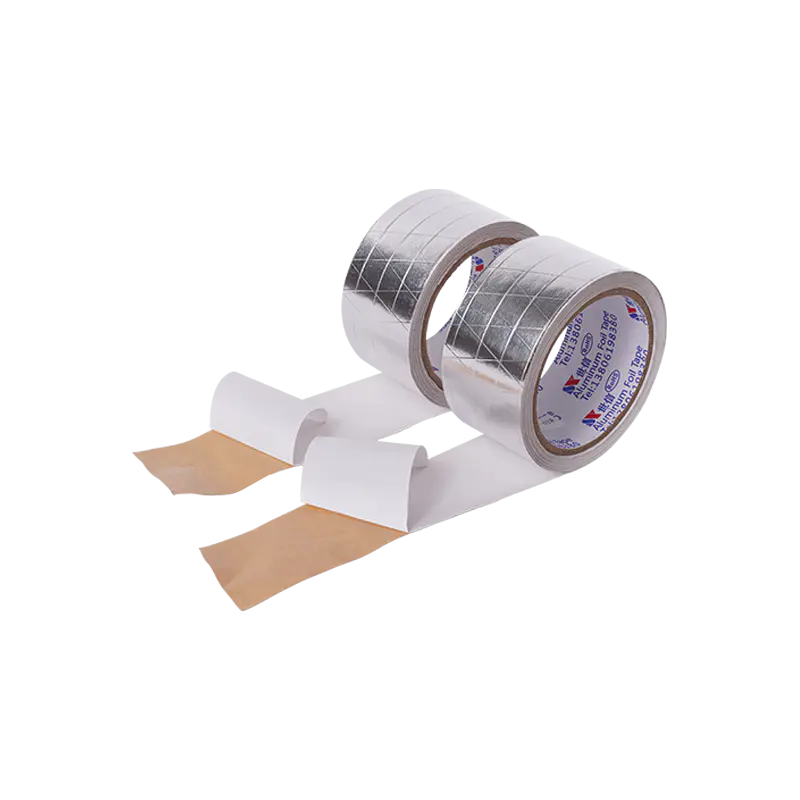
Not all aluminum foil tapes are built for the same demands. Where standard foil tape may suffice for light-duty sealing, applications involving mechanical stress, temperature cycling, moisture exposure, or outdoor weathering require a more capable solution. FSK Reinforced Aluminum Alu Foil Tape addresses these demands through a composite construction that combines a metallic facing, a structural reinforcement layer, and a high-performance acrylic adhesive system. This guide examines its construction, quantified performance properties, and real-world application scenarios to help engineers, contractors, and procurement professionals specify the right product.
The outer facing of FSK reinforced aluminum foil tape for HVAC and insulation sealing is a bright or matte aluminum foil layer that provides the primary barrier functions: vapor impermeability, thermal reflectivity, and resistance to corrosive agents. Beneath the foil, a pressure-sensitive acrylic adhesive is uniformly coated to deliver consistent bond strength across a wide range of substrate materials including galvanized steel, stainless steel, glass wool, phenolic foam, and rigid polyurethane insulation board.
Acrylic adhesives are the preferred choice for this product category because they maintain stable peel adhesion across a service temperature range of approximately -40°C to +120°C, resist plasticizer migration from foam substrates, and do not degrade under prolonged UV exposure — a critical requirement in outdoor and semi-exposed installations. A silicone-coated release liner protects the adhesive during storage and is removed immediately before application.
The defining structural feature of this tape is its internal reinforcement, which distinguishes it from plain aluminum foil tape. A woven or non-woven fiber layer — typically fiberglass, polyester, or a combination — is laminated between the foil facing and the adhesive system. This reinforcement intercepts crack propagation through the foil, redistributes tensile loads across the tape width, and prevents the elongation and tearing that plain foil tape exhibits when subjected to mechanical stress or joint movement. The result is a tape that maintains sealing integrity under conditions where unreinforced alternatives would fail.
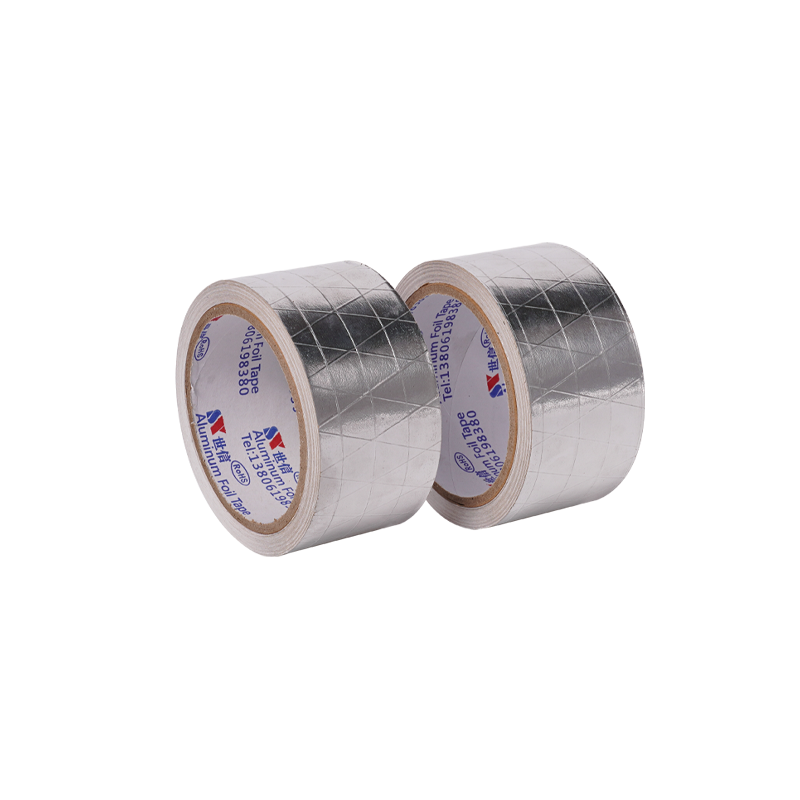
The performance gap between reinforced and standard foil tape is most clearly demonstrated through tensile strength data. The following table presents the typical technical properties of reinforced aluminum foil tape tensile strength and temperature resistance as measured under standardized test conditions.
| Property | Typical Value | Test Reference |
|---|---|---|
| Tensile Strength (MD) | 90 – 150 N/25mm | ASTM D1000 / PSTC-31 |
| Elongation at Break | Less than 3% | ASTM D1000 |
| Peel Adhesion (180°, steel) | 8 – 14 N/25mm | PSTC-101 |
| Continuous Service Temperature | -40°C to +120°C | Supplier qualification |
| Total Thickness | 0.12 – 0.20 mm | ASTM D1000 |
| Moisture Vapor Transmission | Less than 0.05 g/m2/day | ASTM E96 |
FSK foil tape waterproof and UV resistant outdoor applications are supported by three reinforcing material properties working in combination. The aluminum facing acts as an inherent vapor and liquid barrier, with moisture vapor transmission rates below 0.05 g/m2/day making it suitable for vapor control layers in insulation systems. UV resistance is provided by both the metallic facing — which reflects rather than absorbs solar radiation — and the UV-stable acrylic adhesive formulation, which retains over 85% of initial peel adhesion after 1,000 hours of accelerated weathering testing. The flame-retardant characteristic derives from the non-combustible aluminum foil layer, which inhibits flame spread across the tape surface in compliance with relevant fire safety standards applicable to building insulation assemblies.
For buyers evaluating FSK tape vs standard aluminum foil tape adhesion comparison, the decision hinges on the mechanical and environmental demands of the specific application. The table below presents a side-by-side comparison of key parameters across both product types.
| Parameter | FSK Reinforced Aluminum Alu Foil Tape | Standard Aluminum Foil Tape |
|---|---|---|
| Tensile Strength | 90 – 150 N/25mm | 30 – 50 N/25mm |
| Tear Resistance | High (fiber reinforcement) | Low (foil fractures easily) |
| UV Resistance | Excellent (acrylic + foil) | Moderate |
| Waterproof Performance | Excellent | Good |
| Flame Retardancy | Yes | Varies by product |
| Typical Application | Structural sealing, outdoor, pipe joints | Light-duty HVAC, general sealing |
| Price per Roll | Moderate–High | Low–Moderate |
The reinforced variant is the appropriate specification when one or more of the following conditions apply:
One of the most widely specified uses for reinforced aluminum alu foil tape for pipe joint sealing is in hot water supply systems, where pipeline joints must remain sealed against both water and vapor under sustained thermal cycling. The tape's temperature resistance up to 120°C and high peel adhesion to galvanized steel surfaces make it well suited for sealing flanged joints, T-sections, and elbow connections in both residential and light commercial water heating installations. The reinforcement layer prevents the foil from cracking at joint edges where movement stress is concentrated.
Marine and waterfront environments present a combination of challenges — salt spray, humidity, UV radiation, and physical abrasion — that eliminate most standard sealing tapes from consideration. The corrosion-resistant aluminum facing and UV-stable acrylic adhesive system of FSK tape allow it to maintain reliable adhesion and barrier performance in these conditions. Dock facilities use it to seal insulation jacketing on chilled water lines, seal penetrations in equipment enclosures, and provide corrosion-protection wrapping on exposed pipe sections.
In transportation applications — including commercial vehicles, refrigerated trucks, and specialty vehicles — FSK tape seals the edges and joints of thermal and acoustic insulation panels installed in cargo compartments and cab interiors. The tape must withstand vibration over the vehicle's service life, tolerate temperatures ranging from cold-climate lows to engine-bay-adjacent highs, and resist the oils and cleaning agents commonly used in vehicle maintenance. The reinforced construction handles these demands without adhesive creep or foil delamination over time.
Selecting the right tape specification and applying it correctly are equally important for achieving the intended service life. The table below outlines the primary selection and application criteria.
| Criterion | Guidance |
|---|---|
| Service Temperature | Confirm peak and sustained temperatures; allow a 15–20°C safety margin below rated maximum |
| Substrate Material | Verify adhesion compatibility; galvanized steel, rigid foam, and glass wool are standard substrates |
| Tape Width | Minimum 50mm overlap on each side of the joint; use 75mm or 100mm tape for wider joints or irregular surfaces |
| Certifications Required | Check for RoHS, REACH, and ISO 9001 compliance documentation for regulated markets |
| Application Temperature | Apply above 10°C for acrylic adhesive; below this temperature, pre-warm substrate or use cold-weather adhesive variant |
Regardless of tape quality, bond strength is determined largely by surface condition at the time of application. Substrates must be clean, dry, and free from dust, oil, and loose particles. Wiping with isopropyl alcohol is recommended for metal surfaces before application. Apply firm, even pressure along the full length of the tape using a roller or hard squeegee to maximize adhesive contact area. For critical seals in high-moisture environments, a 24-hour dwell time before exposing the joint to operating conditions allows the acrylic adhesive to develop full bond strength.
A commonly overlooked factor in tape specification is width selection relative to joint geometry. For straight seams on flat insulation panels, a 50mm wide tape typically provides sufficient overlap. Curved surfaces such as pipes require wider tape — at least 75mm — to accommodate the geometric reduction in contact width caused by the radius. For pipe diameters below 50mm, spiral wrapping with a 50% overlap is more effective than attempting to apply a flat tape strip around the circumference.
FSK stands for Foil-Scrim-Kraft, describing the three-layer laminate structure of the tape facing material. The foil layer provides the vapor and moisture barrier, the scrim (a woven fiber mesh) provides tensile and tear reinforcement, and the kraft paper substrate provides dimensional stability and a surface for adhesive anchorage. In the context of FSK Reinforced Aluminum Alu Foil Tape, this composite facing is combined with a pressure-sensitive acrylic adhesive and a release liner to form the final tape product. The fiberglass scrim layer is the primary reason FSK tape achieves tensile strengths of 90–150 N/25mm, compared to 30–50 N/25mm for plain aluminum foil tape.
Yes, provided the product specification includes UV-stable acrylic adhesive and the foil facing is of sufficient thickness to resist mechanical damage. The aluminum facing of FSK foil tape waterproof and UV resistant outdoor applications reflects UV radiation rather than absorbing it, which protects both the adhesive and any underlying insulation material from photodegradation. Quality FSK tapes retain over 85% of initial peel adhesion after 1,000 hours of accelerated UV weathering. For permanent outdoor installations, ensure the tape edges are terminated at a hard surface or covered with a sealant bead to prevent moisture ingress at the tape margins over time.
For reinforced aluminum alu foil tape for pipe joint sealing, begin by cleaning the pipe surface with a dry cloth or isopropyl alcohol wipe to remove dust, oils, and moisture. For pipes with diameters above 75mm, cut the tape to a length that provides at least 50mm overlap at the joint seam and wraps fully around the pipe circumference with a minimum 25mm longitudinal overlap. Apply the tape starting at one edge of the joint, pressing firmly as you wrap to eliminate air pockets. For pipes below 75mm in diameter, spiral wrapping with a 50% overlap provides more consistent coverage than single-strip application. Allow the adhesive to dwell for at least one hour before the system is pressurized or exposed to thermal cycling.

Our company has been engaged in the tape manufacturing industry for more than 20 years, and has been focusing on various types of aluminum foil tapes, foam tapes, refrigerator tapes, etc.
IsabelLina
Email:[email protected]
Mobile/Whatsapp: +86 190 3379 1110
Mars Gong
Email:[email protected]
Mobile/Whatsapp: +86 159 5136 0053
Address: West side of Yingbin Avenue and south side of hengwang packaging. Suqian Economic and Technological Development Zone,Jiangsu Province
Copyright © Jiangsu Shixin Adhesive Tape Product Co., Ltd. All Rights Reserved. Custom ODM Refrigerator Foil Adhesive Tapes Manufacturers