2026-11-26
Quick Engineering Takeaway: When aluminum foil tape lifts or refuses to stick in winter, the root cause is usually confusing application temperature with service temperature. Standard water-based acrylic foil tapes often endure -20°C once bonded, but require +10°C or warmer during installation to wet out metal surfaces. For sub-zero HVAC ductwork, cold-storage vapor barriers, or unheated jobsites, specify a low-Tg cold-weather solvent acrylic aluminum foil tape—or evaluate a silicone PSA for extreme thermal-cycling environments.
Every winter from November through February, HVAC distributors, mechanical insulation contractors, and commercial refrigeration OEMs across North America and Northern Europe run into the same field complaint: an aluminum foil tape that sealed cleanly all summer suddenly feels dry on the roll, lifts overnight from galvanized duct seams, or tears during unwind. Winter call-backs drive up elevated-work labor costs and compromise vapor-barrier integrity, causing air leakage, condensation, and frost buildup inside insulation jacketing.
Preventing cold-weather tape failure requires matching three variables to actual jobsite conditions: pressure-sensitive adhesive (PSA) rheology below freezing, aluminum foil gauge and stiffness, and disciplined winter surface preparation.
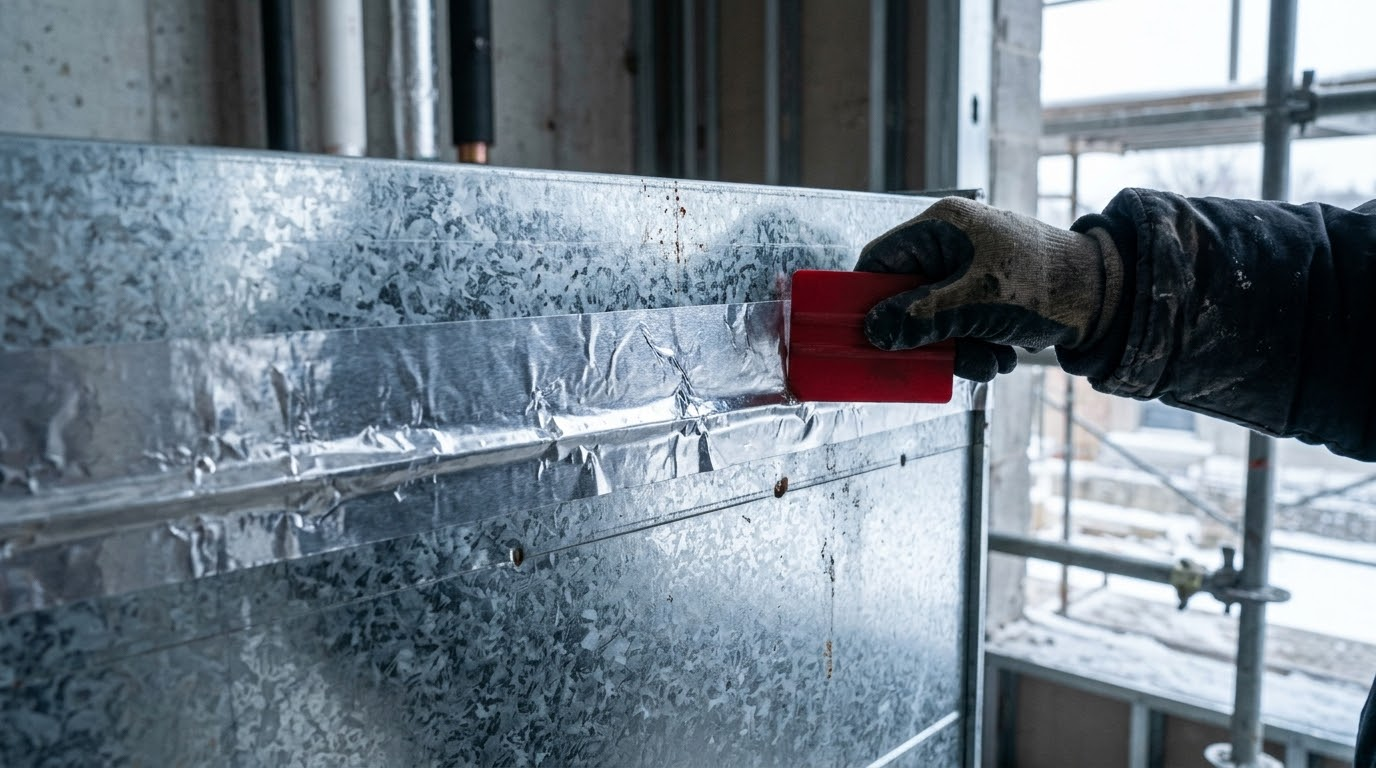
The single most common specification error in cold-climate sealing is reading a datasheet’s “operating temperature range” as the allowable installation temperature. In PSA engineering, those two ratings describe distinct physical states:
As ambient temperature drops toward a polymer’s glass transition temperature (Tg), a pressure-sensitive adhesive stiffens dramatically and loses viscoelastic flow. Even under firm hand pressure, a hardened adhesive bridges across only the highest microscopic peaks on cold sheet metal—feeling dry to the touch and popping off hours later under the foil’s own elastic spring-back.
Before switching adhesive grades, isolate the failure mechanism on site so that surface frost or overly stiff foil thickness does not sabotage a newly qualified cold-weather roll:
Table 1: Cold-Weather Aluminum Foil Tape Failure Diagnostic Guide
|
Observed Field Failure |
Primary Physical / Chemical Root Cause |
Adhesive & Construction Fix |
Jobsite Process Correction |
|
Zero initial tack; adhesive feels hard or dry at installation |
Ambient or duct surface temperature is below the adhesive wet-out threshold (approaching polymer Tg) |
Switch to a low-Tg cold-weather solvent acrylic foil tape; avoid standard water-based acrylic below 0°C |
Store tape rolls in an insulated box or heated cab (+15°C to +25°C) until immediately before application |
|
Sticks initially, then edges lift or flag overnight |
1) Thick foil (≥60 μm) creates high bend spring-back; 2) Slow bond build-up and low cohesion in cold air |
Use dead-soft 30–50 μm pure aluminum foil on curved ducts paired with high-cohesion cold-weather solvent acrylic |
Do not rely on bare-hand wiping; burnish firmly with a plastic squeegee or rubber roller to force wet-out |
|
Entire strip peels away cleanly with no adhesive transfer |
Invisible frost, condensation film, mill rolling oil, or jobsite dust created a weak boundary layer |
Select a higher-wet-out cold-weather solvent acrylic grade (still requires dry, frost-free contact) |
Wipe seams dry with a clean cloth (and IPA solvent where mill oils exist); clear frost before taping |
|
Brittle unwind or tearing in winter; ooze/softening in summer stock |
Traditional rubber or hot-melt systems have a narrow thermal window—stiffening in cold seasons and softening in summer heat |
Upgrade year-round multi-season SKUs from basic rubber to a broad-temperature solvent acrylic system |
Maintain warehouse storage at +15°C to +25°C and <60% RH; enforce FIFO inventory rotation |
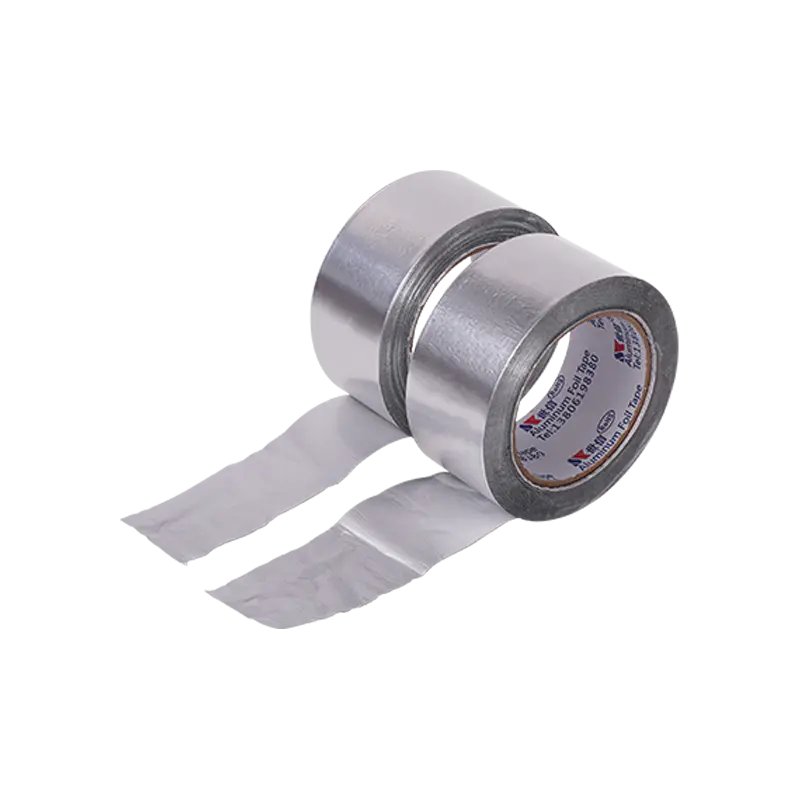
Across our Industrial Aluminum Foil Tape Series, Jiangsu Shixin Adhesive Tape Product Co., Ltd. (Shixin Tape) coats multiple PSA chemistries tailored to different seasonal climates and OEM line requirements. Table 2 compares how each adhesive behaves at sub-zero installation and over multi-year service:
Table 2: Cold-Weather & Full-Lifecycle PSA Comparison for Aluminum Foil Tapes
|
Adhesive Chemistry |
Typical Recommended Application Temp |
Typical Service Temp Range* |
Sub-Zero Tack & Wet-Out |
Humidity / UV Aging Stability |
Best-Fit Use Cases & Limitations |
|
Water-Based Acrylic |
≥ +10°C |
-20°C to +80°C |
Good at room temp; drops sharply below 0°C |
High (low VOC, non-yellowing, strong aging) |
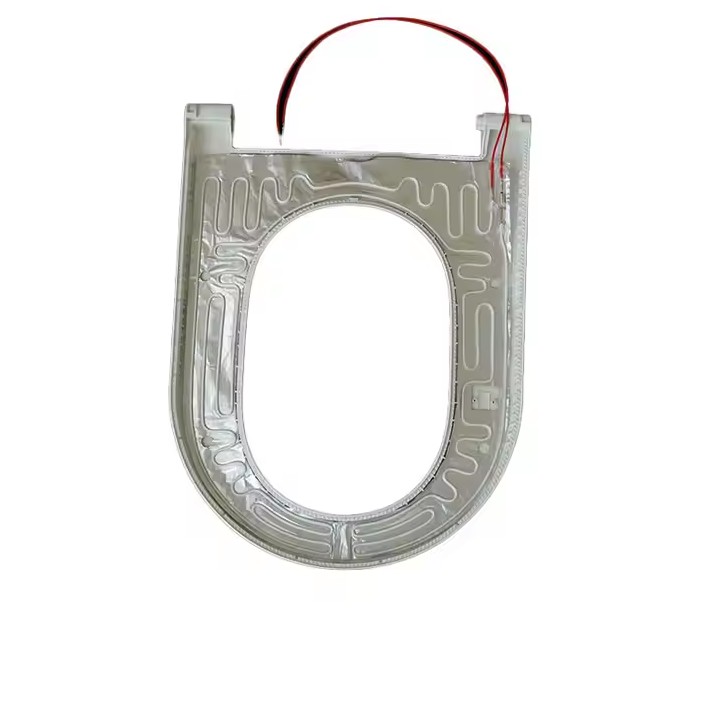
Climate-controlled OEM lines (e.g., refrigerator pipe fixing) and indoor ambient HVAC sealing |
|
Cold-Weather Solvent Acrylic |
-10°C to +40°C |
-30°C to +120°C |
Excellent (low-Tg formulation wets out below freezing) |
Excellent (resists moisture, UV, and thermal cycling) |
Primary choice for winter outdoor HVAC ductwork, cold-storage panels, and vapor-barrier seams |
|
Synthetic Rubber |
+5°C to +35°C |
-15°C to +70°C |
High room-temp grab; stiffens in cold autumn/winter |
Moderate to low (softens/oozes in summer heat; weaker UV resistance) |
Mild indoor sealing needing fast room-temp tack; prone to seasonal brittleness or summer ooze |
|
Hot-Melt PSA |
+10°C to +35°C |
-10°C to +65°C |
Strong at ambient; becomes brittle in cold air |
Fair (lower high-temp shear and UV durability than acrylic) |
Economical indoor temporary sealing and basic facing repairs; not suited for winter outdoor work |
|
Silicone PSA |
Grade-dependent; supports cold installation |
-40°C to +150°C+ |
Consistent (ultra-low polymer Tg) |
Outstanding (extreme thermal shock & chemical resistance) |
Sub-zero specialty equipment, extreme hot/cold cycling ducts, and low-surface-energy substrates; highest unit cost |
*Engineering Note: Temperature windows above represent typical industrial PSA engineering benchmarks. Exact minimum application temperature, peel adhesion, and flame-spread ratings vary by specific grade and must be verified on the grade-matched Technical Datasheet (TDS). For North American code jobs requiring UL 181A-P (rigid ductboard) or UL 181B-FX (flexible air duct) listings—or European projects requiring EN 13501 / BS 476 fire classifications—verify specific grade certifications during sampling rather than assuming equivalence by adhesive family.
Adhesive selection must be paired with the right metallic carrier to minimize lift forces at low temperature:
Five-Step Winter Field Application SOP for HVAC & Cold-Chain Crews
Q1: Why won’t an aluminum foil tape rated down to -30°C stick when installed at -5°C?
A -30°C listing usually describes the service temperature limit after the tape has been applied at room temperature (typically +10°C or higher) and allowed to wet out. Applying standard water-based acrylic or basic rubber tape directly at -5°C causes the adhesive to stiffen near its glass transition temperature, preventing wet-out. Switch to a cold-weather solvent acrylic grade explicitly rated for sub-zero application.
Q2: Rubber adhesive has strong initial tack—why is cold-weather solvent acrylic preferred for winter outdoor HVAC?
Synthetic rubber exhibits aggressive grab around 20°C, but its performance drops sharply at both seasonal extremes: it hardens and loses tack during cold autumn/winter work and softens, oozes, or oxidizes under summer rooftop heat and UV exposure. Cold-weather solvent acrylic maintains reliable sub-zero wet-out while resisting moisture, UV degradation, and thermal cycling over multi-year HVAC service.
Q3: Can cold-weather aluminum foil tape be applied directly over light frost or condensation on cold ducts?
No. Even high-performance cold-weather solvent acrylic cannot form a durable structural bond through liquid water, ice, or frost films. Moisture creates a weak boundary layer that fails as soon as duct temperatures cycle. Always wipe seams clean and dry prior to squeegeeing the tape down.
Q4: What aluminum foil thickness resists edge lifting best in low-temperature sealing?
For curved sheet-metal ducts, elbows, and refrigeration tubing, 30 μm to 50 μm dead-soft pure aluminum foil provides the best balance of vapor barrier performance and minimal spring-back force. Specify 60 μm+ heavy foil or FSK/fiberglass-reinforced foil laminates only when puncture or tear resistance across wide insulation joints is required, and pair them with a high-coat-weight cold-weather adhesive.
Q5: What engineering parameters should I provide before sampling custom cold-weather foil rolls or jumbo rolls?
Include five essentials in your RFQ: minimum installation temperature and full service temperature range, target substrate (galvanized steel, aluminum coil, FSK facing, or insulated panel), foil gauge and liner preference (linerless vs. linered pure foil, FSK, or fiberglass foil), roll dimensions (slit width × length or jumbo roll format), and any project compliance requirements (RoHS, REACH, flame-rating verification, or third-party test records).
Request Cold-Weather Foil Tape Samples & Engineering Datasheets
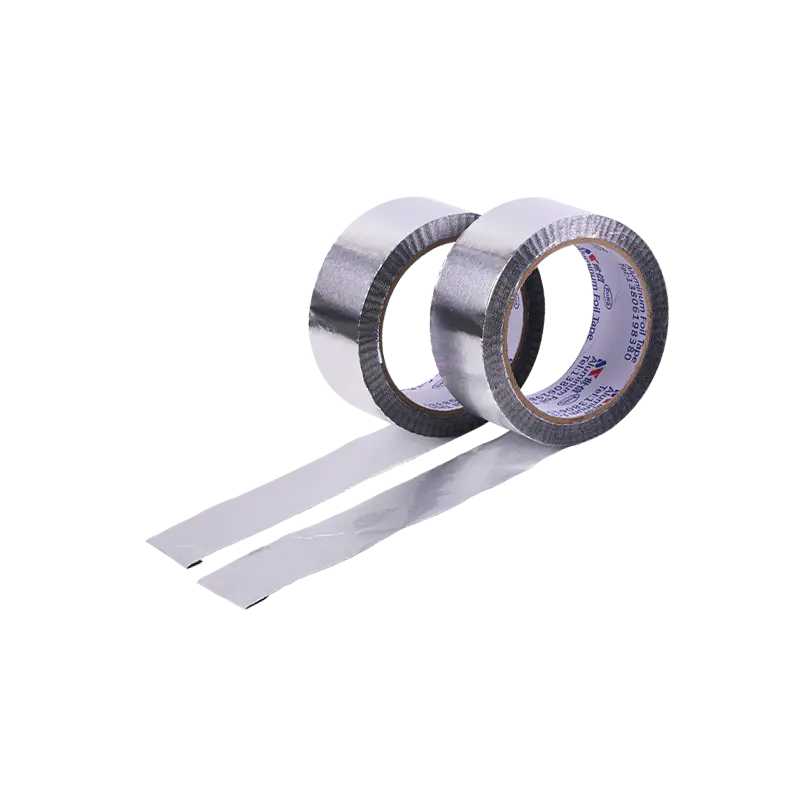
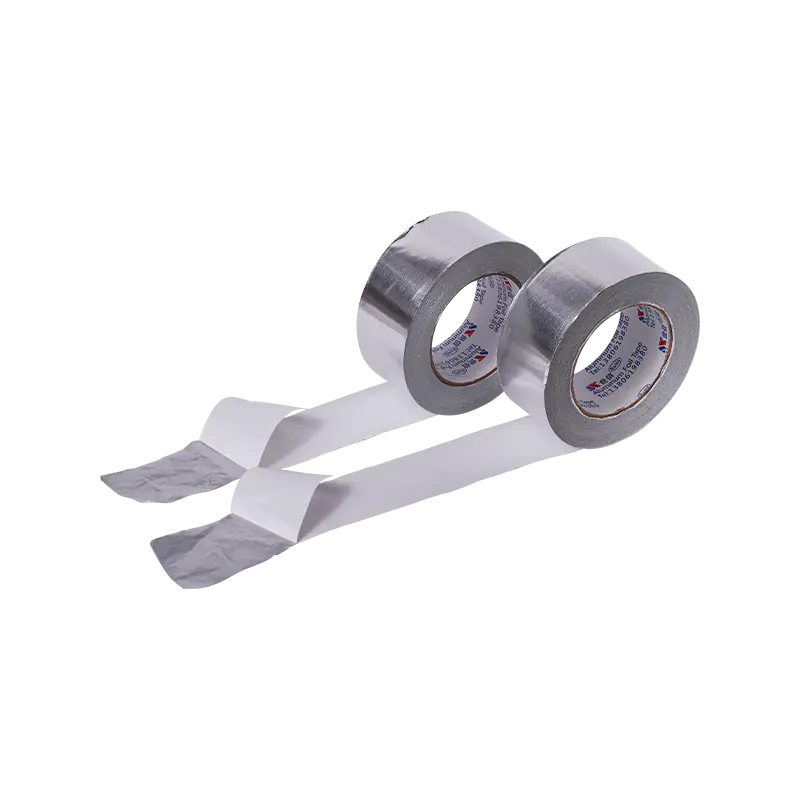
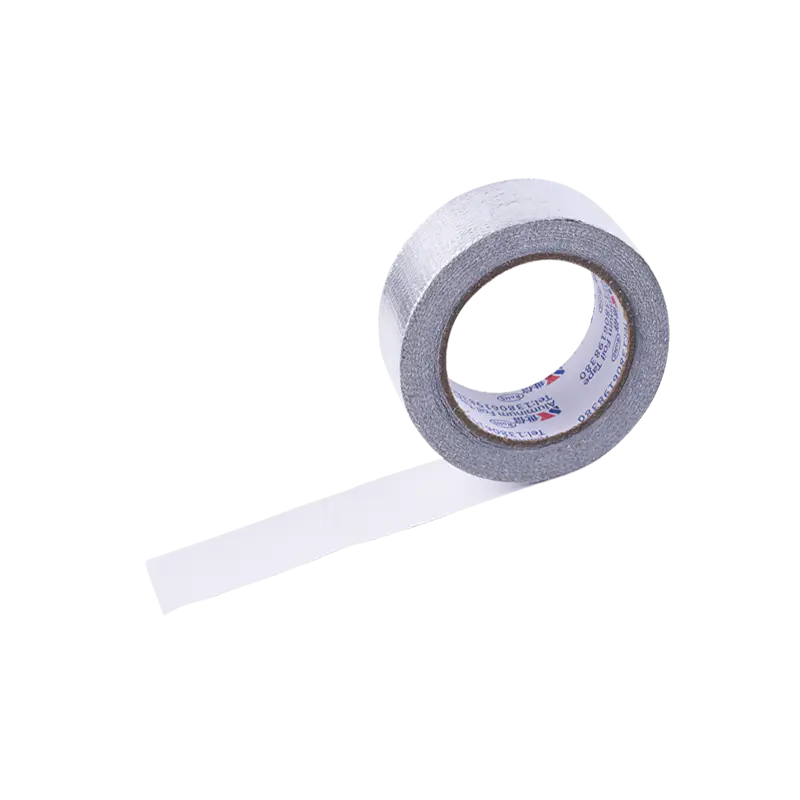
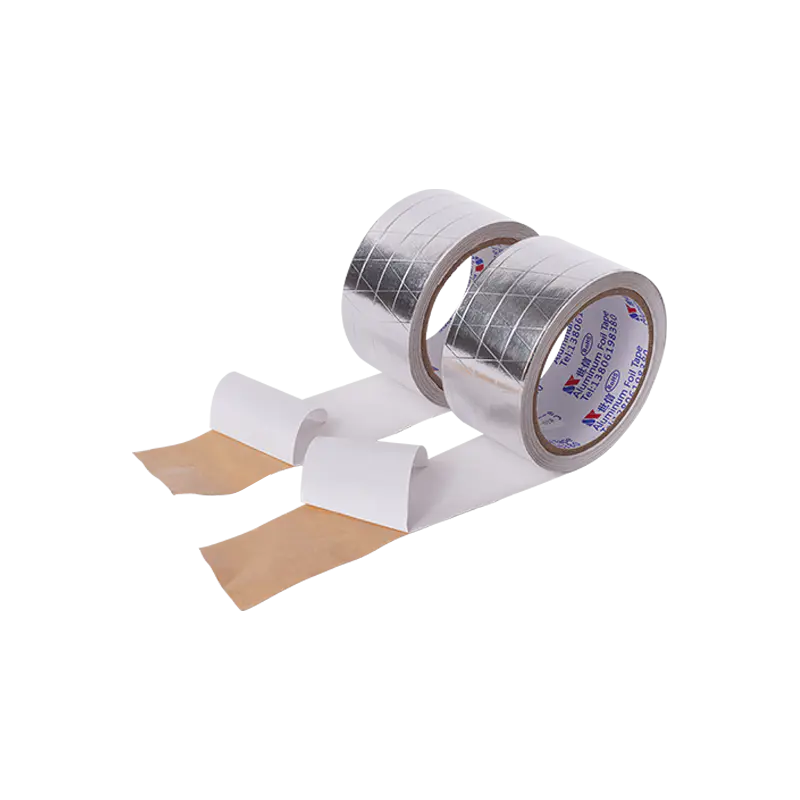
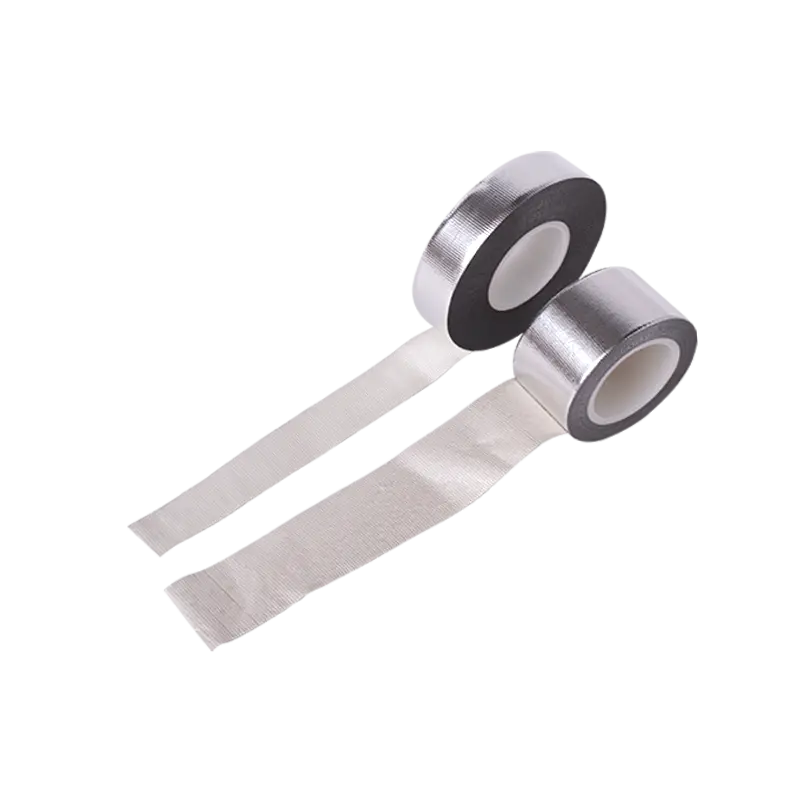
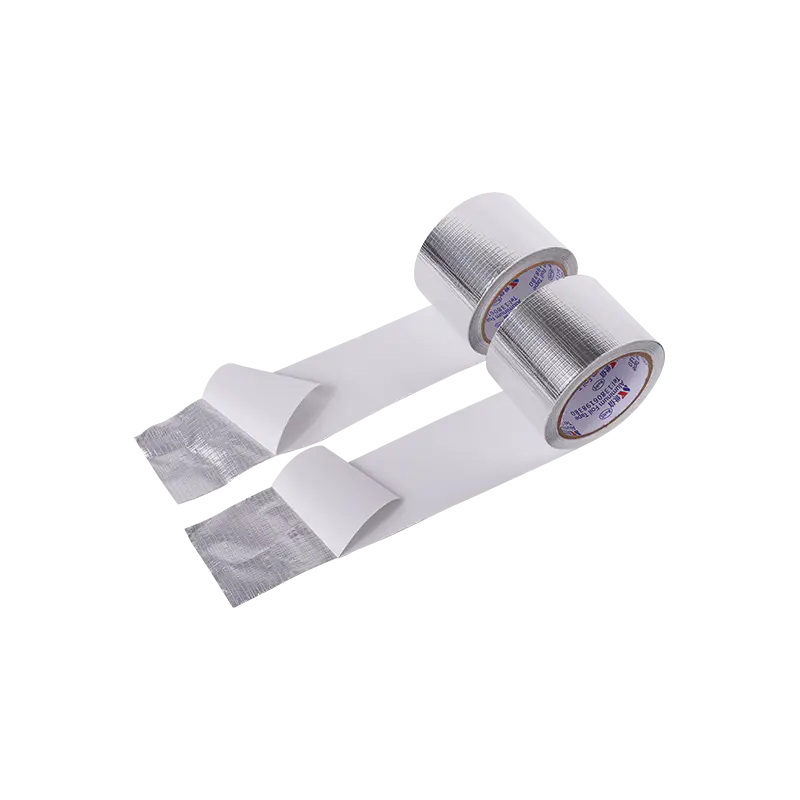
Jiangsu Shixin Adhesive Tape Product Co., Ltd. (Shixin Tape) manufactures multi-chemistry aluminum foil tapes—including linerless and linered pure aluminum foil, refrigeration pipe foil tapes, and fiberglass-cloth foil laminates—for global HVAC distributors, cold-chain contractors, and appliance OEMs under ISO 9001 and ISO 14001 quality and environmental systems, with grade-matched RoHS, REACH, and third-party lab testing support.
Share this Cold-Weather Foil Tape RFQ Checklist with our application engineers for tailored grade matching and trial rolls:
Contact Shixin Engineering Team for Cold-Weather Foil Tape Samples & TDS →

Our company has been engaged in the tape manufacturing industry for more than 20 years, and has been focusing on various types of aluminum foil tapes, foam tapes, refrigerator tapes, etc.
IsabelLina
Email:[email protected]
Mobile/Whatsapp: +86-153-0151-5119
Mars Gong
Email:[email protected]
Mobile/Whatsapp: +86-159-5136-0053
Address: West side of Yingbin Avenue and south side of hengwang packaging. Suqian Economic and Technological Development Zone,Jiangsu Province
Copyright © Jiangsu Shixin Adhesive Tape Product Co., Ltd. All Rights Reserved. Custom ODM Refrigerator Foil Adhesive Tapes Manufacturers