2026-09-24
Quick Answer
Selecting aluminum foil tape for a heating element is not only a foil-thickness decision. Buyers should define the heating-wire material, bonding interface, heat-seal process, continuous operating temperature, aging requirement, moisture exposure, and whether the construction should be linerless or liner-backed. For PVC heating-wire applications, Shixin offers heat-seal aluminum foil constructions in both formats. Selected constructions have been evaluated for prolonged exposure at 100°C and for boiling-water resistance.
In one refrigerator heating application, a customer required the heat-seal layer used with PVC heating wire to withstand 100°C for 96 hours. The engineering concern was whether the wire would remain securely bonded to the aluminum foil under prolonged elevated temperature, not simply whether the foil itself could tolerate heat.
Jiangsu Shixin Adhesive Tape Product Co., Ltd. (Shixin Tape) worked with an adhesive partner to develop a dedicated heat-seal adhesive system for this type of requirement. Current Shixin product information records selected constructions in which PVC heating wire remained bonded after 100 hours at 100°C, together with 72-hour boiling-water resistance. These results should be treated as construction-specific validation rather than a universal rating for every aluminum foil tape.
|
|
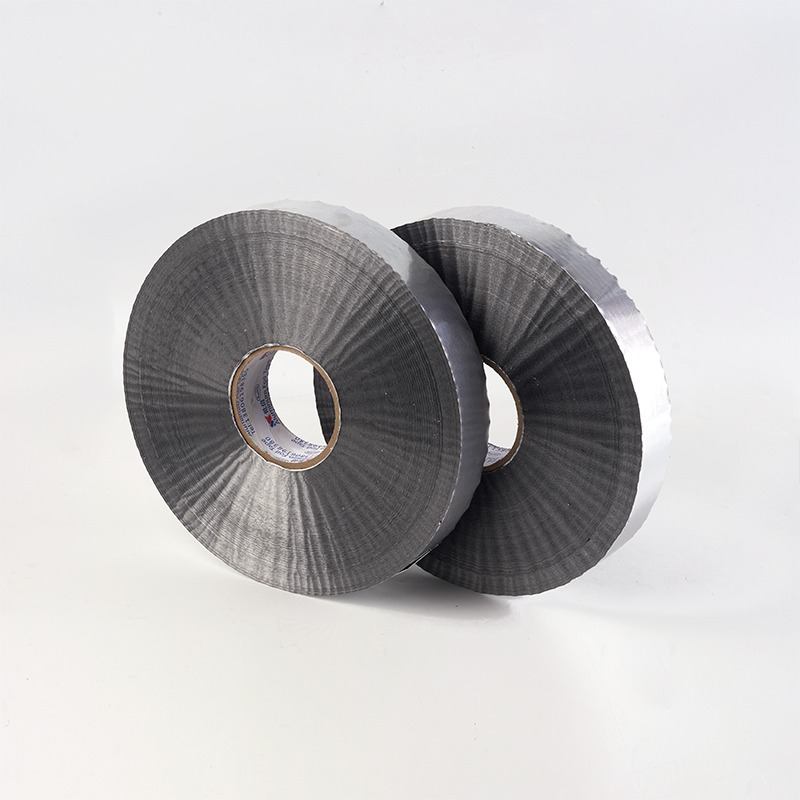
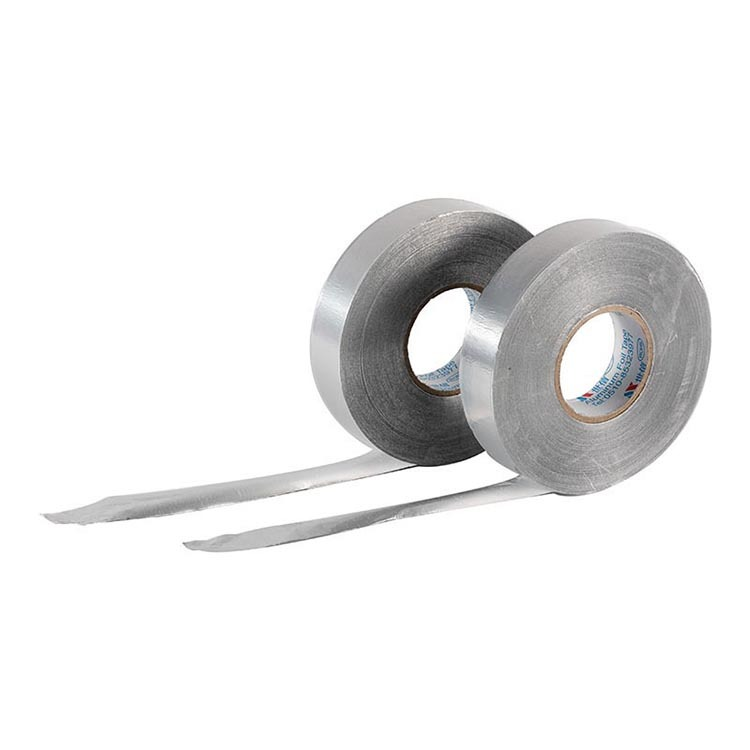
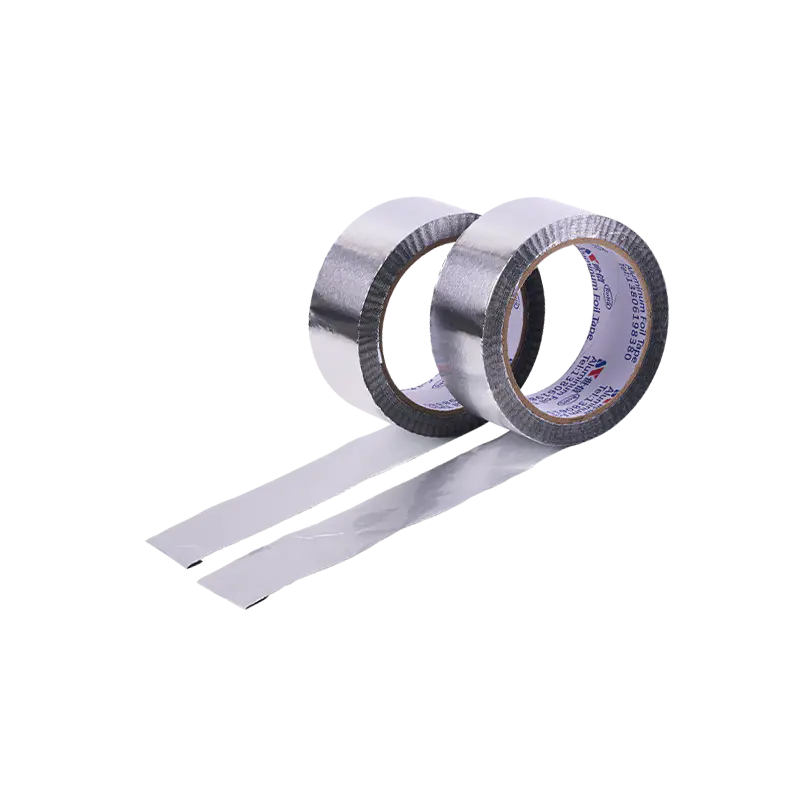
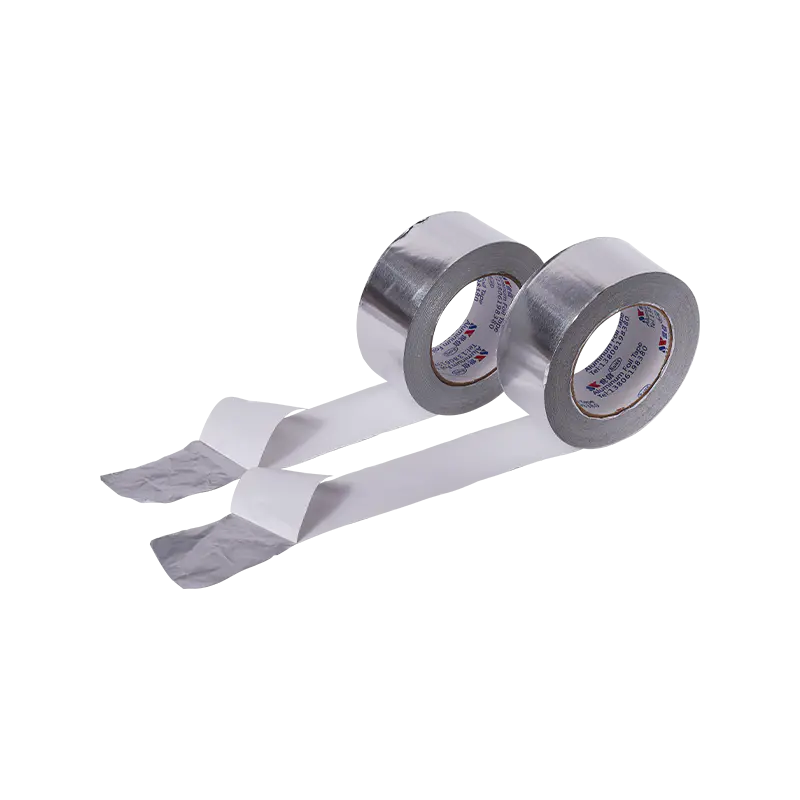
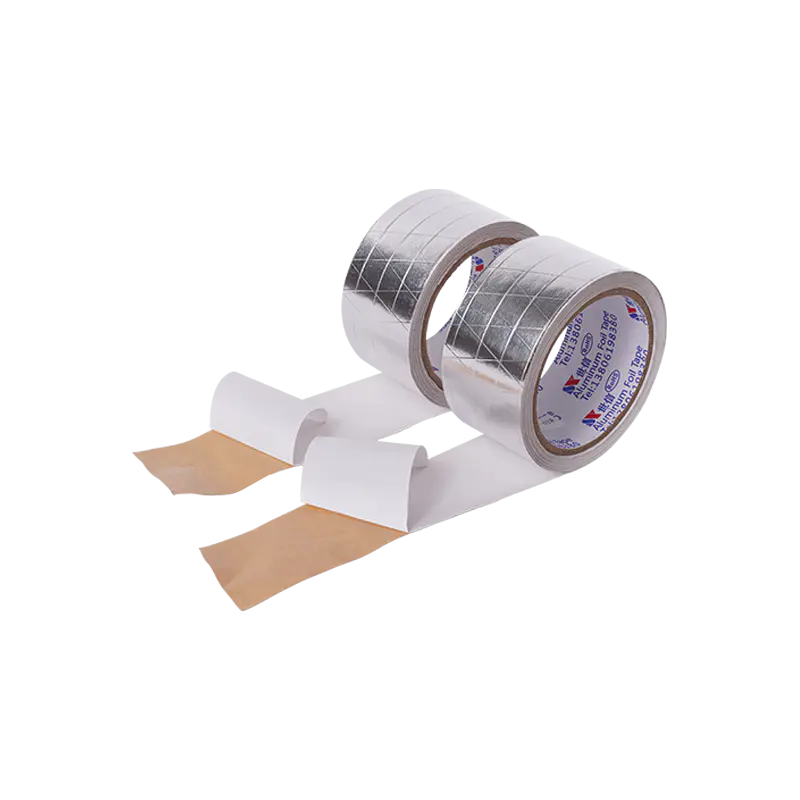
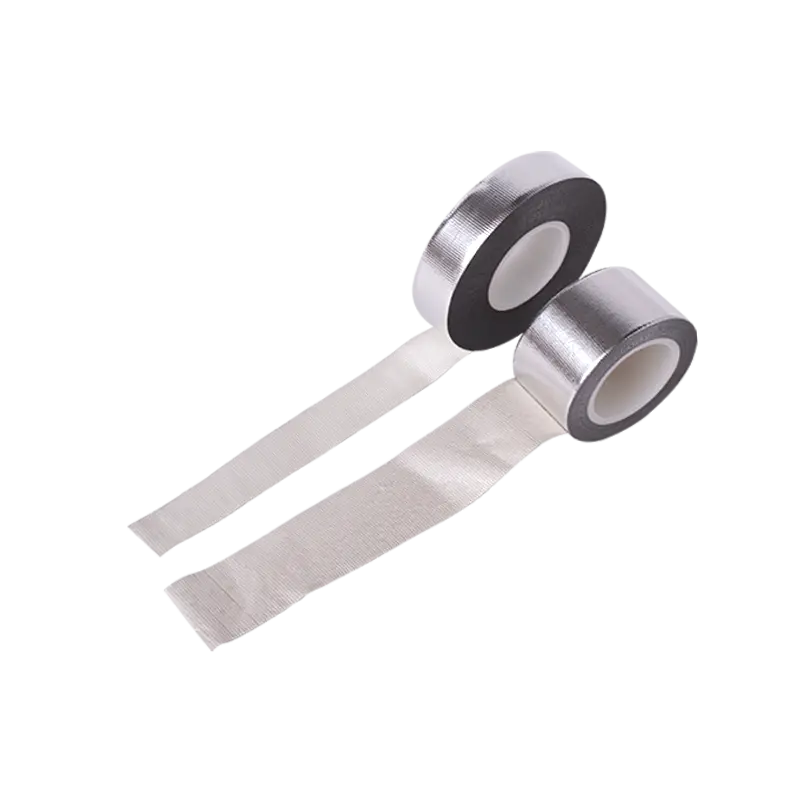
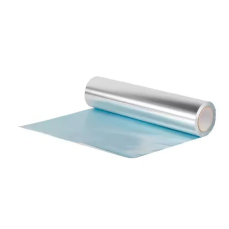
Heat-Seal Aluminum Foil Tape for Heating Elements For PVC heating-wire and refrigerator heating applications, the tape structure should be selected against the actual heat-seal process, service temperature, aging requirement, and moisture exposure. |
What Is Heat-Seal Aluminum Foil Tape for Heating Elements?
Heat-seal aluminum foil tape is a composite material in which aluminum foil is combined with a heat-activated adhesive system. Under the specified heat and pressure conditions, the adhesive forms the bond between the foil and the heating wire or another component.
For heating-element production, the material should be treated as a system rather than as “aluminum foil with glue.” The foil, adhesive, optional liner, heat-sealing conditions, and final assembly all affect whether the material performs reliably in production and after aging.
Two common Shixin construction families are:
|
Construction |
Typical Structure |
Where It Fits Best |
|
Linerless heat-seal aluminum foil tape |
Aluminum foil + heat-seal adhesive |
Direct heat sealing to PVC heating wire and processes where a release liner is unnecessary. |
|
Liner-backed heat-seal aluminum foil tape |
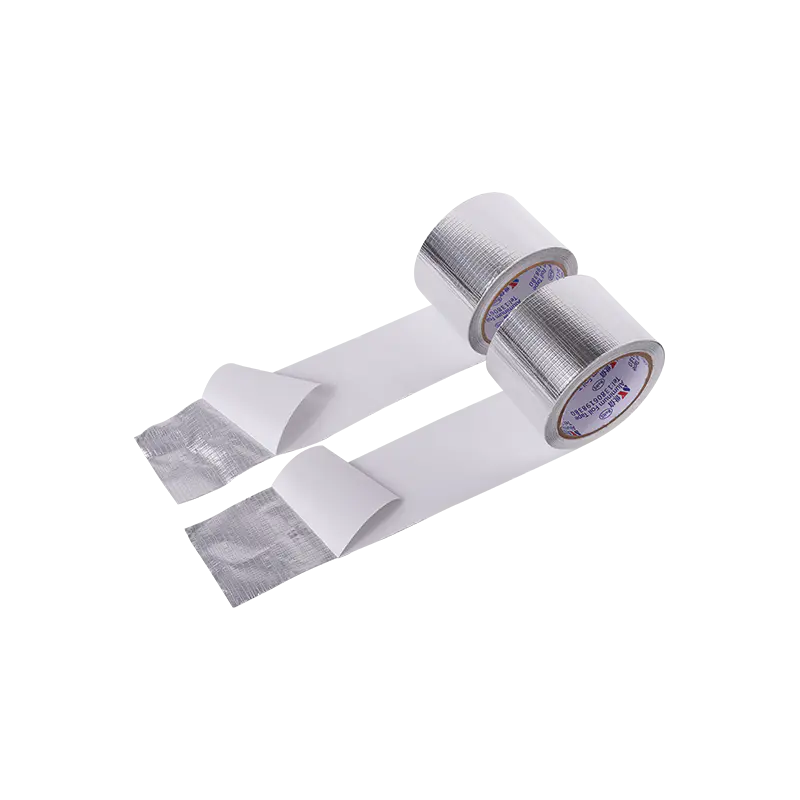
Aluminum foil + heat-seal adhesive + release paper/film; selected grades may include a second adhesive layer |
Die-cutting, protected handling, controlled positioning, or assemblies that require bonding on a second interface. |
Linerless vs. Liner-Backed Heat-Seal Aluminum Foil Tape
The better structure depends on the production process. A liner is not automatically a quality upgrade, and linerless material is not automatically a lower-cost substitute. The decision should follow the way the material will be converted and applied.
|
Selection Question |
Linerless Construction |
Liner-Backed Construction |
|
How is the tape applied? |
Useful for direct and continuous heat-sealing processes. |
Useful when the adhesive surface needs protection before placement. |
|
Is die-cutting required? |
Possible depending on the process, but handling must be evaluated. |
Often easier to manage for pre-cut parts and controlled converting. |
|
Is a second bonding surface needed? |
Usually a single heat-seal interface. |
Selected structures can combine heat-seal and pressure-sensitive adhesive functions. |
|
What should be validated? |
Unwind, heat-seal window, bond retention and aging. |
Release behavior, dimensional stability, positioning and final bond performance. |
How Foil, Adhesive and Construction Affect Performance
The foil acts as a continuous carrier and helps spread heat across the bonded area. Its thickness and mechanical condition also affect conformability, handling, die-cutting behavior and resistance to tearing during assembly.
The exact foil alloy, temper and thickness should be confirmed for the actual heating-element design. They should not be selected from a generic aluminum foil table without considering wire geometry, forming method and production handling.
The adhesive is the most application-sensitive part of the construction. The first question should not be “Which adhesive is strongest?” but “What temperature, moisture and aging conditions will the finished bond actually experience?”
Heat-seal adhesives activate under defined heat and pressure. For PVC heating-wire applications, the supplier should understand the heating-wire material, heat-sealing temperature and dwell time, target operating temperature, aging duration, and any water or humidity exposure before recommending a construction.
A release liner does not remain in the finished heater, but it can matter during converting. It protects the adhesive surface, supports die-cutting and handling, and helps control positioning before lamination or heat sealing.
Instead of choosing a liner only by paper or film type, buyers should evaluate whether it releases consistently after storage, whether die-cut parts remain dimensionally stable, and whether the liner fits the intended converting speed and geometry.
How to Select Heat-Seal Aluminum Foil Tape for PVC Heating Wire
A useful selection process starts with the assembly, not with a catalog code.
Define the heating-wire material and diameter. PVC heating wire is a key application for Shixin heat-seal aluminum foil constructions, but the exact surface and geometry should still be confirmed.
Define the bonding interface. Clarify whether the heat-seal layer bonds directly to the wire, whether the opposite foil surface also needs adhesive, and what substrate the finished heater will contact.
Define the heat-sealing process. Provide the sealing temperature, pressure, dwell time and production speed if known. These conditions determine the process window required from the adhesive.
Define the service environment. Continuous temperature, peak exposure, humidity, water contact and thermal cycling should be separated rather than summarized as “high temperature.”
Define the validation target. If the customer requires a specific aging condition such as 100°C for a defined number of hours, that requirement should appear in the sampling specification before the material is approved.
How to Validate Heat-Seal Aluminum Foil Tape
Validation should reflect the finished heating-element assembly. A room-temperature peel value alone cannot show how a PVC wire-to-foil bond will behave after prolonged heat or moisture exposure.
|
Validation Item |
What to Check |
Why It Matters |
|
Heat aging |
Bond retention after the specified temperature and time. |
Shows whether the heat-seal layer remains stable under the customer’s actual aging requirement. |
|
Boiling-water / moisture exposure |
Bond integrity after the required water or humidity test. |
Useful for applications that may face moisture, condensation or wet-service conditions. |
|
Heat-seal process window |
Sealing temperature, pressure and dwell-time consistency. |
A material can perform well in the laboratory but still be difficult to run if the process window is too narrow. |
|
Finished assembly inspection |
Wire movement, edge lift, delamination and visible adhesive failure after aging. |
The real failure mode occurs at the assembly interface, not on a datasheet. |
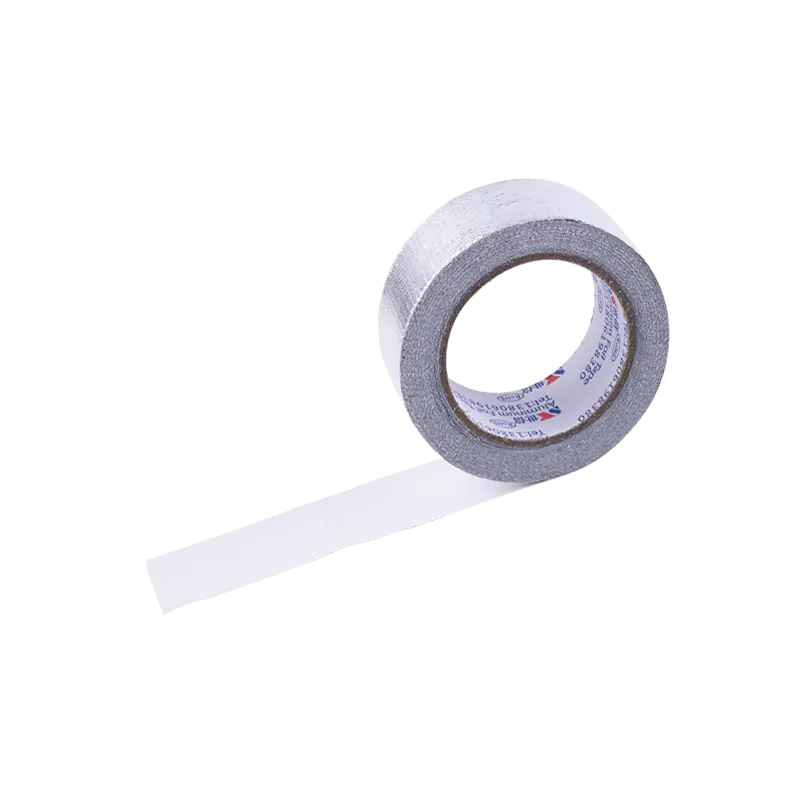
For selected Shixin heat-seal aluminum foil constructions, current product information records PVC heating-wire adhesion after 100 hours at 100°C and 72-hour boiling-water resistance. Selected heating products, such as certain toilet-seat heater constructions, may also be evaluated using Double 85 and high/low-temperature thermal-shock testing. Test availability and acceptance criteria should be confirmed for the specific grade before sampling.
|
|
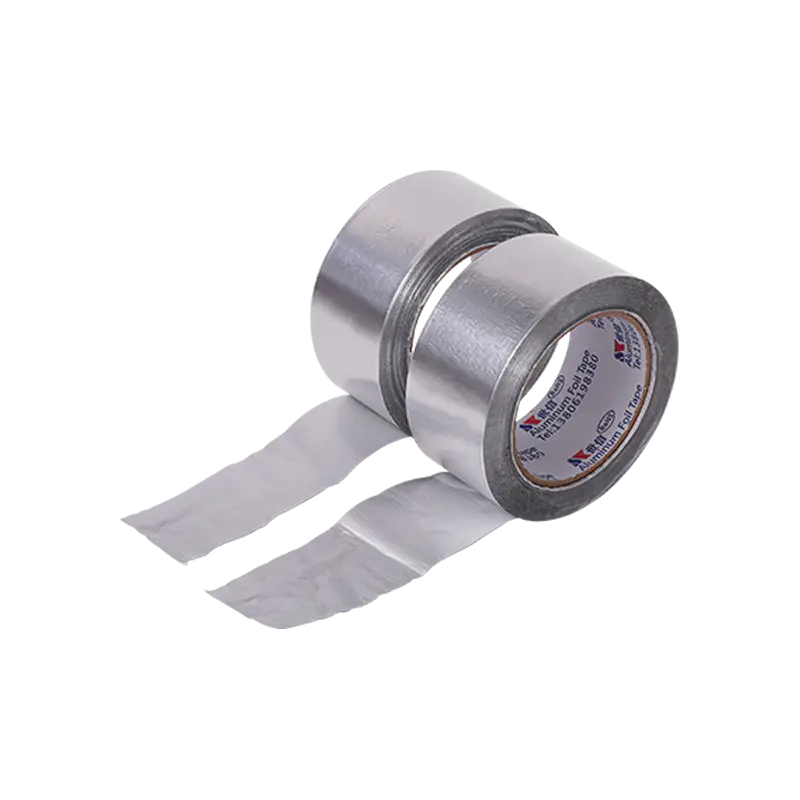
Selected Heat-Seal Aluminum Foil Tape Selected Shixin heat-seal constructions have documented PVC heating-wire adhesion after 100 hours at 100°C and 72-hour boiling-water resistance. Applicability should be confirmed for the specific construction and test requirement. |
Case Study: 100°C Heat-Seal Requirement for Refrigerator Heating Wire
Customer Requirement
From 2023, a refrigerator manufacturer required the heat-seal layer in its aluminum foil heater construction to withstand 100°C for 96 hours. The goal was to reduce the risk of PVC heating wire detaching from the foil during prolonged high-temperature exposure.
Engineering Response
Shixin worked with an adhesive manufacturer to develop a dedicated heat-seal adhesive system for the required application. The development focus was not a generic “high-temperature tape” claim, but stable bonding between the aluminum foil and PVC heating wire under the customer’s specified condition.
Validation Result
Current Shixin product information records selected heat-seal constructions in which PVC heating wire remained bonded after 100 hours at 100°C. The same product family also includes constructions with 72-hour boiling-water resistance, supporting applications where heat and moisture resistance must be considered together.
Application Value
What Buyers Should Specify Before Sampling
A useful RFQ for heating-element aluminum foil tape should include the following information:
The more complete the application information is, the easier it is to determine whether an existing grade is suitable or whether the adhesive system, liner or converting format needs to be adjusted.
Shixin Engineering and Customization Support
Shixin Tape supports industrial buyers with aluminum foil tape manufacturing, adhesive-system coordination, liner and linerless structures, custom widths and roll formats, converting support, sampling and application-oriented validation. For heating-element projects, the recommended construction should be matched to the actual wire, substrate, sealing process and aging requirement rather than selected only by a nominal temperature rating.
Frequently Asked Questions
What is heat-seal aluminum foil tape?
It is an aluminum foil construction combined with a heat-activated adhesive. Under the specified heat and pressure conditions, the adhesive forms a bond to a heating wire or another component. The exact construction may be linerless or liner-backed.
Should I choose linerless or liner-backed heat-seal foil?
Choose according to the production process. Linerless material is useful for direct heat-sealing workflows, while liner-backed material can improve adhesive protection, die-cutting and positioning. Some liner-backed constructions can also provide a second adhesive interface.
Can heat-seal aluminum foil tape bond PVC heating wire?
Yes, PVC heating wire is one of Shixin’s documented application scenarios for heat-seal aluminum foil tape. The correct grade should still be confirmed against the wire construction, heat-sealing process and aging requirement.
What temperature resistance should I specify?
Specify the actual continuous operating temperature and the required aging condition instead of asking only for a generic “high-temperature” grade. In one Shixin refrigerator project, the customer requirement was 100°C for 96 hours; selected current product information records bond retention after 100 hours at 100°C.
What should I provide when requesting a sample?
Provide the heating-wire material, bonding substrate, operating temperature, aging requirement, water or humidity exposure, heat-sealing conditions, required dimensions and application method. This allows the supplier to recommend a relevant construction rather than a generic aluminum foil tape.
Discuss Your Heating Element Application
Share your heating-wire material, operating temperature, bonding substrate, liner preference and required aging test. Shixin can help evaluate whether a standard or customized heat-seal aluminum foil construction is more suitable for your process.

Our company has been engaged in the tape manufacturing industry for more than 20 years, and has been focusing on various types of aluminum foil tapes, foam tapes, refrigerator tapes, etc.
IsabelLina
Email:[email protected]
Mobile/Whatsapp: +86 190 3379 1110
Mars Gong
Email:[email protected]
Mobile/Whatsapp: +86 159 5136 0053
Address: West side of Yingbin Avenue and south side of hengwang packaging. Suqian Economic and Technological Development Zone,Jiangsu Province
Copyright © Jiangsu Shixin Adhesive Tape Product Co., Ltd. All Rights Reserved. Custom ODM Refrigerator Foil Adhesive Tapes Manufacturers