2026-09-20
Content
When sourcing jumbo-roll aluminum foil tape, the most important information is not simply “jumbo roll” or “high temperature.” OEM buyers should specify the tape construction, width, roll length, thickness definition, adhesive system, liner configuration, core compatibility, winding quality, slitting tolerance, application environment and packaging. Shixin’s current aluminum foil tape data includes long-roll options up to 600 m as a listed length option, with existing 38 mm × 680 m big-roll configurations for selected linerless grades, plus customized dimensions according to application and production requirements.
A long roll can improve production continuity, but only when it is compatible with the customer’s unwind equipment, application method and quality requirements. A roll that is too wide, wound with unsuitable tension, supplied on the wrong core or matched to the wrong adhesive can create more downtime than it saves. For OEMs and converters, the correct purchasing question is therefore: what should be specified before the jumbo roll is manufactured?
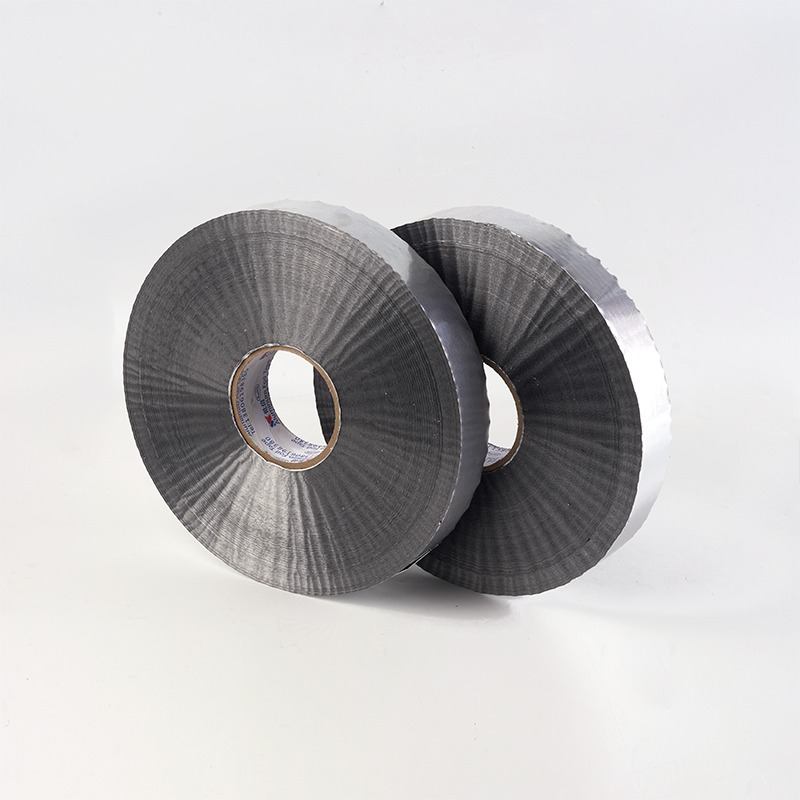
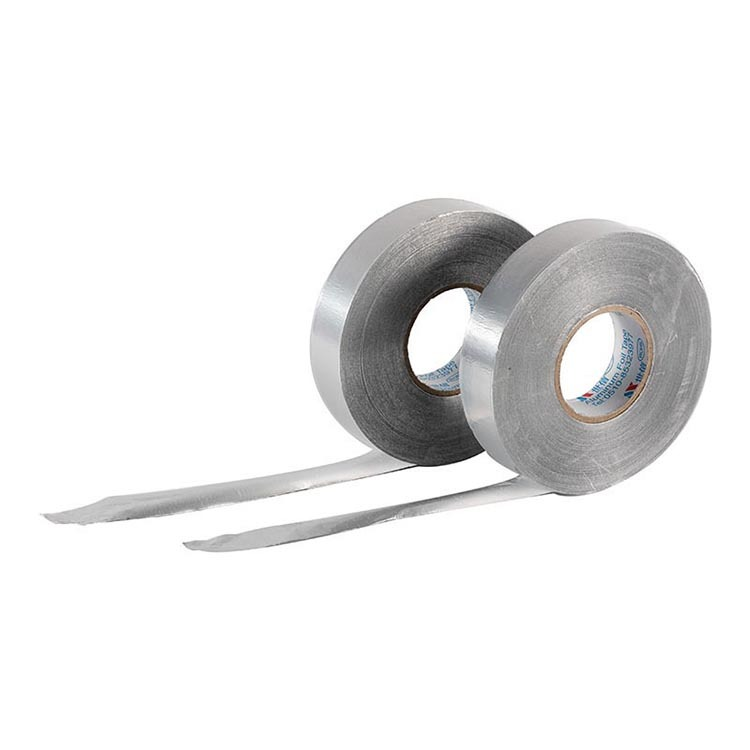
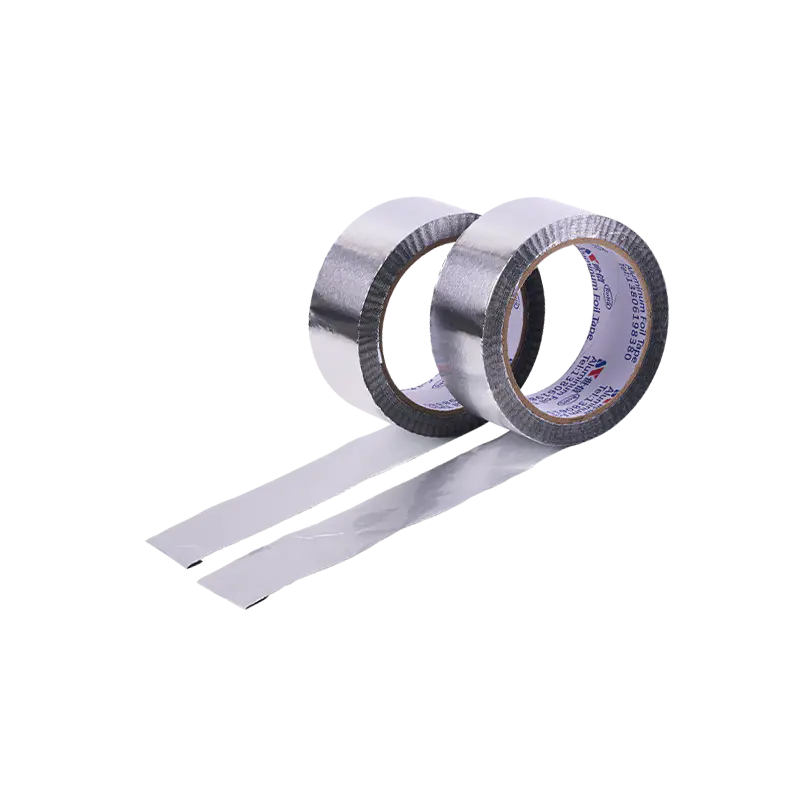
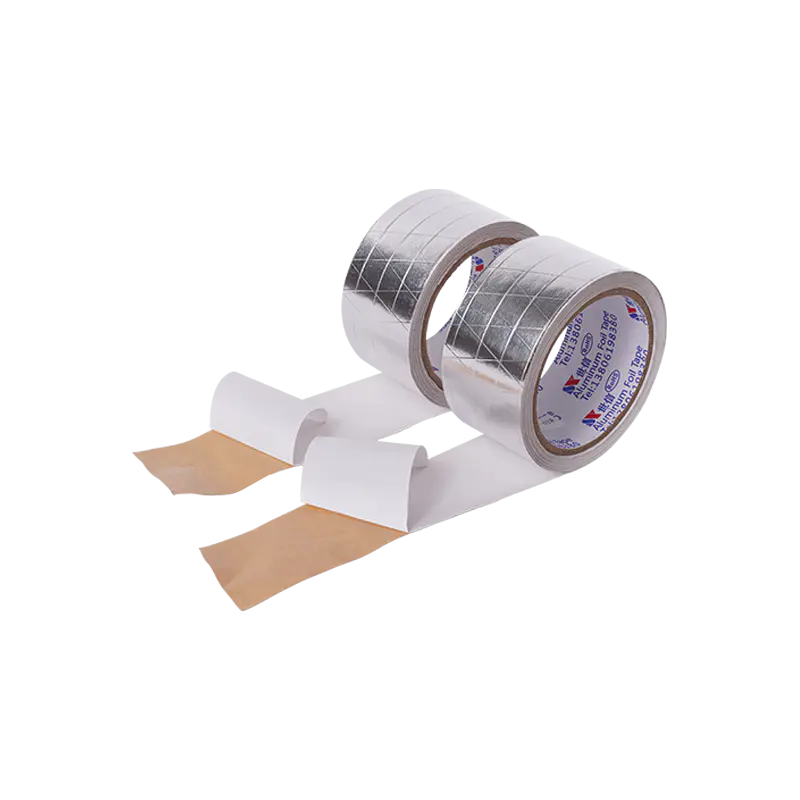
Large-format aluminum foil tape rolls; photograph does not identify roll length
Jumbo-roll aluminum foil tape is a long-roll format designed to reduce roll changes or to serve as feedstock for converting and slitting. It may be supplied as a finished narrow roll for continuous application or as a larger roll intended for further conversion. The key point is that “jumbo” is a format description, not a complete performance specification.
Two jumbo rolls can look similar while differing in adhesive chemistry, backing thickness, total construction, release system, winding tension and edge quality. These differences matter because a production line sees the roll as part of a mechanical process, not simply as a package of tape.
A useful jumbo-roll RFQ begins with what the tape must do. Before asking for price, state the substrate, application method, expected operating environment and whether the roll will be applied directly or converted again. This helps the supplier recommend a construction that matches the process rather than quoting a generic roll.
|
RFQ Item |
What the Buyer Should Specify |
Why It Matters |
|
Application |
Duct sealing, appliance manufacturing, insulation, converting, thermal protection or another defined use |
Defines the performance priorities and relevant construction. |
|
Substrate |
Metal, insulation facing, composite, coated surface or other actual material |
Adhesion varies significantly by surface. |
|
Application method |
Manual, dispenser-assisted, automatic or converting line |
Influences liner configuration, roll length and winding requirements. |
|
Width |
Exact finished width or web width |
Must match the seam, machine guide or slitting plan. |
|
Length |
Required continuous length and allowable tolerance |
Determines changeover frequency and roll size. |
|
Thickness definition |
Foil gauge, adhesive coat or total tape thickness |
Prevents a common quotation mismatch. |
|
Adhesive |
Water-based acrylic, solvent-based acrylic, rubber or specialty system as required |
Controls tack, holding, environmental and temperature behavior. |
|
Liner |
Lined or linerless |
Changes handling, waste and line configuration. |
|
Core / unwind |
Core requirement and equipment interface |
Prevents mechanical incompatibility on the production line. |
|
Packaging |
Roll protection, palletization, labeling and export requirements |
Protects edges and winding quality in transport. |
Longer rolls can reduce changeovers, but more length is not automatically better. The practical limit depends on the tape construction, winding stability, roll weight and the customer’s unwind equipment. Shixin’s current product information lists aluminum foil tape lengths of 5 m, 50 m, 100 m and 600 m, with custom lengths available. Selected linerless aluminum foil tape configurations also include existing big-roll examples of 38 mm × 680 m.
Common listed widths for these linerless aluminum foil tape grades include 25, 48, 50, 63, 75 and 100 mm, with additional sizes available. For an OEM program, however, the best width is the one that matches the actual seam or application head, not the nearest catalog size.
Thickness is one of the easiest specifications to misunderstand. One supplier may quote aluminum foil gauge, another may quote total tape thickness, and a third may provide a nominal construction range. Those values are not interchangeable.
|
Term |
What It Refers To |
Why Buyers Should Clarify It |
|
Foil thickness |
The aluminum backing only |
Affects handling, conformability and mechanical behavior. |
|
Adhesive coat |
The pressure-sensitive adhesive layer |
Affects wet-out, tack and gap-filling behavior. |
|
Total thickness |
Combined finished tape construction |
Useful for machine clearance and comparative specification when defined consistently. |
|
Composite / reinforced thickness |
Finished structure with scrim, film or other layers |
Cannot be compared directly with a plain-foil construction. |
The published product parameter table lists aluminum foil thickness from 11 μm to 100 μm, with customization available. This refers to the aluminum backing. State adhesive thickness, reinforcement and total tape thickness separately when they matter to machine clearance or acceptance.
Liner configuration affects both material flow and the design of the application process. For continuous production, linerless tape can remove the release-liner removal step and reduce liner waste. A lined construction can provide more controlled handling and may be preferred when the adhesive needs protection until the exact moment of placement.
|
Production Factor |
Linerless |
With Release Liner |
|
Line complexity |
No liner-removal station is required. |
Requires liner peeling, collection or disposal. |
|
Application speed |
Can support fast continuous application when the machine is designed for self-wound tape. |
Speed depends partly on stable liner separation. |
|
Adhesive protection |
Requires clean roll handling and storage. |
Adhesive is protected until the liner is removed. |
|
Waste stream |
No release-liner waste. |
Creates a liner waste stream. |
|
Positioning |
Immediate adhesive contact. |
Can offer more control during manual or semi-automatic placement. |
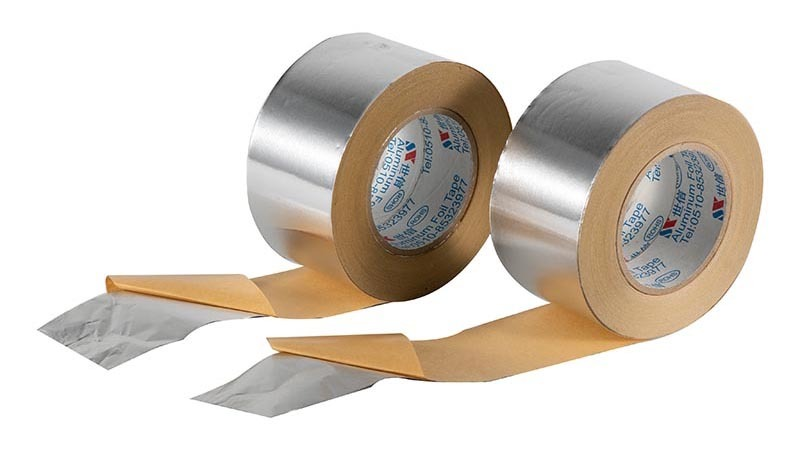
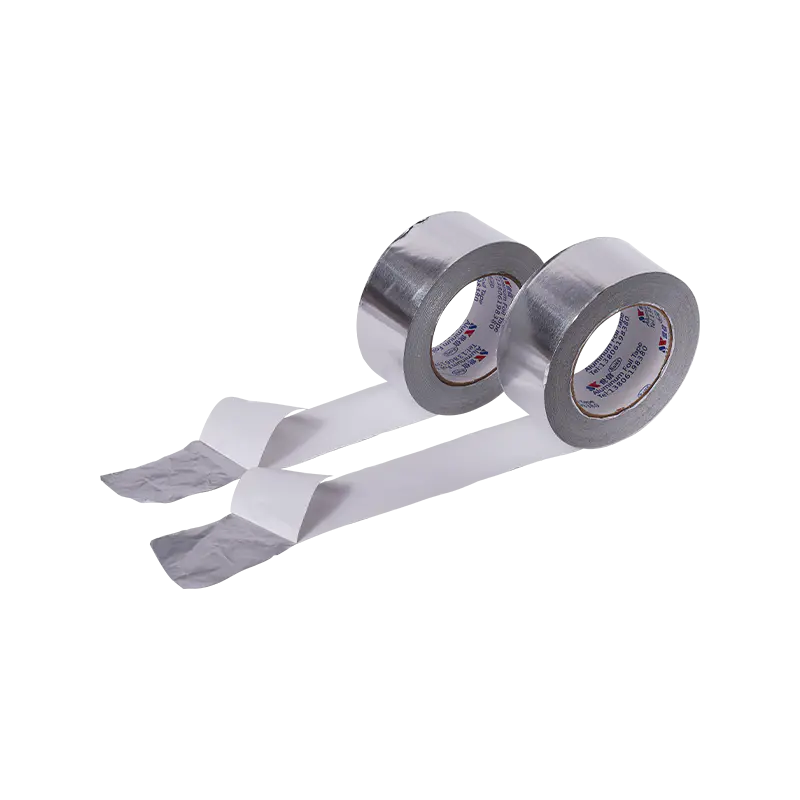
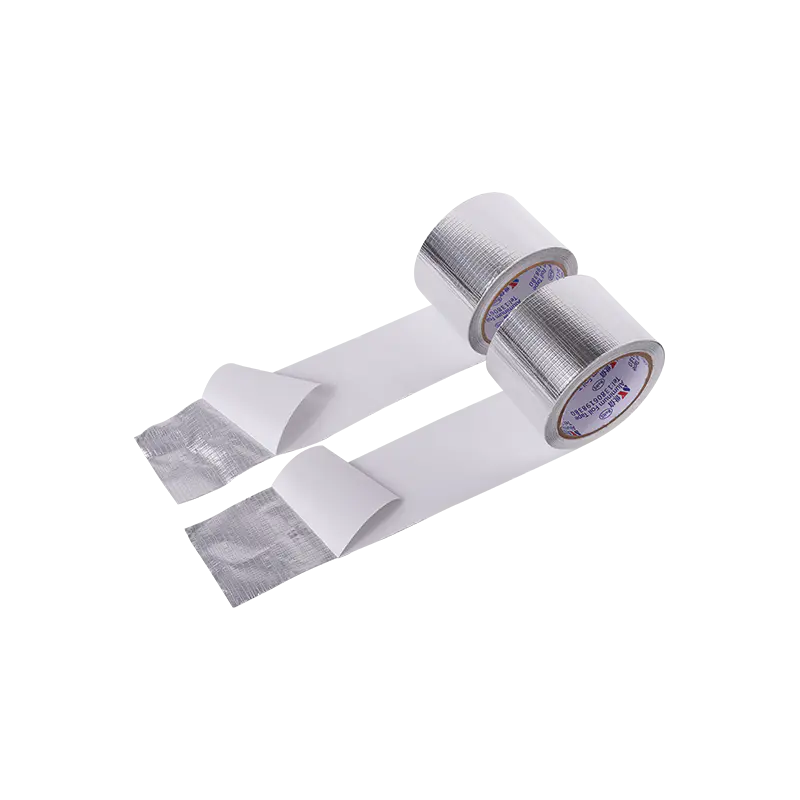
Aluminum foil tape with a release liner
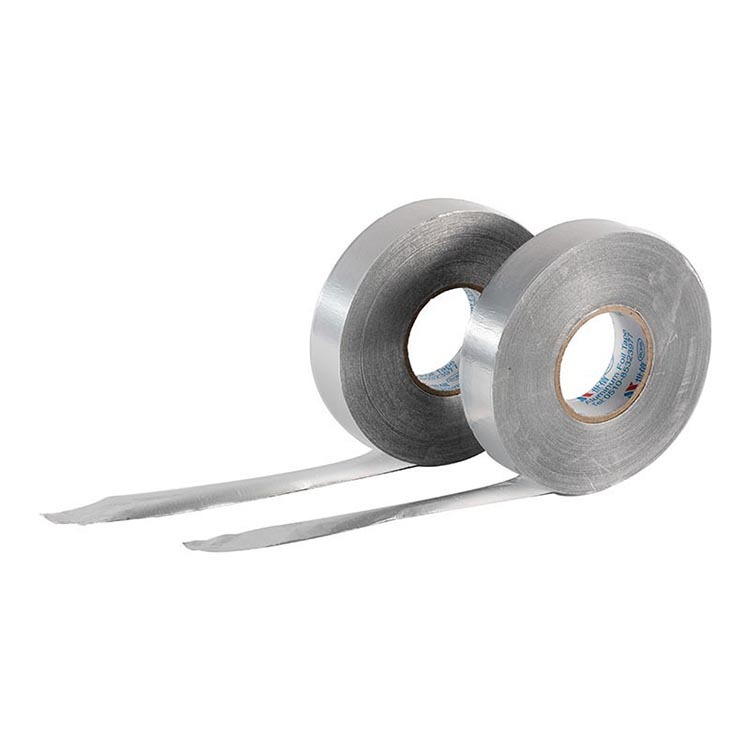
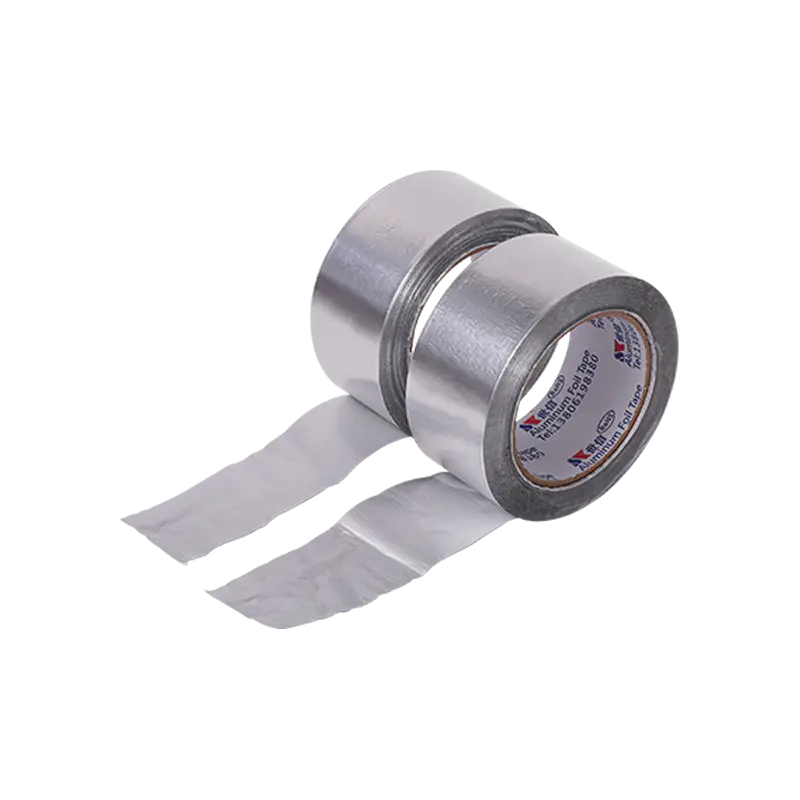
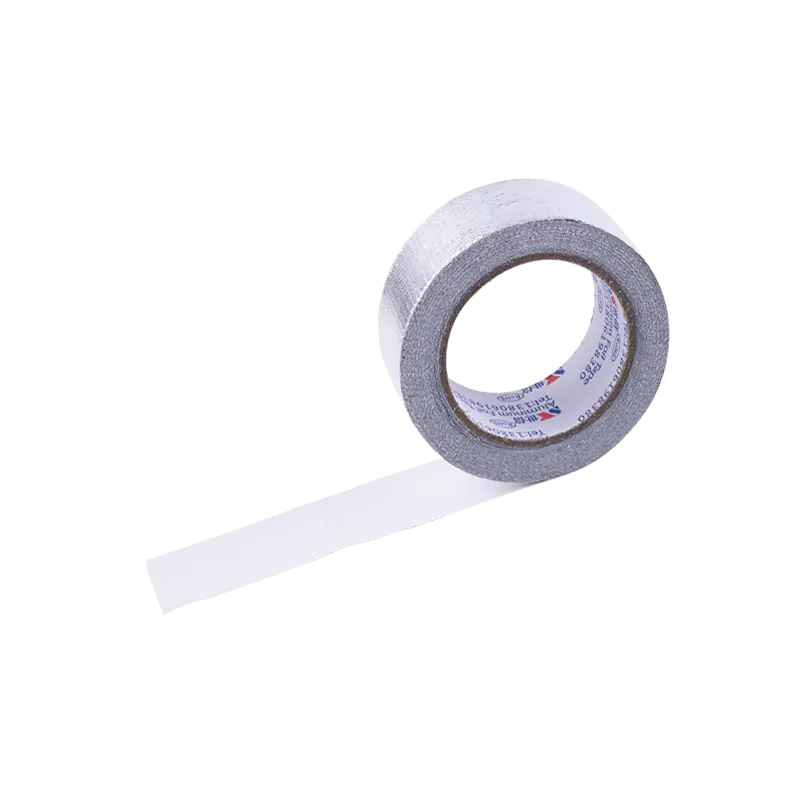
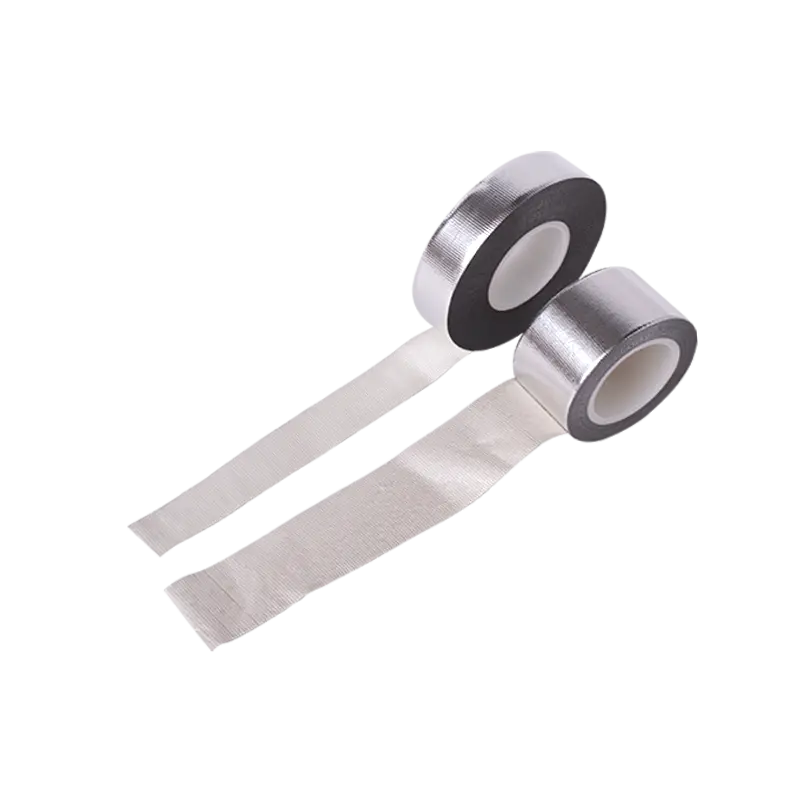
Linerless aluminum foil tape product photograph
A jumbo roll should not be sold on a generic “high-temperature” claim. Shixin aluminum foil tape products can be produced with different adhesive systems, including water-based acrylic, solvent-based acrylic and rubber. Specialty silicone systems are also used in separate high- and low-temperature constructions. The correct adhesive depends on the substrate, temperature, required tack, holding performance and environmental exposure.
For example, Shixin linerless aluminum foil tape data currently includes specific grades listed at approximately -10°C to 90°C and -10°C to 120°C. These figures belong to the corresponding grades. A separate automotive fiberglass foil tape uses silicone adhesive and has its own high-temperature data; that temperature claim should not be transferred to a standard jumbo-roll HVAC or OEM product.
As roll length increases, winding quality becomes more important. A short roll can sometimes tolerate small winding inconsistencies without disrupting use. A long roll running through a production line can magnify those issues into tracking problems, damaged edges or downtime.
|
Quality Point |
What Good Control Looks Like |
Potential Problem if Poorly Controlled |
|
Winding tension |
Stable tension appropriate to the construction |
Telescoping, loose winding, deformation or difficult unwind |
|
Edge alignment |
Straight, undamaged roll edges |
Tracking problems, edge tearing, material waste |
|
Slitting quality |
Clean, consistent cut with minimal burr or adhesive ooze |
Poor machine feed and inconsistent application width |
|
Roll hardness |
Consistent across the roll |
Uneven unwind behavior |
|
Core alignment |
Concentric and mechanically stable |
Vibration or misalignment on the unwind shaft |
|
Packaging protection |
Edges and roll faces protected for transport |
Edge crushing, contamination or telescoping before use |
Core size and roll geometry should be treated as equipment-interface specifications. Rather than assuming that every jumbo roll uses the same industry core, provide the unwind-shaft or mandrel requirement and confirm compatibility before production. The same applies to maximum roll diameter, roll weight, braking method and web path.
For further converting, define the incoming parent-web width, target slit widths and rewinding requirements together. Ask the supplier to confirm the achievable tolerances for the chosen construction before ordering.
The safest way to qualify a jumbo-roll tape is to test the construction on the actual process. A small material sample confirms adhesion, but a pilot roll can reveal line-specific issues such as unwind force, tracking, splice handling, liner separation and roll-change behavior.
|
Validation Stage |
What to Check |
|
Material sample |
Adhesion to the actual substrate, handling, initial tack and basic compatibility |
|
Short trial roll |
Unwind behavior, application pressure, wrinkles, edge lift and operator handling |
|
Pilot production run |
Tracking, roll-change frequency, machine compatibility, waste rate and finished-product consistency |
|
Post-cycle check |
Adhesion after temperature cycling, moisture exposure or other relevant operating conditions |
Shixin provides samples for testing, with sample dimensions and freight arrangements confirmed according to the project. For custom production programs, the buyer should use the trial to lock down the final specification before mass production.
Shixin began in Wuxi, Jiangsu, in 2005 with the establishment of Wuxi Shixin Adhesive Tape Products Co., Ltd., focusing on adhesive tape development, manufacturing and sales. As the business expanded, the company invested in a new factory in Suqian, Jiangsu, in 2018 and established Jiangsu Shixin Adhesive Tape Product Co., Ltd. (Shixin Tape), expanding its industrial tape manufacturing capabilities.
Today, Shixin operates on a site of approximately 12,000 square meters and manufactures aluminum foil tapes, heat-seal aluminum tapes, film tapes and foam tapes for refrigeration, air conditioning, insulation and other industrial applications. For OEM jumbo-roll orders, Shixin helps buyers define parent-web or finished-roll width, roll length, core requirements and unwind direction based on the substrate, adhesive requirements and production process. Trial rolls can be used to evaluate equipment compatibility and continuous operation.
The published linerless foil tape table lists 600 m as a length option and 38 mm × 680 m as a big-roll configuration. Custom dimensions require confirmation for the selected construction. Obtain current technical and compliance documents for the exact grade and intended market before approval.
The most useful starting point for an OEM inquiry is not a request for “the biggest jumbo roll.” It is a complete process specification. That gives the manufacturer enough information to recommend a roll that can run consistently on the buyer’s equipment and perform correctly in the final application.
Current product data lists long-roll options including 600 m, with custom lengths available. Selected linerless grades also show existing 38 mm × 680 m big-roll configurations. Feasibility should be confirmed for the exact tape construction.
Yes. Shixin supports customized widths and has slitting equipment for industrial production. Buyers should provide the target width and any tolerance required by the application equipment.
It can be. Linerless tape eliminates the liner-removal step and is used in machine and high-volume applications, but the application equipment must be designed for the unwind behavior and adhesive surface of the selected grade.
Yes. Shixin aluminum foil tape products include water-based acrylic and solvent-based acrylic options, as well as rubber and specialty systems for different requirements.
Not automatically. Longer rolls increase diameter and weight and can affect winding stability and equipment compatibility. Specify the required runtime and machine limits, then confirm a practical roll length for the selected construction.
Test adhesion on the actual substrate and run a pilot roll where possible. Check unwind, tracking, slitting quality, application pressure, edge lift, temperature exposure and the final product after the relevant operating cycle.
Discuss Your Production Line | Request a Jumbo-Roll Specification Review | Request a Sample

Our company has been engaged in the tape manufacturing industry for more than 20 years, and has been focusing on various types of aluminum foil tapes, foam tapes, refrigerator tapes, etc.
IsabelLina
Email:[email protected]
Mobile/Whatsapp: +86 190 3379 1110
Mars Gong
Email:[email protected]
Mobile/Whatsapp: +86 159 5136 0053
Address: West side of Yingbin Avenue and south side of hengwang packaging. Suqian Economic and Technological Development Zone,Jiangsu Province
Copyright © Jiangsu Shixin Adhesive Tape Product Co., Ltd. All Rights Reserved. Custom ODM Refrigerator Foil Adhesive Tapes Manufacturers