2026-10-23
Content
BOPP carton sealing tape has a simple appearance, but purchasing specifications can become confusing when film thickness, total tape thickness, adhesive coat weight, roll length, core weight and roll diameter are treated as if they were the same thing. This guide explains how these values relate to each other and how buyers can use them to perform a practical specification check.
[Three points to remember]
BOPP density is not identical for every polypropylene grade. Published technical data commonly place relevant PP film grades around 0.90-0.91 g/cm³. For quick calculations, 0.91 g/cm³ is a reasonable example value, while production or purchasing calculations should use the TDS for the specific film grade whenever available.
When a quotation lists 45 μm, 48 μm, 50 μm or 52 μm BOPP packaging tape, the first question is whether that figure describes the BOPP backing or the total finished tape. These are different specifications.
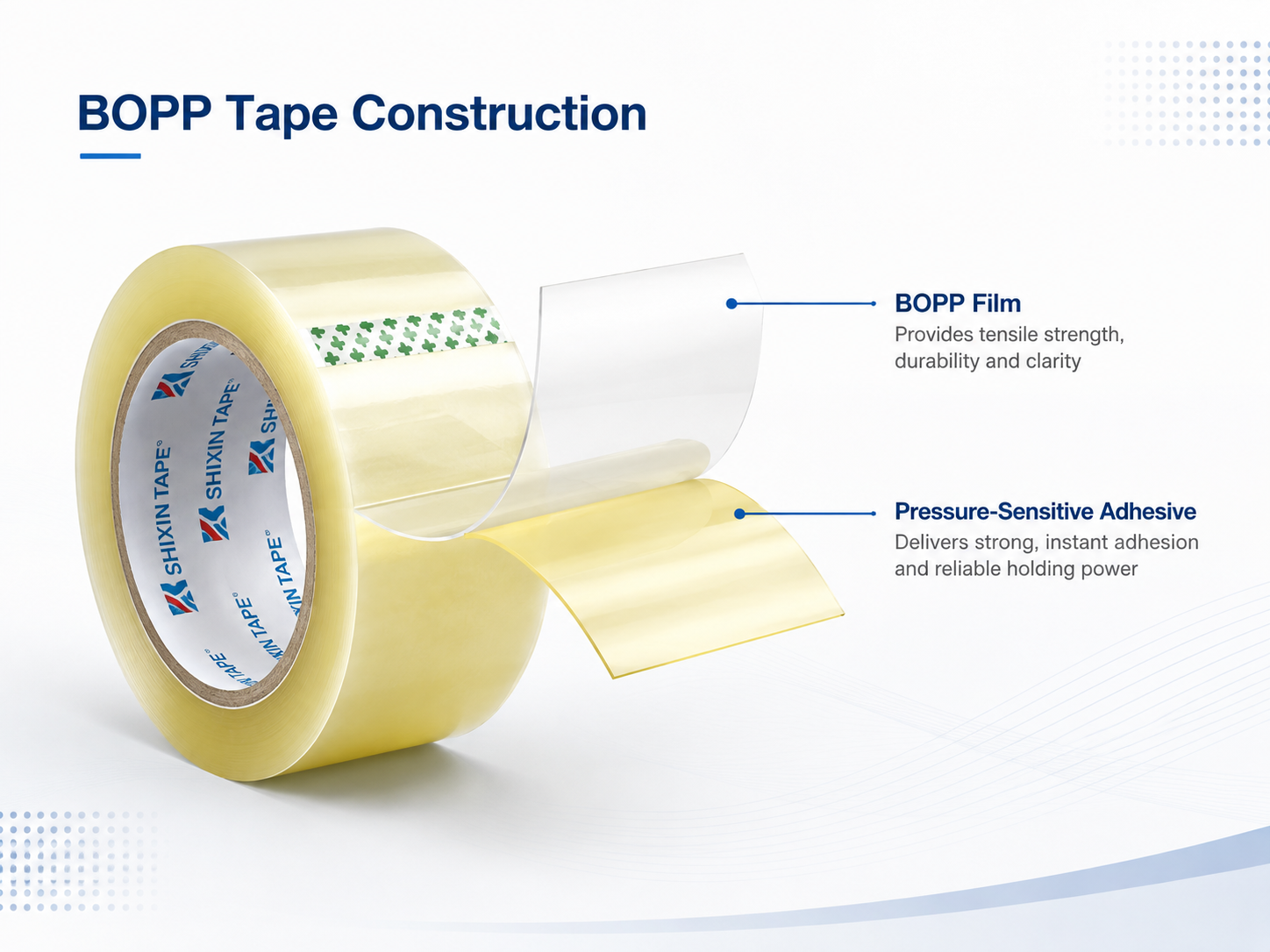
BOPP Film + Pressure-Sensitive Adhesive = Finished BOPP Tape
The BOPP film is the main load-bearing backing. Its thickness affects tensile behavior, stiffness, resistance to breakage, and the way the tape handles and unwinds.
The adhesive forms the bond to corrugated board or another substrate. Adhesive chemistry, dry coat weight and surface condition can influence tack, peel adhesion, holding performance and temperature behavior.
Finished thickness refers to the coated tape as a whole. ASTM D3652/D3652M covers the determination of pressure-sensitive tape thickness under standard conditions and is used for quality control and specification acceptance.
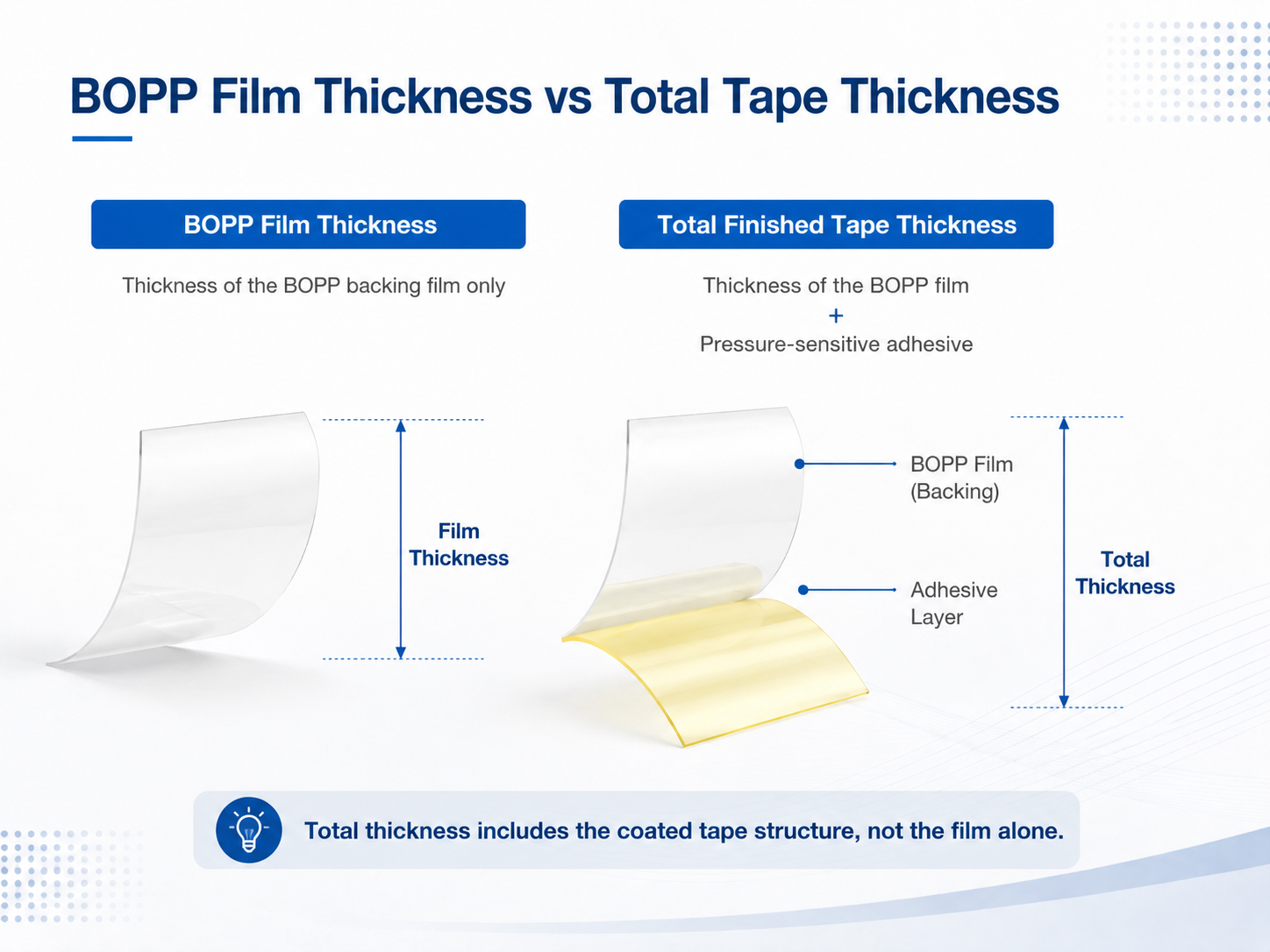
[A better purchasing question] Instead of asking only “How many microns is the tape?”, ask: “Is that the BOPP film thickness or the total finished tape thickness?”
No. Two BOPP tapes with a similar finished thickness can use different backing thicknesses, adhesive chemistries or adhesive coat weights. Their mechanical and bonding performance can therefore differ even when the total caliper is similar.
[GSM is not the same as μm] For example, “28 μm BOPP + 24 GSM adhesive” should not be converted to “28 + 24 = 52 μm.” GSM measures mass per unit area, while μm measures thickness. Conversion requires material density, and finished caliper should be verified by an appropriate thickness measurement method.
For uncoated BOPP film, theoretical weight can be estimated from width, length, film thickness and density. The example below uses 0.91 g/cm³ as a practical calculation value.
Film Weight (kg) = Width (m) × Length (m) × Film Thickness (μm) × Density (g/cm³) ÷ 1000
Assume a BOPP film is 0.048 m wide, 100 m long and 28 μm thick, using a density of 0.91 g/cm³.
0.048 × 100 × 28 × 0.91 ÷ 1000 ≈ 0.122 kg
The theoretical BOPP backing weight is approximately 122 g. This does not include adhesive or the core.
For finished pressure-sensitive BOPP tape, an areal-weight approach is more useful because it allows the backing and adhesive to be treated separately.
Tape Net Weight (kg) = Width (m) × Length (m) × Total Areal Weight (g/m²) ÷ 1000
Total Areal Weight = BOPP Film Areal Weight + Dry Adhesive Coat Weight
For illustration only, assume a 28 μm BOPP film, a film density of 0.91 g/cm³ and a dry adhesive coat weight of 24 g/m².
BOPP Film Areal Weight = 28 × 0.91 = 25.48 g/m²
Total Tape Material Areal Weight ≈ 25.48 + 24 = 49.48 g/m²
For a 48 mm × 100 m roll:
0.048 × 100 × 49.48 ÷ 1000 ≈ 0.238 kg
The estimated net tape material weight is approximately 238 g. Gross roll weight also includes the core and any other relevant packaging components.
[Example only] The 28 μm film, 24 g/m² adhesive coat weight and 48 mm × 100 m roll used above are calculation examples, not fixed Shixin specifications. Actual products should follow the agreed technical data sheet or approved sample.
If a roll cannot be fully unwound, its theoretical length can be estimated from the roll outside diameter, core outside diameter and finished tape thickness.
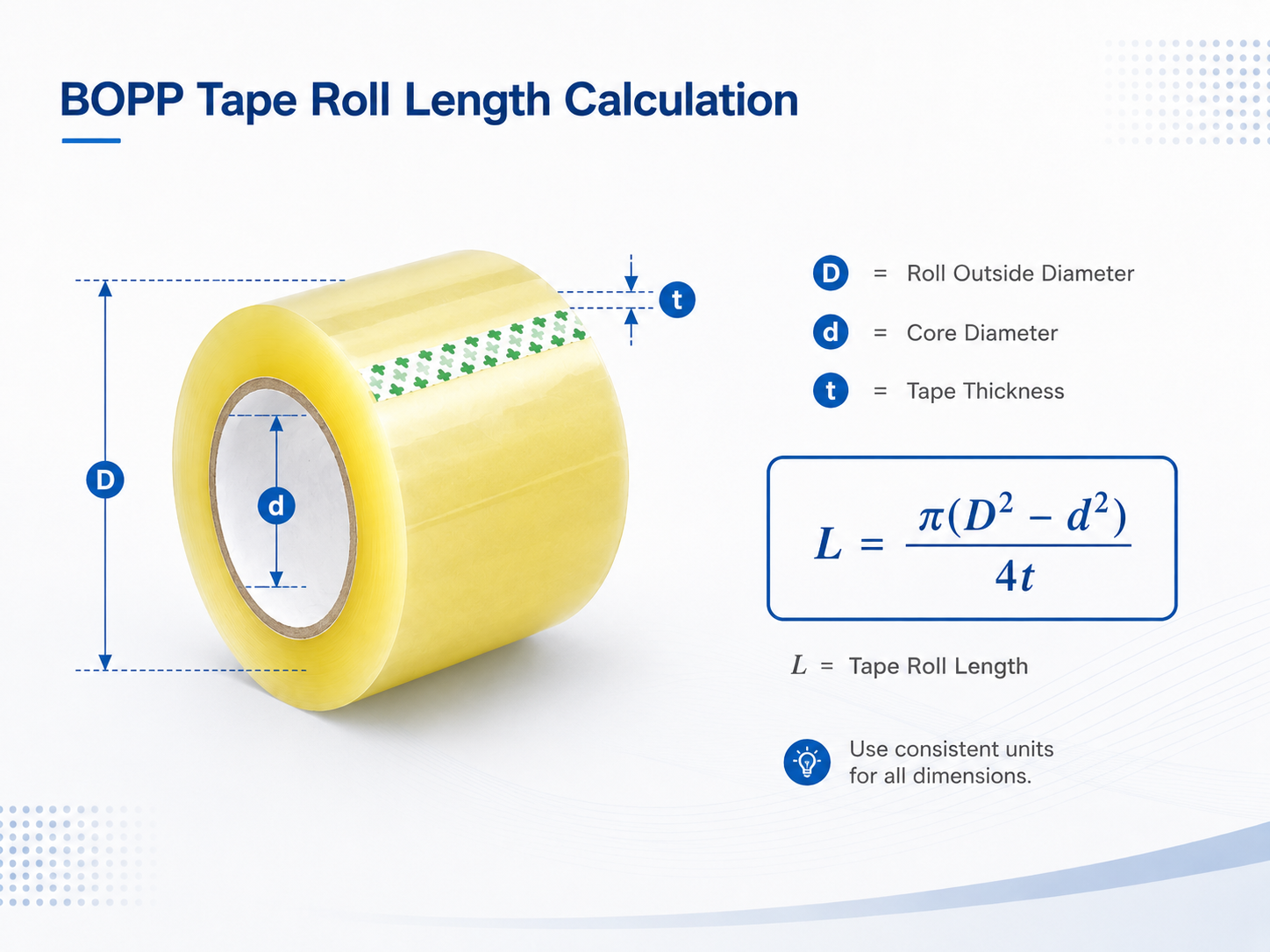
L = π(D² - d²) / 4t
All dimensions must use the same unit. If D, d and t are entered in millimeters, L is obtained in millimeters and must be divided by 1,000 to convert to meters.
Assume D = 120 mm, d = 76 mm and t = 0.052 mm.
L ≈ π × (120² - 76²) / (4 × 0.052) ≈ 130,255 mm ≈ 130 m
The theoretical roll length is approximately 130 m. This method assumes a relatively uniform tape thickness and a uniformly, tightly wound roll, so it is best used as a screening calculation rather than the sole acceptance method.
Small caliper variations become significant after hundreds or thousands of wound layers.
A tightly wound roll contains less interlayer space than a loosely wound roll.
Pressure-sensitive adhesive can deform under winding pressure, so the wound structure is not a perfectly rigid stack.
Normal process variation in adhesive coat weight and thickness affects finished caliper and weight.
Layer alignment, air between wraps and core condition can change the final outside diameter.
[Buyer takeaway] Roll diameter is useful for quick screening, but it should not be the only method used to accept roll length or finished thickness.
Gross roll weight includes both the tape material and the core. Two rolls with the same gross weight can therefore contain different amounts of tape when their cores differ.
Gross Roll Weight = Net Tape Material Weight + Core Weight
Even after the core is deducted, net tape weight cannot be converted accurately into length unless the width, BOPP film thickness, adhesive coat weight and material construction are also known.
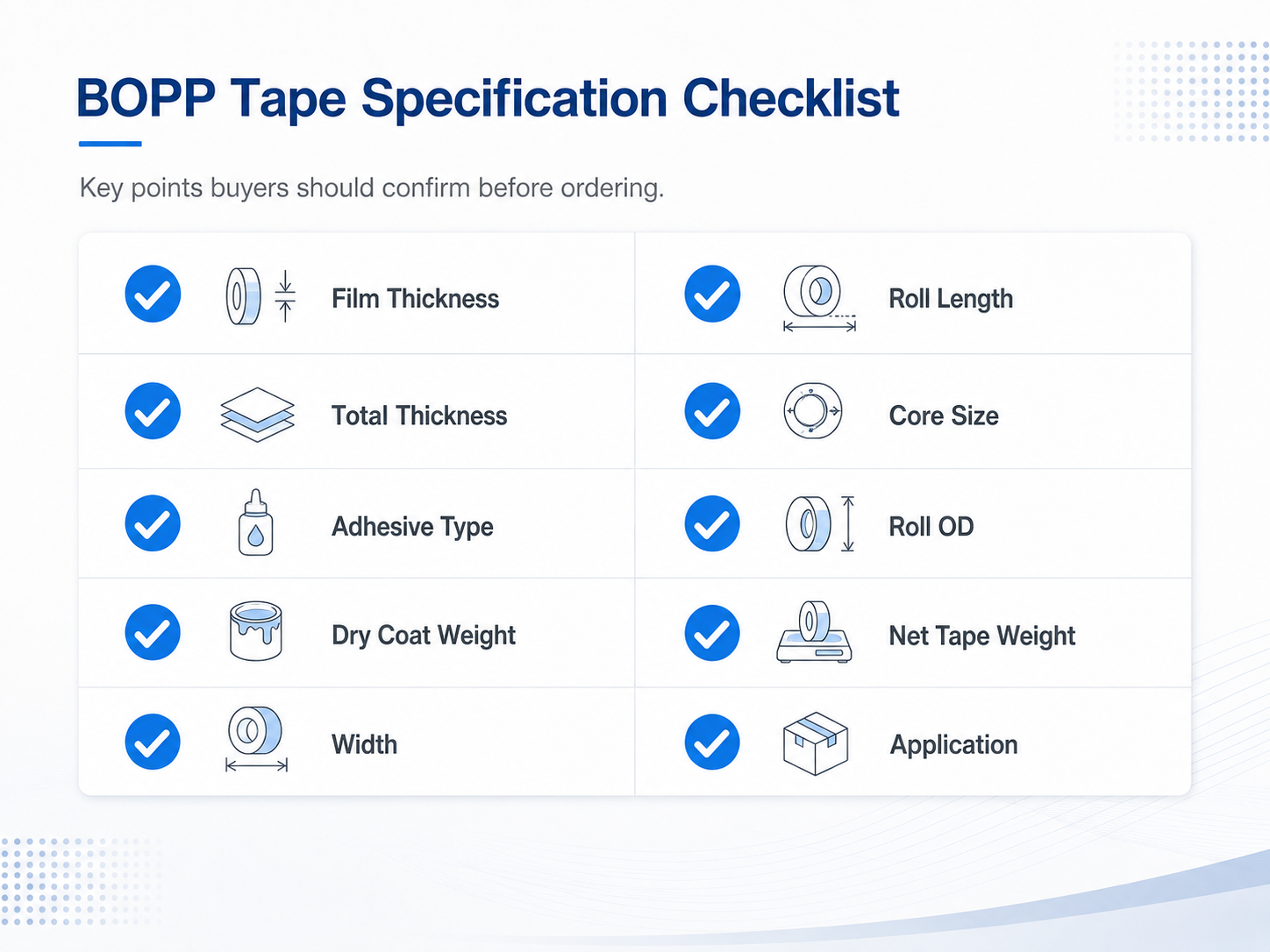
For bulk purchasing, a stronger specification check combines roll length, width, film thickness, finished thickness or adhesive coat weight, core specification and net weight instead of relying on a single number.
If two suppliers both quote “52 μm BOPP tape,” do not assume the products are technically equivalent. Continue the comparison with the following information.
The purchasing goal is not simply to obtain a “52 μm” tape. It is to define a tape construction that works with the carton, sealing process and storage environment.
No. BOPP means Biaxially Oriented Polypropylene, while MOPP means Monoaxially Oriented Polypropylene. Their orientation structures give the films different mechanical behavior and make them suitable for different applications.
BOPP tape is widely used for carton sealing and general packaging. MOPP-based tapes can be selected for industrial fixing, bundling and other applications where their directional tensile characteristics are useful. They should not be treated as interchangeable simply because both use polypropylene film.
View Shixin MOPP Tape
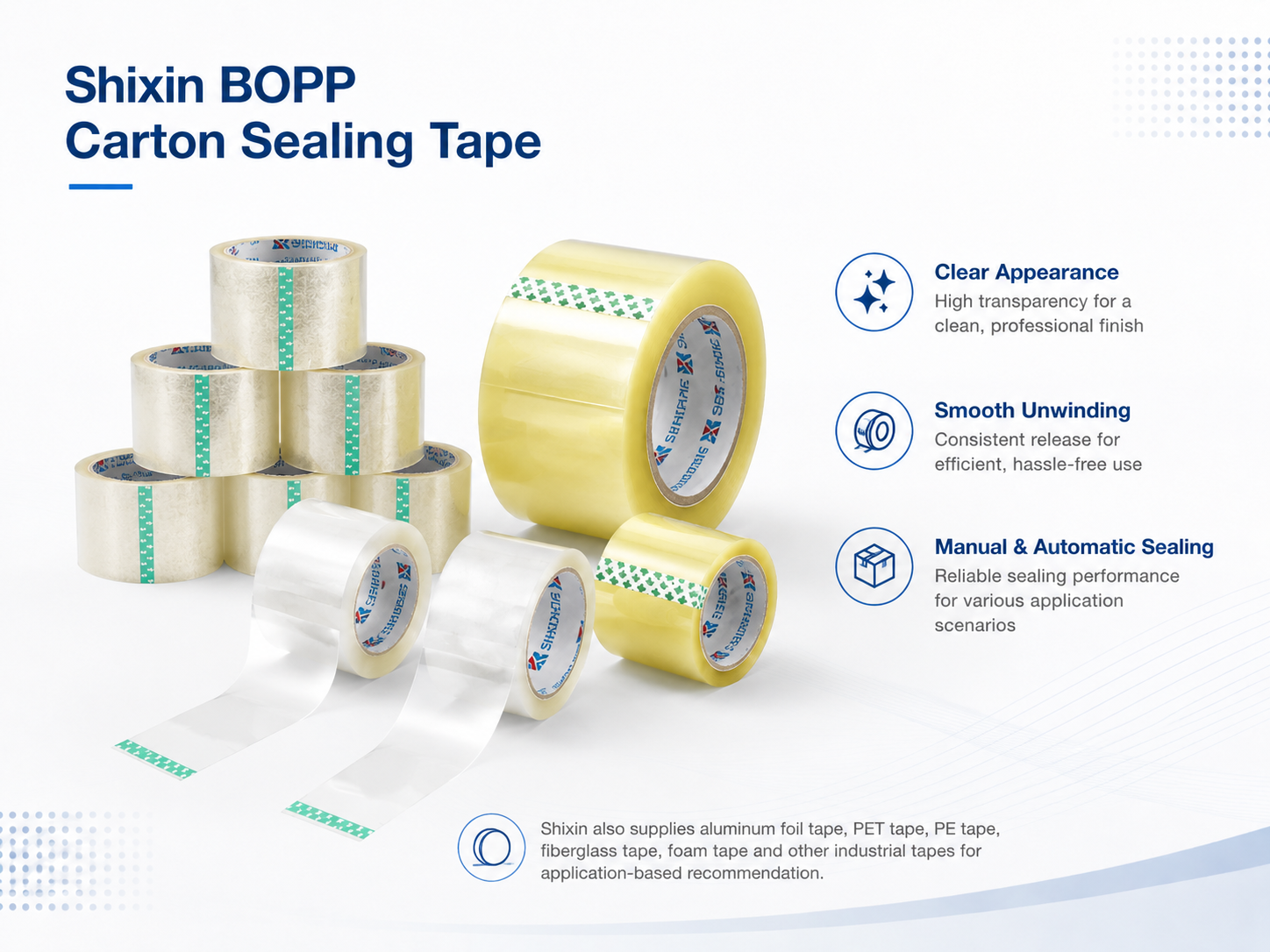
BOPP packaging tape should be specified around the actual packaging process rather than thickness alone. Jiangsu Shixin Adhesive Tape Product Co., Ltd. can review requirements including BOPP film thickness, finished tape thickness, adhesive system, width, roll length, core dimensions and manual or automated application conditions.
For example, Shixin’s current SXBOPP-01W BOPP carton sealing tape product page separately lists a carrier thickness of 23 μm and a total thickness of 50 μm. Separating these values makes it easier for buyers to understand the tape construction instead of treating “50 μm” as the only specification.
View Shixin BOPP Carton Sealing Tape
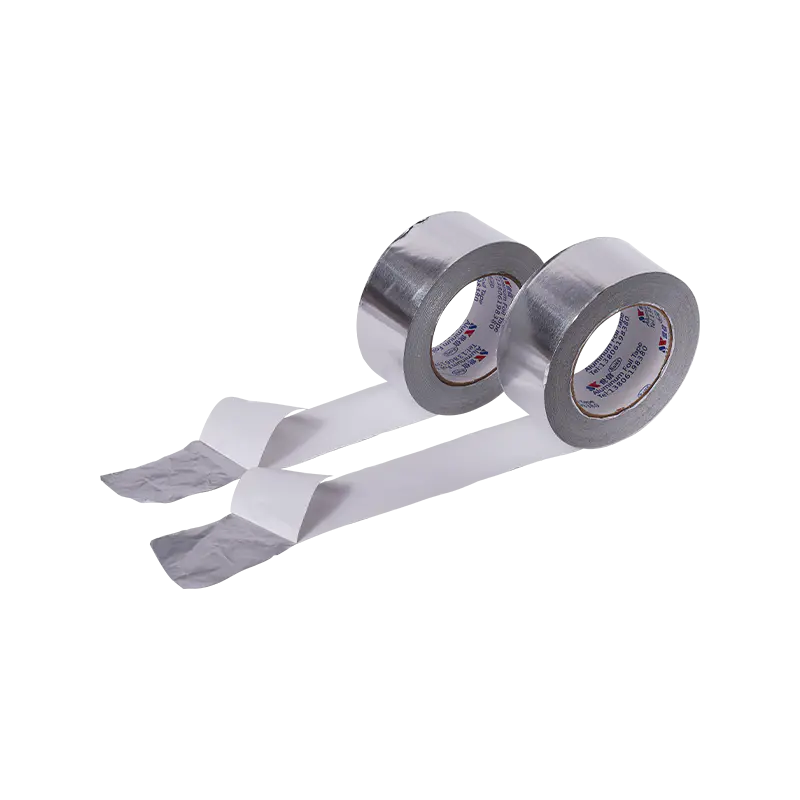
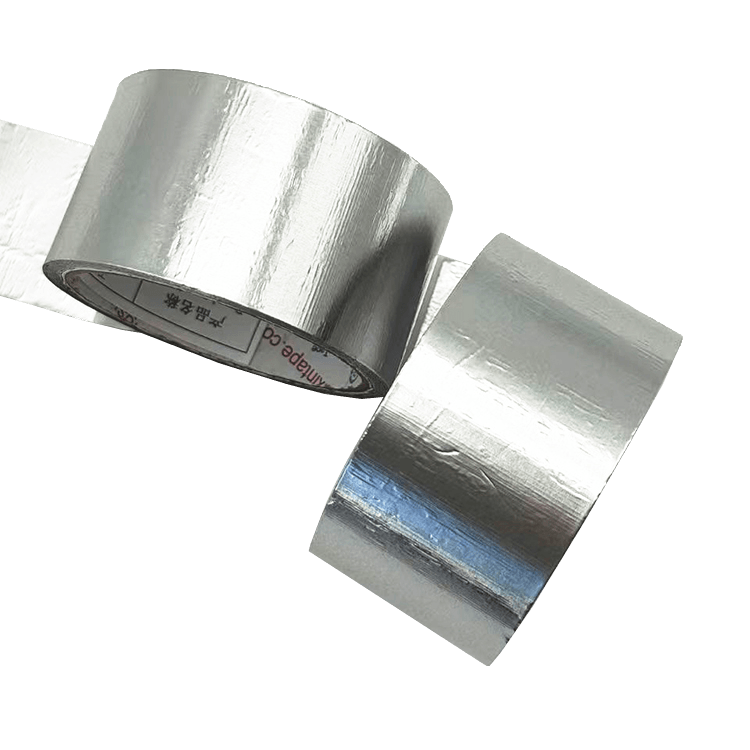
Beyond BOPP and other PP-based tapes, Shixin supplies a broad range of industrial adhesive tapes, including aluminum foil tapes, PET tapes, PE tapes, fiberglass tapes, foam tapes and cloth-based tapes. Each construction differs in backing, adhesive system, thickness, temperature capability and roll configuration. For specific projects, Shixin can narrow the selection according to the bonding substrate, operating temperature, adhesion requirements, application method and custom roll specifications, rather than recommending a tape by product name alone.
For a more useful recommendation, provide the carton type, package weight, operating temperature, sealing method, required tape width and target roll length.
It depends on the supplier’s specification definition. BOPP film thickness refers only to the backing, while finished total thickness normally refers to the coated tape as a whole. Buyers should confirm which value is being quoted.
In carton sealing tape quotations, 52 μm is often used to describe finished total thickness, but supplier definitions vary. The film thickness, adhesive chemistry and adhesive amount can still differ between products with a similar total caliper.
Uncoated BOPP film can be estimated from width, length, film thickness and density. Finished pressure-sensitive tape should also account for adhesive coat weight, and gross roll weight also includes the core.
Yes, as a theoretical estimate using roll outside diameter, core outside diameter and finished tape thickness. Winding tension, thickness tolerance and entrapped air can affect the actual result.
Yes. Similar total thickness does not guarantee the same BOPP backing thickness, adhesive system or coat weight, so tensile and bonding performance can differ.
No. Roll weight is also affected by width, film thickness, adhesive amount and core weight.
Not automatically. Their film orientation and mechanical behavior differ, so selection should be based on the sealing, fixing or bundling application.
If you are comparing BOPP tape film thickness, finished thickness, roll length, core dimensions or adhesive requirements, send Shixin your target specification and application conditions. We can help review the construction and provide samples or technical data for further evaluation.
Request Technical Data | Discuss Your Application | Request a Sample
Jiangsu Shixin Adhesive Tape Product Co., Ltd. | BOPP Technical Blog Draft | 2026-08-28

Our company has been engaged in the tape manufacturing industry for more than 20 years, and has been focusing on various types of aluminum foil tapes, foam tapes, refrigerator tapes, etc.
IsabelLina
Email:[email protected]
Mobile/Whatsapp: +86 190 3379 1110
Mars Gong
Email:[email protected]
Mobile/Whatsapp: +86 159 5136 0053
Address: West side of Yingbin Avenue and south side of hengwang packaging. Suqian Economic and Technological Development Zone,Jiangsu Province
Copyright © Jiangsu Shixin Adhesive Tape Product Co., Ltd. All Rights Reserved. Custom ODM Refrigerator Foil Adhesive Tapes Manufacturers