2026-10-23
Content
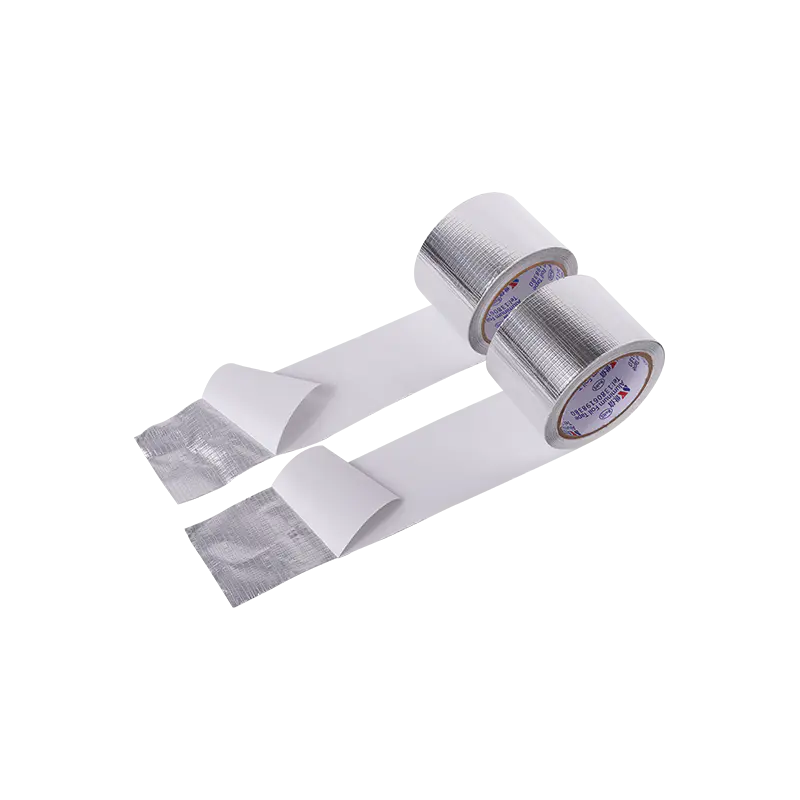
In the high-volume production of refrigerators and freezers, every second counts, every gram of material matters, and every waste stream adds cost. Yet, one of the most overlooked sources of inefficiency in the assembly process is the humble release liner — the silicone-coated paper or PET film that protects the adhesive on conventional tape rolls, only to be peeled off and discarded with every single application.
For a production line applying hundreds of meters of foil tape daily across multiple shifts, the cumulative impact of liner waste is far from trivial. It affects not only material costs but also labor productivity, floor space utilization, waste disposal expenses, and even corporate sustainability metrics. Understanding these hidden costs is the first step toward making a smarter, more efficient choice.
In a typical refrigerator manufacturing facility, foil tape is used extensively for cooling pipe fixation, insulation anchoring, and sealing applications. Consider the following:
The financial and operational impact of this waste stream extends across multiple cost centers, each of which is examined in detail below.
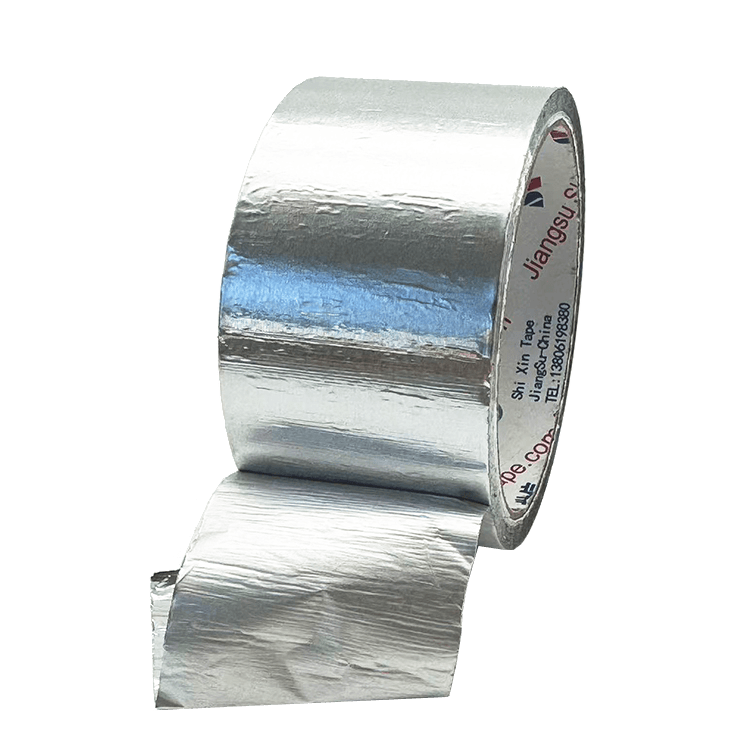
The release liner is a necessary component of conventional tape manufacturing, but from the moment the tape is applied, it becomes useless waste. The cost of the liner is embedded in the price of the tape — you pay for it, and then you throw it away.
For a high-volume manufacturer, the liner is part of the purchased tape construction and may also create collection and disposal work after application. To quantify this cost, use the actual tape purchase price, liner basis weight, annual tape consumption, labor time and local waste-management cost rather than a fixed percentage assumption.
Beyond the direct financial cost, liner waste also consumes valuable storage space on the production floor. Rolls of peeled liner accumulate rapidly, requiring frequent emptying of waste bins and dedicated collection points. This interrupts workflow and adds non-value-added movement for production staff.
Every application of liner-based tape requires a two-step process: peel the liner, then apply the tape. While this may seem like a trivial distinction, the cumulative effect in high-volume production is substantial.
Liner-based application includes a liner-removal step, while linerless application removes that separate action. The actual cycle-time difference depends on the operator, tape width/length, workstation and equipment, so it should be measured on the production line rather than expressed as a fixed percentage.
Moreover, the liner peeling step introduces ergonomic challenges. Repeatedly gripping and peeling the liner can contribute to operator fatigue, particularly during extended shifts. This fatigue can lead to slower application speeds, inconsistent placement, and higher defect rates.
Liner waste does not simply disappear after it is peeled. It must be managed throughout the production process:
These waste management activities are entirely non-value-added — they consume labor, equipment, and space without contributing to the final product. In a lean manufacturing environment, such activities are prime targets for elimination.
Corporate sustainability commitments are increasingly influencing procurement decisions. Major appliance manufacturers are under pressure to reduce their environmental footprint, and their suppliers are expected to contribute to these goals.
The release liners used in conventional tape are typically coated with silicone, which makes them difficult to recycle. Most municipal recycling facilities do not accept silicone-coated paper or film, forcing manufacturers to send this waste to landfills or incinerators. This undermines sustainability goals and can negatively impact a company's environmental reporting.
Using linerless tape removes the separate release-paper/film waste stream. Other production waste and packaging remain, so the total environmental benefit should be evaluated using the factory’s actual waste-management system.
The table below compares practical differences between liner-based and linerless foil tape in refrigerator manufacturing. Actual production impact depends on tape dimensions, application method, equipment, line speed, and site-specific operating conditions.
|
Evaluation Factor |
Tape With Liner |
Linerless Tape |
What to Verify on Your Line |
|
Release material |
Separate paper/film liner is removed during application. |
No separate liner is removed during application. |
Waste volume, collection route and local disposal/recycling method. |
|
Application steps |
Includes liner removal before/while applying the tape. |
Removes the separate liner-peeling step. |
Actual cycle time with your operator or equipment. |
|
Machine integration |
Equipment may need liner handling depending on process design. |
Relevant Shixin grades support machine and manual use. |
Unwind force, tension control, cutting and feed stability. |
|
Roll configuration |
Liner contributes to total roll build. |
No separate liner layer. |
Usable length and roll diameter should be compared using the actual two product constructions, not a fixed percentage. |
|
Total application cost |
Tape price + liner handling + labor + downtime + rejects/rework. |
Tape price + unwind/application + downtime + rejects/rework. |
Use real production data rather than a universal savings percentage. |
Key takeaway: Linerless foil tape removes the separate liner-peeling and liner-waste steps. The actual effect on cycle time, roll changes and total cost must be measured on the customer’s production line. For refrigerator condenser-tube applications, Shixin’s recorded case shows that release-layer/adhesive compatibility and seasonal unwind stability can be more important than a generic savings percentage.
Beyond the measurable financial and operational benefits, linerless foil tape addresses several broader strategic priorities for modern appliance manufacturers:
Changing from liner-based to linerless tape is a process decision rather than a simple product substitution. Potential benefits should be confirmed together with unwind behavior, adhesion, PU-foam compatibility and equipment/process fit.
A useful next step is to validate the actual application. Shixin’s recorded refrigerator condenser-tube case shows that the core engineering issue can be the interaction of release coating, adhesive chemistry, seasonal temperature and PU foaming, not merely the presence or absence of a liner.
Selecting linerless foil tape for refrigerator condenser-tube fixing requires attention to the actual manufacturing process. In Shixin’s recorded case, the critical issues were seasonal changes in adhesive tack and unwind, compatibility between the anti-stick layer and adhesive system, and interaction with polyurethane foaming.
Before evaluating tape specifications, it is essential to understand the three primary stress factors that the tape will encounter throughout the appliance's service life:
These stresses are not independent — they interact. For example, low temperatures can increase adhesive stiffness, making it more susceptible to vibration-induced fatigue. High humidity can plasticize the adhesive, reducing its cohesion and holding power. A well-engineered tape must balance all three performance dimensions simultaneously.
The aluminum foil backing serves two critical functions: providing a thermal pathway for heat transfer and delivering the mechanical strength needed to hold pipes securely. The following table compares the key substrate parameters that influence performance:
|
Substrate / Construction Factor |
Shixin Product Information |
Impact on Application |
Verification |
|
Foil construction |
Linerless and laminated linerless aluminum foil structures are available; thickness can be customized by grade. |
Affects conformability, tear behavior, handling and line compatibility. |
Confirm the selected TDS and sample roll. |
|
Release / anti-stick layer |
Linerless products use an anti-stick/release layer on the backing side. |
Controls unwind and affects compatibility with downstream materials such as PU foam. |
Check unwind through seasonal temperature changes and verify PU-foam interaction where relevant. |
|
Adhesive system |
Water-based acrylic, solvent-based acrylic and rubber systems are used in linerless structures. |
Affects tack, unwind, temperature sensitivity and cost. |
Select by substrate, season/temperature, line speed and application method. |
|
Application mode |
Relevant linerless grades support both machine and manual use. |
Allows integration with different production layouts. |
Validate feed, cutting, pressure and placement on the actual line. |
Selection guidance: For refrigerator condenser-tube fixation, do not set one universal minimum foil thickness or alloy requirement. Select the actual linerless or laminated linerless construction based on conformability, unwind, adhesive system, PU-foam compatibility and line process, then validate the chosen grade with its TDS and trial roll.
The adhesive system is arguably the most critical component of the tape. It must maintain flexibility, tack, and cohesion across the full operating temperature range while resisting degradation from moisture and vibration. Two primary adhesive chemistries are available for cold appliance applications:
|
Adhesive System |
Use in Shixin Linerless Foil Structures |
Selection Note |
|
Water-based acrylic |
Available in linerless / laminated linerless structures. |
Cost-effective option for suitable substrates and process conditions; validate tack and unwind. |
|
Solvent-based acrylic |
Available in linerless / laminated linerless structures. |
Used when higher performance is required; confirm temperature and substrate compatibility by grade. |
|
Rubber adhesive |
Available in linerless / laminated linerless structures. |
Can be sensitive to seasonal temperature changes; the recorded condenser-tube case specifically addressed this issue. |
|
Silicone |
Used in Shixin high/low-temperature linered and automotive high-temperature grades, not as a universal linerless condenser-tube specification. |
Use only when the selected product structure and application require it. |
Key insight: Adhesive performance changes with temperature, but Shixin’s current product information does not support the Tg and low-temperature retention values previously shown here for linerless condenser-tube tape. For this application, select from the actual available adhesive systems and validate tack, unwind and bonding under the customer’s expected seasonal and process conditions.
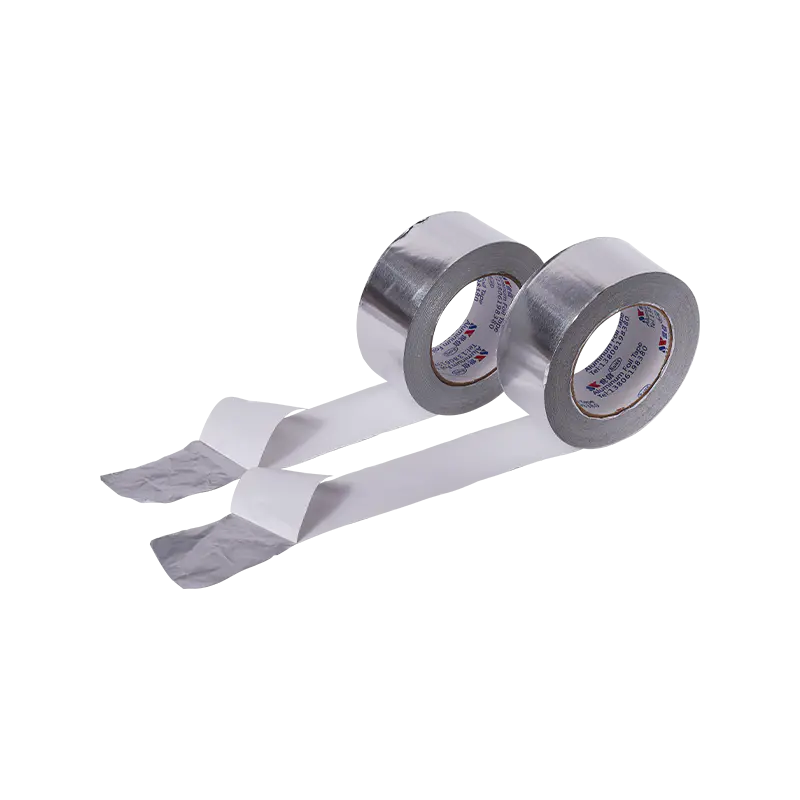
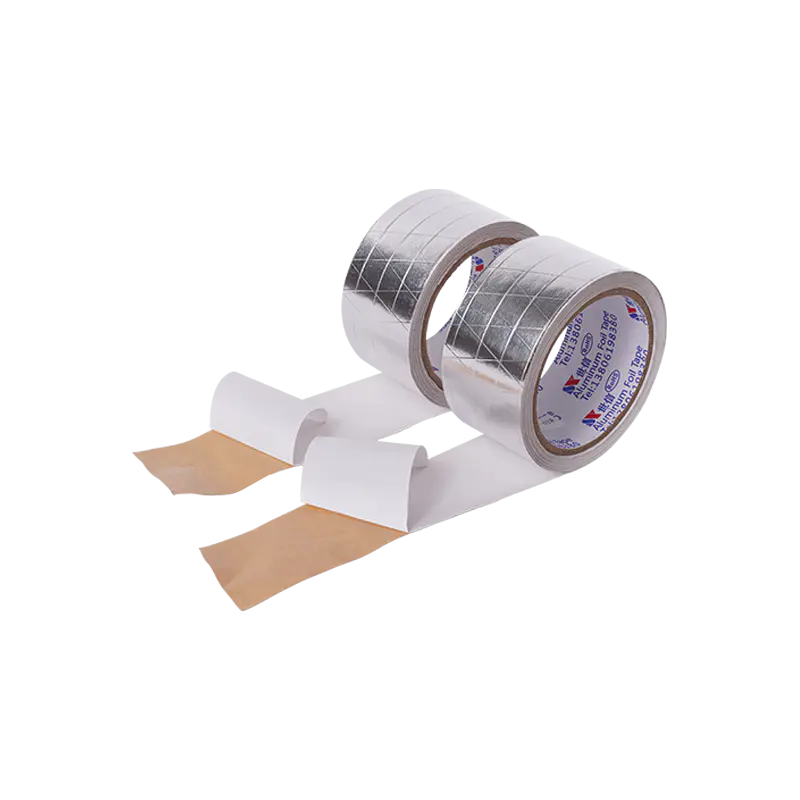
Linerless tape achieves its unique construction through a specialized release coating applied to the backside of the aluminum foil. This coating prevents the adhesive from bonding permanently to the backing, allowing the tape to unwind cleanly without a separate release liner. The key technical features of this construction include:
For refrigerator assembly, linerless construction can reduce release-material handling and can support continuous or machine application. The actual benefit depends on the tape construction and line settings.
|
Performance Attribute |
Tape With Liner |
Linerless Tape |
|
Release / unwind |
Release behavior depends on liner and adhesive construction. |
Controlled by the backing release/anti-stick layer and adhesive system. |
|
Release-material waste |
Generates a separate liner waste stream after application. |
Does not generate a separate release-paper/film stream. |
|
Application steps |
Includes removal/handling of liner. |
No separate liner-removal step. |
|
Machine use |
May require liner handling depending on equipment. |
Relevant Shixin grades support machine and manual use. |
|
Key risk to validate |
Liner handling, contamination and process fit. |
Unwind force, adhesive transfer, seasonal stability and PU-foam compatibility. |
One of the most critical yet often underestimated requirements for refrigerator cooling pipe tape is its ability to act as a moisture vapor barrier. Condensation that penetrates between the pipe and the cabinet surface can lead to:
If moisture-vapor transmission is a formal requirement, use a product-specific test report and the customer’s acceptance criterion. Shixin’s current internal product information does not support one universal MVTR value for all linerless condenser-tube tapes.
When evaluating linerless foil tape for refrigerator cooling pipe fixation, the following table provides a comprehensive checklist of performance parameters and minimum acceptable values. These benchmarks are based on industry practice for high-volume appliance manufacturing:
|
Validation Item |
Why It Matters |
Recommended Check |
Evidence Source |
|
Unwind force / release stability |
Too high or too low unwind can affect manual or automated application. |
Trial rolls across expected seasonal/line temperatures. |
Application trial / production record |
|
Adhesion to actual condenser-tube/cabinet surfaces |
Surface finish, oil and adhesive chemistry affect bonding. |
Peel/tack check on production substrates after cleaning process. |
TDS + sample validation |
|
PU-foam compatibility |
The release layer can affect interaction with PU foam in refrigerator construction. |
Foaming trial on the actual cabinet process. |
Recorded Shixin condenser-tube case + customer trial |
|
Seasonal stability |
Rubber adhesive tack and unwind can change with temperature. |
Compare winter/summer or controlled-temperature unwind and adhesion. |
Recorded Shixin condenser-tube case |
|
Machine compatibility |
Feed, cutting and tension settings vary by equipment. |
Run at target line speed and monitor jams, breakage and placement. |
Production-line validation |
Experienced procurement and engineering professionals understand that tape selection cannot be reduced to a single "most important" parameter. The performance of the tape in actual service depends on how all of these parameters interact:
This is why rigorous application-specific testing is essential. The ideal tape for refrigerator cooling pipe fixation is not the one with the highest single specification, but the one that achieves the best balance of thermal conductivity, low-temperature adhesion, vibration resistance, moisture barrier performance, and application efficiency for your specific production environment.
The technical specifications outlined above provide a framework for evaluating linerless foil tape candidates for refrigerator cooling pipe fixation. In the next section, we examine the practical aspects of application methods and production line integration — translating these technical parameters into real-world performance on your assembly line.
Selecting the right linerless foil tape is only half the equation. The manner in which the tape is applied — whether manually by operators or automatically by dispensing equipment — has a profound impact on both the quality of the pipe fixation and the overall efficiency of the assembly process. This section examines the practical aspects of tape application in refrigerator manufacturing, providing guidance on methods, equipment, quality control, and common failure modes.
Refrigerator production lines vary widely in their automation levels, from manual assembly operations in smaller facilities to highly automated, high-speed lines in large-scale manufacturing plants. The tape application method must be matched to the production environment, operator skill levels, and desired throughput.
In many refrigerator manufacturing facilities, particularly those with lower production volumes or complex product configurations, tape is applied manually by trained operators. While manual application lacks the speed of automated systems, it offers flexibility and adaptability to variations in pipe routing and cabinet geometry.
The single most important factor in achieving a durable bond is proper surface preparation. Copper and aluminum pipes, as received from suppliers, often have surface contamination that can compromise adhesion:
In most production environments, the recommended cleaning method is a simple wipe with a clean, dry cloth or a solvent-free degreasing wipe specifically designed for metal surfaces. For heavily contaminated pipes, a brief wipe with isopropyl alcohol or a mild metal cleaner may be used, followed by thorough drying before tape application. Note that solvents must be fully evaporated before tape application to prevent adhesive softening.
Even with a high-performance tape, application technique significantly influences the final bond quality. The following best practices should be standard operating procedure:
|
Application Step |
Recommended Practice |
Why It Matters |
|
Positioning |
Align the tape squarely over the pipe, ensuring even overlap on both sides. |
Misalignment reduces contact area and creates stress concentrations that can lead to edge lifting. |
|
Initial Contact |
Make light contact with the pipe surface before applying pressure. This allows the adhesive to wet the surface. |
Rushing the initial contact can trap air bubbles and reduce effective bond area. |
|
Pressure Application |
Apply firm, even pressure along the entire length of the tape using a roller or squeegee. |
Pressure forces the adhesive into surface micro-pores, maximizing contact area and bond strength. |
|
Edge Sealing |
Pay particular attention to the edges of the tape, ensuring they are firmly pressed down. |
Edges are the most vulnerable point for moisture ingress and peel initiation. |
|
Overlap Management |
Where overlapping is required, ensure a minimum overlap of 10–15 mm. |
Sufficient overlap creates a continuous moisture barrier and distributes stress across a larger area. |
Even experienced operators can introduce defects if attention to detail slips. The following table identifies the most common defects, their root causes, and practical remedies:
|
Defect |
Root Cause |
Remedy |
|
Wrinkles or Bubbles |
Uneven tension during application; insufficient pressure |
Use a roller with firm pressure; apply from center outward to expel air |
|
Edge Lifting |
Insufficient pressure at edges; contamination at the pipe surface |
Clean surfaces thoroughly; apply extra pressure along edges with a finger or small roller |
|
Insufficient Adhesion |
Surface contamination; application temperature too low |
Ensure surfaces are clean and dry; maintain application temperature above +15°C |
|
Tape Misalignment |
Poor visual guidance; operator fatigue |
Provide clear alignment markers; rotate operators to reduce fatigue |
|
Adhesive Bleed |
Excessive pressure; application temperature too high |
Use moderate, even pressure; avoid application in direct sunlight or near heat sources |
In high-volume refrigerator manufacturing, automated tape dispensing systems are essential for achieving consistent quality, reducing labor costs, and maintaining production line speed. Linerless tape is inherently better suited to automation than liner-based tape, as it eliminates the need for liner removal mechanisms — one less mechanical subsystem to maintain and troubleshoot.
A typical automated tape dispensing system for refrigerator cooling pipe fixation consists of the following components:
The following table compares the performance characteristics of manual versus automated application for refrigerator cooling pipe tape:
|
Parameter |
Manual Application |
Automated / Machine Application |
Evaluation Note |
|
Flexibility |
Operators can adapt to routing and geometry changes. |
Requires equipment setup and program/mechanical adjustment. |
Choose based on product mix and production layout. |
|
Pressure / placement |
Operator-dependent. |
Can be controlled by the application head when properly set up. |
Validate actual bond quality, not only equipment speed. |
|
Material handling |
Operator handles cutting and placement. |
Feed, tension and cutting are equipment-dependent. |
Relevant Shixin linerless grades support machine use, but settings must be qualified. |
|
Release-material handling |
With-liner tape requires manual or assisted liner collection. |
Linerless tape removes the separate liner-handling step. |
Evaluate waste handling and workstation design. |
|
Performance metric |
Measure actual cycle time, defects and material use. |
Measure actual cycle time, downtime, breaks/jams and rejects. |
Do not use a fixed 3-4× speed multiplier without line data. |
Automated dispensing systems are designed for continuous, uninterrupted operation. Liner-based tape introduces several challenges that linerless tape neatly solves:
These advantages translate directly into higher machine uptime, reduced maintenance, and lower total cost of ownership for automated dispensing equipment.
Transitioning from manual or liner-based tape application to linerless automated dispensing requires careful planning. The following roadmap provides a structured approach:
|
Phase |
Activities |
Expected Outcomes |
|
Feasibility Assessment |
Evaluate current application method, line speed, pipe geometry, and operator feedback. |
Define requirements for automation; quantify potential savings. |
|
Tape Qualification |
Obtain linerless tape samples; test on actual production pipes under simulated line conditions. |
Confirm adhesive performance at -10°C; validate unwind characteristics. |
|
Equipment Specification |
Specify or source automated dispenser with appropriate tension control, cutting mechanism, and pressure system. |
Equipment selected that matches tape properties and line speed. |
|
Line Integration |
Install equipment; integrate with existing conveyor or robotic positioning systems. |
Automated station operational; interfaced with production line controls. |
|
Operator Training |
Train operators and maintenance staff on equipment setup, operation, and troubleshooting. |
Staff confident in operating and maintaining the automated system. |
|
Production Ramp-Up |
Gradually increase line speed and volume; monitor quality metrics (peel adhesion, alignment, waste). |
Target line speed achieved; quality consistent with manual application or better. |
|
Continuous Improvement |
Collect data on material usage, downtime, and rejection rates; identify further optimization opportunities. |
Ongoing efficiency improvements; documented ROI achieved. |
Quality control does not end when the tape is applied. A robust quality management system includes in-process verification and ongoing monitoring to detect and correct deviations before they result in non-conforming products.
For high-volume lines, SPC provides a powerful framework for monitoring and improving application consistency. Key metrics to track include:
By monitoring these metrics and establishing control limits, production managers can identify trends early and take corrective action before quality issues escalate. For example, a gradual increase in cycle time may indicate that the unwind tension is drifting, requiring adjustment to the tension control system.
Regardless of whether application is manual or automated, operator training is essential to achieving consistent quality. The following topics should be covered in training programs:
Investment in operator training yields measurable returns in reduced defect rates, lower material waste, and higher production throughput. The best tape in the world will not perform reliably if applied incorrectly.
Understanding the application process is essential for translating the technical specifications of linerless foil tape into reliable performance on the production line. Whether applied manually or automatically, the key to success lies in proper surface preparation, consistent technique, and robust quality control. In the next section, we introduce the manufacturing capability and product ecosystem that supports these application requirements, providing a complete solution for refrigerator cooling pipe fixation.
While linerless foil tape for cooling pipe fixation is a critical component in refrigerator manufacturing, it represents only one element of a broader adhesive ecosystem that supports the entire appliance assembly process. From thermal insulation and vibration damping to electrical insulation and surface protection, a wide range of adhesive materials is required to bring a refrigerator from components to finished product. Managing multiple suppliers for these diverse material families creates procurement complexity, quality inconsistency, and compatibility risks at material interfaces. This section introduces a manufacturing partner that addresses these challenges through a unified product ecosystem, vertically integrated operations, and decades of industry experience.
Established in 2005, our journey spans over two decades of dedicated growth in the adhesive tape industry. What began as a small-scale producer has evolved into a high-tech enterprise that fully integrates research and development, production, and global sales — a transformation that reflects our commitment to continuous improvement and customer-focused innovation.
Our manufacturing campus spans nearly 12,000 square meters of factory floor space, housing multiple dedicated production lines for aluminum foil coating, laminating, precision slitting, and custom converting. This scale enables us to operate with both agility — responding to custom orders with short lead times — and stability — maintaining consistent output even during peak demand seasons.
With a committed team of 100 employees, including engineers, quality control specialists, and production technicians, we maintain a vertically integrated operation that gives us full control over every stage of the manufacturing process — from raw material receiving to finished goods dispatch. This integration ensures that quality is built into every roll, not inspected in at the end.
Many appliance manufacturers face the challenge of managing multiple suppliers for different adhesive material families — one for foil tapes, another for foams, a third for film tapes. This fragmentation leads to increased procurement overhead, inconsistent quality, and compatibility issues at the interfaces between materials. Our unified product ecosystem addresses these challenges by offering a complete range of adhesive solutions under one roof:
|
Product Family |
Key Offerings |
Primary Applications in Refrigeration |
|
Aluminum Foil Tapes |
Without Liner / With Liner / Laminated (without liner) / Fiberglass Reinforced / FSK Reinforced / SS Reinforced / Automotive High-Temp / Heat Seal |
Cooling pipe fixation; duct sealing; insulation anchoring; vapor barrier; EMI shielding |
|
PU / PE / NBR Foam Solutions |
Closed-cell and open-cell foams in various densities and thicknesses; single- or double-sided adhesive |
Vibration damping between compressor and cabinet; gasketing for door seals; thermal insulation; acoustic absorption |
|
Film Tapes Solutions |
PET (polyester), polyimide, and PVC film tapes; acrylic or silicone adhesives |
Electrical insulation for wiring harnesses; high-temperature masking during cabinet foaming; surface protection during assembly |
Consolidating adhesive material sourcing with a single, capable supplier delivers tangible benefits across procurement, engineering, and production:
|
Benefit Area |
How It Is Achieved |
Measurable Outcome |
|
Vendor Consolidation |
Single point of contact for foil tapes, foams, and film tapes |
Reduced procurement overhead; fewer supplier audits; simplified qualification processes |
|
Material Compatibility |
Material combinations are evaluated according to adhesive chemistry, substrate, and application conditions |
Helps reduce interface-compatibility risk when materials are properly evaluated |
|
Logistics Efficiency |
Multiple material types combined in a single shipment |
Reduced freight costs; lower administrative workload; consolidated inventory management |
|
Technical Consistency |
Unified quality system and testing protocols across all product families |
Consistent quality across all adhesive materials; simplified troubleshooting |
In the appliance industry, regulatory compliance is not optional — it is a prerequisite for doing business. Our operations and products are certified to internationally recognized standards that provide our customers with confidence in both quality and regulatory adherence:
|
Certification |
Scope |
Value to Your Business |
|
ISO 9001 |
Quality Management System — documented processes for production, inspection, and continuous improvement |
Batch traceability; documented corrective actions; fewer quality surprises |
|
ISO 14001 |
Environmental Management System — waste reduction, responsible chemical usage, minimized environmental footprint |
Supports your corporate sustainability goals; reduces regulatory risk |
|
SGS Certification |
Third-party verification of product performance and safety |
Independent validation of claimed properties; reduces need for your own testing |
|
RoHS Compliance |
Restriction of Hazardous Substances Directive (EU 2011/65/EU) — free from lead, mercury, cadmium, hexavalent chromium, PBBs, PBDEs |
Essential for export to EU and other regulated markets; meets appliance industry requirements |
|
REACH Compliance |
Registration, Evaluation, Authorization, and Restriction of Chemicals (EC 1907/2006) — full substance registration and SVHC disclosure |
Transparency on chemical content; reduces compliance burden for your finished products |
Why this matters to you: These certifications are not badges on a wall — they represent an operational discipline that translates into fewer quality surprises, smoother regulatory approvals for your finished products, and reduced audit fatigue when your own customers request supply chain documentation.
Our quality assurance framework operates at three levels, ensuring that every roll of tape meets the specifications agreed upon — not just in the first shipment, but in every shipment, year after year:
Every batch of raw material — aluminum foil, adhesive polymer, release liner, and scrim reinforcement — is tested against incoming specifications before being released to production. Key tests include:
During production, real-time monitoring ensures that every meter of tape meets specifications:
Each finished roll is sampled and tested for compliance with the full specification:
As a high-tech enterprise, we maintain an active R&D program that focuses on the challenges our customers will face tomorrow, not just today. Our current research priorities include:
|
Research Area |
Objective |
Expected Benefit to Customers |
|
Adhesive Formulation Optimization |
Developing solvent-free and water-based acrylic systems |
Reduced VOC emissions; improved worker safety; compliance with tightening environmental regulations |
|
Reinforcement Architecture |
Exploring new scrim weaves and fiber combinations |
Higher tensile strength at lower basis weights; more cost-effective reinforced tapes |
|
Surface Engineering |
Aluminum surface treatments to enhance adhesive anchoring and corrosion resistance |
Improved long-term durability; better performance in high-humidity environments |
|
Sustainability Initiatives |
Evaluating recycled aluminum content and bio-based adhesive raw materials |
Greener products that support your corporate sustainability goals |
|
Cold-Temperature Adhesion |
Extending low-temperature performance beyond -20°C |
Broader application range for deep-freeze and transport refrigeration |
Our R&D team collaborates directly with customer engineering departments on custom projects, offering tailored solutions that address application-specific requirements — whether that means a unique width, a specialized adhesive pattern, or a custom release liner for automated dispensing equipment.
One of the most frequently cited challenges for procurement professionals is balancing cost reduction with quality preservation. Our manufacturing model addresses this through a combination of economies of scale and a localized, integrated supply chain that eliminates unnecessary cost layers.
The following case uses Shixin’s recorded refrigerator condenser-tube project instead of a generic comparison with European suppliers. The 10-15% procurement-cost reduction is specific to that recorded product/application case.
|
Recorded Case |
Production Problem |
Shixin Response & Recorded Result |
|
Refrigerator condenser-tube laminated linerless foil tape |
Rubber-adhesive tack/unwind changed with seasonal temperature; PU-foam compatibility also required attention. |
Shixin developed an anti-stick/release layer compatible with different adhesive systems. Several refrigerator manufacturers improved seasonal application stability; the internal case record reports about 10-15% lower tape procurement cost for this specific solution. |
Case note: The approximately 10-15% procurement-cost reduction is recorded for a specific refrigerator condenser-tube tape project after release-layer and adhesive-system optimization. It is not a universal supplier-cost comparison or a guaranteed saving for other products or customers.
Our long-term partnerships include globally recognized brands across the home appliance and electronics sectors — organizations known worldwide for their stringent supplier qualification processes:
These partnerships are not awarded lightly. Each of these companies conducted rigorous supplier audits, performance trials, and ongoing quality monitoring before entrusting us with their production-critical materials. Their continued trust — in many cases spanning over a decade — is the strongest validation of our reliability and the effectiveness of our unified product ecosystem.
A complete adhesive ecosystem is more than a collection of products — it is an integrated system of materials, quality systems, technical expertise, and supply chain reliability that works together to support your production goals. Whether you need linerless foil tape for cooling pipe fixation, foam solutions for vibration damping, or film tapes for electrical insulation, our unified portfolio and vertically integrated manufacturing model provide a single, trusted source for all your adhesive material requirements. In the next section, we examine how our supply chain reliability and long-term partnership approach deliver value beyond the product itself.
In the appliance manufacturing industry, trust is earned through consistent performance over time. The world's leading refrigerator and home appliance manufacturers do not select suppliers based on marketing claims alone — they subject potential partners to rigorous qualification processes, including facility audits, product testing, and ongoing quality monitoring. Our track record of serving these demanding customers provides the strongest possible validation of our products, our systems, and our commitment to excellence.
This section examines the performance benchmarks that matter most to appliance manufacturers, presents the evidence of our reliability, and quantifies the value we deliver through cost competitiveness and quality assurance.
We are proud to count among our long-term partners a distinguished group of global brands spanning the home appliance, consumer electronics, and industrial equipment sectors. These organizations — recognized worldwide for their stringent supplier qualification processes — have selected us as a trusted source for adhesive tape and foam solutions:
The significance of these partnerships extends beyond the brand names themselves. Each of these companies maintains:
Our continued partnerships with these companies — in many cases spanning over a decade — demonstrate that we consistently meet or exceed their expectations. This is the most credible validation of our capabilities that any supplier can offer.
Quality is the foundation of trust. We benchmark our product performance against the most stringent industry standards and ensure that every lot meets or exceeds the following key performance indicators. The table below compares typical industry requirements for premium-grade tapes with our guaranteed minimum performance:
|
Parameter to Confirm |
Reason |
How to Validate |
Do Not Assume |
|
Adhesion |
Must match the actual tube/cabinet surface and cleaning condition. |
TDS + trial on production substrates. |
One universal peel value for all grades. |
|
Unwind / release |
Critical for manual and machine application. |
Trial across expected temperatures and line settings. |
A fixed improvement percentage. |
|
Temperature behavior |
Adhesive tack and release can change seasonally. |
Cold/warm application trials or customer-defined test. |
Unsupported Tg or low-temperature retention numbers. |
|
Moisture / foam interaction |
Refrigerator cabinet foaming and humidity conditions can affect the interface. |
PU-foam compatibility and finished-unit trial. |
A universal MVTR value without a product test. |
|
Mechanical / vibration behavior |
Depends on tape structure and final assembly. |
Application-specific durability or customer test. |
A universal 10/20-million-cycle benchmark. |
Key takeaway: Performance should be evaluated against the agreed specification for the selected product and the applicable test records. Process control, inspection, and third-party documentation can be used as supporting evidence where available. For appliance manufacturers, this means consistent, predictable performance across every shipment.
For appliance procurement, cost should be evaluated together with application stability and line compatibility. In Shixin’s recorded condenser-tube project, the anti-stick layer and adhesive system were optimized to address seasonal application issues; the internal case record reports approximately 10-15% lower tape procurement cost for that specific solution.
The table below breaks down the cost advantage by component, providing transparency into how the savings are achieved:
|
Recorded Case |
Production Problem |
Shixin Response & Recorded Result |
|
Refrigerator condenser-tube laminated linerless foil tape |
Seasonal tack/unwind instability and PU-foam interface considerations. |
Shixin developed an anti-stick/release layer compatible with different adhesive systems. Several refrigerator manufacturers improved seasonal application stability; the internal case record reports about 10-15% lower tape procurement cost for this specific solution. |
Case note: The approximately 10-15% procurement-cost reduction is recorded for a specific refrigerator condenser-tube tape project after release-layer and adhesive-system optimization. It is not a universal supplier-cost comparison or a guaranteed saving for other products or customers.
The following recorded case focuses on a refrigerator condenser-tube application and should be read as project-specific evidence rather than a general savings model.
|
Case Metric |
Before / Issue |
After Shixin Development |
Evidence |
|
Seasonal application stability |
Temperature-sensitive rubber adhesive could cause low tack in cold periods and difficult unwind/breakage in warm periods. |
Release layer designed to be compatible with different adhesive systems, enabling better formulation matching. |
Internal refrigerator condenser-tube case |
|
Procurement cost |
Rubber-adhesive solution carried higher cost in the recorded case. |
Internal case records approximately 10-15% lower tape procurement cost. |
Case-specific result; not a universal saving for all customers |
|
Production efficiency |
Seasonal tape problems could disrupt application. |
Case record states production issues caused by seasonal variation were improved. |
Qualitative case result; actual line-cycle improvement depends on each factory |
Recorded case result: In Shixin’s laminated linerless aluminum foil tape project for refrigerator condenser tubes, optimizing the anti-stick layer and adhesive compatibility addressed seasonal application problems. The internal case record reports approximately 10-15% lower tape procurement cost. This is a case-specific result, not a universal savings claim.
We view every customer relationship as a technical partnership, not a simple purchase order. Our support model is designed to help you succeed at every stage of the product lifecycle:
|
Support Phase |
Activities |
Your Benefits |
|
Pre-Sales Application Engineering |
Our technical team works with your design and production engineers to understand application environment — temperatures, surface materials, application methods, regulatory requirements |
Optimal product grade recommendation before trial; reduced trial costs; accelerated qualification |
|
Customization Capabilities |
Flexible converting: custom slitting (6 mm to 1,200 mm), custom core sizes, log rolls for automated dispensing, special release liner treatments |
Tape matches your production equipment exactly; reduced waste; improved line efficiency |
|
On-Site Technical Support |
Field engineers available for site visits to observe application techniques, troubleshoot adhesion issues, recommend process improvements |
Faster problem resolution; optimized application processes; reduced reject rates |
|
Responsive Problem Resolution |
Review relevant production, inspection, and application information for reported quality concerns; define corrective actions based on the confirmed cause |
Documented review and corrective-action follow-up where applicable |
While transactional relationships focus on price per roll, we believe in creating value through collaboration and shared growth. Our longest customer relationships now exceed fifteen years — a duration that reflects our commitment to continuous improvement, transparent communication, and mutual success.
When you choose us as your adhesive material supplier, you are not simply purchasing tape or foam. You are gaining a manufacturing partner with:
For supplier evaluation, we recommend reviewing the selected product specification, available test data, samples, and application results under your own process conditions. This provides a more practical basis for comparison than broad marketing claims.
In the appliance manufacturing industry, production lines cannot afford unplanned downtime. Every minute of stoppage translates into lost output, delayed shipments, and increased costs. Supply chain reliability is therefore not a convenience — it is a business imperative. This section examines how our manufacturing capabilities, quality systems, and partnership philosophy work together to provide the supply chain security that appliance manufacturers require.
Beyond the product itself, we offer a comprehensive range of value-added services, supply chain flexibility options, and collaborative engagement models that are designed to support your production goals — today and into the future.
Our manufacturing infrastructure is built to support the high-volume demands of global appliance production. Key capacity metrics include:
This scale provides our customers with confidence that their production requirements can be met consistently, even during peak demand periods. Our capacity planning process includes regular reviews of customer forecasts, allowing us to proactively adjust production schedules and maintain buffer stock for key customers.
Vertical integration is a key differentiator in our manufacturing model. Unlike suppliers who rely on subcontractors for critical production steps, we maintain in-house control over the entire manufacturing process:
|
Process Stage |
Our Capability |
Benefit to You |
|
Raw Material Receiving & Inspection |
Incoming material testing for foil thickness, alloy composition, adhesive polymer properties, and liner siliconization |
Substandard materials are rejected before production begins — ensuring consistent quality from the start |
|
Adhesive Coating |
In-house solvent-based and water-based acrylic coating lines with real-time coat weight monitoring |
Precise adhesive coat weight control; consistent performance across every roll and every batch |
|
Laminating & Reinforcement |
In-house lamination of foil to scrim, kraft, or film reinforcements; precision nip pressure control |
Consistent reinforcement bonding; no risk of delamination between layers |
|
Precision Slitting |
Multi-blade slitting capability from 6 mm to 1,200 mm width; tight tolerance control |
Accurate widths for automated dispensing equipment; reduced edge contamination risk |
|
Quality Testing & Validation |
In-house laboratory with peel, tensile, shear, thermal, and humidity testing capability |
Rapid quality verification; shortened response time for any quality issues |
|
Packaging & Logistics |
In-house packaging with custom labeling; strategic port proximity for efficient shipping |
Private labeling capability; consolidated shipments; optimized freight costs |
Key takeaway: Vertical integration eliminates the variability and communication gaps that arise when relying on external subcontractors. Every critical process step is under our direct control, ensuring consistent quality and rapid response to any issues that arise.
Standard tape widths and lengths do not fit every production line. Our custom converting capabilities ensure that the tape you receive is precisely matched to your application equipment and process requirements:
|
Customization Option |
Available Specifications |
Typical Application |
|
Width |
6 mm to 1,200 mm, in 1 mm increments |
Matching tape width to pipe diameter or automated dispenser opening |
|
Length |
10 m to 500 m (or longer, subject to roll diameter limits) |
Minimizing roll change frequency; matching to automated dispenser capacity |
|
Core Size |
3-inch (76 mm), 6-inch (152 mm), or metric equivalents; custom core I.D. available |
Compatibility with your existing dispensing equipment or manual applicators |
|
Packaging |
Shrink-wrapped rolls; carton packaging; palletized shipping; private labeling |
Reducing waste handling on your production floor; brand consistency for distributors |
|
Die-Cutting |
Custom shapes and sizes for specific application needs |
Pre-cut tape discs for insulation pin capping; custom patches for localized sealing |
Beyond the physical product, we offer a range of supporting services that enhance the value of our partnership and reduce the administrative burden on your procurement and engineering teams:
We understand that production schedules can be unpredictable. Our supply chain model is designed to provide the flexibility that high-volume manufacturers require:
|
Flexibility Option |
What It Means |
Benefit to Your Operation |
|
Safety Stock Holding |
We maintain safety stock of our most popular tape grades to accommodate urgent orders |
Unexpected spikes in demand or production schedule changes can be accommodated without extended lead times |
|
Expedited Production |
We can prioritize urgent orders when unforeseen demand arises |
Short-notice production changes are accommodated; production lines remain operational |
|
Forecast-Based Planning |
We work with your procurement team to develop accurate demand forecasts and align production schedules |
Consistent lead times; reduced risk of supply disruptions; optimized production efficiency |
We define our role not as a vendor of adhesive products, but as a technical partner invested in your success. This commitment manifests in five core principles that guide every customer relationship:
As industries worldwide move toward more sustainable manufacturing practices, we are committed to reducing the environmental footprint of our operations and products. Our sustainability initiatives include:
|
Initiative |
Current Status |
Future Direction |
|
ISO 14001-Certified Environmental Management |
Fully implemented and certified |
Continuous improvement through annual environmental performance reviews |
|
Solvent-Reduction Programs |
Actively transitioning to water-based adhesive systems |
Reduced VOC emissions; improved worker safety; regulatory compliance |
|
Recyclable Packaging |
Shipping cartons and core materials made from recyclable materials wherever possible |
Encouraging customer recycling of used cores and packaging |
|
Raw Material Stewardship |
Working with aluminum suppliers who practice responsible sourcing |
Evaluating feasibility of incorporating recycled aluminum content in foil substrates |
|
Product Durability |
Manufacturing tapes with extended service life |
Reducing replacement frequency and associated material consumption over lifecycle |
We view sustainability not as a marketing message, but as an ongoing journey of improvement. We welcome dialogue with our customers on how we can collectively reduce environmental impact while maintaining the performance standards your applications require.
Successful partnerships are built on mutual respect and shared effort. To enable the most productive collaboration, we ask that our customers:
We are not looking for short-term transactions. We are seeking long-term relationships with partners who value quality, reliability, and innovation as much as we do. Whether you are a global appliance manufacturer, a specialty converter, or an engineering firm exploring new thermal management solutions, we invite you to experience the difference that genuine partnership makes. Contact us to begin a conversation about your needs and aspirations — and let us build a shared future together.

Our company has been engaged in the tape manufacturing industry for more than 20 years, and has been focusing on various types of aluminum foil tapes, foam tapes, refrigerator tapes, etc.
IsabelLina
Email:[email protected]
Mobile/Whatsapp: +86 190 3379 1110
Mars Gong
Email:[email protected]
Mobile/Whatsapp: +86 159 5136 0053
Address: West side of Yingbin Avenue and south side of hengwang packaging. Suqian Economic and Technological Development Zone,Jiangsu Province
Copyright © Jiangsu Shixin Adhesive Tape Product Co., Ltd. All Rights Reserved. Custom ODM Refrigerator Foil Adhesive Tapes Manufacturers