2026-10-23
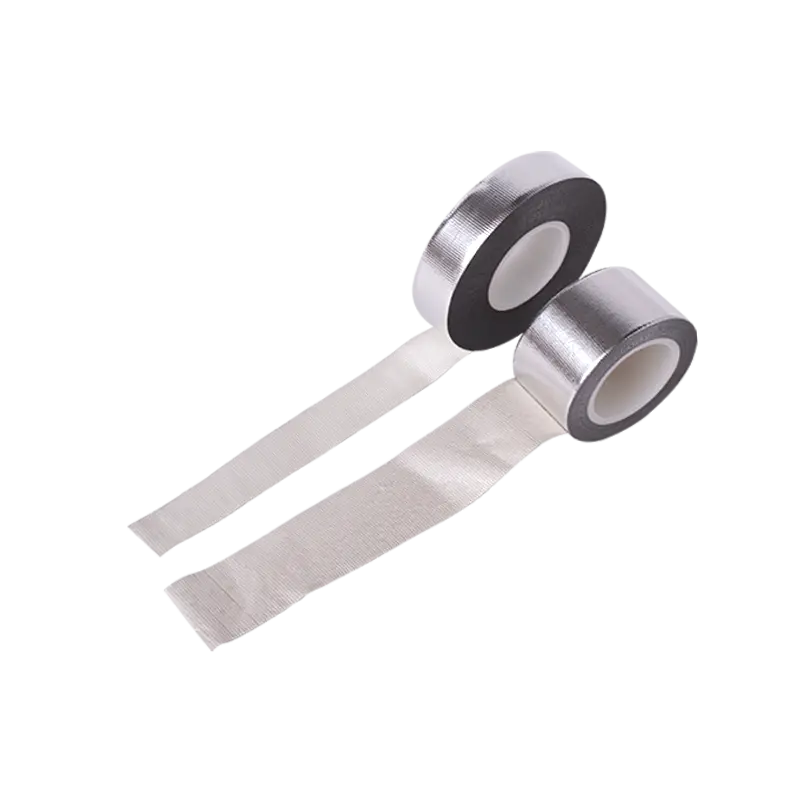
A common risk with linerless aluminum foil tape can appear during warm storage or when higher-tack adhesive systems are used. Under prolonged roll pressure, the adhesive may transfer to the foil backing, making the tape harder to unwind and increasing the risk of wrinkling, adhesive transfer, or tearing during application.
A release liner helps isolate and protect the adhesive surface before use. Depending on the application and converting process, it can also support cleaner handling, more controlled positioning, and more stable die-cutting or pre-cut processing.
For applications involving warm storage, higher-tack adhesives, die-cut parts, or processes where adhesive-surface protection is important, a liner-backed aluminum foil tape may therefore be a more suitable construction than a linerless grade.
|
Quick Answer: High-temperature aluminum foil tape with a release liner should be selected by adhesive system, actual temperature profile, liner type, substrate, and processing method. Shixin currently offers standard lined aluminum foil tape for general industrial and appliance applications, as well as a silicone-based high/low-temperature lined construction for more demanding temperature conditions. |
What Makes High-Temperature Aluminum Foil Tape with Release Liner Different
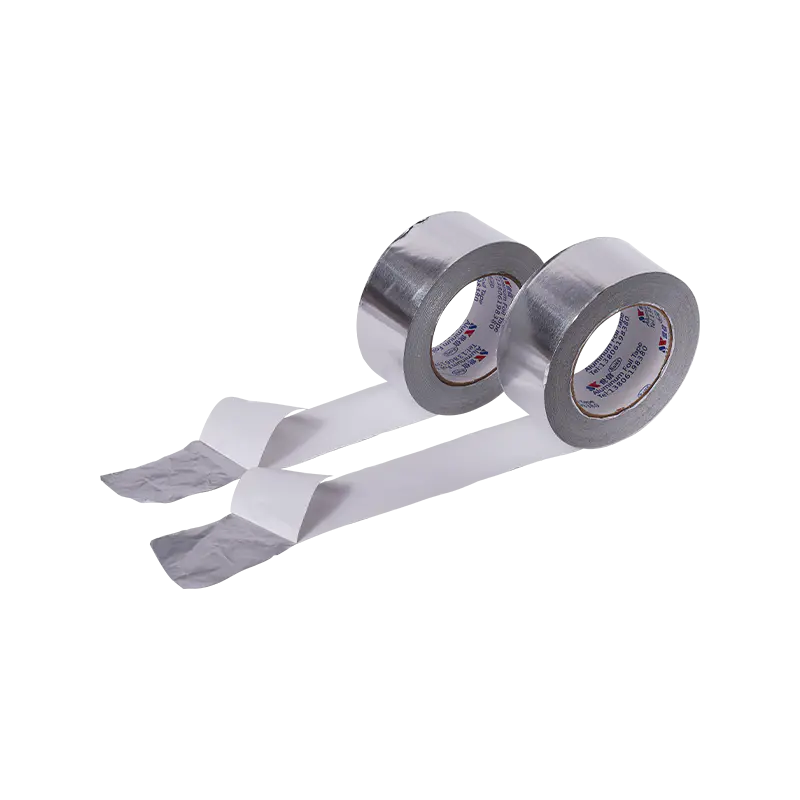
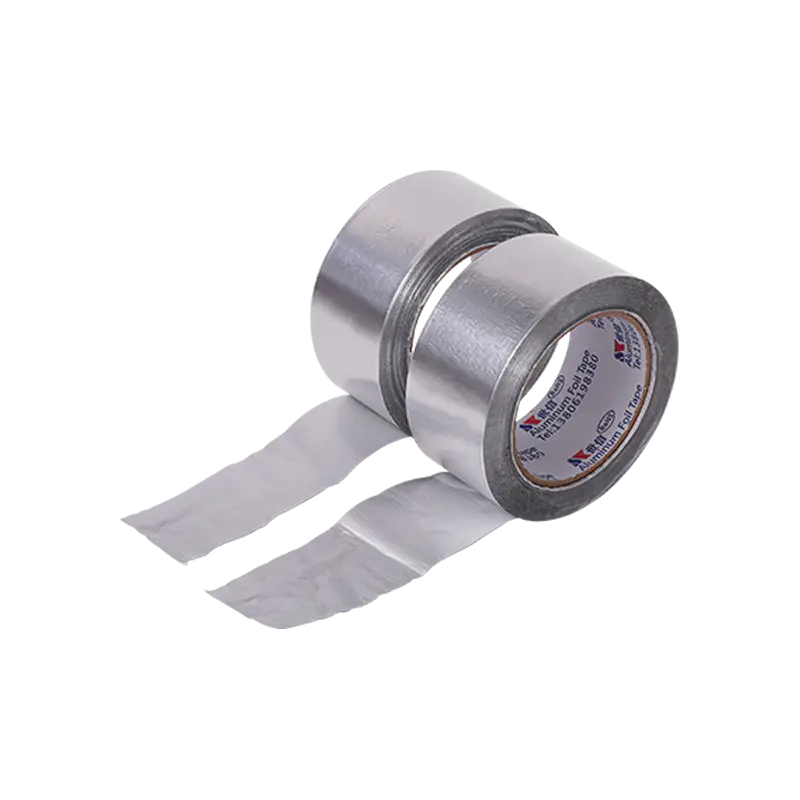
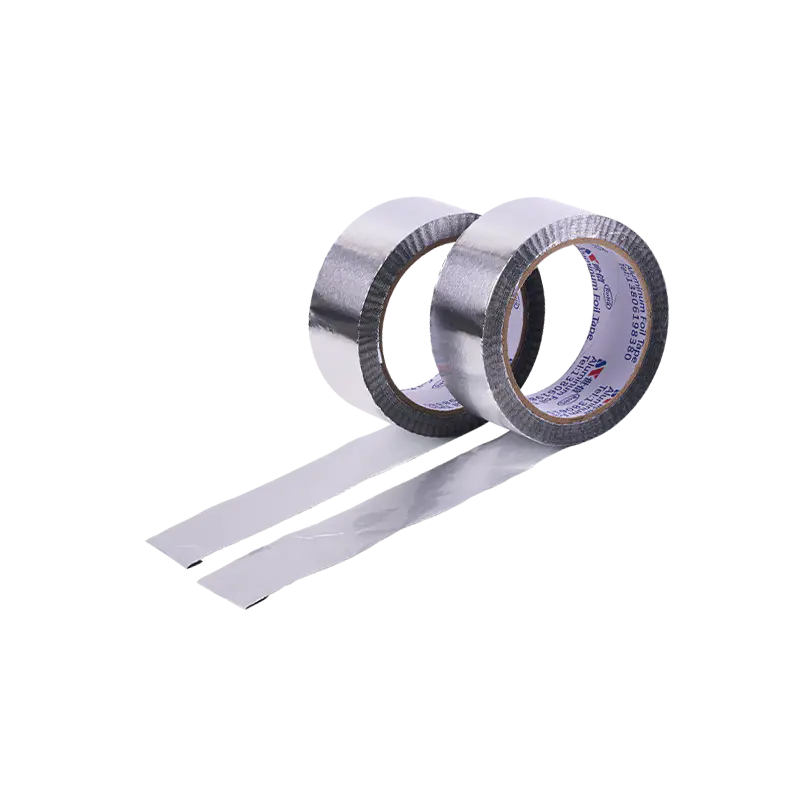
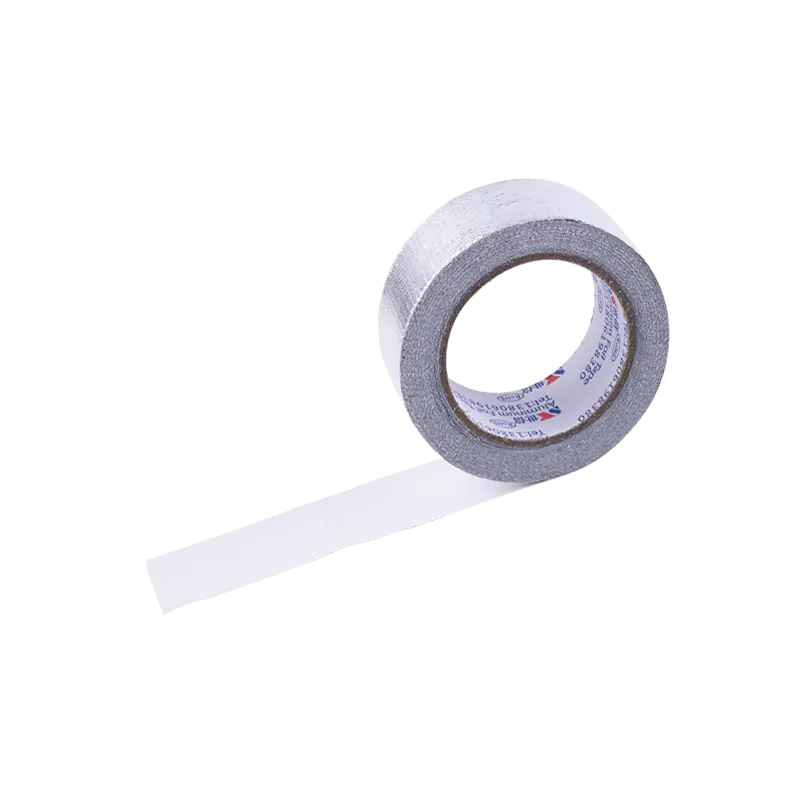
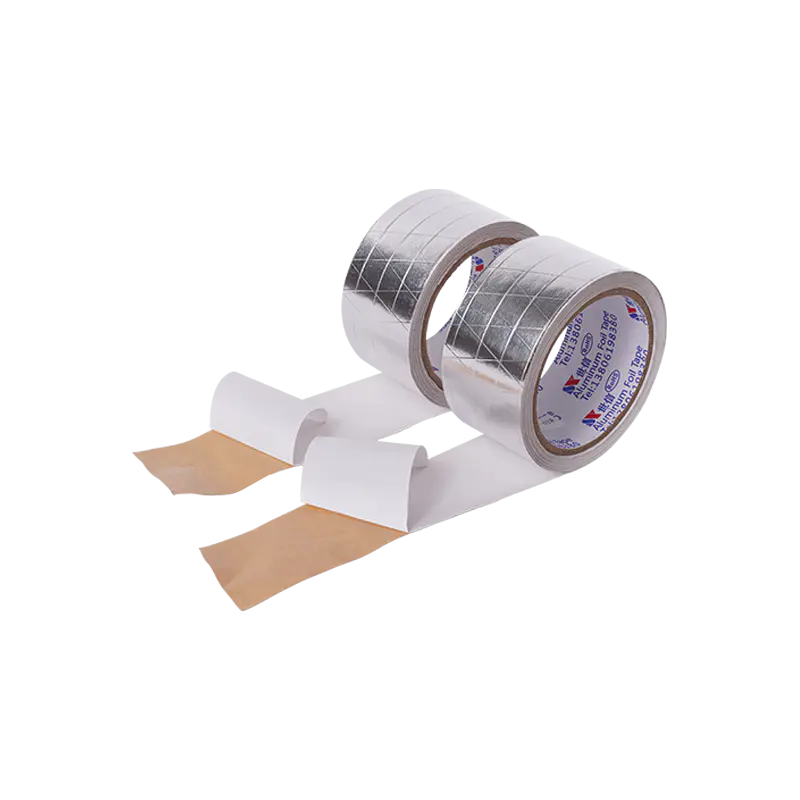
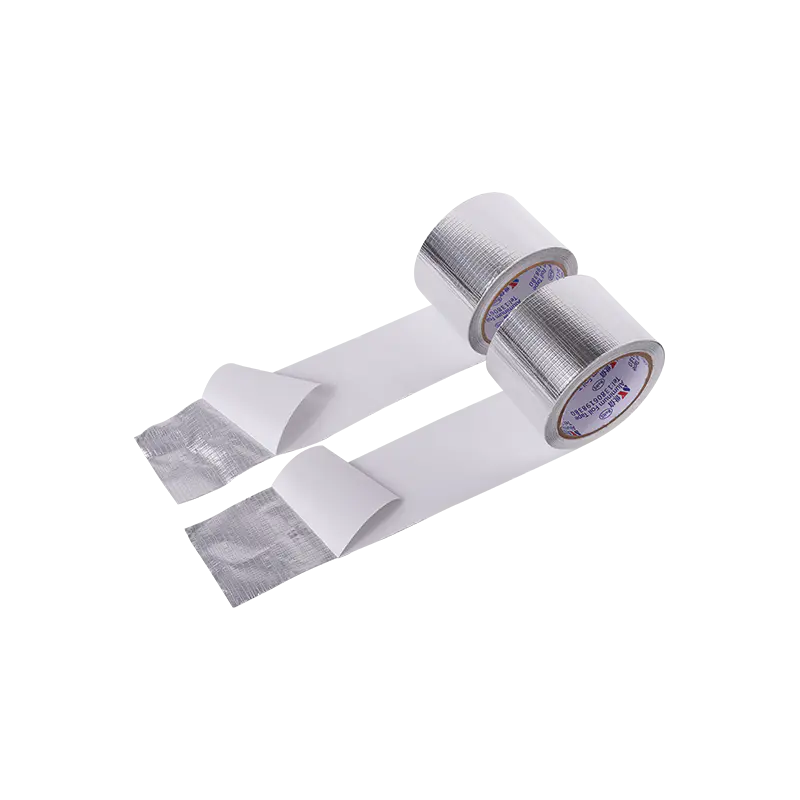
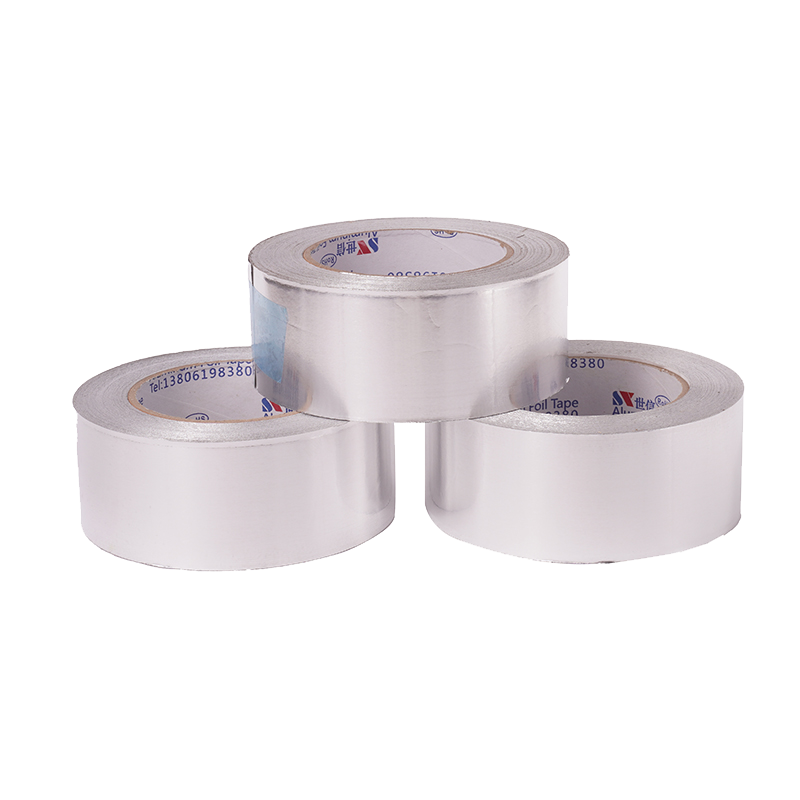
High-temperature aluminum foil tape with a release liner consists of an aluminum foil backing, a pressure-sensitive adhesive, and a removable release film or paper. The liner protects the adhesive face before application and can improve handling when the tape needs to be positioned, slit, die-cut, or prepared as pre-cut parts.
The liner itself does not create high-temperature performance. The real temperature capability comes mainly from the adhesive system and the validated construction. This distinction matters because a standard lined foil tape and a silicone-based high/low-temperature grade are not the same specification.
In practice, the release liner can provide three useful functions:
Process note: both linerless and liner-backed constructions can be used in industrial production. The better option depends on the application equipment, release behavior, roll format, positioning requirement, and whether removing a liner adds an extra step to the line.
Liner Options: What Should You Confirm?
For Shixin lined aluminum foil tape, current release-material options include PET film, kraft paper, and white silicone release paper. Rather than selecting a liner by a generic temperature number, procurement and engineering teams should match the liner to the actual converting and application process.
|
Current Liner Option |
What to Confirm Before Qualification |
|
PET film |
Release force, die-cutting or slitting compatibility, unwind tension, and equipment handling. |
|
Kraft paper |
Release behavior, manual handling, slitting/die-cutting requirements, and storage conditions. |
|
White silicone release paper |
Release consistency, handling method, part geometry, and equipment compatibility. |
If the tape will be used on an automated line, do not assume that one liner material is universally better. Run the actual roll or die-cut part on the intended equipment and verify release behavior, positioning, and waste handling.
With Release Liner vs. Linerless Aluminum Foil Tape
|
Construction |
Main Process Advantages |
Points to Consider |
|
Linerless |
No liner-removal step; lower material consumption; can support continuous or machine application depending on the adhesive and equipment. |
Adhesive and unwind behavior should be checked under actual storage, roll pressure, and line conditions. |
|
With release liner |
Protects the adhesive face; supports controlled positioning, manual handling, die-cutting, and pre-cut processing; easy-unwind options are available. |
The liner must be removed and managed as part of the process; equipment compatibility should be validated. |
For many appliance and HVAC applications, the choice is not simply “manual versus machine.” It is a process-design decision. A linerless tape may reduce steps in continuous application, while a liner-backed tape may be preferable when adhesive protection, pre-cut parts, or controlled placement is more important.
Adhesive Chemistry Sets the Temperature Performance
The adhesive system is one of the most important variables in a lined aluminum foil tape. Shixin's current product matrix includes water-based acrylic, solvent-based acrylic, rubber, hot-melt, and silicone systems for different application requirements.
|
Adhesive System |
Selection Direction |
Temperature Note |
|
Water-based acrylic |
Cost-effective option for general industrial, refrigerator, air-conditioner, sealing, and indoor applications. |
Use the temperature range of the exact product model. |
|
Solvent-based acrylic |
For applications requiring higher bonding or performance requirements than a general-purpose water-based system. |
Confirm against actual substrate, temperature, and aging conditions. |
|
Rubber / hot melt |
Selected for specific tack, processing, or bonding requirements. |
Do not assign a generic high-temperature rating without product-specific data. |
|
Silicone |
Used when more demanding high- or low-temperature resistance and weather resistance are required. |
Shixin's current high/low-temperature lined construction is listed at -30°C to 250°C. |
Reference Product Data
The following values are examples from Shixin's current product information and should be treated as product-specific reference data, not universal values for every lined foil tape.
|
Item |
Standard Lined Aluminum Foil Tape |
High-/Low-Temperature Lined Foil Tape |
|
Structure |
Aluminum foil + pressure-sensitive adhesive + PET/Kraft/white silicone release paper |
Aluminum foil + silicone adhesive + release film |
|
Adhesive options |
Water-based acrylic / solvent-based acrylic / rubber / hot melt |
Silicone |
|
Current temperature data |
About -10°C to 60-80°C depending on model and adhesive system |
-30°C to 250°C |
|
Typical applications |
Refrigerator/AC tube fastening, duct sealing, indoor holding, patching, sealing and masking |
Refrigerator/freezer evaporator and condenser thermal/sealing work, hot-water or hot-pipe sealing, engineering-pipe insulation, demanding high/low-temperature conditions |
|
Other current data |
Foil thickness 11-100 μm or customized; typical total thickness 0.07 mm; peel adhesion ≥4 N/cm for SXATP-01W |
Confirm the exact construction and required test data before qualification |
How to Verify Performance Before Ordering Production Volume
A useful sourcing process should reproduce the customer's real operating conditions instead of relying on a single brochure temperature. Five checks are particularly useful:
Storage note: for current standard pressure-sensitive foil tape data, Shixin recommends storage at room temperature away from moisture and heat sources. The listed shelf life is one year from shipment when stored at 21°C and 50% relative humidity, away from direct sunlight.
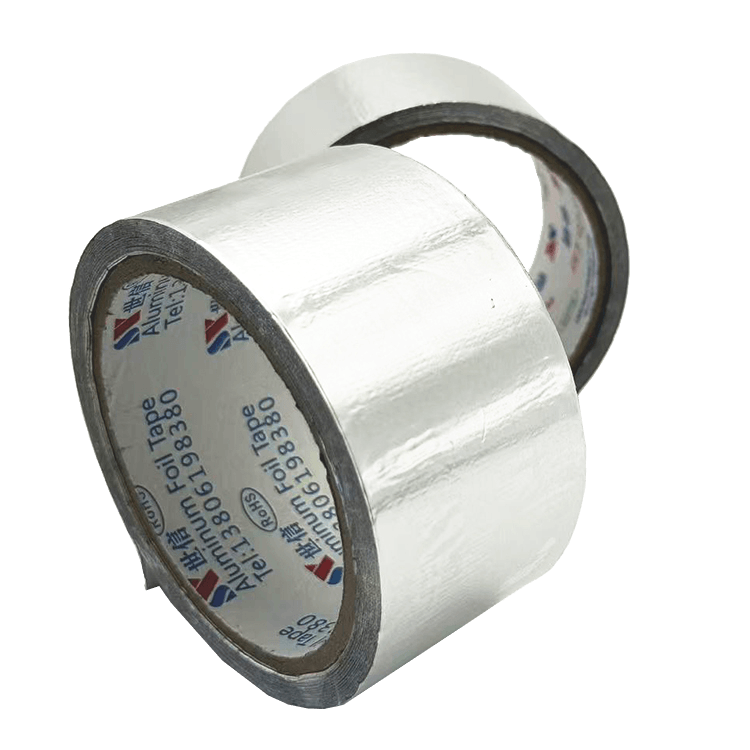 ISO-Certified High-Temperature Aluminum Foil TapeOffering corrosion-resistant acrylic adhesive and dual lined or linerless options, this tape withstands continuous 120°C exposure with strong peel adhesion. It is designed for sealing and protection in demanding HVAC, appliance, and automotive environments.View Product →
Where Lined Aluminum Foil Tape Is Used
Refrigerator and Freezer Manufacturing
Lined aluminum foil tape can be used for fixing cooling tubes and for thermal, insulation, and sealing work around evaporator or condenser assemblies, depending on the selected adhesive system and product construction. The release liner helps keep the adhesive face protected until placement.
HVAC and Duct Sealing
Typical uses include duct joining and sealing, pipe sealing, insulation-related work, and indoor repair or masking on metal surfaces. For hotter pipes or more demanding temperature conditions, the adhesive system should be upgraded and verified rather than assuming that all foil tapes have the same temperature capability.
Engineering Pipe Insulation
The silicone-based high/low-temperature lined construction can be evaluated for engineering-pipe insulation and sealing where the temperature environment is outside the range of standard acrylic-based products.
Do Not Confuse Pressure-Sensitive Foil Tape with Heat-Seal Foil Tape
If the application involves bonding PVC heater wires or heat-sealing components in refrigerator defrost heaters, heated toilet seats, pet heating products, or similar assemblies, the correct product family may be heat-seal aluminum foil tape rather than a standard pressure-sensitive lined foil tape. These are different constructions and should be qualified separately.
How Shixin Supports Product Selection and Qualification
Jiangsu Shixin Adhesive Tape Product Co., Ltd. can discuss adhesive type, liner material, foil thickness, width, length, roll format, and application conditions before mass production. Standard foil thicknesses can be customized within the current product range, and samples are available for customer testing before an order.
For B2B qualification, the most useful starting information is your substrate, normal and peak temperature, required width and length, application method, liner preference, and any compliance or testing requirements. These details allow the tape construction to be matched to the process instead of selected by temperature or price alone.
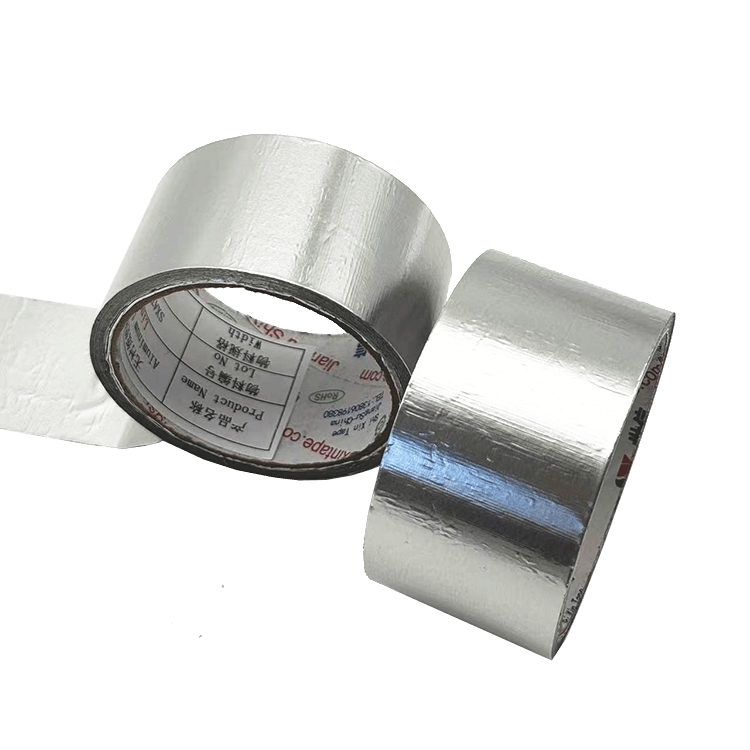 Single-Sided Heat-Resistant Foil Tape for HVAC RepairWith a thickened aluminum foil and high-tack adhesive, this tape resists 120°C airflow, provides 60% higher tensile strength, and passes UV and damp heat tests. It delivers instant pressure-sensitive sealing for duct repair and joint reinforcement.View Product →
Frequently Asked Questions
What temperature can high-temperature aluminum foil tape with a release liner withstand?
It depends on the adhesive system and exact product construction. Shixin's current standard lined aluminum foil tape models are listed around -10°C to 60-80°C depending on the adhesive system, while a silicone-based high/low-temperature lined construction is available with a -30°C to 250°C temperature range. The actual application should still be validated under the customer's operating conditions.
Does the release liner change final adhesion after application?
The liner mainly protects the adhesive before use. Final bond performance depends on the adhesive system, substrate, surface cleanliness, application pressure, temperature, and aging conditions. The liner should be removed cleanly without contaminating the adhesive face.
Can lined aluminum foil tape be die-cut or used on automated equipment?
Yes, but suitability depends on the liner, release force, die geometry, unwind tension, equipment design, and part shape. Shixin's high/low-temperature lined construction is described for both machine and manual use, but production qualification should be performed on the actual line.
Are RoHS and REACH documents available?
Shixin's current product information lists RoHS, REACH, and SGS documentation for relevant products, together with ISO 9001 management-system certifications. Request the current applicable documentation for the exact product being qualified.
What information should I send before requesting a sample?
Provide the substrate, operating and peak temperature, tape width and length, application method, liner preference, target performance, and any required compliance or test standards. This makes sample selection faster and reduces the risk of qualifying the wrong construction.
|
CTA: Discuss your application with Shixin's team to select the adhesive system, liner, temperature range, and roll format, or request a sample for qualification on your actual substrate and production process. |

Our company has been engaged in the tape manufacturing industry for more than 20 years, and has been focusing on various types of aluminum foil tapes, foam tapes, refrigerator tapes, etc.
IsabelLina
Email:[email protected]
Mobile/Whatsapp: +86 190 3379 1110
Mars Gong
Email:[email protected]
Mobile/Whatsapp: +86 159 5136 0053
Address: West side of Yingbin Avenue and south side of hengwang packaging. Suqian Economic and Technological Development Zone,Jiangsu Province
Copyright © Jiangsu Shixin Adhesive Tape Product Co., Ltd. All Rights Reserved. Custom ODM Refrigerator Foil Adhesive Tapes Manufacturers