2026-10-23
Content
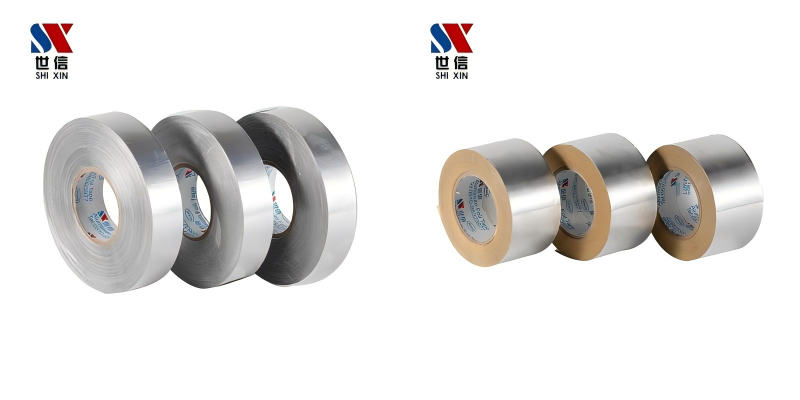
Neither linerless nor linered aluminum foil tape is inherently better for refrigerator and freezer manufacturing. The correct format depends on the application position, assembly method and downstream manufacturing process.
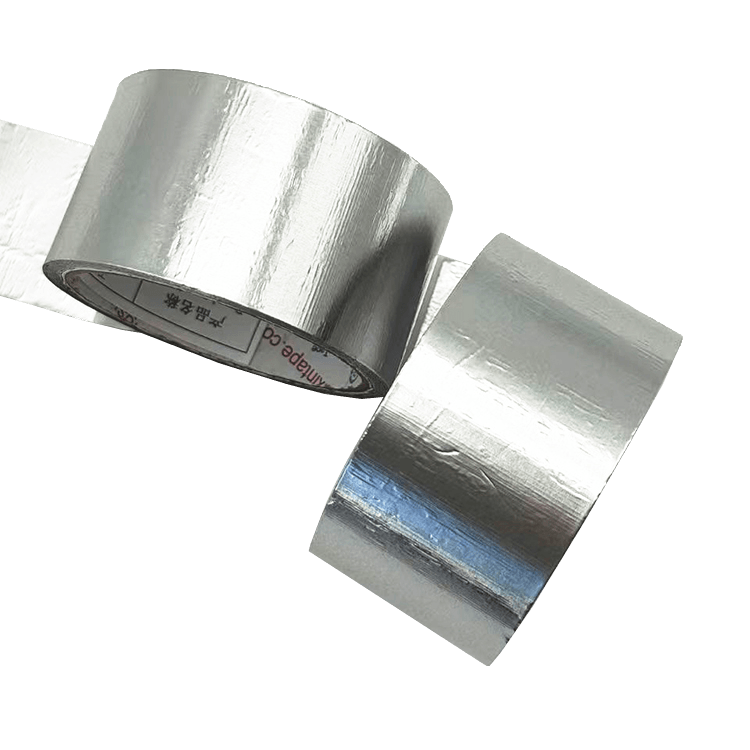
Linerless aluminum foil tape is often a strong fit for continuous application, repetitive tube fixing and production environments where eliminating release-liner handling can simplify the process.
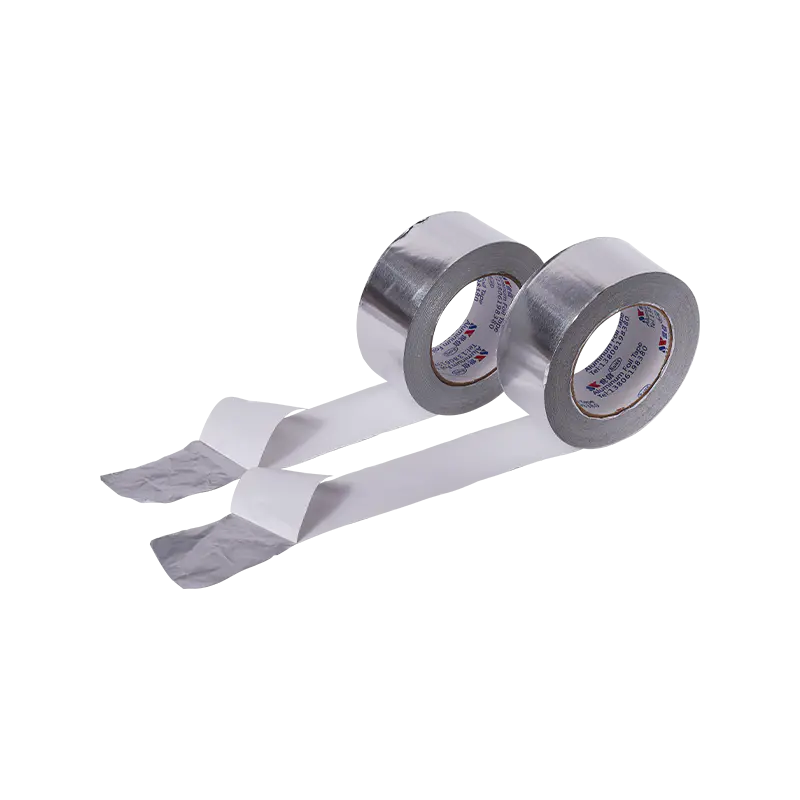
Aluminum foil tape with a liner is generally easier to use when the application requires accurate positioning, pre-cut or die-cut components, or extended protection of the adhesive surface before placement.
|
Recommended selection sequence: Application → Production Process → Tape Construction → Adhesive → Backside Treatment → Production-Line Validation |
For refrigeration OEMs, the more useful question is not which roll has the lower unit price, but which construction delivers the more stable process and lower total application cost.
The fundamental difference is whether a separate release material protects the adhesive. That difference affects unwinding, adhesive protection, converting, positioning and waste handling.
A typical construction can be represented as:
|
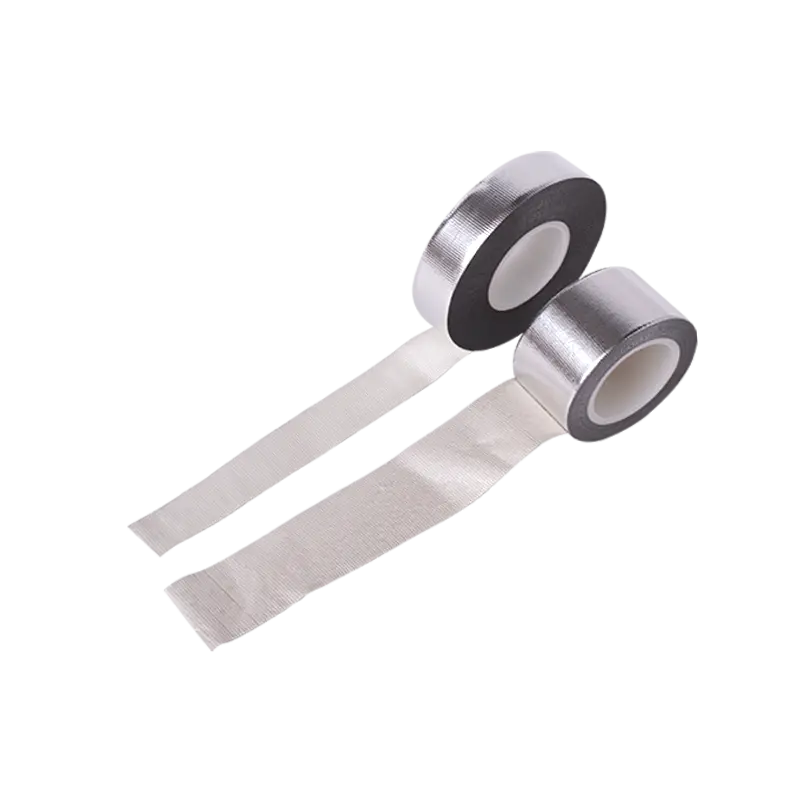
Release-treated surface + Aluminum foil + Pressure-sensitive adhesive |
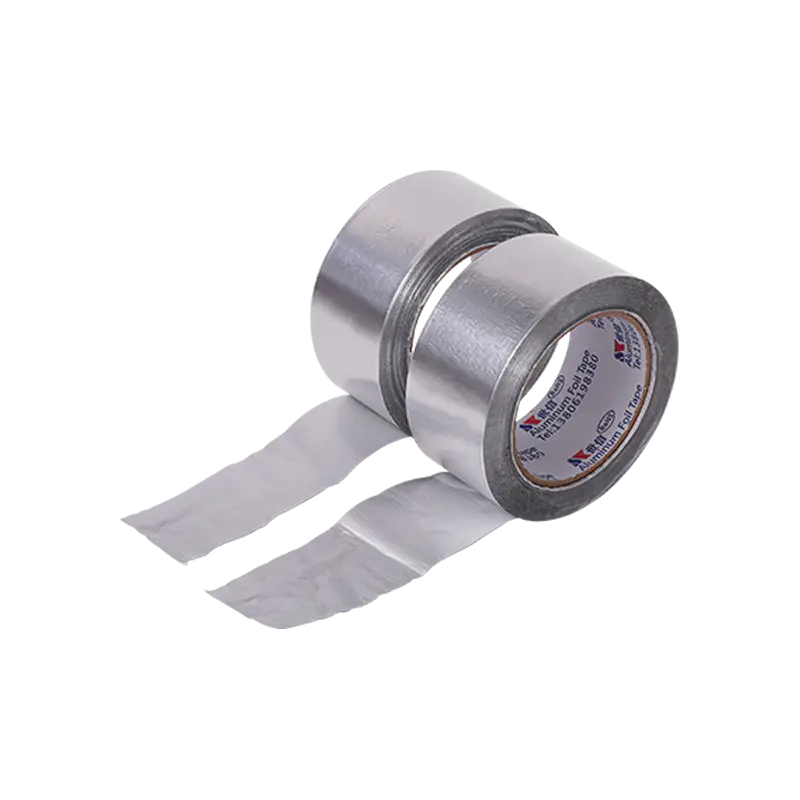
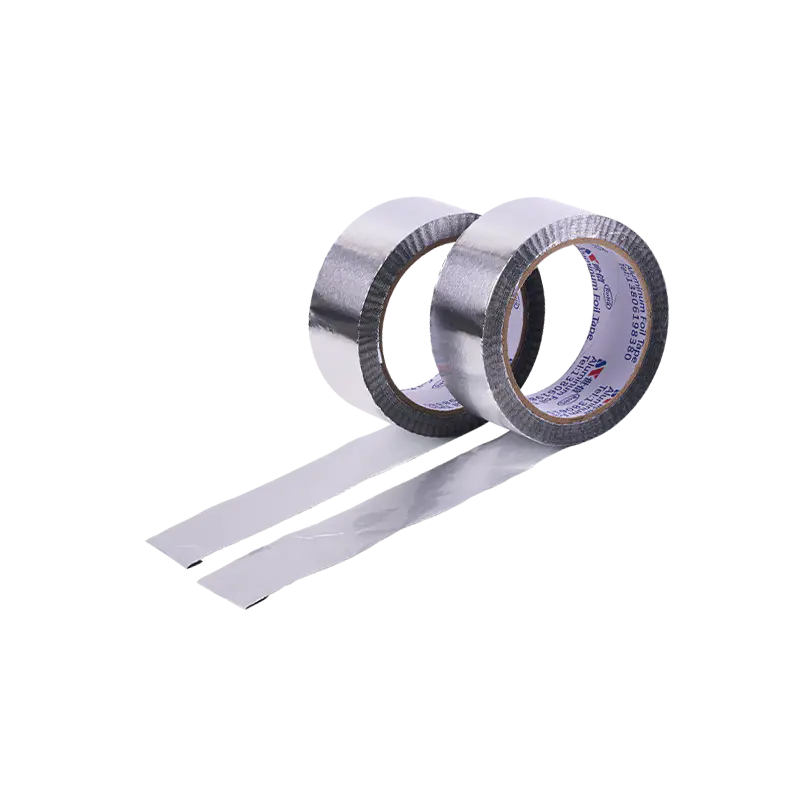
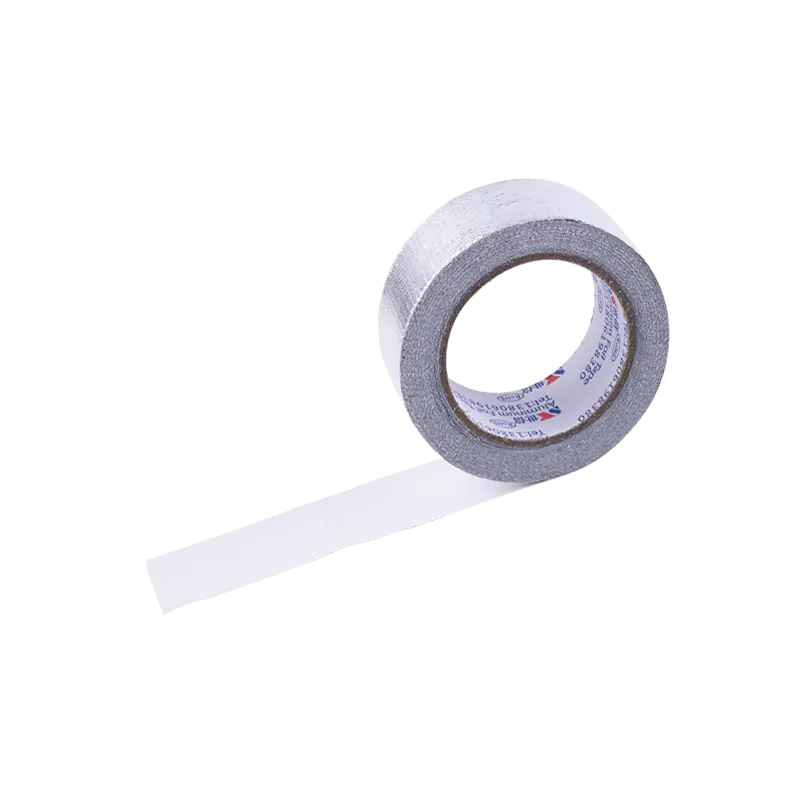
Linerless aluminum foil tape uses a self-wound construction. The adhesive contacts the release-treated backside of the previous layer in the roll, so the tape can be applied directly after unwinding without removing separate release paper or film.
A typical construction can be represented as:
|
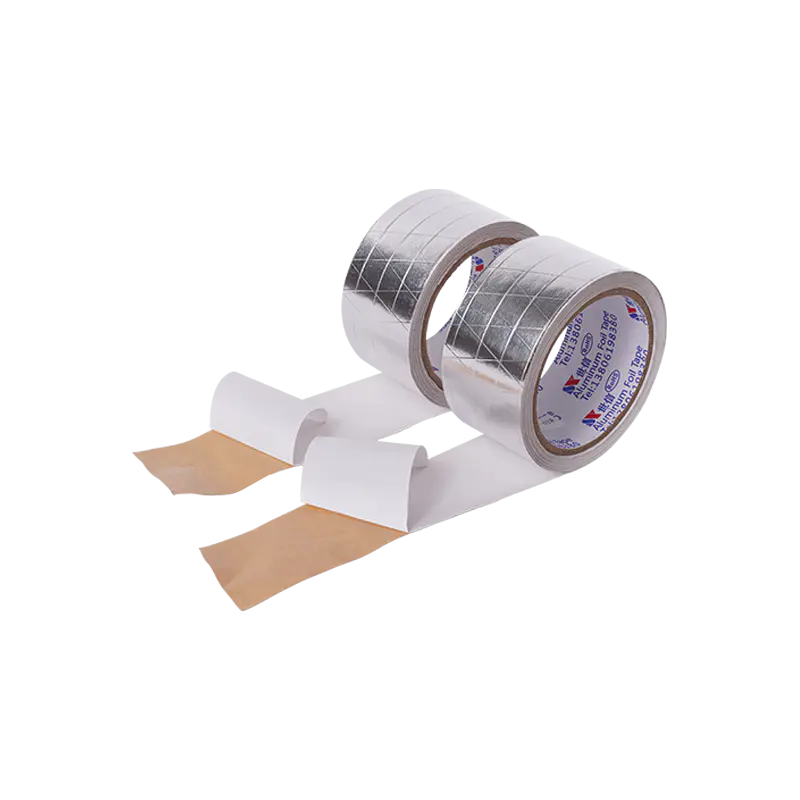
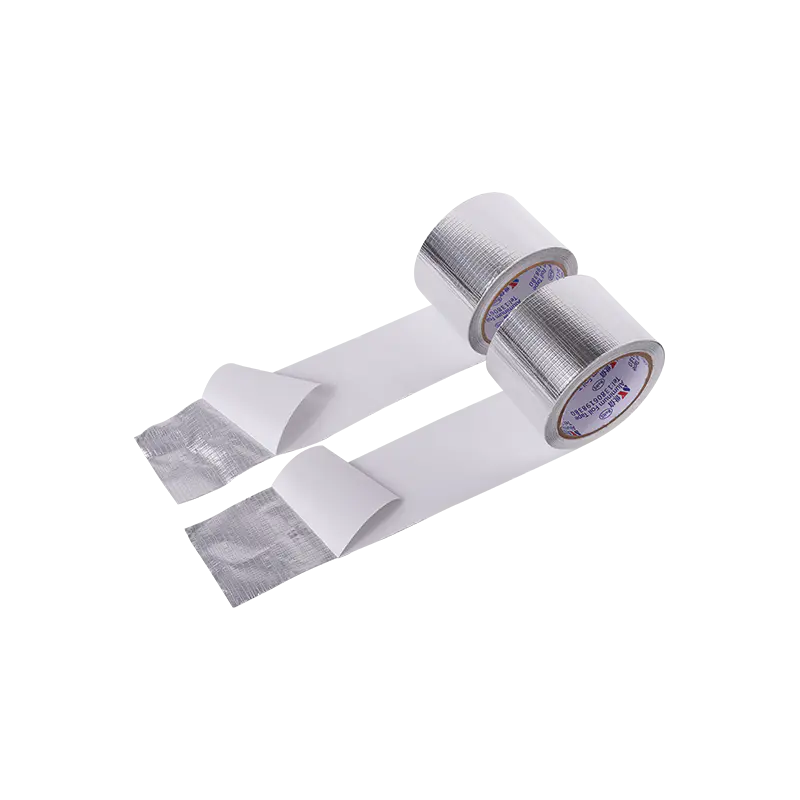
Aluminum foil + Pressure-sensitive adhesive + Release paper / film |
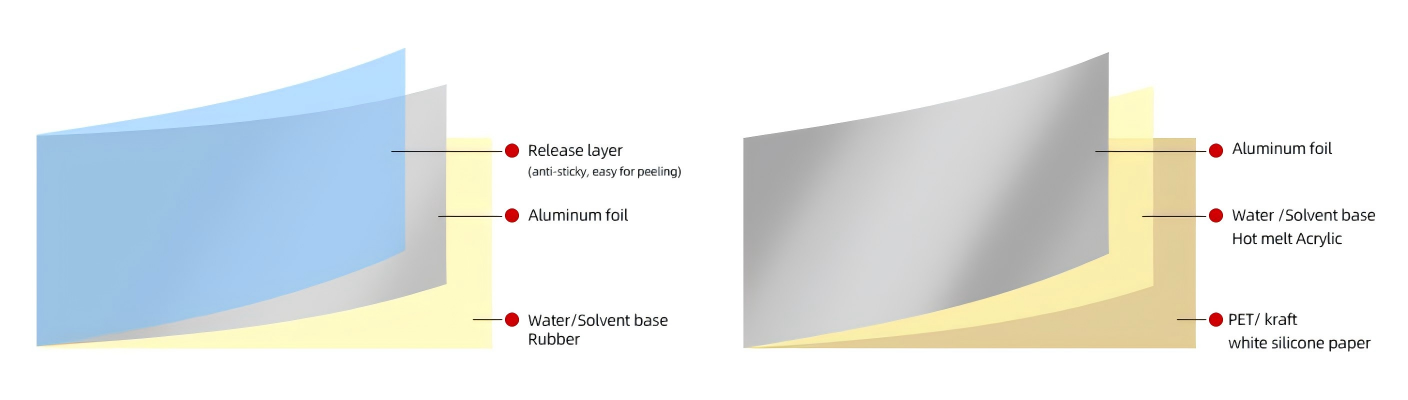
The liner protects the adhesive until application. Although liner removal adds a process step, it can provide practical advantages for converting, pre-cut parts, handling and precision placement.
|
Factor |
Linerless Foil Tape |
Foil Tape With Liner |
|
Release liner |
None |
Paper or film |
|
Basic application |
Unwind and apply |
Remove liner, then apply |
|
Continuous operation |
Well suited to repetitive runs |
Suitable; efficiency depends on liner handling |
|
Liner waste |
None |
Generated during use |
|
Adhesive protection |
Exposed after unwinding |
Protected until application |
|
Precision positioning |
Depends on tack and fixture design |
Usually easier to control |
|
Die-cutting / pre-cut parts |
Usually not the first choice |
Well suited |
|
Automation |
Self-wound feeding systems |
Liner-peeling or die-cut feeding systems |
|
Main process benefit |
Fewer steps and less waste |
Converting, positioning and adhesive protection |
“Suitable for automation” does not mean that an automated line must use linerless tape. A system with automatic liner removal, die-cut feeding or precise component placement may be better matched to a linered construction.
|
The correct format should follow the equipment, workstation cycle and handling method. |
Foil tape is commonly used in refrigerator and freezer manufacturing to secure condenser tubing, evaporator-related components and other areas that require fixing, thermal contact or sealing. In continuous application stations, linerless material removes the separate liner-peeling and liner-disposal steps.
|
Linerless: Unwind → Position → Press |
In high-volume manufacturing, repeated handling steps, roll changes, workstation waste and equipment compatibility all contribute to the real process cost.
A lined tape produces paper or film that must be collected and removed from the workstation. At high-frequency stations, this may involve waste collection, housekeeping, transport and keeping discarded liner away from equipment.
Linerless construction removes that material stream, so its value is better evaluated through total application cost rather than roll price alone.
Where tape is applied continuously along tubing or repeatedly at similar positions, a self-wound roll can simplify material feeding and handling. Any productivity benefit should still be validated against roll length, unwind force, machine speed and operator method.
If the tape is converted into circles, rectangles, custom profiles, positioning patches or other defined shapes, the release liner can support the adhesive layer during die-cutting, transport and storage. In these cases, a lined construction is usually easier to process and manage.
Once linerless tape is unwound, the adhesive is exposed immediately. With a high-tack adhesive, premature contact may reduce the opportunity for repositioning. A linered tape can allow controlled, progressive exposure of the adhesive during placement.
In production areas with metal particles, plastic dust, oil or frequent manual handling, an exposed adhesive surface is more vulnerable to contamination. A liner is particularly useful for pre-cut parts that must be stored or moved between workstations before final assembly.
For continuous, repetitive condenser-tube fixing, linerless aluminum foil tape is often worth evaluating first. The final decision should still consider feeding equipment, adhesive performance, roll dimensions and downstream manufacturing steps.
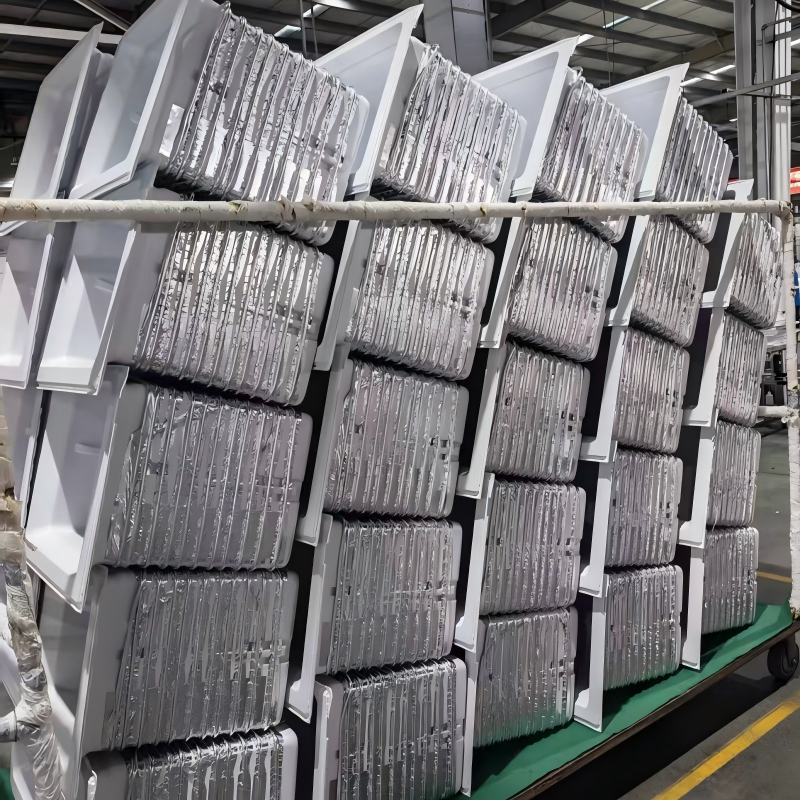
If PU polyurethane foam injection follows the tape application, the compatibility between the tape backside treatment and the actual foaming materials and process should also be validated.
In some refrigerator condenser-tube constructions, the applied foil tape subsequently enters the PU foaming process. At that stage, the backside surface of the tape may become one of the interfaces contacted by the foam.
Linerless aluminum foil tape normally requires a controlled release treatment on the foil backside to achieve stable unwinding. Different release systems, PU formulations and foaming conditions can behave differently at that interface, so conventional peel-adhesion data alone are not sufficient to confirm suitability.
If the backside treatment is not compatible with the downstream PU foaming process, adhesion of the foam around the taped area may be affected. Whether this occurs in a specific application should be confirmed using the actual material combination and production foaming conditions.
For linerless foil tape used before PU foaming, recommended validation includes:
|
Where PU foaming is part of the refrigerator process, production approval should include an actual foaming trial rather than relying only on standard tape test data. |
Either format may be appropriate. Linerless tape can be evaluated for fast, repetitive attachment, while linered tape is generally easier to control for defined pre-cut lengths, precision placement, die-cut parts or complex manual assembly.
For longer continuous seams, linerless tape can reduce liner-removal steps and workstation waste. If the process requires pre-cut components or extended adhesive protection, a lined construction may be the better fit.
For die-cutting, punching, pre-cutting or multi-station handling, foil tape with a release liner is generally more practical. The main requirements here are converting, positioning and handling rather than application speed alone.
For refrigeration manufacturing, linerless versus linered is only one part of the specification. Foil thickness, adhesive chemistry, release treatment, roll dimensions and equipment settings can be equally important.
Foil thickness affects tensile strength, tear behavior, conformability, converting stability and thermal behavior in the assembly. Thicker foil is not automatically better. Curved surfaces may require greater conformability, while mechanically demanding positions may require higher structural strength.
Common systems include water-based acrylic, solvent-based acrylic, rubber-based adhesive and other application-specific formulations. Selection should consider the substrate, initial tack, holding power, temperature, aging requirements, production speed and downstream processes. Initial tack alone is not an adequate approval criterion for a long-term OEM application.
Unwind force is a key manufacturing parameter for linerless tape. Excessive unwind force can make handling difficult, stretch or tear the foil, and disturb machine feeding. Poor control can also affect roll stability. Unwind behavior should therefore be validated together with roll construction, backside treatment and production equipment.
The backside release treatment of linerless tape must balance clean unwind, reduced adhesive transfer and compatibility with downstream processes. Where PU foaming, lamination or other contact processes follow, the backside treatment should not be treated only as an unwinding aid.
On continuous or automated production lines, tape width and roll length influence roll-change frequency, machine compatibility, workstation cycle, material utilization and inventory management. OEM programs often benefit from dimensions matched to the actual equipment and process.
Before selecting a tape, define the real manufacturing conditions:
Substrates may include metal, plastic, foam, coated steel, aluminum and composite materials. Surface energy, contamination, coatings and actual application temperature can also influence adhesive selection.
Consider linerless construction first when the process involves:
Consider a linered construction first when the process requires:
Then evaluate foil thickness, adhesive chemistry, adhesion, holding power, temperature requirements, release performance, backside treatment and roll dimensions.
Laboratory data are useful for screening, but they do not fully replace an OEM line trial. Before mass-production approval, evaluate:
|
The preferred tape is the one that provides the more stable process, lower rework risk and more reasonable total application cost under real manufacturing conditions. |
Not necessarily. The more useful comparison is Total Application Cost rather than tape purchase price alone.
|
Total Application Cost = Tape Cost + Labor + Line Time + Liner Handling + Waste Disposal + Downtime + Reject / Rework Cost |
Linerless tape can reduce release-material handling and some application steps, which may be valuable in continuous high-volume production. However, if the process requires frequent repositioning, complex die-cutting or additional handling controls, those benefits can be offset elsewhere in the process.
For an OEM procurement team, cost per accepted finished refrigerator is often more meaningful than cost per square meter of tape.
Jiangsu Shixin Adhesive Tape Product Co., Ltd. has manufactured industrial adhesive tapes since 2005 and has long-term application experience in refrigerators, freezers and home-appliance manufacturing. Refrigeration projects are evaluated around application position, substrate, production process, adhesive chemistry, foil thickness, unwind requirements, PU foaming conditions, operating temperature, roll dimensions and equipment requirements.
In one refrigerator condenser-tube application, Shixin adjusted the backside treatment system of a linerless aluminum foil tape to better match the customer's adhesive system and production conditions, with particular attention to unwind and processing stability across seasonal temperature changes. After validation in the customer's production process, the solution improved manufacturing stability while reducing tape purchasing cost by approximately 10%–15% in that specific project.
This result was application-specific and should not be interpreted as a universal saving. Actual cost changes depend on material construction, dimensions, order volume, equipment and process conditions.
Neither format is universally better. Linerless tape is often more efficient for repetitive continuous application and reduced liner handling. Linered tape is generally better suited to die-cutting, precision positioning, pre-cut components and applications requiring adhesive protection before placement.
No. Self-wound feeding systems may favor linerless material, while equipment with automatic liner removal, die-cut feeding or precision placement can be better matched to a linered construction.
For continuous, high-frequency condenser-tube fixing, linerless foil tape is often worth evaluating first. If PU foaming follows, backside-treatment compatibility with the actual foaming process should also be validated.
They can use similar adhesive families, but linerless tape also requires a backside release system that works with the adhesive to provide stable unwinding and minimize adhesive transfer.
Generally, yes. The release paper or film supports the adhesive layer during converting, handling, storage and precision placement.
Recommended validation includes peel adhesion, holding power, unwind performance, dimensional consistency, low-temperature or thermal-cycle behavior, batch consistency and actual production-line performance. If PU foaming is involved, test compatibility under the real material and foaming conditions.
The right construction depends on application position, substrate, production method and downstream manufacturing steps.
Send Shixin your application position, substrate, tape dimensions, production method and whether PU foaming or die-cutting is involved. Our team can help evaluate a suitable foil construction, adhesive system and liner configuration.
|
Discuss Your Application | Request a Sample | Request Technical Data |

Our company has been engaged in the tape manufacturing industry for more than 20 years, and has been focusing on various types of aluminum foil tapes, foam tapes, refrigerator tapes, etc.
IsabelLina
Email:[email protected]
Mobile/Whatsapp: +86 190 3379 1110
Mars Gong
Email:[email protected]
Mobile/Whatsapp: +86 159 5136 0053
Address: West side of Yingbin Avenue and south side of hengwang packaging. Suqian Economic and Technological Development Zone,Jiangsu Province
Copyright © Jiangsu Shixin Adhesive Tape Product Co., Ltd. All Rights Reserved. Custom ODM Refrigerator Foil Adhesive Tapes Manufacturers