2026-10-23
Content
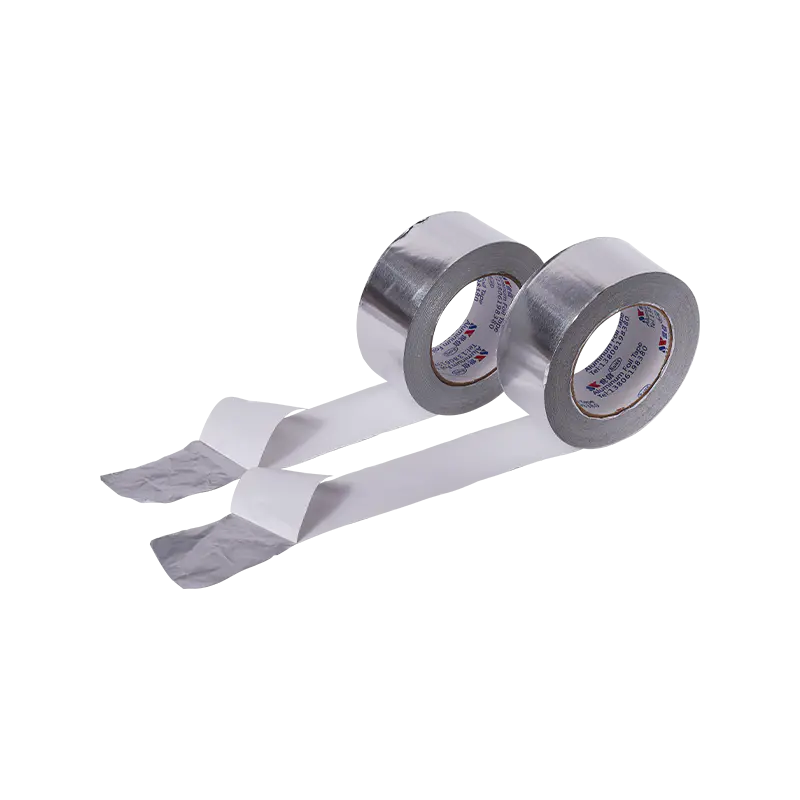
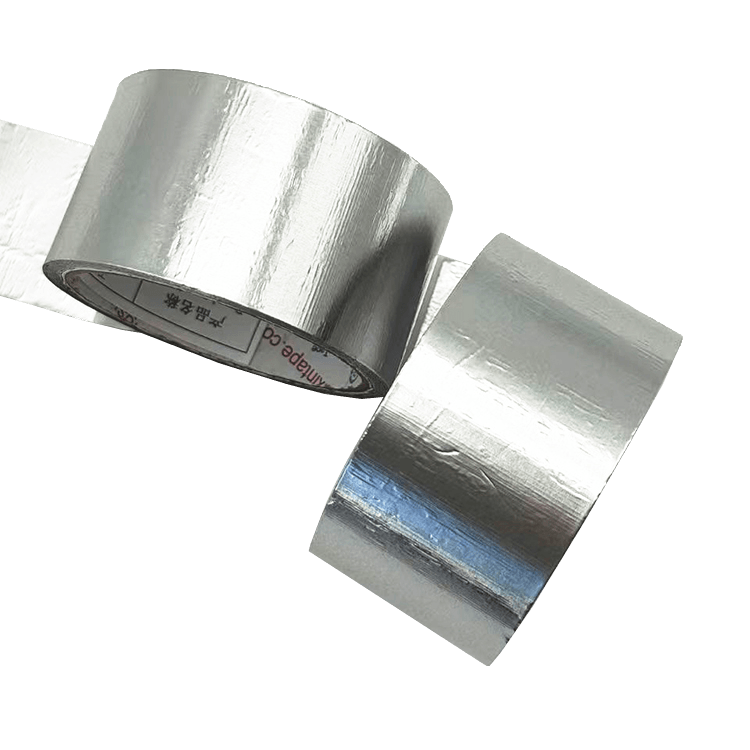
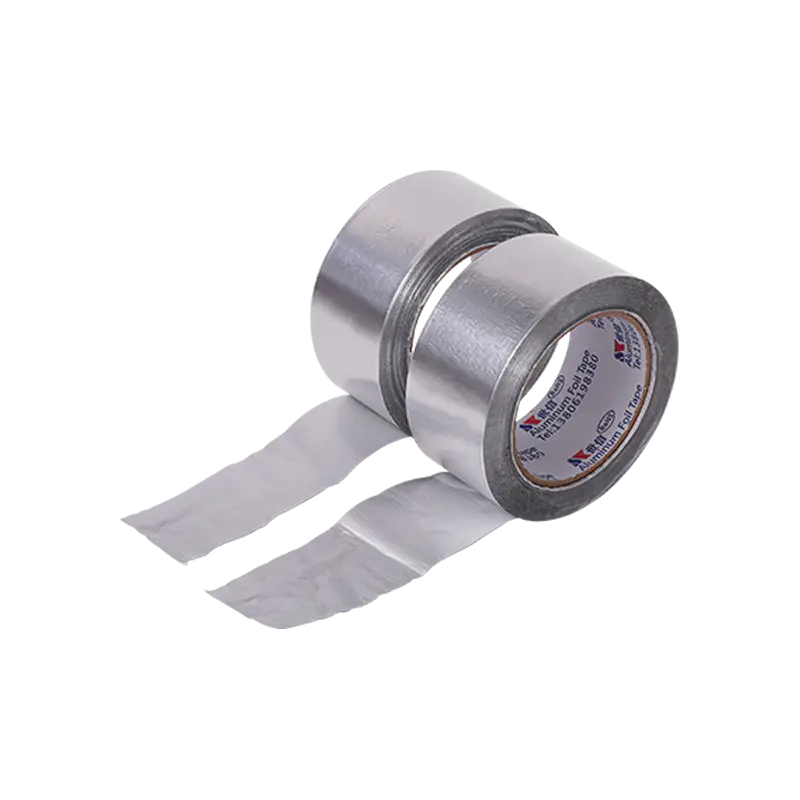
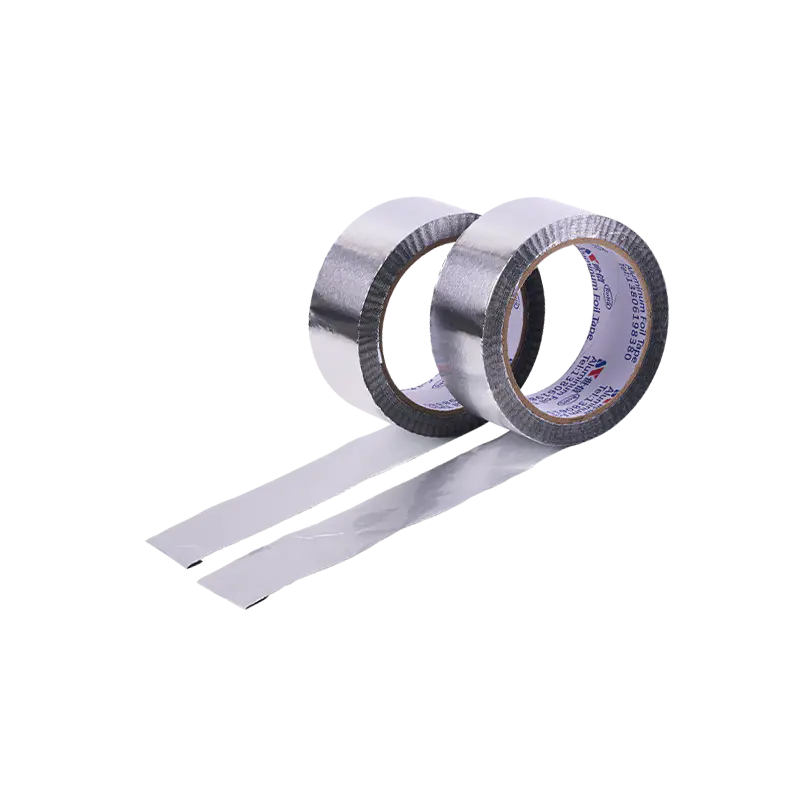
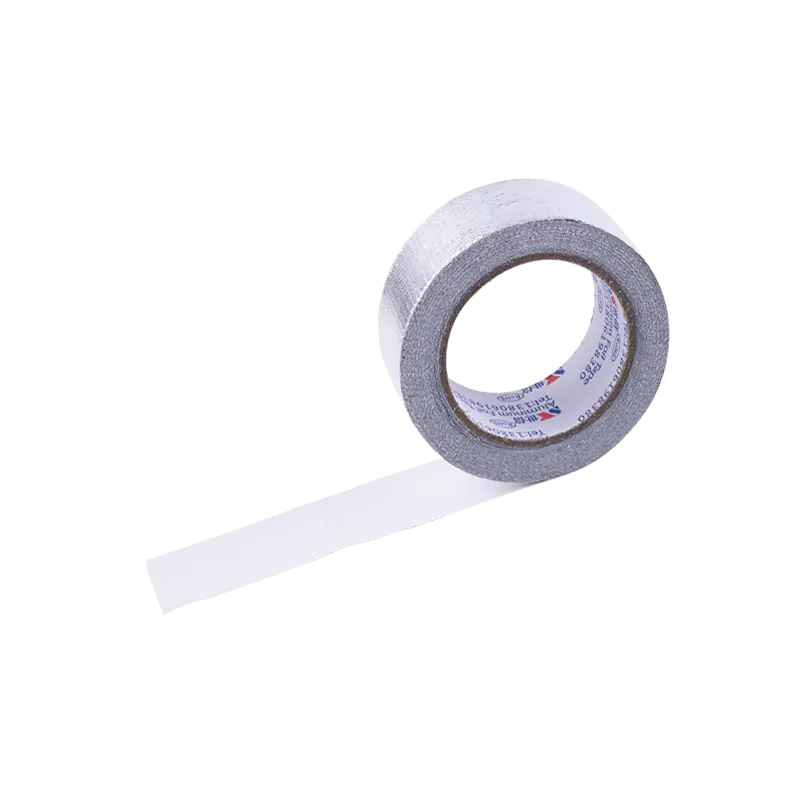
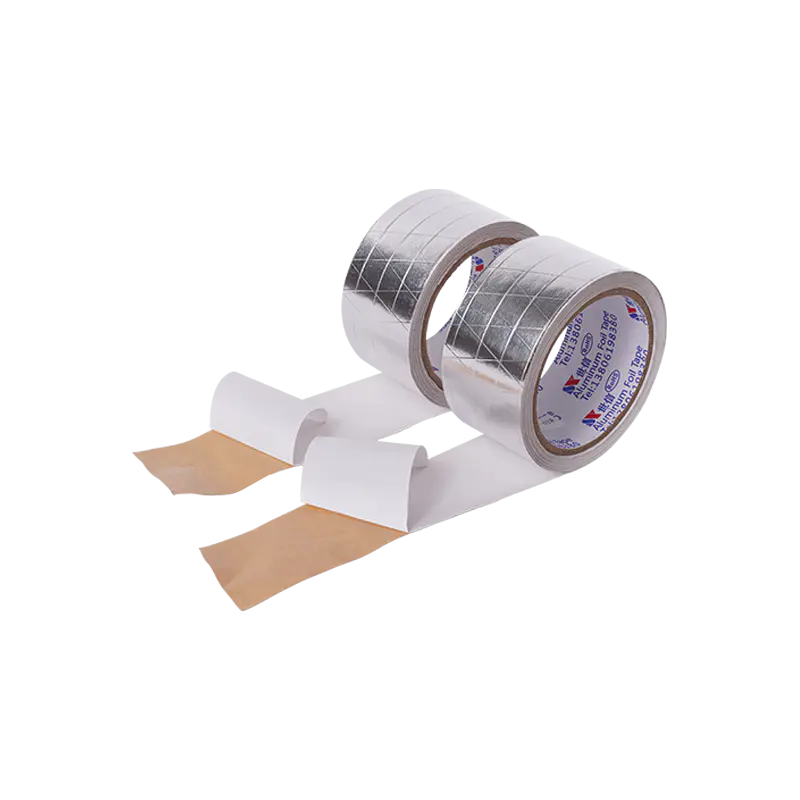
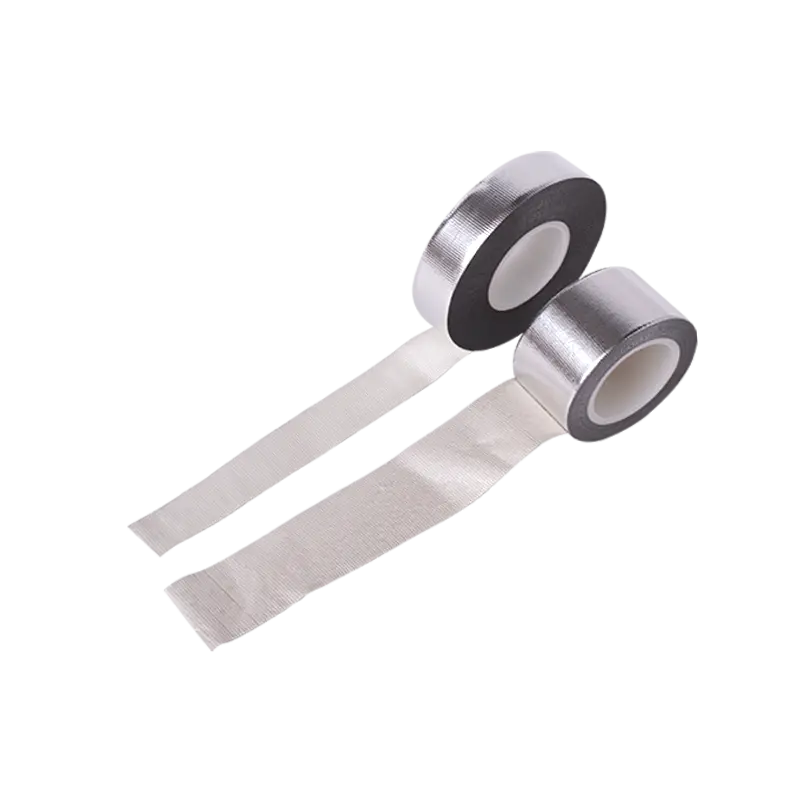
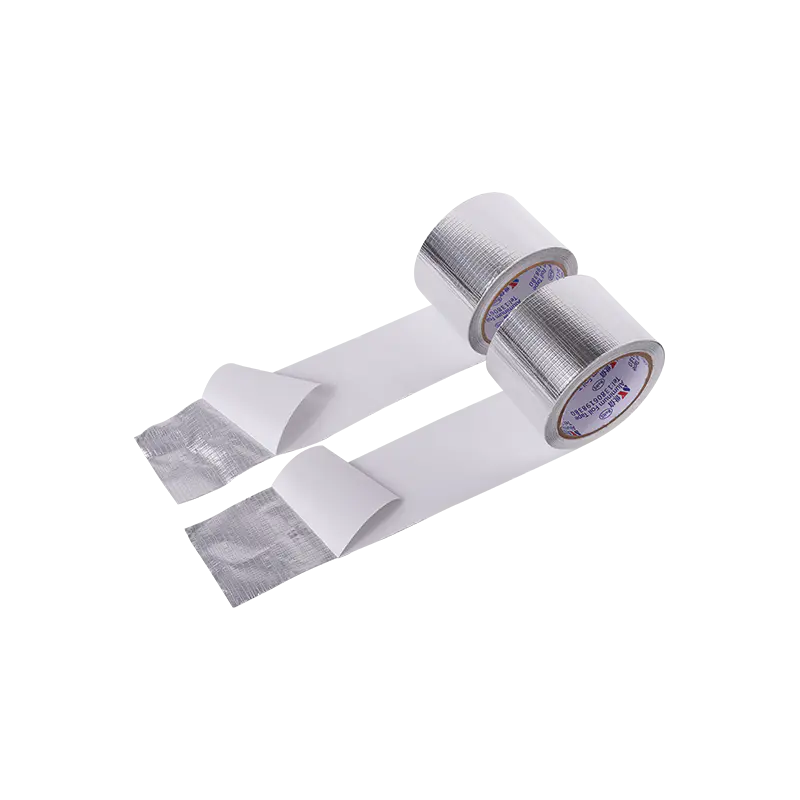
Water-Base Aluminum Foil Tape for Duct Sealing (Linerless) is an aluminum foil-backed adhesive tape developed for sealing duct joints, seams, insulation facings, and related HVAC components. It combines the barrier properties of aluminum foil with a water-based pressure-sensitive adhesive and a linerless construction, allowing the tape to be applied directly from the roll without a conventional release liner.
The aluminum foil provides a continuous surface that can help resist moisture penetration and maintain the integrity of insulation and vapor-barrier assemblies. Its flexibility also allows the tape to conform to relatively flat, curved, or slightly irregular surfaces when sufficient application pressure is applied. Water-based acrylic adhesive systems are commonly used where balanced adhesion, handling, and environmental considerations are required. Existing linerless foil tape constructions demonstrate that water-based adhesive can be combined with aluminum foil for HVAC sealing and insulation-related applications.
The aluminum foil backing serves more than a visual or reflective function. In duct sealing systems, it acts as a thin barrier layer while providing mechanical support for the adhesive. The foil can help cover seams and joints continuously, reducing exposed gaps in the surface of the insulation or duct assembly.
Foil thickness should be selected according to the required flexibility, tear resistance, conformability, and mechanical durability. Commercial linerless aluminum foil tapes are available across different foil and total-thickness ranges; published specifications include foil thicknesses from approximately 25 to 40 μm and total tape thicknesses around 60 to 80 μm for certain water-based constructions.
|
Parameter |
Typical Consideration |
Effect on Application |
|
Aluminum foil thickness |
Approximately 25–40 μm in some linerless constructions |
Influences flexibility, tear resistance, and surface conformity |
|
Total tape thickness |
Approximately 60–80 μm in some published constructions |
Influences handling, durability, and coverage |
|
Adhesion to steel |
Example published value ≥12 N/25 mm |
Indicates bonding capability on clean metal substrates |
|
Service temperature |
Example published range −20°C to +120°C |
Defines suitability for different operating environments |
The values above are representative published specifications rather than universal requirements. Actual performance depends on the adhesive formulation, foil construction, substrate, application temperature, and test method. Product selection should therefore be based on the technical specification of the intended tape rather than a single nominal thickness or temperature value.
The adhesive layer determines how effectively the aluminum foil tape bonds to the duct surface. A water-based acrylic pressure-sensitive adhesive is formulated to provide adhesion when pressure is applied to the tape, making surface preparation and application pressure important factors in achieving reliable bonding.
For duct sealing, adhesive performance should be evaluated according to several parameters rather than peel adhesion alone. Initial tack affects how readily the tape attaches during installation, while peel adhesion indicates resistance to separation from the substrate. Holding power is also important where the tape must remain bonded over an extended period.
Published linerless water-based foil tape specifications include values such as 15# rolling-ball tack, 24-hour holding power, and adhesion to steel of at least 12 N/25 mm. These figures illustrate the types of technical properties that can be evaluated when developing or selecting a duct-sealing tape.
The defining feature of a linerless aluminum foil tape is the absence of a separate release paper or film covering the adhesive. Instead, the tape is wound and treated so that it can be unwound and applied without first removing a disposable liner. This construction can simplify continuous application and reduce release-liner waste.
For HVAC contractors, insulation manufacturers, and production lines using dispensing equipment, the linerless structure can be particularly relevant where repeated tape application is required. The operating method must nevertheless be considered carefully because linerless rolls generally require appropriate dispensing, winding, and tension control to prevent the adhesive surface from sticking prematurely to adjacent layers.
Reliable duct sealing depends on the complete assembly rather than the tape alone. Surface cleanliness, substrate compatibility, application pressure, temperature, overlap, and long-term environmental exposure all influence the final bond. For applications involving demanding HVAC codes, pressure classes, fire requirements, or specific system certifications, the selected tape should be verified against the applicable project specification and test standard.
Water-Base Aluminum Foil Tape for Duct Sealing (Linerless) combines an aluminum foil backing with a water-based pressure-sensitive adhesive and a linerless winding structure. Its performance is determined by the interaction between the foil, adhesive, and application conditions rather than by any single parameter. For duct sealing, the most important characteristics include adhesion, moisture resistance, temperature stability, flexibility, mechanical strength, and reliable linerless handling.
For HVAC and insulation applications, the tape needs to maintain sufficient contact with the substrate while conforming to seams, overlaps, and moderate surface irregularities. Published technical data for water-based linerless aluminum foil constructions commonly include foil thicknesses of approximately 25–40 μm, total thicknesses of about 60–80 μm, adhesion to steel of at least 12 N/25 mm, and service-temperature ranges around -20°C to +120°C, although actual specifications vary according to construction and adhesive formulation.
Adhesion is a fundamental performance factor because the tape must remain attached to duct surfaces and insulation facings throughout temperature and humidity changes. A water-based acrylic pressure-sensitive adhesive can provide a balance between initial tack and long-term bonding when the substrate is properly prepared.
Initial tack determines how readily the tape attaches during the first contact, while peel adhesion indicates the force required to separate the tape from a substrate. Holding power is particularly relevant to vertical joints and areas exposed to continuous mechanical or thermal stress. Published specifications for linerless water-based aluminum foil tape include a rolling-ball tack value of 15# and adhesion to steel of at least 12 N/25 mm.
|
Adhesion Parameter |
Example Published Value |
Practical Significance |
|
Initial tack |
15# rolling-ball tack |
Indicates the ability to establish initial contact with the substrate |
|
Peel adhesion to steel |
≥12 N/25 mm |
Indicates resistance to separation from a clean metal surface |
|
Holding power |
24 hours |
Helps evaluate resistance to adhesive creep under sustained load |
These figures should be treated as representative technical references rather than universal specifications. Adhesion results can change significantly with substrate cleanliness, surface energy, application pressure, tape width, test method, and temperature.
The aluminum foil layer provides a continuous metallic barrier that can help limit moisture and vapor transmission when seams and overlaps are properly sealed. This characteristic is important for HVAC insulation because uncontrolled moisture penetration can reduce insulation effectiveness and contribute to condensation-related problems.
A linerless aluminum foil tape should therefore be evaluated not only for adhesive strength but also for the integrity of its foil layer and the quality of the finished seam. A thicker or stronger adhesive does not automatically provide better vapor protection if the tape is damaged, poorly applied, or incompletely overlapped.
Duct systems can experience temperature fluctuations during operation, startup, shutdown, and seasonal changes. The adhesive must retain adequate bonding performance across the expected temperature range rather than being selected solely according to its maximum temperature rating.
Published water-based linerless aluminum foil tape specifications show service-temperature ranges such as -20°C to +120°C, while other constructions designed for duct sealing may specify narrower or different ranges. Application temperature can also be separately defined; one published construction specifies an application range of 0°C to +40°C.
|
Temperature Factor |
Example Range |
Why It Matters |
|
Service temperature |
-20°C to +120°C |
Defines the general temperature environment for continued use |
|
Application temperature |
0°C to +40°C |
Defines the conditions under which reliable initial bonding can be established |
The service-temperature range should always be checked against the actual HVAC operating environment. If the tape will experience unusually high temperatures, outdoor exposure, condensation, or repeated thermal cycling, additional validation may be necessary.
Duct systems are rarely composed entirely of perfectly flat surfaces. Tape may need to cover corners, seams, overlaps, transitions, or insulation surfaces with slight irregularities. Aluminum foil provides dimensional stability while a suitably flexible construction allows the tape to follow the substrate without excessive cracking or lifting.
Foil thickness has a direct relationship with handling characteristics. Thinner foil generally provides greater flexibility and easier conformity, while thicker foil can provide improved resistance to tearing and mechanical damage. The appropriate balance depends on whether the priority is detailed surface conformity, mechanical durability, or continuous production handling.
|
Foil Thickness Range |
General Characteristic |
Typical Consideration |
|
Approximately 20–30 μm |
More flexible |
Useful where conformity and easy handling are important |
|
Approximately 30–40 μm |
Balanced flexibility and strength |
Suitable for many insulation and duct-sealing applications |
|
40 μm and above |
Greater mechanical robustness |
Consider where resistance to handling damage is more important |
The ranges above are engineering reference ranges rather than fixed application rules. Actual performance also depends on foil temper, adhesive thickness, laminate structure, and total tape thickness. Published linerless water-based constructions include 25, 30, 34, and 40 μm aluminum foil options, demonstrating how different thicknesses can be used to balance flexibility and mechanical properties.
Although duct sealing tape is primarily an adhesive sealing material, the aluminum backing must withstand normal handling and installation forces. Tensile strength affects how the tape behaves during unwinding and application, while tear resistance becomes important when the tape is stretched around corners or cut during installation.
For industrial procurement, tensile strength should be considered together with elongation, foil thickness, total thickness, and adhesion. A tape with high tensile strength but insufficient flexibility may be difficult to apply smoothly to irregular surfaces. Conversely, an extremely flexible construction may require additional care during installation to prevent stretching or deformation.
The linerless structure eliminates the separate release liner normally used to protect the adhesive. The tape is wound in a self-wound configuration so that it can be unwound directly for application. This can reduce release-liner waste and simplify repetitive taping operations, particularly when the material is used with suitable dispensing equipment.
For high-volume duct sealing, the linerless structure can also affect production efficiency because operators do not need to remove and discard a release liner before applying each section. However, linerless tape requires appropriate roll winding, tension control, and dispensing methods to ensure smooth unwinding without premature adhesive transfer or blocking.
|
Feature |
Performance Consideration |
Impact on Duct Sealing |
|
Water-based adhesive |
Balanced tack and long-term adhesion |
Supports bonding to properly prepared duct and insulation surfaces |
|
Aluminum foil backing |
Barrier performance and mechanical support |
Helps maintain seam and insulation-facing integrity |
|
Linerless construction |
No separate release liner |
Reduces liner waste and can simplify continuous application |
|
Flexible foil construction |
Conformability to moderate irregularities |
Helps cover seams, overlaps, and transitions |
|
Temperature stability |
Retention of adhesive performance across the specified range |
Supports reliable sealing during HVAC operating cycles |
Overall, the performance of linerless aluminum foil tape should be evaluated as a complete adhesive system. Adhesion, foil thickness, total thickness, temperature range, flexibility, moisture resistance, tensile strength, and linerless winding quality should be considered together to determine whether the tape is appropriate for a specific duct sealing application.
Water-Base Aluminum Foil Tape for Duct Sealing (Linerless) supports HVAC duct sealing by combining an aluminum foil barrier with a pressure-sensitive water-based adhesive. When correctly applied to a clean and compatible substrate, the tape can cover seams, joints, overlaps, and insulation-facing interfaces while helping maintain the continuity of the sealed surface. The linerless construction also allows the tape to be dispensed directly from the roll, which is useful for repetitive duct assembly and insulation operations. Published product data for water-based linerless aluminum foil constructions show applications including HVAC sealing, insulation, and moisture protection.
Duct sections commonly contain longitudinal seams, transverse joints, connection points, and transitions between different components. These areas can become potential leakage paths if the surfaces are not properly joined or sealed. Aluminum foil tape provides a continuous covering over the joint, while the adhesive creates contact between the tape and the substrate.
For effective sealing, the tape should extend sufficiently beyond the joint to provide an adequate bonding area on both sides. The installer should press the tape firmly against the substrate to remove air pockets and maximize adhesive contact. Surface preparation is equally important because dust, grease, oil, moisture, and loose particles can reduce the actual bonding area and lead to edge lifting.
|
Duct Sealing Factor |
Function |
Potential Effect on Performance |
|
Tape width |
Determines the available bonding area across the seam |
Wider tape can provide greater coverage for larger joints or overlaps |
|
Adhesion |
Keeps the tape attached to the duct surface |
Higher and more stable adhesion can reduce lifting and separation |
|
Application pressure |
Improves contact between adhesive and substrate |
Helps eliminate gaps and improve initial bonding |
|
Foil integrity |
Maintains the continuous barrier layer |
Reduces exposed areas across the sealed joint |
Aluminum foil tape is also used to seal joints and overlaps in insulation-facing materials. In these applications, the objective is not simply to attach two pieces of material. The tape helps maintain continuity across the facing layer so that the insulation assembly remains more consistent around seams and transitions.
The aluminum foil backing can provide a moisture-resistant and reflective surface, while the adhesive secures the tape to the facing material. Water-based linerless foil tape constructions are available with different foil and total thicknesses, allowing the tape to be selected according to flexibility, mechanical strength, and application requirements. Published specifications include aluminum foil thicknesses from approximately 25 to 40 μm and total tape thicknesses from approximately 60 to 80 μm.
For relatively smooth insulation facings, a thinner and more flexible foil construction may provide easier conformity. Where the installation involves more handling or greater mechanical exposure, a thicker backing may provide additional resistance to tearing and deformation.
|
Construction Consideration |
Lower Thickness |
Higher Thickness |
|
Flexibility |
Generally easier to conform to irregular surfaces |
Generally more resistant to deformation |
|
Handling |
Requires more care against tearing |
Typically provides greater mechanical robustness |
|
Surface conformity |
Suitable for detailed seams and transitions |
May require greater application pressure on tight curves |
|
Mechanical protection |
Moderate |
Generally higher |
The appropriate thickness should therefore be determined from the actual duct and insulation construction rather than selected solely according to nominal thickness.
Duct sealing and insulation sealing serve an important role in controlling unwanted air movement and moisture exposure. A continuous aluminum foil layer can function as a barrier over properly sealed joints, while the adhesive helps keep the barrier attached to the substrate.
For insulation systems, maintaining continuity at seams is particularly important because openings or poorly bonded edges can create localized paths for moisture and air movement. Aluminum foil itself has very low permeability to water vapor, but the finished assembly depends on the integrity of the tape overlap, adhesive bond, and surrounding insulation materials.
The tape should therefore be regarded as one component of the overall sealing system. It cannot compensate for large gaps, contaminated surfaces, damaged insulation, or incorrectly fitted duct sections. Where airtightness is a project requirement, the complete duct system should be evaluated according to the applicable engineering specification and testing requirements.
The reflective aluminum surface can help maintain the continuity of foil-faced insulation and other reflective barrier assemblies. When adjacent foil surfaces are joined with compatible aluminum foil tape, the finished surface can remain substantially continuous across seams and overlaps.
This function is especially relevant where the insulation system relies on a foil facing for moisture and vapor control. The tape must cover the joint completely and remain securely bonded throughout the expected service environment. A small area of exposed adhesive or an incompletely sealed edge can become a weak point even when the main tape body has good barrier properties.
|
System Requirement |
Role of Aluminum Foil Tape |
Important Installation Factor |
|
Seam coverage |
Covers the gap or joint between adjacent surfaces |
Correct tape width and sufficient overlap |
|
Vapor barrier continuity |
Bridges discontinuities in foil-faced insulation |
Complete edge bonding without open channels |
|
Moisture protection |
Provides an aluminum barrier over the sealed area |
Continuous foil layer and properly bonded edges |
|
Reflective surface continuity |
Extends the foil-facing surface across seams |
Accurate positioning and wrinkle-free application |
The substrate has a direct influence on adhesive performance. Metal duct surfaces such as aluminum and galvanized steel generally provide relatively uniform bonding surfaces when they are clean and dry. Insulation facings can be more variable because their surface structure, coating, porosity, and texture differ according to the insulation construction.
Before application, the substrate should be free from dust, oil, grease, loose particles, and visible moisture. Pressure-sensitive tape generally requires sufficient application pressure to establish intimate contact between the adhesive and substrate. This is particularly important on textured or slightly irregular insulation facings.
Water-based linerless aluminum foil tape specifications can vary considerably. For example, published technical data for one water-based construction lists adhesion to steel of ≥12 N/25 mm, while another linerless water-based aluminum construction lists peel adhesion of ≥8.5 N/in and tensile strength of ≥100 N/in. These values should not be directly compared without considering the test method, backing construction, adhesive formulation, and measurement direction.
|
Parameter |
Published Example A |
Published Example B |
|
Adhesive |
Water-based adhesive |
Water-based adhesive |
|
Aluminum foil thickness |
25–40 μm options |
Not specified in the cited construction |
|
Total thickness |
60–80 μm options |
64 μm |
|
Adhesion |
≥12 N/25 mm to steel |
≥8.5 N/in peel adhesion |
|
Tensile strength |
Not specified |
≥100 N/in |
|
Service temperature |
-20°C to +120°C |
Application-dependent |
The values are provided only as examples of parameters used for technical evaluation. Procurement specifications should use one consistent test method and clearly define the substrate, test temperature, dwell time, tape width, and measurement units before comparing different constructions.
The linerless construction eliminates the separate release liner normally removed during application. This can make the process more suitable for continuous or repetitive sealing operations because the operator can unwind and apply the tape without performing a separate liner-removal step. Linerless aluminum foil tape is also available in roll formats designed for machine or dispensing applications.
For production environments, the benefit is closely related to roll design and dispensing stability. Consistent winding, suitable roll tension, correct core dimensions, and controlled dispensing help prevent adhesive transfer, blocking, edge deformation, or uneven application. These factors become increasingly important as tape width and roll length increase.
Overall, Water-Base Aluminum Foil Tape for Duct Sealing (Linerless) supports duct sealing through several complementary functions: bonding the tape to the substrate, covering seams and joints, maintaining foil-facing continuity, helping control moisture exposure, and simplifying repetitive application. Reliable results depend on selecting the appropriate tape construction and applying it to a clean, dry, compatible surface under controlled installation conditions.
When selecting aluminum foil tape for HVAC duct sealing, the main difference between a linerless construction and a conventional tape with a release liner is the way the adhesive is protected and the tape is handled before application. Linerless aluminum foil tape is wound onto itself and uses a suitable release interface on the non-adhesive side, while conventional foil tape uses a separate paper or film liner over the adhesive. This structural difference affects installation workflow, waste generation, dispensing, storage, and production efficiency.
For duct sealing, neither construction should be considered universally superior. The appropriate choice depends on the application volume, required application method, substrate condition, tape dimensions, adhesive performance, and whether the sealing operation is performed manually or through a dispensing system.
A conventional aluminum foil tape consists of an aluminum foil backing, an adhesive layer, and a separate release liner. The liner protects the adhesive during storage and transportation and is removed immediately before application. This construction provides a clearly separated adhesive surface and is particularly convenient when the tape must be cut, positioned, or handled individually.
A linerless aluminum foil tape eliminates the separate release liner. The adhesive-coated tape is wound in a self-wound configuration, with the reverse side designed to provide controlled release during unwinding. This allows the operator to apply the tape directly from the roll without first removing a disposable liner. Linerless constructions are particularly suitable for repetitive sealing and machine-assisted dispensing.
|
Construction |
Linerless Aluminum Foil Tape |
Conventional Linered Aluminum Foil Tape |
|
Basic structure |
Aluminum foil + adhesive + self-wound release interface |
Aluminum foil + adhesive + separate release liner |
|
Adhesive protection |
Provided by controlled release surface and roll structure |
Provided by paper or film release liner |
|
Liner removal |
Not required |
Required before application |
|
Application method |
Direct unwinding and application |
Peel liner, position, and apply |
|
Typical process advantage |
Efficient for repetitive application |
Convenient for individual manual application |
The most noticeable difference during installation is the number of handling steps. With conventional linered tape, the operator normally needs to remove the release liner before pressing the adhesive onto the duct or insulation surface. For short repair sections, this additional step may have little practical impact. However, when hundreds or thousands of joints must be sealed, repeated liner removal can increase handling time.
Linerless tape can simplify the process because the operator can unwind and apply the tape directly. This is especially useful for long seams, insulation production, and repetitive HVAC assembly. The linerless structure is also compatible with dispensing equipment designed for controlled roll unwinding.
However, linerless tape requires appropriate roll design and dispensing control. Excessive unwind tension, poor winding consistency, or unsuitable storage conditions can affect application quality. For manual work, the operator should also control the tape tension to avoid unnecessary stretching or deformation of the aluminum foil.
A conventional linered tape generates a release liner every time tape is applied. The liner itself does not contribute to the finished duct seal and must be separated and discarded after application. In high-volume duct fabrication or insulation production, the accumulated quantity of release liner can become a significant process waste stream.
The linerless construction removes this separate material from the application process. This does not mean that the tape has no manufacturing waste, but it eliminates the disposable release liner generated during normal installation. The reduction in handling can also support a more continuous application process.
|
Process Factor |
Linerless Tape |
Linered Tape |
|
Separate liner |
Not required |
Required |
|
Liner removal step |
Eliminated |
Required |
|
Installation waste |
No separate release-liner waste |
Release liner is discarded after application |
|
Repeated application |
Well suited to continuous dispensing |
Requires repeated liner removal |
|
Manual positioning |
Requires controlled direct application |
Liner can protect adhesive until positioning |
The presence or absence of a release liner does not by itself determine the sealing performance of the finished tape. Adhesive formulation, aluminum foil thickness, total tape thickness, surface preparation, application pressure, and temperature resistance remain critical factors.
For example, published specifications for water-based linerless aluminum foil tape include aluminum foil thicknesses from approximately 25 to 40 μm, total thicknesses from approximately 60 to 80 μm, adhesion to steel of ≥12 N/25 mm, and a service temperature range of approximately -20°C to +120°C. These values illustrate the performance parameters that should be reviewed when evaluating a linerless construction.
Conventional linered HVAC foil tapes can also provide strong adhesion and temperature resistance. Therefore, a comparison should focus on the complete technical specification rather than assuming that linerless construction automatically provides higher or lower adhesive performance.
|
Technical Factor |
Linerless Construction |
Linered Construction |
Selection Priority |
|
Foil thickness |
Application-dependent |
Application-dependent |
Flexibility and mechanical durability |
|
Adhesive type |
Water-based or other specified systems |
Water-based, solvent-based, rubber, or other systems |
Temperature and substrate compatibility |
|
Adhesion |
Depends on adhesive formulation |
Depends on adhesive formulation |
Long-term joint integrity |
|
Temperature resistance |
Depends on adhesive and backing |
Depends on adhesive and backing |
Operating environment |
|
Handling efficiency |
High for repetitive dispensing |
More handling steps |
Production volume |
Linerless aluminum foil tape is particularly useful when the sealing process involves repeated applications, long duct seams, large quantities of insulation joints, or machine-assisted dispensing. The absence of a release liner can simplify the workflow and reduce the amount of waste generated during installation.
A conventional linered construction can remain practical when tape sections need to be individually positioned, die-cut, stored after cutting, or applied to small and complex components. The release liner protects the adhesive before use and can make individual pieces easier to handle during precision assembly.
For projects involving specialized adhesive requirements, the linered structure may also provide greater freedom in adhesive formulation and converting processes. Therefore, the decision should be based on the actual production process rather than on the liner configuration alone.
For procurement and engineering evaluation, the most useful comparison is a combination of construction, adhesive performance, application method, and operating environment. A linerless tape is generally attractive when application speed and waste reduction are important, while a linered tape may be advantageous when individual-piece handling and precise positioning are priorities.
|
Application Requirement |
Preferred Construction |
Reason |
|
Continuous duct seam sealing |
Linerless |
Direct unwinding supports repetitive application |
|
Large-scale insulation assembly |
Linerless |
Reduces liner-removal operations |
|
Small individual repair pieces |
Linered or linerless |
Choice depends on handling method |
|
Precision die-cut components |
Often linered |
Release liner can support individual-piece handling |
|
Waste reduction objective |
Linerless |
Eliminates separate release-liner waste during application |
|
Automated or semi-automated dispensing |
Linerless |
Suitable for controlled roll-to-application processes |
In practical HVAC applications, the choice between linerless and conventional aluminum foil tape should ultimately be based on the sealing environment, substrate, adhesive requirements, application volume, dispensing method, and required service life. Linerless construction provides a clear process advantage by eliminating the release-liner removal step, while conventional linered construction continues to offer useful handling characteristics for applications requiring individual positioning or specialized converting.
Selecting Water-Base Aluminum Foil Tape for Duct Sealing (Linerless) requires more than choosing a suitable tape width. The adhesive must remain compatible with the duct or insulation substrate, the aluminum foil must provide sufficient flexibility and mechanical strength, and the complete construction must withstand the expected temperature and humidity conditions. For industrial procurement, the selection process should also consider roll format, dispensing method, application temperature, and the required service life.
Technical specifications for linerless water-based aluminum foil tapes can vary considerably. Published constructions include aluminum foil thicknesses from approximately 25 to 40 μm, total thicknesses from approximately 60 to 80 μm, adhesion to steel of ≥12 N/25 mm, and service temperatures around -20°C to +120°C. Other linerless constructions specify different temperature and adhesion ranges, demonstrating why the tape should be selected according to the actual HVAC application rather than by nominal dimensions alone.
The first consideration is the material that the tape needs to bond to. HVAC duct systems may contain galvanized steel, aluminum, foil-faced insulation, composite insulation structures, or other facing materials. These surfaces differ in surface energy, roughness, porosity, and contamination sensitivity, so an adhesive that performs well on clean metal may behave differently on an insulation facing.
Before selecting a tape, identify the actual substrate and verify adhesion under representative application conditions. The surface should normally be clean, dry, and free from oil, grease, dust, loose particles, and other contaminants. Pressure-sensitive adhesives require sufficient contact with the substrate, so surface preparation can have a major effect on final bonding performance.
|
Substrate |
Key Selection Consideration |
Important Application Factor |
|
Galvanized steel |
Adhesion to smooth metal |
Remove oil, dust, and surface contamination |
|
Aluminum duct |
Adhesion and surface condition |
Ensure the surface is clean and dry |
|
Foil-faced insulation |
Adhesion to facing material |
Consider surface texture and coating compatibility |
|
Composite insulation |
Adhesive compatibility with the exposed facing |
Test the complete surface construction |
Tape width determines how much surface area is available on each side of a seam. Narrow tape can be appropriate for relatively small joints and localized sealing, while wider tape provides greater coverage for larger seams, insulation overlaps, and irregular interfaces.
Published linerless aluminum foil tape specifications include widths such as 25 mm, 48 mm, 50 mm, 63 mm, 75 mm, and 100 mm, with additional sizes available for specific applications. Aluminum foil thickness can also range from approximately 11 to 100 μm in customizable constructions.
|
Selection Factor |
Lower Range |
Higher Range |
Main Consideration |
|
Tape width |
25–50 mm |
75–100 mm or wider |
Joint size and required coverage |
|
Aluminum foil thickness |
Approximately 20–30 μm |
Approximately 40 μm and above |
Flexibility versus mechanical durability |
|
Total thickness |
Approximately 60 μm |
Approximately 80 μm or higher |
Handling, strength, and surface conformity |
These ranges are engineering reference points rather than mandatory specifications. A thinner foil may be easier to conform around curved or irregular surfaces, while a thicker foil can provide greater resistance to tearing during installation. For long duct seams, the tape width should also provide sufficient coverage beyond the joint without creating unnecessary material consumption.
Adhesive performance should be evaluated using several parameters rather than relying on initial tack alone. Peel adhesion, initial tack, holding power, and temperature stability provide different information about how the adhesive behaves during installation and long-term service.
For example, one published water-based linerless aluminum foil construction specifies adhesion to steel of ≥12 N/25 mm, holding power of 24 hours, and a rolling-ball tack of 15#. Another published linerless water-based construction lists peel adhesion of ≥8.5 N/in and tensile strength of ≥100 N/in. These values should not be directly ranked without confirming that the test methods, substrates, dimensions, and test conditions are equivalent.
|
Adhesive Parameter |
What It Indicates |
Why It Matters in Duct Sealing |
|
Initial tack |
Ability to establish initial contact |
Important during positioning and first application |
|
Peel adhesion |
Resistance to separation from the substrate |
Helps evaluate long-term seam attachment |
|
Holding power |
Resistance to adhesive creep under sustained load |
Important for vertical seams and long-term bonding |
|
Temperature stability |
Retention of adhesive properties under temperature changes |
Important for heating, cooling, and seasonal HVAC cycles |
For procurement, the test method should always be recorded alongside the numerical value. A peel adhesion value without its test standard, substrate, dwell time, and measurement conditions is difficult to use for a meaningful engineering comparison.
HVAC duct systems may operate across changing temperatures depending on whether they serve heating, cooling, ventilation, or combined systems. The selected tape therefore needs to maintain adequate adhesion and structural integrity throughout the actual service range.
Published water-based linerless aluminum foil tape data include a service temperature range of -20°C to +120°C and an application temperature range of 0°C to +40°C. Another linerless construction specifies a service range of approximately -10°C to +90°C. These differences demonstrate that temperature performance is determined by the complete adhesive and backing construction.
|
Temperature Requirement |
Example Range |
Selection Consideration |
|
Application temperature |
0°C to +40°C |
Relevant to initial adhesive bonding |
|
Moderate service environment |
Approximately -10°C to +90°C |
Suitable only where the actual system remains within the specified range |
|
Wider service environment |
Approximately -20°C to +120°C |
Provides a broader operating window when verified by testing |
Humidity should also be considered. Where ductwork is exposed to condensation or high relative humidity, the tape should provide stable adhesion and maintain the continuity of the aluminum barrier. The surface condition during application is equally important because applying pressure-sensitive tape to a wet or contaminated surface can significantly reduce bonding quality.
The aluminum foil and adhesive should be considered as a complete system. A highly flexible foil may improve conformity but can be easier to damage during installation. A thicker foil can provide greater mechanical robustness but may require more application pressure around tight curves. Similarly, increasing adhesive coating weight does not automatically guarantee better performance if the adhesive is incompatible with the substrate or operating environment.
|
Construction Factor |
Potential Advantage |
Potential Trade-Off |
|
Thinner aluminum foil |
Greater flexibility and conformability |
Lower resistance to tearing and mechanical damage |
|
Thicker aluminum foil |
Higher mechanical durability |
Reduced flexibility on tight curves |
|
Higher initial tack |
Fast initial attachment |
Does not necessarily indicate long-term shear performance |
|
Higher peel adhesion |
Greater resistance to separation |
May require stronger application pressure or different handling characteristics |
|
Linerless construction |
Fewer application steps and no separate liner waste |
Requires suitable roll winding and dispensing control |
The application method should be defined before selecting the final roll configuration. Linerless aluminum foil tape is particularly relevant to repetitive applications because the tape can be dispensed directly from the roll without removing a separate release liner. Published product information specifically identifies linerless construction for machine use and offers jumbo-roll formats for converting and dispensing applications.
For manual installation, roll width, roll length, unwind behavior, and ease of cutting become important. For automated or semi-automated processes, additional factors such as core diameter, roll width tolerance, winding consistency, unwind tension, and dispensing speed should be included in the specification.
|
Application Method |
Important Tape Characteristics |
|
Manual duct sealing |
Suitable width, flexibility, manageable roll size, stable adhesion |
|
Long continuous seams |
Consistent unwind, sufficient roll length, stable foil strength |
|
Semi-automatic dispensing |
Controlled roll dimensions, consistent winding, suitable core size |
|
Production-line application |
Jumbo-roll compatibility, stable unwind tension, consistent adhesive coating |
Ultimately, the selection of Water-Base Aluminum Foil Tape for Duct Sealing (Linerless) should be based on the complete application profile: substrate, joint dimensions, tape width, foil thickness, adhesive performance, temperature range, humidity exposure, and application method. For B2B procurement, requesting a technical data sheet with clearly defined test methods and verifying the tape on the actual duct or insulation substrate can provide a more reliable basis for specification than comparing isolated numerical values.
Reliable duct sealing depends on more than the adhesive strength of the tape. Water-Base Aluminum Foil Tape for Duct Sealing (Linerless) must be applied under suitable surface, temperature, pressure, and handling conditions to achieve consistent bonding. For HVAC applications, the basic process should include substrate preparation, correct tape positioning, controlled application pressure, proper seam coverage, and a final inspection of the finished seal. Industry guidance for pressure-sensitive HVAC tapes consistently emphasizes that the substrate should be clean, dry, and free from oil, grease, dust, and other contaminants before application.
Surface preparation is one of the most important factors affecting adhesive performance. Even when a tape has adequate initial tack and peel adhesion, contamination between the adhesive and substrate can reduce the effective contact area and create weak bonding points. Metal duct surfaces should be free from oil, grease, dust, loose particles, and moisture. Insulation facings should also be checked for dust, damaged coatings, loose fibers, or other materials that could interfere with adhesion.
The surface should be sufficiently dry before the tape is applied. If old tape or sealant is being replaced, loose residue should be removed before the new tape is installed. For maintenance work, the surrounding surface should also be inspected for damaged duct sections or deteriorated insulation rather than simply covering the existing problem with another layer of tape.
|
Surface Condition |
Expected Effect |
Recommended Action |
|
Clean and dry metal |
Provides a suitable bonding surface |
Proceed with normal application |
|
Dust or loose particles |
Reduces adhesive contact |
Remove contaminants before taping |
|
Oil or grease |
Can significantly reduce adhesion |
Clean and allow the surface to dry completely |
|
Moisture or condensation |
Can interfere with adhesive contact |
Dry the surface before application |
|
Old loose tape or sealant |
Creates an unstable bonding layer |
Remove unstable material and prepare the exposed substrate |
Tape width should be selected according to the joint geometry and the amount of surface available for bonding. The tape should extend beyond the seam far enough to establish continuous adhesion on both sides. For insulation systems, the required overlap can depend on the facing construction and project specification.
As a practical example, installation guidance for pressure-sensitive aluminum foil tape used with fiberglass duct board specifies a minimum width of approximately 64 mm for 25 mm duct board and approximately 76 mm for 38 mm and 51 mm duct board applications, with at least 25 mm overlap onto adjacent surfaces in the referenced installation method. These values are application-specific and should not be treated as universal requirements for every linerless tape or duct construction.
|
Installation Factor |
Reference Value |
Purpose |
|
Tape width |
Approximately 64–76 mm in one duct-board application |
Provides sufficient coverage around the joint |
|
Adjacent surface overlap |
At least 25 mm in the referenced application |
Creates a continuous bonding area beyond the seam |
|
Tape positioning |
Centered across the joint |
Helps distribute bonding area evenly on both sides |
For actual projects, the tape width and overlap should be established from the duct design, insulation thickness, joint geometry, applicable standard, and tape manufacturer's technical instructions.
Pressure-sensitive adhesive requires intimate contact with the substrate. Simply placing the tape over a seam does not guarantee complete bonding. After positioning, the tape should be pressed firmly and evenly across its entire surface, paying particular attention to the edges and the areas immediately adjacent to the joint.
A suitable roller, squeegee, or sealing tool can help distribute pressure consistently and remove trapped air. Installation guidance for foil tape on duct board recommends firm rubbing across the tape surface to remove air bubbles and folds while avoiding puncture or tearing of the foil.
For linerless tape, controlled tension is also important. Excessive pulling can stretch or deform the aluminum foil before the adhesive has established full contact. The tape should be unwound smoothly and applied without unnecessary stretching.
|
Application Condition |
Recommended Practice |
Reason |
|
Initial positioning |
Align the tape accurately over the seam |
Prevents uneven coverage |
|
Pressure application |
Use firm, consistent pressure |
Maximizes adhesive-substrate contact |
|
Air bubbles |
Smooth outward from the center |
Reduces unbonded areas |
|
Wrinkles |
Reposition before final pressure is applied |
Helps maintain a continuous seal |
|
Edges |
Apply additional pressure where necessary |
Reduces the risk of edge lifting |
Temperature affects pressure-sensitive adhesive behavior during installation. A tape may have a wide service-temperature range but still require a narrower temperature range for reliable initial application. Therefore, the application temperature and service temperature should always be evaluated separately.
Published specifications for linerless aluminum foil tape include service-temperature ranges such as -10°C to +90°C and -10°C to +120°C, depending on the construction. These values illustrate the importance of checking the actual specification rather than assuming that all linerless aluminum foil tapes have identical temperature resistance.
|
Parameter |
Example Range |
Selection Significance |
|
Service temperature |
-10°C to +90°C |
Suitable only when the actual operating environment remains within the specified range |
|
Service temperature |
-10°C to +120°C |
Provides a wider rated operating window for applicable constructions |
|
Application temperature |
Specified separately by tape construction |
Determines whether the adhesive can establish reliable initial bonding |
High humidity and condensation should also be considered. If the substrate is visibly wet, bonding should normally be postponed until the surface is dry unless the specific tape is explicitly designed and tested for wet-surface application. For outdoor or high-humidity environments, the adhesive and aluminum backing should be evaluated for long-term environmental stability.
A visual and physical inspection should be performed after application. The objective is to identify gaps, lifted edges, wrinkles, punctures, incomplete coverage, or sections where the adhesive has not made adequate contact with the substrate.
For projects where airtightness is a defined performance requirement, tape inspection should form part of the overall duct-system quality-control procedure. Duct joints and seams are expected to be substantially airtight under applicable construction requirements, and the selected closure system may need to comply with the relevant duct-sealing standard for the specific duct construction.
Storage conditions can affect adhesive and roll performance before the tape reaches the installation site. Rolls should be protected from excessive heat, direct sunlight, moisture, contamination, and physical deformation. The tape should remain in its original packaging until required for use whenever practical.
For linerless rolls, handling is particularly important because the adhesive surface is directly associated with the self-wound roll structure. Excessive pressure, contamination, improper winding tension, or unsuitable storage can affect unwinding behavior and application consistency. Published technical information for aluminum foil HVAC tapes commonly specifies controlled storage conditions and limited exposure to direct sunlight.
|
Quality-Control Point |
Recommended Check |
Potential Risk if Ignored |
|
Surface cleanliness |
Check for dust, oil, grease, and moisture |
Reduced adhesion or premature lifting |
|
Tape width |
Verify against joint and project requirements |
Insufficient seam coverage |
|
Application pressure |
Maintain uniform pressure across the tape |
Air pockets and incomplete bonding |
|
Temperature |
Check application and service limits |
Poor initial bond or premature adhesive failure |
|
Foil condition |
Inspect for tears, punctures, and excessive stretching |
Loss of barrier continuity |
|
Edge condition |
Inspect for lifting or incomplete contact |
Potential air or moisture pathways |
|
Storage |
Control heat, moisture, sunlight, and contamination |
Changes in adhesive and unwinding performance |
For industrial HVAC applications, reliable duct sealing is ultimately a combination of correct tape specification, proper substrate preparation, controlled installation, and systematic quality inspection. A linerless construction can simplify repetitive application and eliminate separate release-liner handling, but its sealing performance still depends on correct surface preparation, sufficient pressure, appropriate coverage, and compliance with the requirements of the complete duct system. When the application involves regulated duct assemblies or specified airtightness and fire-performance requirements, the tape should be verified against the applicable project standards before production or installation.

Our company has been engaged in the tape manufacturing industry for more than 20 years, and has been focusing on various types of aluminum foil tapes, foam tapes, refrigerator tapes, etc.
IsabelLina
Email:[email protected]
Mobile/Whatsapp: +86 190 3379 1110
Mars Gong
Email:[email protected]
Mobile/Whatsapp: +86 159 5136 0053
Address: West side of Yingbin Avenue and south side of hengwang packaging. Suqian Economic and Technological Development Zone,Jiangsu Province
Copyright © Jiangsu Shixin Adhesive Tape Product Co., Ltd. All Rights Reserved. Custom ODM Refrigerator Foil Adhesive Tapes Manufacturers